12 Essential Monsoon Baby Care Tips: India Safety Guide
Master monsoon baby care with our guide on humidity, mosquito protection, and mould prevention. Keep your baby healthy and dry this rainy season! Click to read.
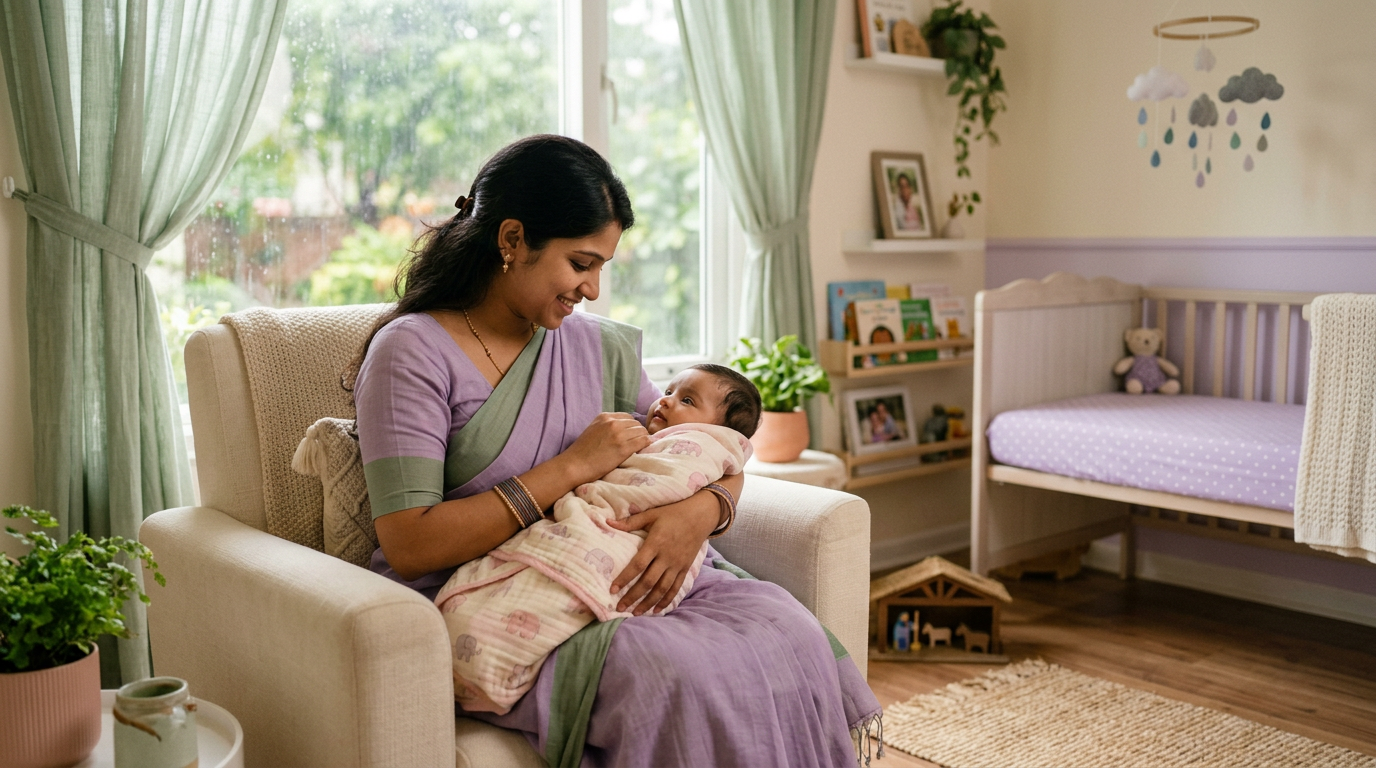
The golden rule for monsoon baby care in India is simple: Dry is healthy, and stagnant is dangerous. From the humid gullies of Mumbai to the drenching rains of Kerala, the monsoon brings a surge in fungal skin infections (mould/diaper rash) and vector-borne diseases like Dengue and Malaria. Keeping your baby safe means focusing on three things: skin breathability, rigorous mosquito protection, and sanitising the damp corners of your home.
1. Navigating the "Chipchip" Humidity: Clothes and Skin Care
In India, we often make the mistake of over-dressing babies as soon as the clouds turn grey. But monsoon humidity in Delhi or Kolkata can be suffocating. High humidity prevents sweat from evaporating, leading to painful heat rash (ghamori) even when it’s raining outside.
* Fabric Choice: Stick to 100% mulmul or soft organic cotton. Avoid synthetic "frocks" or polyester onesies which trap heat.
The Layering Rule: If you feel comfortable in one layer, your baby needs one layer. Keep a light cotton swaddle or dohar* handy for when the AC or fan feels a bit too chilly.
* Bath Routine: You don't need piping hot water. Lukewarm water is best. Use a soap-free, pH-balanced cleanser. Monsoon skin can be deceptively oily but prone to fungal growth.
* The Powder Trap: Never use talcum powder in the folds of the neck, armpits, or groin during monsoon. It clumps with sweat, creating a pasty mess that actually invites fungal infections. Use a light, water-based lotion if the skin is dry, or keep it bare and dry.
2. Mosquito Wars: Keeping the "Macchar" at Bay
With stagnant water comes the threat of Dengue, Chikungunya, and Malaria. According to the Indian Academy of Pediatrics (IAP), prevention is always better than treatment since a baby's immune system is still developing.
* The Full-Coverage Strategy: The most effective "repellent" is clothing. Use full-sleeved cotton shirts and leggings that cover the ankles.
Netting is King: For babies under 6 months, physical barriers are the safest. Use a high-quality mosquito net (machardani) over the palna* or crib. Ensure there are no holes and it’s tucked in tightly.
* Safe Repellents:
Under 2 months: Do not use any chemical repellents on the skin. Use nets and patches on the outside* of clothes or the stroller.
Over 2 months: You can use DEET (up to 10-30%) or Picaridin-based lotions on exposed skin (avoiding hands and mouth). Brands like Mamaearth or Goodknight have "natural" roll-ons, but remember that Citronella* wears off in about 20-30 minutes, whereas DEET lasts longer.
* The 5 PM Rule: Mosquitoes are most active at dawn and dusk. Keep windows shut or ensured mesh screens are closed by 5:00 PM.
3. Mould Prevention: Dealing with Dampness and "Seelan"
The smell of mitti is lovely, but the smell of damp cupboards is a warning sign. Mould (fungus) can trigger respiratory issues, wheezing, and nasty skin allergies in infants.
* Sun the Mattress: If you get even an hour of bright sunlight, take the baby’s mattress and pillows out. UV rays are the best natural disinfectant.
* The Dry-Box Technique: Keep baby’s clothes in airtight plastic containers or use silica gel pouches (taped securely inside the cupboard where the baby can’t reach them) to absorb moisture.
* Check the Walls: Look for black spots behind the crib or wardrobe. If you see mould, clean it with a mixture of white vinegar and water.
* Washing Machine Care: Monsoon laundry often smells "musty." Add a capful of antiseptic liquid (like Dettol or Savlon) or half a cup of white vinegar to the rinse cycle to kill bacteria. Always iron baby’s clothes; the heat of the iron helps kill any lingering fungal spores and ensures the fabric is bone-dry.
4. Food and Water Safety (The "Pani" Protocol)
Monsoon is the peak season for typhoid and stomach infections. If your baby has started solids, your kitchen hygiene must triple.
* Boil Everything: Even if you have a high-end RO filter, boil the baby’s drinking water for 5 minutes and store it in a clean steel bottle.
* Freshness Factor: Avoid feeding pre-cut fruits or leftovers more than 2 hours old. Humidity makes food perish much faster.
* Sterilise Gear: If you are bottle-feeding, be extra vigilant. The humid air allows bacteria to multiply on damp teats. Use a steam steriliser or the traditional boiling method after every use.
Real Talk from Indian Moms
Reema, Bengaluru (Mom to 7-month-old): "I used to think 'natural' meant safe, so I only used neem oil for mosquitoes. My son ended up with 10 bites in one evening. My paediatrician told me—use the net first, and don't be afraid of mild DEET if you're going to the park. It’s better than Dengue."
Anjali, Mumbai (Mom to 4-month-old): "The maalish (massage) is tricky in rains. My sasu maa insisted on heavy mustard oil, but it gave my baby tiny red bumps because of the humidity. We switched to a very light coconut oil and decreased the massage time. Problem solved."
When to Call Your Paediatrician
Don't wait for "home remedies" to work if you see these red flags:
* Any fever over 100.4°F (38°C) lasting more than 24 hours.
* A persistent, "barking" cough or wheezing sounds.
* Unexplained rashes that look like small red islands or Have a white coating (signs of fungal infection).
* Extreme lethargy or refusal to breastfeed/eat.
* Sunken eyes or decreased urine output (less than 6 wet nappies a day—sign of dehydration from a tummy bug).
Frequently Asked Questions
Can I give my baby an oil massage (maalish) during the monsoon?
Yes, but be careful. High humidity plus heavy oil (like mustard or heavy sesame) can clog pores and lead to sweat rashes. Use a light oil like virgin coconut oil or a water-based massage lotion. Ensure you wash the oil off thoroughly during the bath.
Is it safe to use a mosquito coil or liquid vaporisers in the baby's room?
Generally, no. The smoke from coils is harmful to tiny lungs. Liquid vaporisers should be used with caution—turn them on 30 minutes before the baby enters the room, and then turn them off. Never keep them running right next to the crib in a closed room.
My baby’s clothes feel slightly damp even after drying. Is that okay?
No. Damp clothes are the primary cause of fungal skin infections (Tinea) and eczema flare-ups. If the sun isn't out, use a room heater for 15 minutes or iron the clothes on a high setting to ensure every bit of moisture is gone.
Should I stop giving curd (dahi) or fruits to my baby in the rain?
This is a common myth. Curd is a great probiotic. Unless your baby is currently suffering from a cold or your doctor has specifically said no, there is no need to stop. Just ensure the fruit is washed in clean water and peeled just before serving.
How do I prevent diaper rash during the humid months?
The monsoon humidity makes the diaper area a "greenhouse" for bacteria. Give your baby at least 2-3 hours of "diaper-free time" every day on a waterproof mat. Use a thick zinc-oxide-based barrier cream at every change.
How do I treat heat rash or ghamori during the monsoon?
Keep the area dry. Give the baby a sponge bath with cool water. Avoid heavy creams on the rash; instead, use a light calamine lotion if recommended by your doctor. Dress the baby in loose mulmul clothes.
The monsoon is a beautiful time of year in India, and your baby can enjoy it safely. Just remember: keep the air moving, the skin dry, and those mosquitoes far, far away. You’ve got this, mama!
"A dry baby is a happy baby."
Sources & further reading
- Indian Academy of Pediatrics — Monsoon Related Illnesses in Children
- National Health Portal (NHP) India — Dengue Prevention Guidelines
- World Health Organization (WHO) — Indoor Air Quality Guidelines: Dampness and Mould
- ICMR — Vector Control Research Centre (VCRC) Guidelines
Written by Dr. Anjali Mehta, MBBS, DCH (Paediatrics)
Reviewed by TheMamaCircle Editorial Team
Last updated: 9 May 2026
This article is for general information only and is not a substitute for personalised medical advice. Always consult your paediatrician or obstetrician for your specific situation.