6 Month Old Baby Milestones: Sitting, Weaning & Growth
Guide to 6 month old baby milestones including sitting, weaning, and sensory growth. Learn how to support your baby's development with Indian-specific tips.
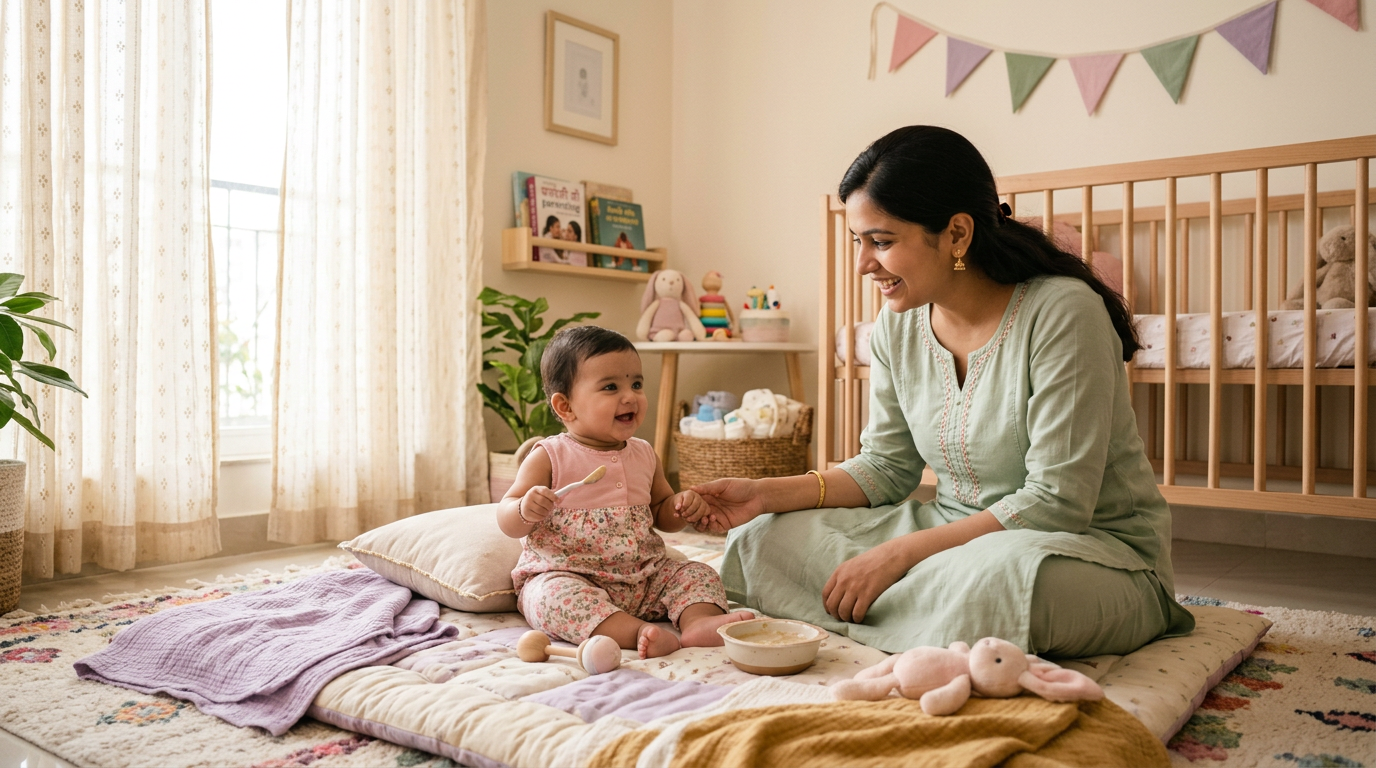
The 6 month old baby milestones reflect a massive transition period where your little one shifts from being a newborn to a curious, interactive infant. This is the "golden month" for Indian parents, often celebrated with the traditional Annaprashan or Mukhe Bhaat ceremony, marking the official beginning of solids and a new chapter of physical independence.
In this comprehensive guide, we will explore the physical, cognitive, and sensory milestones your 6-month-old should be reaching, rooted in Indian parenting practices and international safety standards.
6 Month Old Baby Milestones: Physical Growth and Sitting
At six months, your baby’s physical world expands because they are no longer content just lying on their back. Their core muscles are strengthening, and their perspective of the room is changing.
Sitting with Support vs. Independent Sitting
By now, most babies can sit when propped up with cushions or in a sturdy high chair. Some "high-achievers" might even sit unassisted for a few seconds before toppling over like a little laddoo.
* Tripod Sit: You might notice your baby leaning forward on their hands to balance. This "tripod" position is a crucial precursor to independent sitting.
The Indian Context: Many Indian mothers use a U-shaped feeding pillow or firm bolsters (takiyas*) to help stabilize the baby. Ensure the surface is firm; a soft mattress can make it harder for them to find their balance.
Rolling Over and Strengthening "Gadi" (Core)
Your baby should be a pro at rolling from tummy to back and vice versa. This movement is essential for building the neck and shoulder strength required for crawling later. If you are still doing regular maalish (massage) with mustard or coconut oil, focus on the spine and hip joints to support this increased mobility.
The Developmental Pincer Grasp (Early Stages)
While the true pincer grasp (using thumb and forefinger) usually comes later, at 6 months, babies start using their whole hand to "rake" objects toward them. They will grab your dupatta, their toys, and—fair warning—your hair with surprising strength!
Transitioning to Solids: The Annaprashan Milestone
The 6-month mark is the official age recommended by the World Health Organization (WHO) and the Indian Academy of Pediatrics (IAP) to introduce complementary foods while continuing stanpaan (breastfeeding) or formula.
Identifying Signs of Readiness
Don't just jump into solids because the calendar says so. Look for these signs:
Selecting First Foods for the Indian Palate
Start with smooth purees or well-cooked mashes.
Dal Pani vs. Dal Mash: Move away from just "Dal Pani" (which lacks calories) and offer thick, mashed Moong Dal*.
* Rice Kanji: A staple in Indian households, rice is easy to digest and hypoallergenic.
Fruits and Veggies: Mashed banana (kela), steamed apple puree, or boiled and mashed kaddu* (pumpkin).
* Iron-Rich Foods: Since a baby’s iron stores deplete by 6 months, consider ragi (finger millet) porridge, which is a powerhouse of nutrition in South Indian traditions.
The "Dabba" vs. Homemade Debate
While homemade is gold, modern Indian moms often balance work and home. If using store-bought organic cereals, ensure they have no added sugar or salt, per FSSAI guidelines.
Sensory and Cognitive Development at Half a Year
Your baby’s brain is like a sponge, absorbing every lori (lullaby) and face they see.
Vision and Recognition
At 6 months, a baby's vision has improved to nearly adult levels of color and depth perception. They will recognize familiar faces—it’s the age when "stranger danger" or stranger anxiety might kick in. Don't be offended if they cry when a distant Chacha or Bua tries to pick them up; it’s actually a sign of healthy cognitive development and secure attachment to you.
Language and Babbling
Listen closely! You’ll hear a lot of "ba-ba," "da-da," and "ma-ma." While they don't yet associate "ma-ma" with you specifically, they are practicing the phonetic sounds of your mother tongue. Respond to their babbles as if you are having a real conversation; this encourages language acquisition.
Sensory Play Ideas
* Texture Play: Let them touch different fabrics—silk, cotton, wool.
* Mirror Work: Babies love looking at "the other baby" in the mirror. It helps with self-recognition.
* Water Play: During bath time, let them splash. It teaches cause and effect (I hit the water, it splashes!).
How can I encourage my 6 month old's development?
As a parent, you are your child's first and best teacher. To encourage these milestones, you don't need expensive toys; you need engagement.
1. Tummy Time is Still Relevant
Even if they hate it, a few minutes of tummy time several times a day is non-negotiable. Place a colorful toy just out of reach to encourage them to reach or pivot.
2. Interactive Reading
Use "Touch and Feel" board books. In India, many brands now offer bilingual books (English-Hindi). Pointing to a picture of a GAYE (cow) and making the "moo" sound stimulates both visual and auditory pathways.
3. Safe Exploration Space
Since they are starting to sit and maybe even "scoot," it’s time to baby-proof. Get down on your hands and knees to see the world from their level. Cover sharp corners of the diwan or coffee table and plug those low-level electrical sockets.
4. Group Interaction
If you live in a joint family, encourage the grandparents to talk to the baby. If you’re in a nuclear setup in a metro city like Bangalore or Mumbai, consider joining a "Mommy and Me" playgroup or simply visiting the local park in the evening to let the baby observe other children.
When to Consult Your Pediatrician
While every baby develops at their own pace (especially premature babies, who use an "adjusted age"), keep an eye out for these red flags:
* Does not try to reach for objects.
* Shows no affection for caregivers (parents/nanny).
* Has great difficulty getting sounds out.
* Seems very stiff or very floppy.
* Does not roll in either direction.
* Does not follow objects with both eyes.
If you notice these, a quick chat with your pediatrician at the 6-month vaccination visit (OPV, DTP, Hep-B boosters) is a good idea.
Frequently Asked Questions
Is it normal if my 6-month-old is not sitting yet?
Yes, it is perfectly normal! While some babies sit at 6 months, many don't master independent sitting until 7 or 8 months. As long as your baby has good head control and is making attempts to push up, there is usually no cause for concern.
Which Indian food is best for a 6-month-old first meal?
Traditionally, Sooji Halwa (without sugar) or Moong Dal Khichdi (mashed) are preferred. However, many experts recommend starting with a single-grain cereal like Ragi or a single vegetable puree like Lao (Bottle Gourd) to check for allergies.
How much water should a 6-month-old drink?
Once you start solids, you can offer small sips of boiled and cooled water. Approximately 50ml to 100ml a day is sufficient, as they still get most of their hydration from breast milk or formula.
My baby is 6 months old and hasn't started babbling. Should I worry?
Babies vary significantly in their verbal milestones. Ensure you are talking, singing, and reading to them daily. If they aren't making any sounds or don't react to loud noises, consult your doctor to rule out any hearing issues.
Can I give my baby salt or sugar at 6 months?
No. It is strongly recommended to avoid added salt and sugar until the age of 1. Their kidneys are too immature to handle salt, and sugar can lead to tooth decay and a preference for unhealthy foods later in life. Use mashed dates or bananas for sweetness instead.
Is the '6-month sleep regression' real?
Yes, it is! With all the physical milestones like sitting and rolling, your baby’s brain is "practicing" even at night. This, combined with teething (those first bottom incisors!), can lead to more frequent night wakings. Stick to a calm bedtime routine of a warm bath and a gentle massage.
*
Reaching the six-month mark is a victory for both the baby and the parents. You’ve survived the newborn haze, and now you’re entering a world of personality, giggles, and messy high-chair photos. Trust your maternal instinct, keep the nazar (evil eye) away with your love and care, and enjoy every messy spoonful of that first khichdi! You’re doing a great job, Mama.