7 Month Baby Food Chart Indian: Recipes & Weekly Meal Plan
Start your 7 month baby food chart indian journey with Ragi, Khichdi, and Mashed Fruit. Move from purees to textures safely with our expert-backed guide.
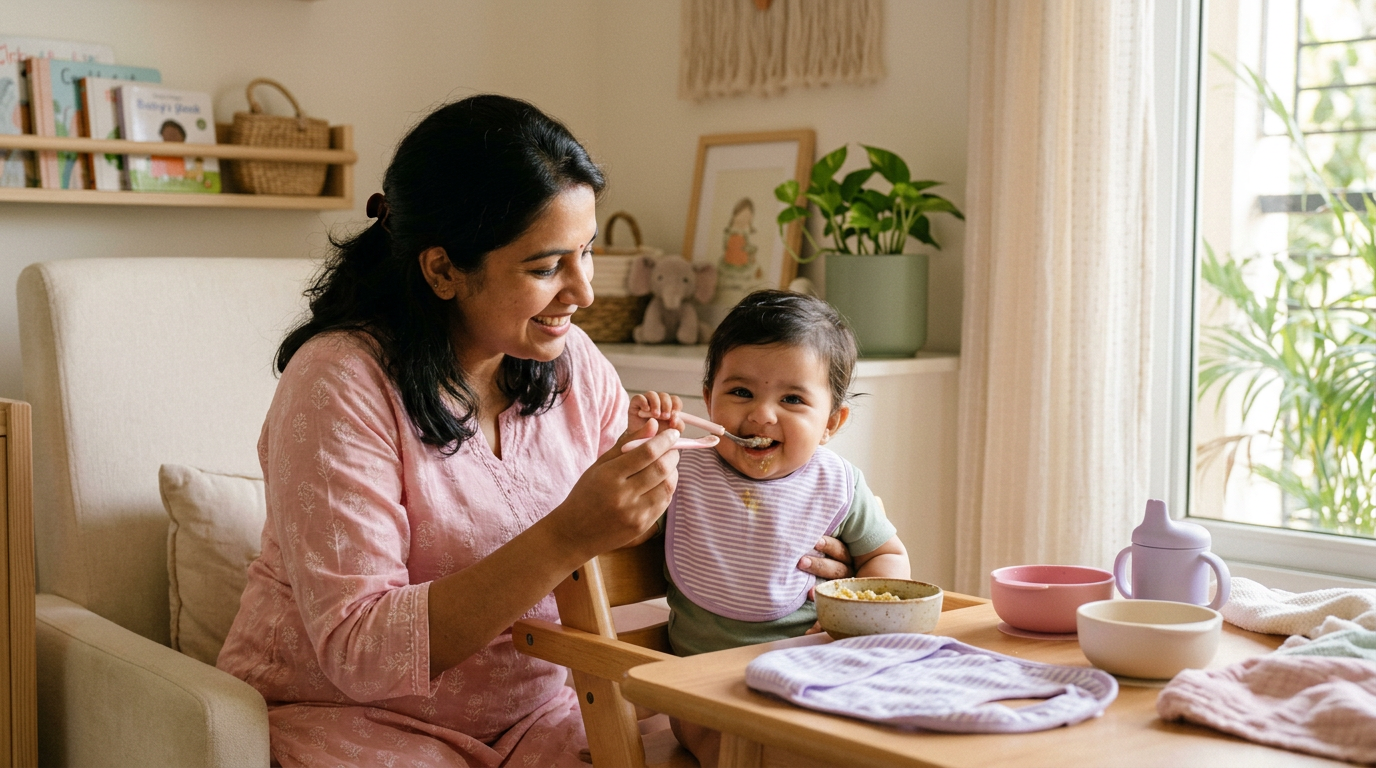
So, your little bundle has crossed the initial hurdle of first tastes. If you followed our 6 month baby food chart indian, you’ve already introduced basic Dal Paani and Apple Puree. Now that your baby is 7 months old, it’s time to move from "tasting" to "eating." A 7 month baby food chart indian needs to be more than just watery liquids; we are moving into mashed textures and combo meals like Khichdi or Suji Kheer to meet their growing iron and calorie needs.
Making the Shift: What Changes at 7 Months?
At seven months, your baby is likely sitting up with minimal support and maybe even rocking on all fours. This physical activity burns calories. While breast milk or formula remains the primary source of nutrition, the 7 month baby food chart indian style focuses on increasing the thickness of the food.
According to guidelines by the Indian Academy of Paediatrics (IAP), this is the window where "complementary feeding" becomes critical. Your baby’s iron stores from birth are depleting, and they need solid nourishment. This isn't just about nutrition; it’s about oral motor development. If you keep feeding watery soups, they won't learn how to move their tongue to swallow thicker textures.
Key Nutritional Pillars for 7 Months:
* Iron: Ragi (Nachni) and Bajra are Indian superfoods.
* Protein: Moong dal and Masoor dal (well-cooked and mashed).
* Healthy Fats: A half-teaspoon of desi ghee or homemade white butter (makhan).
* Vitamin C: Lemon drops or tomato pulp added to dal to help iron absorption.
Your Weekly 7 Month Baby Food Chart Indian Plan
This chart is designed for the typical Indian household. We aren't suggesting expensive avocados or blueberries that cost ₹500 a punnet. We are talking about what’s in your rasoi.
| Meal Time | Suggested Food Item |
| :--- | :--- |
| Early Morning | Breast milk or Formula |
| Breakfast (9:00 AM) | Ragi Porridge or Suji Halwa (no sugar) |
| Mid-Morning | Breast milk or a small piece of mashed Banana |
| Lunch (1:00 PM) | Dal-Chawal Mash or Vegetable Khichdi with Ghee |
| Evening | Breast milk or Formula |
| Dinner (6:30 PM) | Mashed Stewed Apple or Stewed Pear |
| Bedtime | Breast milk or Formula |
Note: Always maintain a 3-day rule when introducing a brand new ingredient to check for allergies.
Top Indian Recipes for 7-Month-Olds
1. The Magic Ragi Malt (Nachni Satva)
Ragi is an absolute powerhouse. It has 10x the calcium of wheat or rice.
* How to make: Soak ragi grains overnight, sprout them (optional but better for digestion), sun-dry, and grind into a powder. Cook 1 tablespoon of this powder with 1 cup of water until it thickens. Add a drop of ghee. Skip the sugar and salt; your baby’s kidneys aren't ready for it yet.
2. Moong Dal Khichdi (The Ultimate Comfort)
The IAP and WHO recommend local, culturally appropriate foods. Nothing is more Indian than Khichdi.
* How to make: Pressure cook 1 part rice and 1/2 part moong dal with a pinch of turmeric (haldi). Mash it thoroughly with a wooden masher (mathani) until it’s a smooth paste. Add a tiny bit of jeera powder for digestion.
3. Banana and Sabudana Mash
Sabudana (Tapioca pearls) is great for weight gain, though it’s mostly carbs.
How to make: Soak sabudana until soft. Boil it in water until transparent. Mash it and mix with a fully ripe Elaichi* banana. It’s naturally sweet and very filling.
Is your 7-month-old ready for the 8 month baby food chart indian?
You might wonder if you can skip ahead. If your baby is successfully swallowing thick purees and shows interest in grabbing your roti, they might be transitioning early. However, most experts suggest staying the course until they have better pincer grasp (picking things up with thumb and forefinger). Once they reach that milestone, you can look into our 8 month baby food chart indian which introduces more finger foods and chunkier textures.
Real Talk from Indian Moms
"My sasu maa insisted on giving cow's milk at 7 months, but my paediatrician said no. I stuck to Ragi and Dal. My daughter is now a healthy toddler who eats everything!"
— Sunita Rao, Bengaluru (Mom to 18-month-old)
"I was so scared of choking that I only gave watery dal. Then I saw the 9 month baby food chart indian and realized I was behind! At 7 months, the 'thick curd' consistency is the goal. Don't be afraid of the mash."
— Meher Pathak, Lucknow (Mom to 10-month-old)
Common Mistakes to Avoid
When to call your paediatrician
While weaning is a natural process, keep an eye out for these red flags:
* Persistent Constipation: If the baby hasn't passed stool for 3+ days after starting solids or seems in pain.
* Allergic Reactions: Hives, rashes around the mouth, or swelling of lips after a new food.
* Projectile Vomiting: Not just a little "spit up," but forceful vomiting.
* Refusal to Eat: If the baby goes more than 24 hours refusing all solids and liquids.
* Blood in Stool: Can indicate a protein allergy or severe constipation.
Frequently Asked Questions
Can I give honey to my 7-month-old?
No. Never give honey to a baby under 1 year of age due to the risk of Infant Botulism, a rare but serious form of food poisoning.
When should I move to an 8 month baby food chart indian?
Move to the 8 month baby food chart indian when your child is comfortable with mashed foods and starts making "chewing" motions with their jaws, even if they don't have teeth yet.
What should be on a 9 month baby food chart indian?
A 9 month baby food chart indian typically introduces more textured finger foods like soft-boiled carrots, paneer cubes, and small bites of paratha.
Can I give buffalo or cow milk now?
No, the National Institute of Nutrition (NIN) and IAP recommend waiting until 12 months for animal milk as a primary drink. Small amounts used in cooking (like in suji kheer) are generally okay after 8-10 months, but check with your doctor.
How much water should a 7-month-old drink?
Usually, 60-120ml of water a day is enough, offered in sips after meals. Most of their hydration still comes from breast milk.
Is it okay to use store-bought Cerelac?
While homemade is best, a BIS-certified fortified cereal is okay for travel or emergencies. However, aim for "Single Grain" varieties without added sugar. Prices for organic Indian brands like Slurrp Farm or Little Moppet usually range from ₹250 to ₹400 per pack.
Feeding your baby is about building a relationship with food. Some days they will finish the bowl, and some days the floor will eat more than the baby. Take a deep breath, keep the mathani ready, and remember: "My baby’s appetite is his own, and I am the provider, not the enforcer."
Sources & further reading
- Indian Academy of Pediatrics - Complementary Feeding Guidelines
- National Institute of Nutrition - Dietary Guidelines for Indians
- WHO-UNICEF Complementary Feeding Global Guidelines
Written by Neha Kapoor, RD (Registered Dietitian, Maternal & Child Nutrition)
Reviewed by TheMamaCircle Editorial Team
Last updated: 5 June 2026
This article is for general information only and is not a substitute for personalised medical advice. Always consult your paediatrician or obstetrician for your specific situation.