9 Months Pregnancy Diet Chart Indian: Week-by-Week Guide
9 months pregnancy diet chart Indian: Expert week-by-week guide for the final stretch. Manage heartburn & build iron for birth. Read for the meal plan.
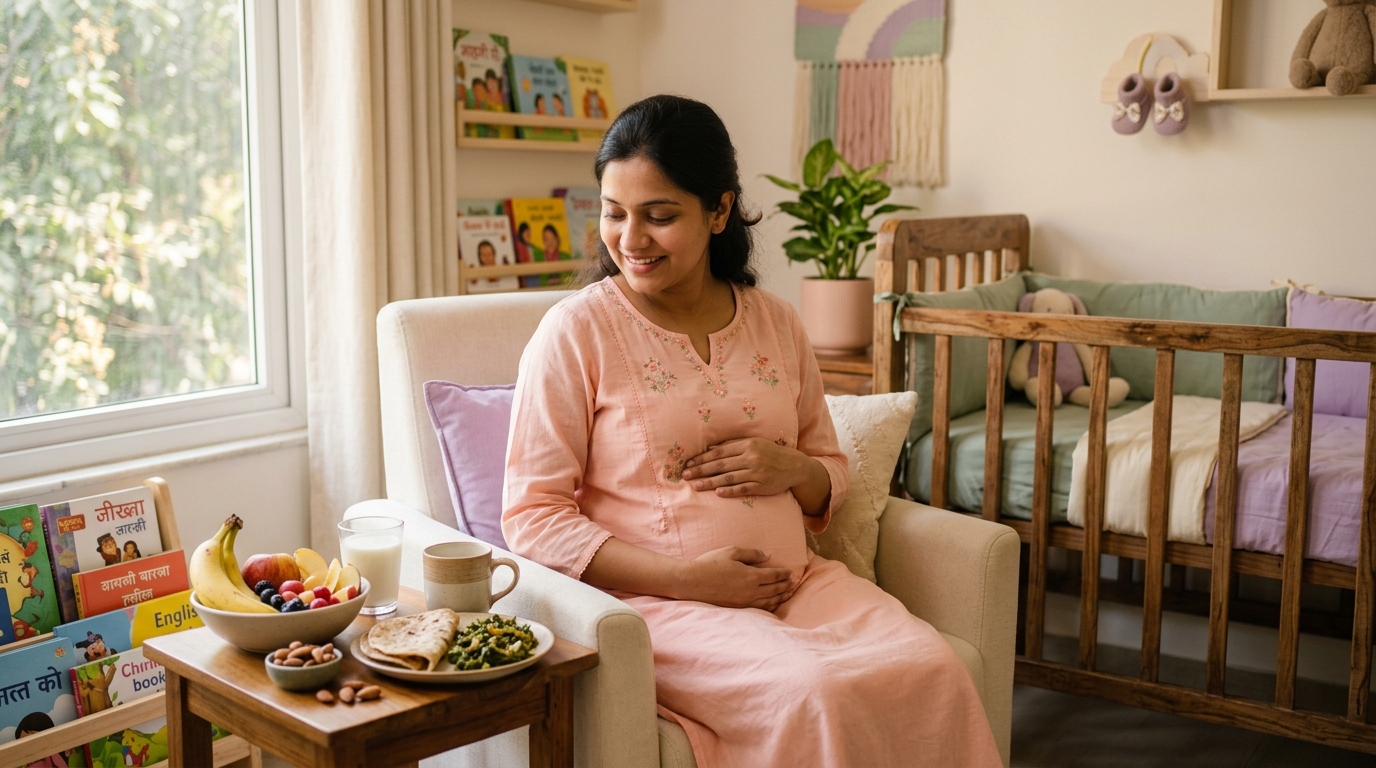
In the final stretch of pregnancy, your diet shifts from "building a baby" to "preparing for birth." By month 9, your baby’s lungs are maturing and their brain is developing rapidly, requiring roughly 2,400 to 2,600 calories per day. The goal isn't just to eat more, but to eat strategically to manage swelling, prevent digestive distress (the dreaded heartburn!), and build the iron reserves you'll need for delivery.
The 9th Month Philosophy: Light, Frequent, and Iron-Rich
Between weeks 36 and 40, your stomach is being squeezed into the size of a lemon by your growing uterus. Large meals are your enemy now. Instead, focus on 6-7 mini-meals. We are prioritizing Vitamin K (for blood clotting during birth), Calcium (for those final bone hardening stages), and Fibre (to avoid the constipation that makes late-stage pregnancy miserable).
Week 36: The "Lighten the Load" Diet
At 36 weeks, many Indian moms experience "lightening" — when the baby drops into the pelvis. While this helps you breathe better, it puts immense pressure on your bladder and bowels.
* Focus: Easy digestion and hydration.
* Morning (7:30 AM): 5 soaked almonds + 2 walnuts + 1 glass of warm lemon water with a drop of honey.
* Breakfast (9:00 AM): 1 bowl of vegetable Upma with plenty of carrots and peas or a Moong Dal Chilla with paneer stuffing.
* Mid-Morning (11:30 AM): A bowl of curd (dahi) with a sprinkle of roasted cumin (jeera) to aid digestion.
* Lunch (1:30 PM): 1 small katori of brown rice or 1 Phulka, a big bowl of Lauki (bottle gourd) or Turai (ridge gourd) sabzi, and a cucumber salad.
* Real-world tip: Avoid heavy Rajma or Chole this week. They cause gas, which can be mistaken for Braxton Hicks contractions and cause unnecessary panic.
Week 37: Building Iron and Vitamin K
You are now "early term." Your body is preparing for the blood loss associated with delivery. Vitamin K is crucial here.
* Focus: Green leafy vegetables and natural sugars for energy.
* Morning: 1 glass of fresh Coconut Water (Nariyal Pani).
* Breakfast: Ragi (finger millet) porridge made with milk/jaggery or Ragi Dosa. Ragi is an Indian superfood packed with calcium and iron.
* Lunch: Palak Dal (Spinach lentils) with 1-2 Rotis topped with a little A2 Ghee.
* Evening Snack (4:30 PM): A handful of roasted Makhana (fox nuts) or a small bowl of pomegranate (Anar). Pomegranate is excellent for boosting haemoglobin.
* Dinner: A light Khichdi made of yellow moong dal and rice, seasoned with ginger and ajwain to prevent bloating.
Week 38: The Fuel for Labor
Labour can happen any day now. You need glycogen stores in your muscles to push.
* Focus: Complex carbohydrates and Omega-3s.
* Breakfast: Poha with added peanuts and curry leaves.
* Lunch: 1 Katori of Curd Rice (excellent for gut health) + a side of sautéed beans or bhindi.
* Mid-Day Hydration: Amla juice or a simple Chaas (buttermilk) with ginger.
* Dinner: Vegetable Dalia (broken wheat) or a bowl of vegetable soup with a slice of toasted multi-grain bread.
The "Dadi" Tip: Many Indian households recommend Gond Ke Ladoo or Ajwain Laddoo* starting now. While calorie-dense, having half a small laddoo with warm milk at night can help with backaches.
Week 39 & 40: Keeping it Moving
The goal is to stay comfortable and avoid constipation, which can make pelvic pressure feel worse.
* Focus: High fibre and "Soft" foods.
* Daily Essential: 2 dried Figs (Anjeer) soaked overnight. These are natural laxatives.
* Breakfast: Oats porridge with sliced banana or a fruit smoothie with chia seeds.
* Lunch: Traditional "Sattvic" meal—Dal, Chawal, and a simple stir-fry of seasonal vegetables like Parwal or Tinda.
* Dinner: If you feel very full, have a hearty bowl of Tomato and Carrot soup or a light Moong Dal idli.
* Hydration: Aim for 3 litres of water. Dehydration can actually trigger "false" contractions.
> Mama-to-Mama Real Talk:
> "I spent my 39th week obsessing over 'labor-inducing foods' like pineapple and spicy curries. Honestly? They just gave me terrible heartburn and kept me up all night. My doctor told me: 'The baby comes when the baby is ready, not because of the vindaloo.' Focus on rest and simple dal-chawal instead." — Megha, Mumbai mama of a 4-month-old.
Crucial Nutrients for the 9th Month
| Nutrient | Why you need it now | Indian Source |
| :--- | :--- | :--- |
| DHA/Omega 3 | Final brain & eye polish | Walnuts, Flaxseeds (Alsi), Chia seeds |
| Vitamin K | Blood clotting for birth | Spinach, Methi, Sarson, Broccoli |
| Calcium | Strengthening bones & teeth | Paneer, Ragi, Sesame seeds (Til), Milk |
| Magnesium | Reduces leg cramps | Pumpkin seeds, Bananas, Almonds |
Real Talk from Indian Moms
"Everyone told me to eat ghee to 'grease the birth canal.' My gynaecologist laughed and said ghee goes to the stomach, not the uterus! I kept the ghee to one teaspoon per meal for the energy, but didn't overdo it. My digestion thanked me."
— Ananya, Bengaluru (Mom to a 5-month-old)
"In my 9th month, I developed a weird craving for ice chips. Turns out, my iron was low. Once I started having my beetroot-pomegranate juice daily, the craving stopped. Listen to what your body is trying to say through those cravings!"
— Priya, Delhi (Mom to a 10-month-old)
When to Call Your Paediatrician (or OB-GYN)
Nutrition is vital, but in the 9th month, physical symptoms take priority. Call your doctor immediately if:
* You experience a sudden, sharp decrease in baby’s movements (count your kicks after every meal!).
* You have sudden swelling in your face or hands (could be a sign of Preeclampsia).
* You have a persistent headache or blurred vision.
* You experience "burning" pain in the upper abdomen that isn't relieved by antacids.
* You notice any leaking fluid or bright red spotting.
Frequently Asked Questions
Can I eat papaya or pineapple in the 9th month to induce labour?
While ripe papaya and pineapple are generally safe in moderation, there is no scientific evidence that they induce labour. In fact, large amounts of pineapple can cause acidity and diarrhoea, which you definitely don't want while in labour. Stick to small, occasional servings.
Is it mandatory to drink Saffron (Kesar) milk for a fair baby?
This is a common Indian myth. Baby’s skin colour is determined by genetics (melanin), not food. However, Kesar milk is a wonderful sedative. Drinking a warm glass of milk with 2-3 strands of Kesar can help you sleep better during those restless 9th-month nights.
How much Ghee should I really be eating?
Standard Indian guidelines suggest 1-2 teaspoons of Ghee per day is healthy. It provides essential fats and fat-soluble vitamins (A, D, E). The "half a cup of ghee" tradition is outdated and can lead to excessive postpartum weight gain and digestive issues.
Why do I feel so breathless after eating?
Your uterus is hitting its highest point (just under the ribs) at 36-37 weeks. This crowds your lungs. Switch to "grazing"—eating very small portions every 2 hours instead of 3 large meals.
Should I stop taking my iron and calcium supplements now?
No. Never stop supplements without your doctor’s advice. Your body needs those iron stores for the delivery process and calcium for the initial weeks of breastfeeding (milk production takes a lot of calcium from your body!).
Is it okay to drink tea or coffee?
Limit caffeine to one small cup a day. Caffeine can interfere with iron absorption and might make your baby extra active at night, keeping you awake. If you need a warm drink, try caffeine-free herbal teas or warm milk.
The 9th month is a marathon, not a sprint. Your body is doing the Incredible work of finishing a human being. Feed it with kindness, stay hydrated, and remember: soon, you’ll be holding your baby and all this heartburn will be a distant memory.
You’ve got this, Mama. Just one more week/day/hour at a time.
Sources & further reading
- Indian Academy of Pediatrics (IAP) — Nutrition During Pregnancy Guidelines
- ICMR - NIN — Dietary Guidelines for Indians
- FOGSI — Perinatal Nutrition Recommendations
- Ministry of Health and Family Welfare (NHP) — Antenatal Care Guide
Written by Neha Kapoor, RD (Registered Dietitian, Maternal & Child Nutrition)
Reviewed by TheMamaCircle Editorial Team
Last updated: 23 April 2026
This article is for general information only and is not a substitute for personalised medical advice. Always consult your paediatrician or obstetrician for your specific situation.