Baby Books India: Best First Books & Board Books Guide
Discover the best baby books in India for 0-3 year olds. From bilingual gems to sturdy board books, help your little one fall in love with reading. Shop smart!
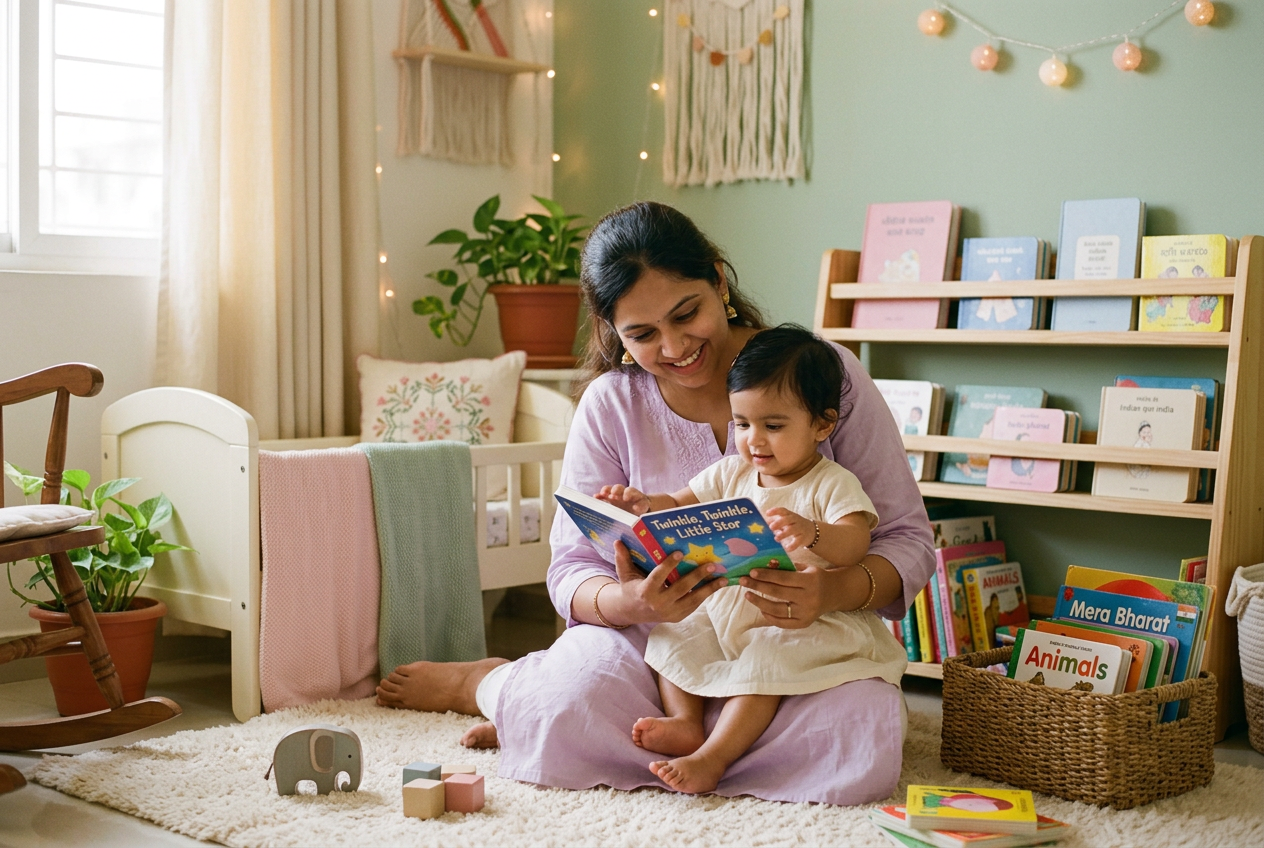
The best baby books in India for 0-3 year olds are high-contrast black-and-white books for newborns, chunky board books for tactile toddlers, and bilingual (English-Hindi/Regional) picture books for early language development. Start with titles like Ten Little Fingers and Ten Little Toes or the Indigrow series that celebrate Indian culture. Reading isn’t about finishing the story; it’s about the bond and the brain sparks that happen when your little one points at a cow and says "Gai!"
My first attempt at reading to my son was a disaster. He was four months old, sitting in his jhoola, and I was reading a classic British board book about farm animals. He didn't care about the sheep; he wanted to eat the corners of the book. My sasu maa laughed, saying, \"He’s not a scholar yet, Anjali!\" But she was only half right. While he was definitely teething, those early sessions were building his vocabulary long before he could speak.
Why Indian Babies Need More Than Just 'Classic' Western Books
For a long time, Indian nurseries were filled with Dr. Seuss and Peppa Pig. While those are great, we have a unique linguistic and cultural landscape. Reading helps a child's brain develop neural pathways, but it also helps them see themselves in the world.
When you read a book that mentions a \"Samosa\" or shows a \"Nani\" in a saree, your child makes a faster connection between the page and their reality. In India, we also often grow up in multilingual households. Introducing bilingual books (English-Hindi, English-Tamil, etc.) early on doesn't confuse babies—it actually makes them more cognitively flexible.
The Evolution of Reading (0-3 Years)
* 0-6 Months: Use high-contrast, black-and-white books. Their vision is still developing, and these sharp images grab their attention.
* 6-12 Months: This is the \"everything goes in the mouth\" phase. Stick to heavy-duty board books (₹250–₹500 range) or indestructible \"Indestructibles\" that can withstand drool and chewing.
* 1+ Years: Interactive books are king. Look for "Lift-the-flap," "Touch-and-feel," or "Press-and-sound" books.
* 2-3 Years: Simple storylines. This is when Indian folk tales or stories about daily life (going to the market, celebrating Diwali) start to resonate.
Which are the best first books for babies in India?
1. High-Contrast & Black-and-White Books
The IAP (Indian Academy of Pediatrics) emphasizes that visual stimulation is crucial in the first few months. Look for locally available brands like Tiny Toddler or Nestery’s own collections.
* Why: Helps with focus and eye tracking.
Top Pick: Hello Baby: Animals* (High-contrast series).
2. The Cultural Pioneers: Indigrow & Tulika Books
If you want books that feel like home, Tulika Books and Indigrow are non-negotiable.
Tulika offers bilingual books in 9+ Indian languages. Their Gajapati Kulapati* series is a cult favourite among Indian moms for a reason—it’s hilarious and rhythmic.
Indigrow focuses on culture. Whether it’s The Kabir Series* or books about Indian festivals, they are beautifully illustrated and sturdy.
3. Board Books for Rough Handling
Look for "Board books" (not paperbacks!) from publishers like Pratham Books or Tara Books.
Pro Tip: Pratham’s StoryWeaver* platform allows you to read many of these for free online, but for 0-3 years, you want the physical "dabba-style" board books they can carry around.
Budget-Friendly: The My First Library* box sets (10 small books for ~₹400) sold on Amazon/Flipkart by Wonder House are decent for building a base, but they are generic. Supplement them with one or two "hero" Indian stories.
Real Talk from Indian Moms
Mama-to-mama: Let go of the "story."
If your 1-year-old keeps flipping to the last page or wants to talk about the crow on page 2 for ten minutes, let them. You aren't a narrator; you are a co-explorer. If you try to force them to sit still for the whole plot, they will associate books with "study time"—and we want them to associate books with "mamma time."
Anecdote: The "Gajapati" Miracle
Ananya, a Bengaluru mom of a 14-month-old, told us: \"My son Riaan wouldn’t sit still for anything. I bought Gajapati Kulapati on a whim because the elephant looked cute. When I did the 'A-CHOO!' sneeze sound from the book, he collapsed in giggles. Now, 'Achhoo' is his favourite word, and he brings me that book three times a day. It’s the first time he’s connected a book to a real emotion.\"
Indian Bilingual Picks: Why Two Languages are Better Than One
In most Indian homes, we speak a mix of languages. Research from AIIMS and global linguistic studies shows that babies can differentiate between two or even three languages from birth.
English-Hindi: Look for Akshara or Tulika's* bilingual flip books.
* Why it works: Hearing "Mango" and "Aam" in the same breath helps the brain categorise concepts faster.
Where to find them: Check out independent bookstores like Full Circle or online platforms like The Nestery and FirstCry*.
Setting Up a "Reading Kona" (Reading Corner) on a Budget
You don't need a fancy Pinterest nursery.
Real Talk: The Screen Time Struggle
Real talk: It is incredibly tempting to put on a "Learning Colors" video on YouTube when you are trying to cook dal-tadka. We've all done it. But the IAP recommends ZERO screen time for under 2s. Books are the antidote. A book about colors provides "passive" learning where the child has to engage. A video provides "active" over-stimulation where the child's brain just switches off. Even 5 minutes of a flap-book is better for their IQ than 30 minutes of Cocomelon.
When to call your paediatrician
While every child hits milestones at different rates, book engagement can be a "soft" indicator of development. Consult your paediatrician if:
* Your 6-month-old does not track the book with their eyes when you move it.
* Your 12-month-old shows zero interest in images or faces in books.
* Your 18-month-old doesn’t point to objects in a book when you name them (e.g., "Where is the cow?").
* There is a lack of "joint attention" (the baby doesn’t look at the book and then back at you to share the experience).
Frequently Asked Questions
Which language should I start reading in first?
Read in the language you are most comfortable in. If your "heart language" is Marathi or Bengali, read that. Your baby reacts to your rhythm and tone. You can introduce English books simultaneously without any "confusion" risk.
Are expensive "International" book subscriptions worth it in India?
Honestly? Only if you have the budget. While kits like Lovevery are amazing, you can recreate the experience using local brands like Ariro Toys or by hand-picking books from Tulika and Pratham for one-fourth the price.
My baby just rips the pages. What do I do?
Stop buying paper books! Stick to Board Books or Cloth Books. If a page rips, tape it in front of them and explain, "We have to be gentle with our friends (books)." But mostly, just switch to sturdier materials until they are 2.5 or 3 years old.
Can I use Kindle or Tablets for baby books?
No. For the 0-3 age group, the tactile experience (feeling the page, pointing, the smell of the book) is essential for sensory development. E-readers don't provide the "spatial" understanding that a physical book does.
Where can I buy diverse Indian books?
* Online: The Nestery, Tulika Books website, Amazon (search for "Indian Board Books").
Libraries: Check for Trunk It* or local community libraries in cities like Delhi, Mumbai, and Bangalore.
Is it too early to read to a 2-month-old?
Never. At 2 months, they won't understand the story, but the sound of your voice lowers their cortisol (stress levels) and helps their hearing develop. High-contrast images will also help their optic nerve development.
Reading to your baby isn't about making them a genius by age three. It’s about that quiet moment at the end of a long, exhausting day of diaper changes and khichdi spills where you both just sit and look at a picture of a moon. It’s a ritual that says, "You are loved, and the world is a big, beautiful place."
Keep the books within their reach—and within your heart. Reading is the best gift you can give your little shaitan.
Sources & further reading
- Indian Academy of Pediatrics — Screen Time and Early Literacy Guidelines
- AIIMS — Early Childhood Development & Stimulation
- UNESCO / Pratham Books — The Importance of Mother Tongue Literacy
- WHO — Guidelines on Physical Activity, Sedentary Behaviour and Sleep for Children under 5 Years of Age
Written by Dr. Anjali Mehta, MBBS, DCH (Paediatrics)
Reviewed by TheMamaCircle Editorial Team
Last updated: 21 May 2026
This article is for general information only and is not a substitute for personalised medical advice. Always consult your paediatrician or obstetrician for your specific situation.