Baby Development Month by Month: India Milestone Chart 2024
Wondering when your baby will crawl or say their first word? Our month-by-month guide covers motor, cognitive, and social milestones for Indian parents. Read more!
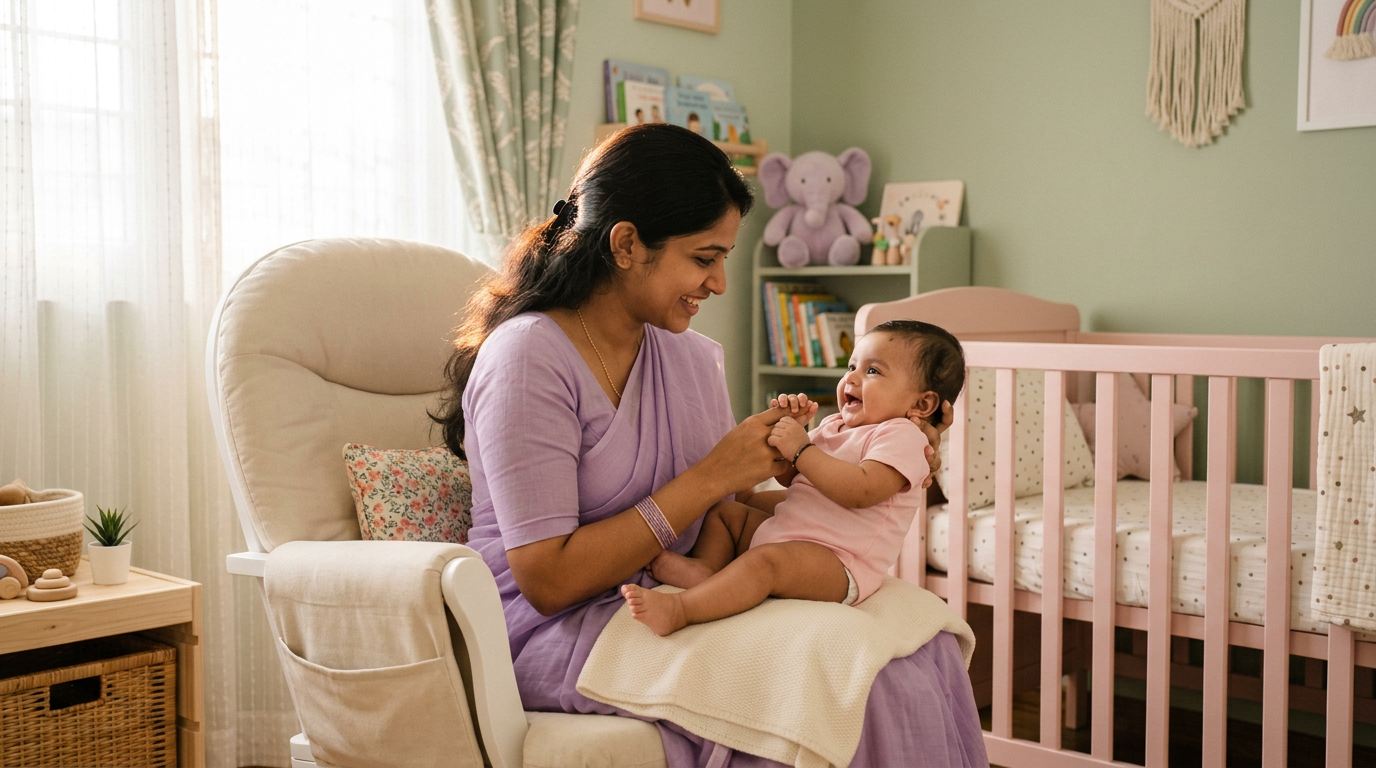
The first year of your baby’s life is less of a "journey" and more of a high-speed chase through growth charts and sleepless nights. If you are wondering when your baby will finally track your movement or start that much-anticipated babble, the answer is: every baby follows their own internal clock, but there are clear "milestone markers" we look for to ensure development is on track. From that first social smile at 6 weeks to the chaotic first steps around 12 months, this guide breaks down the physical, cognitive, and social milestones for Indian parents.
Month 1 to 3: The "Fourth Trimester" and Sensory Awakening
During these first 90 days, your baby is transitioning from the womb to the world. It’s a period of "reflexive" movements rather than intentional ones.
* Motor Skills: Initially, movements are jerky. By month 3, most babies can lift their head and chest when lying on their tummy (Tummy Time is non-negotiable now!).
* Cognitive & Sensory: They begin to follow moving objects with their eyes. You’ll notice them staring at high-contrast patterns or your face.
* Social: Around 6 to 8 weeks, look out for the Social Smile. This isn't just gas; it’s a genuine response to your voice or face.
Maalish Tip: In India, we love our maalish (massage). Use this time for eye contact and gentle "cycle" leg movements to help with colic and motor awareness.
Month 4 to 6: The Great Discovery
This is when the personality starts to shine through. The "blob" phase ends, and the "explorer" phase begins.
* Motor Skills: Rolling over is the big milestone here—usually front-to-back first, then back-to-front. By 6 months, many babies can sit with a little support or by leaning on their hands (the "tripod sit").
* Cognitive: Everything goes into the mouth. This is how they learn about textures and tastes. They start to recognise their own name.
Social/Communication: You’ll hear "cooing" turn into "babbling"—syllables like ba-ba, da-da, or ma-ma* (though they don't know what they mean yet!).
> Real talk: Don't get into a "milestone war" with your WhatsApp group. If your neighbour’s 5-month-old is sitting and yours isn't, it doesn’t mean your baby is "behind." It means they are busy working on a different skill, like fine motor grabbing or vocalising.
What are the milestones for a 7 to 9 month old baby?
This is the "movement" quarter. Most Indian homes become obstacle courses around this time as babies find their wheels.
Gross Motor: The Crawl and Pull-up
* Crawling: Most babies start crawling between 7 and 10 months. Note: Some babies skip crawling entirely and go straight to "bottom shuffling" or standing. This is generally fine as long as they are using both sides of their body equally.
Pulling to Stand: They will use the sofa, your kurta, or the jhoola* to pull themselves up.
Fine Motor: The Pincer Grasp
Around 9 months, watch for the Pincer Grasp—using the thumb and index finger to pick up small objects. This is the perfect time to introduce soft finger foods like well-cooked pressure-cooked carrots or small bits of paneer.
Cognitive: Object Permanence
They now understand that if you hide a toy under a dupatta, it hasn't disappeared forever. This leads to the fun (and sometimes exhausting) game of "Drop the Spoon."
Month 10 to 12: Finding Independence
Your baby is now a "little person." This stage is defined by communication and the first signs of walking.
* Social/Emotional: Stranger Anxiety peaks here. They might cling to you when 'Door-bell Didi' or a distant relative visits. This is a sign of healthy emotional attachment.
Communication: They start using gestures—pointing at a dabba of snacks or waving bye-bye*. They might say 1-2 words with meaning (like "Dada" for Dad).
* Motor: The "cruising" phase—walking while holding onto furniture. Some brave souls might take their first independent steps around their first birthday.
Real talk from Indian moms
"My mother-in-law was convinced my son wasn't walking at 11 months because we didn't do a specific puja. I had to calmly explain that his paediatrician said his muscle tone was perfect and he was just a cautious soul. He walked at 14 months and hasn't stopped running since!" — Ananya, Bengaluru, mom to a 2-year-old.
"The 'stranger danger' phase hit us hard during Diwali. Everyone wanted to hold the baby, and she just screamed for me. I felt embarrassed, but then I realized it’s actually a sign she knows I’m her safe space." — Meher, Mumbai, mom to a 10-month-old.
Milestone Chart: A Quick Summary
| Age | Key Motor Milestone | Key Social/Cognitive Milestone |
| :--- | :--- | :--- |
| 2 Months | Holds head up during tummy time | Makes gurgling sounds; smiles at people |
| 4 Months | Pushes up on elbows; grabs toys | Recognises familiar people; reaches for objects |
| 6 Months | Rolls in both directions; sits with support | Responds to name; likes to look in mirrors |
| 9 Months | Crawls; pulls to stand | Separation anxiety starts; Pincer grasp |
| 12 Months | Cruising or walking; stands alone | Uses simple gestures (shaking head 'no') |
When to call your paediatrician
While every baby is different, "Red Flags" are specific signs that warrant a professional check-up. Speak to your doctor if you notice:
* By 3 Months: Not tracking moving objects with eyes or not responding to loud noises.
By 6 Months: Doesn't show affection for caregivers; doesn't make vowel sounds (ah, eh, oh*); feels very stiff or very floppy.
* By 9 Months: Doesn't sit with help; doesn't babble; doesn't look where you point.
* By 12 Months: Doesn't crawl; doesn't say "mama" or "dada"; loses skills he/she once had.
Frequently Asked Questions
Does my baby need a walker to help them walk?
No. The Indian Academy of Pediatrics (IAP) and most global health bodies strongly discourage walkers. They don't help babies walk faster; they actually skip the vital muscle-building stage of crawling and pulling up. Most importantly, they are a major cause of domestic injuries (falling down stairs or reaching hot items on counters).
My baby is 10 months old and still not crawling. Should I worry?
Not necessarily. Some babies skip crawling and move straight to walking. However, ensure they have plenty of floor time. If they are moving in some way (scooting, rolling to get across the room) and using both arms and legs equally, it’s usually not a concern.
When do babies usually say their first word?
Most babies say their first meaningful word between 10 and 14 months. Before this, they are "rehearsing" with babbles. If your baby is 15 months and has no words, a hearing check and speech evaluation are recommended.
Why is my baby suddenly afraid of the nani she used to love?
This is Stranger Anxiety, which usually kicks in around 8-9 months. It’s actually a brilliant cognitive milestone! It means your baby now has the memory to distinguish between "primary caregivers" and "everyone else." It will pass with gentle exposure.
Can screen time help with cognitive development?
Until age 2, the WHO and IAP recommend zero screen time. Babies learn through 3D interaction—touching your face, feeling the texture of a wooden toy, or watching your lips move. A screen cannot replace the "serve and return" interaction of a human caregiver.
You are your baby’s best teacher simply by talking, singing, and playing with them on the floor. Don't let the charts steal your joy; if they are happy, curious, and moving, you’re doing great.
Trust your gut, but follow the science.
Sources & further reading
- Indian Academy of Pediatrics — Growth and Development Chart
- WHO — Standards for Child Growth and Development
- AIIMS New Delhi — Paediatrics Division Milestone Guidelines
- National Health Portal (NHP) India — Infant and Young Child Care
Written by Dr. Anjali Mehta, MBBS, DCH (Paediatrics)
Reviewed by TheMamaCircle Editorial Team
Last updated: 13 May 2026
This article is for general information only and is not a substitute for personalised medical advice. Always consult your paediatrician or obstetrician for your specific situation.