Baby Eczema Treatment India: Natural & Medical Guide (2024)
Dealing with baby eczema? Discover natural baby eczema treatment like coconut oil and medical options for Indian skin. Get relief for your baby’s itchy skin!
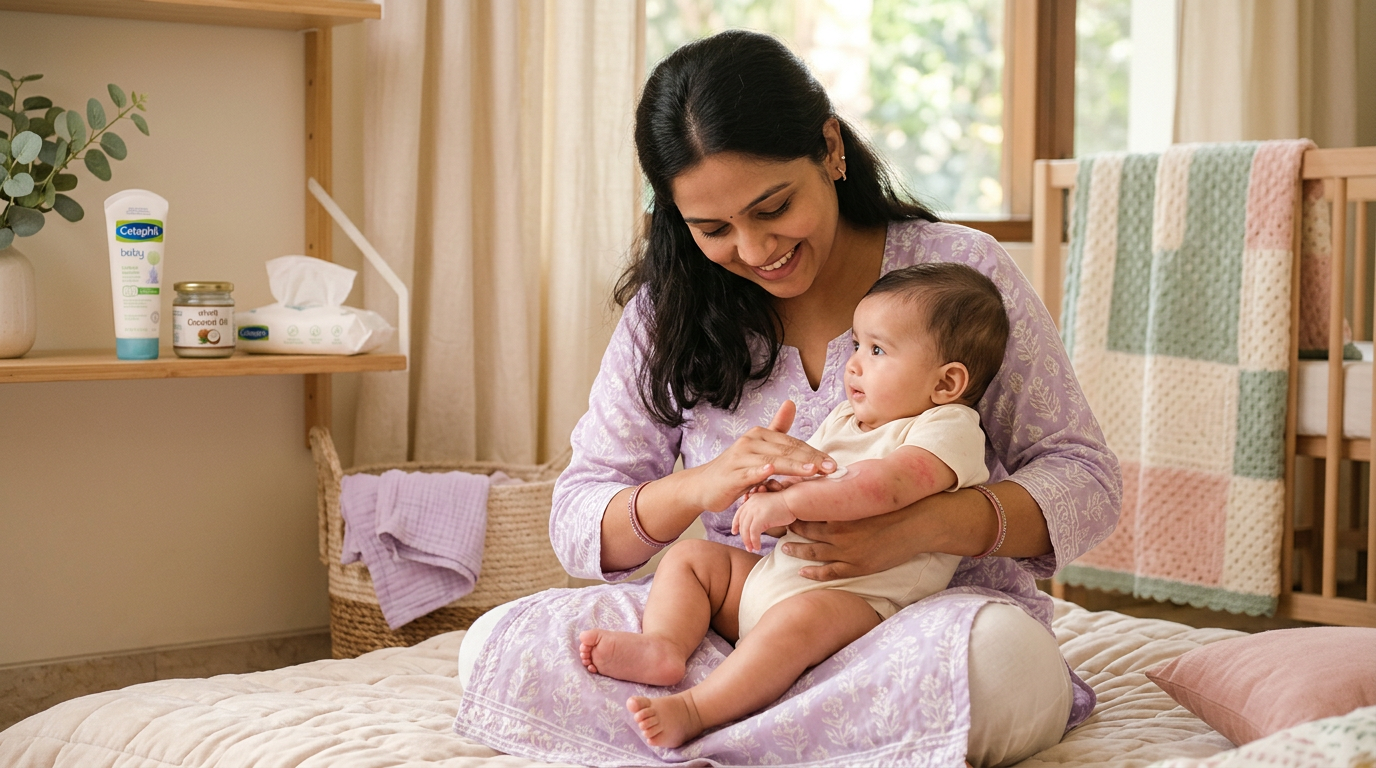
Baby Eczema Treatment in India: Relief for Your Little One's Skin
Is your baby’s skin looking red, dry, or patches of 'khujli' making them fussy? Baby eczema treatment involves a combination of deep moisturisation, identifying triggers like harsh soaps or heat, and using doctor-prescribed creams when necessary. At The Mama Circle, we know how heartbreaking it is to see your little jaan scratching their delicate skin, but with the right Indian-context care, relief is possible.
Eczema, or Atopic Dermatitis, affects nearly 15-20% of infants in India. It isn't just "dry skin"; it’s a condition where the skin barrier is weak, letting moisture out and irritants in. Whether you are dealing with the humid heat of Mumbai or the dry winters of Delhi, managing baby eczema requires a consistent "soak and seal" routine.
What Causes Eczema in Indian Babies?
Before diving into treatments, let's understand why your baby's skin is reacting. In India, several environmental and genetic factors play a role:
Natural Baby Eczema Treatment: Dadi-Nani Approved Remedies
When eczema is mild, natural home remedies can work wonders to soothe the itch. However, always do a patch test on a small area of the leg first.
1. Virgin Coconut Oil (Nariyal Tel)
In India, coconut oil is our go-to for everything. Studies show that Virgin Coconut Oil (VCO) is better than mineral oil at reducing Staph bacteria on the skin, which often causes eczema infections. Use cold-pressed oil for the best results.
2. Oatmeal Baths (Chokar ka Pani)
Colloidal oatmeal is just finely ground oats. Adding two tablespoons to your baby’s lukewarm bath water creates a protective layer on the skin. It acts as an anti-inflammatory agent, reducing redness.
3. Neem Leaf Infusion
For centuries, Neem has been used for its antibacterial properties. Boiling a few neem leaves in water, cooling it, and using it for a final rinse can prevent secondary infections if your baby has scratched their skin raw.
4. Aloe Vera Gel
Freshly scooped aloe vera gel (not the bright green store-bought ones with fragrance) is incredibly cooling for 'garmi-related' eczema. It hydrates without being greasy.
5. Sun-Flower Seed Oil
Applying sunflower oil can help skin produce its own ceramides. It is often recommended over olive oil, which can sometimes damage the skin barrier in newborns.
How to Treat Baby Eczema at Home? (The Step-by-Step Routine)
The goal of treatment is to "Seal the Moisture." Follow this 3-step Indian routine:
Step 1: The 'Short & Sweet' Bath
Use lukewarm water—never hot. Keep the bath under 10 minutes. Use a soap-free cleanser (like Sebamed, Cetaphil Baby, or Tedibar) only on the "dirty" bits (diaper area, underarms). Avoid using Ubtan or Besan during a flare-up, as these can be too abrasive.
Step 2: The 3-Minute Rule
As soon as you lift the baby out of the tub, pat them dry with a soft mulmul cloth. Do not rub! While the skin is still slightly damp (within 3 minutes), apply a thick layer of moisturiser. This "locks in" the water from the bath.
Step 3: Choose the Right Moisturiser
In India, we often use lotions, but for eczema, you need Creams or Ointments. Look for ingredients like:
* Ceramides: To repair the skin barrier.
* Shea Butter / Cocoa Butter: For deep hydration.
* Petroleum Jelly: The safest, cheapest "sealant" available in any Indian chemist shop.
Medical Approaches: When Home Remedies Aren't Enough
Sometimes, ghar ke nuske aren't enough. If the skin is oozing, crusty, or the baby can’t sleep because of the itch, consult a paediatric dermatologist.
Topical Steroids
Many Indian parents are "steroid-phobic," but when used under a doctor's supervision (like Hydrocortisone 1%), they are the gold standard for calming inflammation. Use them only on the red patches, not the whole body, for a short duration (usually 3-7 days).
Topical Calcineurin Inhibitors (TCIs)
Creams like Tacrolimus or Pimecrolimus are non-steroidal options often prescribed for sensitive areas like the face or skin folds.
Antibiotics
If the eczema has a yellow crust or "weeping" discharge, it might be infected with Staph. Your doctor may prescribe a topical antibiotic like Mupirocin or an oral syrup.
Antihistamines
While they don't stop the eczema, syrups like Atarax or Maxtra (prescribed by a doctor) can help a baby sleep better by reducing the "itch-scratch cycle" at night.
Managing Eczema in the Indian Climate
India’s climate varies wildly, and your treatment must adapt.
* During Monsoons: Humidity is high. Use lighter creams and ensure the baby is in a dry, ventilated room to avoid fungal infections on top of eczema.
During Summers: Sweat is your enemy. Keep the baby in soft Malmal* or 100% cotton clothes. Use an AC or cooler to keep them at a comfortable temperature.
* During Winters: Use a humidifier if you use room heaters (which dry out the air). Apply moisturiser at least 4-5 times a day.
Lifestyle Adjustments for the Indian Home
Frequently Asked Questions
Can I use mustard oil (Sarson ka tel) for baby eczema?
No. While mustard oil is traditional in North India, it is very pungent and can act as an irritant on compromised eczema skin. It can also disrupt the skin barrier further. Stick to coconut or sunflower oil.
Is eczema caused by what I eat while breastfeeding?
Rarely. Only about 10% of eczema cases are linked to maternal diet. Before cutting out milk or nuts from your diet, consult a doctor, as you need your nutrition to produce quality milk.
Will my baby outgrow eczema?
Yes! The good news is that most Indian children outgrow eczema by the age of 5 or 6 as their skin barrier matures. About 50-60% see a significant improvement by age 2.
Can water quality in Indian cities affect eczema?
Absolutely. Hard water (common in many Indian apartments) contains minerals like calcium and magnesium that can dry out the skin. Consider installing a water softener for the baby’s bath tap.
Is it safe to use 'Jhonson's' or 'Himalaya' products on eczema?
If the product has added fragrance or "parfum," it might irritate eczema. For flare-ups, skip scented products and use medical-grade emollients like Emollient, Venusia, or Cetaphil.
Can I use 'Dettol' in the bath water to kill germs?
Never use Dettol or Savlon in the bath for a baby with eczema. These are very harsh and will strip the skin of its natural oils, causing a massive flare-up.
A Note of Encouragement for Mamas
Dealing with baby eczema is a marathon, not a sprint. There will be days when the skin looks perfect, and days when a new tooth or a change in weather brings back the redness. Don't blame yourself—it's not about hygiene or your parenting.
Shower your little one with extra pyaar, keep their skin "greasy" and cool, and remember that this phase shall pass. You’re doing a great job, Mama!
Disclaimer: This guide provides general information and is not a substitute for professional medical advice. Always consult your paediatrician before starting any new treatment or medication for your baby.",excerpt: