Baby Essentials India: The Ultimate Newborn Care Guide
Planning for your newborn? From mulmul jhablas to BIS-safe baby hygiene products, here is the ultimate guide to baby essentials for every Indian home.
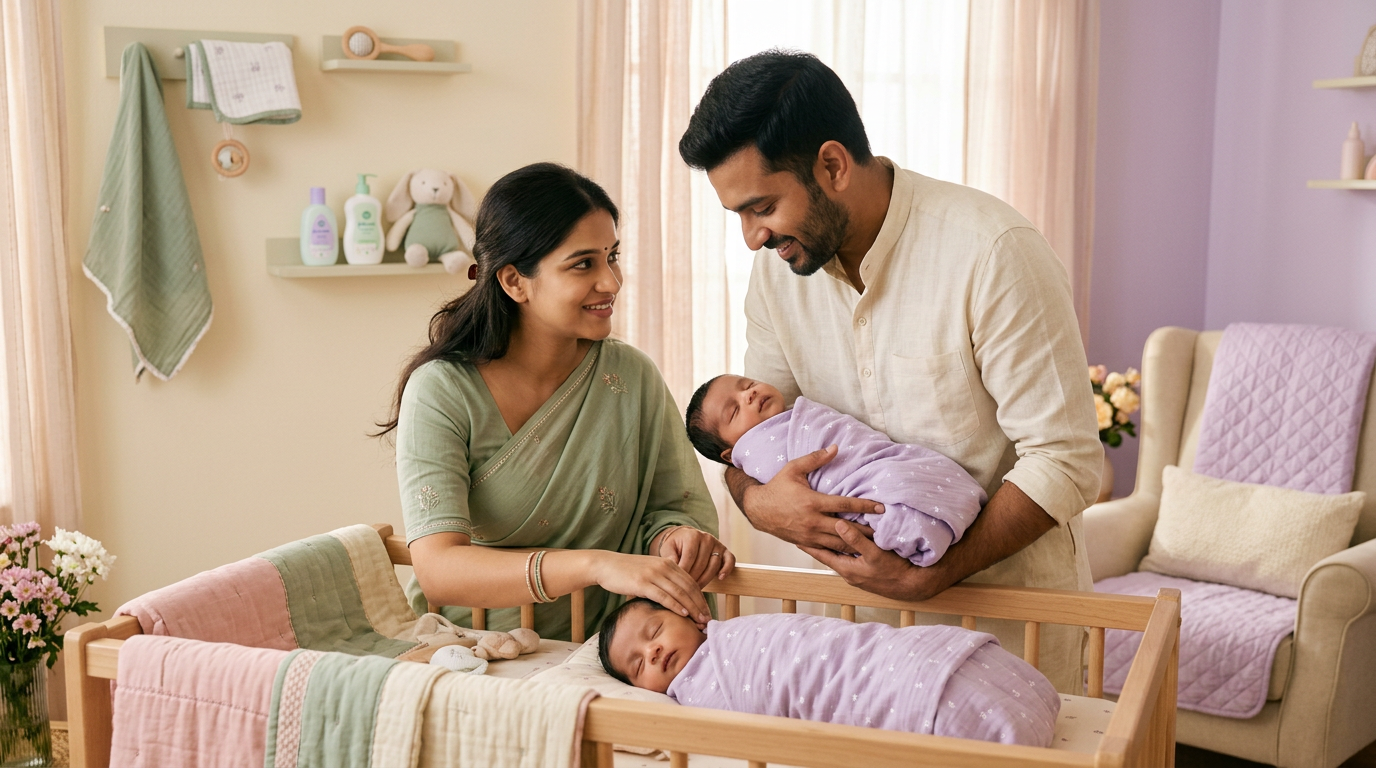
Before your little jaan arrives, the nesting instinct kicks in hard. You might find yourself scrolling through international websites, adding fancy diaper pails and $200 wipe warmers to your cart. Stop right there. Preparing for a newborn in an Indian household requires a blend of modern safety and traditional wisdom. From the softest mulmul baby essentials to the right maalish oils that won't irritate sensitive skin, your shopping list needs to be practical, climate-conscious, and BIS-approved.
What are the must-have baby essentials for an Indian home?
In India, we deal with extreme humidity, dust, and the beautiful (but sometimes overwhelming) advice from Dadun and Nani. Your core kit should focus on breathable fabrics and high-quality baby hygiene products that suit our tropical weather. Forget the heavy strollers for now; focus on what happens in the first 40 days (Sawa Mahina).
1. The Clothing Kit (The Jhabla Rule)
Newborn skin is 30% thinner than ours. Skip the polyester "cute" outfits with sequins.
* Mulmul Jhablas: 10-12 thin cotton vests. They dry instantly and let the skin breathe.
* Cloth Langots: Even if you use diapers, give the baby "air time" with traditional padded tie-up nappies.
* Swaddle Wraps: Choose lightweight cotton or bamboo. Avoid heavy fleece unless you are in the peak of a Delhi winter.
* Cap, Mittens, and Booties: Even in summer, newborns lose heat through their heads. 2-3 sets are enough.
2. The Sleeping Setup
The Indian Academy of Pediatrics (IAP) recommends a firm, flat surface to prevent SIDS (Sudden Infant Death Syndrome).
Firm Mattress: Avoid soft, fluffy beds or razais* that sink.
Waterproof Mats (Quick Dry): You\u2019ll need at least 4. These are lifesavers during diaper changes or maalish* time.
* Mosquito Net: A pop-up net or a large one covering the entire crib/bed is non-negotiable in India to prevent Dengue and Malaria.
* Sleeping Bag/Cosi: Helpful for keeping the baby snug during night feeds without loose blankets.
Which baby care items are actually worth the investment?
As a paediatrician, I see parents spending thousands on "gadgets" while ignoring the basics. When selecting baby care items, look for the ISI mark or IS 4707 (Part 1 & 2) standards for cosmetic safety.
The Hygiene and Grooming Station
Maintaining hygiene is the biggest challenge in our dusty environment.
* Fragrance-free Wipes: Or better yet, large cotton balls/pads and warm water for the first month.
* Nasal Aspirator: A bulb syringe or manual suction tool is essential for those stuffy "milk noses."
* Soft Hairbrush: To gently manage cradle cap.
* Baby Nail Scissors: Do not use adult clippers; baby nails grow like weeds and are sharp enough to scratch their face.
The Bathing and Maalish Routine
* Massage Oil: Virgin Coconut oil or Sesame oil (cold-pressed) is generally best for Indian skin. Avoid mustard oil if your baby has sensitive skin or eczema.
* pH-Balanced Cleanser: Look for "Syndet" bars or liquid washes with a pH of 5.5.
Plastic Bather or Tubs: Makes it easier if you don't have a traditional Dai* coming over to help with the bath.
Building a medical kit: Newborn essentials India
You shouldn't be running to the local chemist at 2 AM. Your newborn essentials india list must include a "First Aid" box vetted by your doctor.
* Digital Thermometer: Rectal or underarm (axillary) is most accurate for infants.
* Colic Drops: Only to be used after consulting your paediatrician.
* Saline Nasal Drops: To clear congestion before feeding.
* Vitamin D3 Drops: A standard recommendation by the IAP for all breastfed infants (usually 400 IU daily).
* Antiseptic Liquid: For cleaning the umbilical cord area if advised, or for washing your own hands before handling the baby.
Feeding Essentials: Stanpaan and Beyond
Whether you are breastfeeding (stanpaan) or formula feeding, the right tools reduce stress for the mama.
* Breast Pump: A manual one is fine for occasional use; electric is better if you're returning to work.
* Feeding Pillow: Saves your back and neck during those marathon 40-minute sessions.
* Burp Cloths: Buy them in bulk (15-20). You will go through them faster than you think.
* Sterilizer: Essential for bottles and pump parts. If you don't want a machine, a large dedicated stainless steel pot for boiling works perfectly well (the old-school way!).
Real talk from Indian moms
> \"I bought 20 fancy onesies but my son lived in his grandfather's old soft dhoti-turned-jhabla for the first month. Don't overspend on clothes!\" — Ridhima, Delhi, Mom to 4-month-old.
> \"Invest in a good quality mosquito net. We live on the 10th floor in Mumbai and yet the mosquitoes are relentless. It\u2019s the most important piece of baby gear we own.\" — Ananya, Mumbai, Mom to 7-month-old.
> \"Keep a separate set of towels just for the baby\u2019s maalish. The oil never really leaves the fabric, so don't use your good guest towels!\" — Sowmya, Bengaluru, Mom to 1-year-old.
When to call your paediatrician
While you have your baby essentials ready, you also need to know when the "essentials" aren't enough:
* Fever: Any temperature above 100.4\u00b0F (38\u00b0C) in a newborn is an emergency.
* Poor Feeding: If the baby is not waking up for feeds or pushing the breast/bottle away consistently.
* Dehydration: Fewer than 6 wet diapers in 24 hours.
* Skin Changes: Yellowish tint in the eyes/skin (Jaundice) or a rash that looks like small blisters.
* Lethargy: If the baby is unusually drowsy or hard to wake.
Frequently Asked Questions
What are the most important baby care essentials for summer?
In Indian summers, the most important baby care essentials are light mulmul clothing, a high-quality mosquito net, and a talc-free dusting powder (only for skin folds, avoid the face). Hydration is key, but for babies under 6 months, this means more frequent breastfeeding, not water.
How many baby care items do I need before the delivery?
You don't need a nursery full of toys. Focus on 12 jhablas, 3-4 swaddles, 2 packs of newborn diapers, a basic grooming kit, and feeding supplies. You can always order more on Blinkit or Amazon once you know your baby's size and preferences.
Are traditional baby hygiene products like Ubtan safe?
While Ubtan (besan, haldi, malai) is traditional, it can be too abrasive for a newborn's delicate skin barrier. Many paediatricians suggest waiting until the baby is at least 3-6 months old. Stick to dermatologically tested, fragrance-free baby hygiene products for the first few months.
What should be in my travel kit for newborn essentials India?
A travel-friendly diaper bag should include: a portable changing mat, 5 diapers, wet wipes, a change of clothes, sanitiser for you, a nursing cover, and a plastic bag for soiled clothes or diapers.
Is a pacifier considered part of baby essentials?
Pacifiers are a personal choice. While they can soothe some babies, many Indian lactation experts suggest waiting until breastfeeding is well-established (usually 4-6 weeks) to avoid nipple confusion.
How do I choose the best baby care items for sensitive skin?
Look for products that are "paraben-free," "phthalate-free," and "hypoallergenic." In India, check if the product is BIS certified. Always do a patch test on the baby's leg before applying any new oil or lotion to the whole body.
Planning for your baby's arrival shouldn't feel like a chore. Focus on the basics that provide comfort and safety, and remember that your scent and touch are the only baby care essentials your little one truly craves. You are doing a great job, Mama.
I am enough for my baby, and my baby is enough for me.
Sources & further reading
- Indian Academy of Pediatrics (IAP) - Newborn Care Guidelines
- Bureau of Indian Standards (BIS) - Toy and Infant Safety
- World Health Organization (WHO) - Maternal and Newborn Health
Written by Dr. Anjali Mehta, MBBS, DCH (Paediatrics)
Reviewed by TheMamaCircle Editorial Team
Last updated: 13 June 2026
This article is for general information only and is not a substitute for personalised medical advice. Always consult your paediatrician or obstetrician for your specific situation.