Baby Fever Home Remedy: 5 Safe Indian Methods for Moms
Searching for a safe baby fever home remedy? Learn how to use lukewarm sponging, hydration, and light clothing to soothe your little one. Expert Indian tips inside.
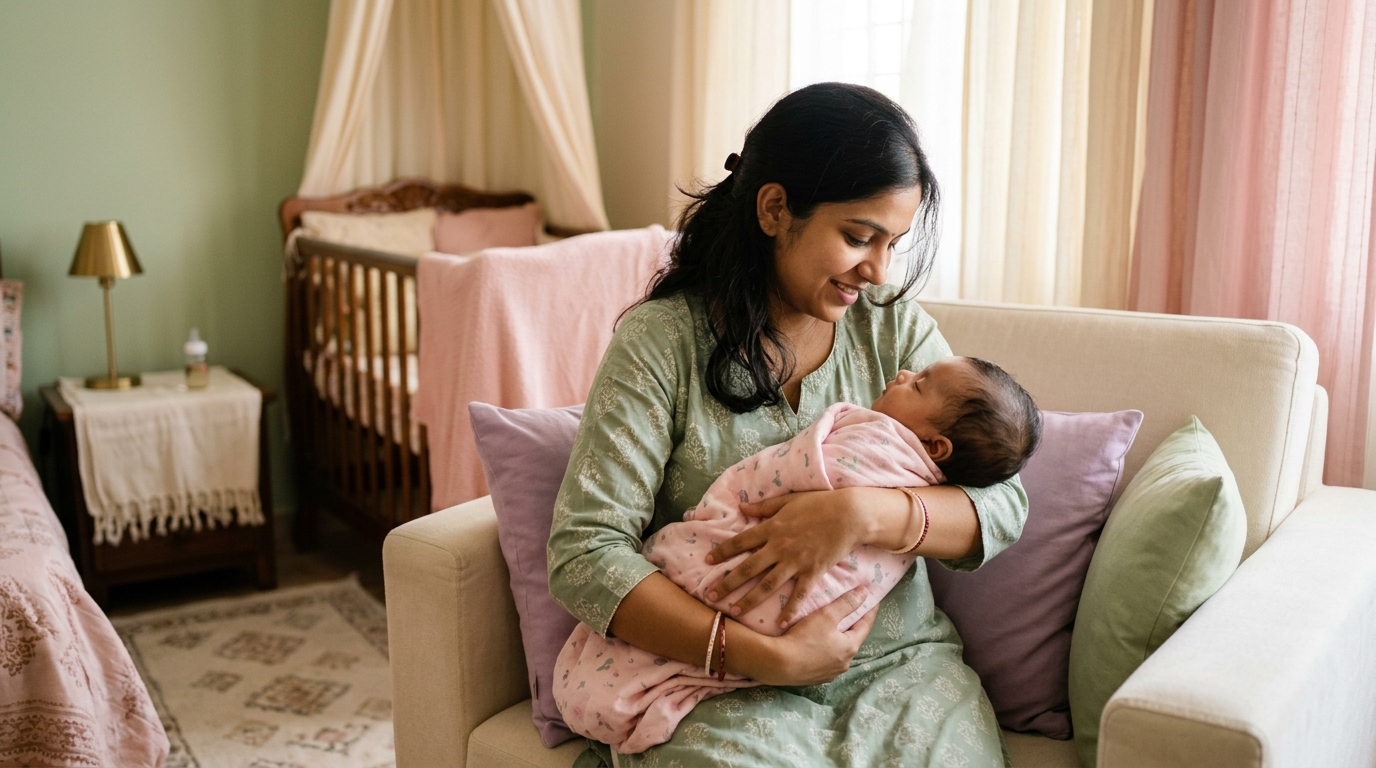
When your little one’s forehead feels like a hot tawa, panic is the first guest to arrive. While every baby fever home remedy aims to bring that temperature down, it is crucial to remember that fever is not the enemy—it is the body’s way of fighting off germs. For an Indian mom, the pressure from sasu maa to use specific herbs can be overwhelming, but safety always comes first. This guide focuses on evidence-based comfort measures and traditional Indian wisdom that align with Indian Academy of Paediatrics (IAP) guidelines to manage your baby's discomfort safely at home.
Understanding Fever in the Indian Context
In India, we often use the back of our hand to check a baby's temperature, but for accuracy, a digital thermometer is non-negotiable. A rectal temperature (for infants) or axillary (underarm) temperature above 100.4°F (38°C) is technically a fever. During the postnatal recovery period (also called postnatal), a mother's instinct is sharp, but hormonal shifts can make every warm forehead feel like an emergency. Before reaching for the medicine cabinet, ensure you are not over-bundling the baby in heavy blankets or woollens, a common mistake in North Indian winters.
The Most Effective Baby Fever Home Remedy: The Lukewarm Sponge
Forget the old-school ice-water or alcohol rubs; those cause shivering, which actually raises the internal body temperature. The gold standard for a baby fever home remedy is the Patti or lukewarm water sponging.
How to do it correctly:
* Water Temperature: Use plain tap water or slightly warm water. It should feel comfortable on your inner wrist.
The Technique: Use a soft cotton mulmul* cloth. Gently dab the forehead, armpits, and groin area. As the water evaporates from the skin, it naturally cools the body.
* Duration: 15 to 20 minutes is usually enough to see a slight drop in temperature and a significant increase in the baby's comfort.
* Stop if: The baby starts shivering. Shivering is the body’s way of generating more heat, which defeats the purpose.
Hydration and Feeding During a Fever
Fever leads to fluid loss through sweat and rapid breathing. Keeping your baby hydrated is the most vital home remedy for baby fever to prevent complications.
* For Babies under 6 Months: Exclusive breastfeeding is your best tool. Your milk contains specific antibodies and provides all the hydration needed. If you notice changes in your baby's crying patterns or fussiness during feeds, our AI cry analyzer might help you distinguish between hunger and pain.
For Babies over 6 Months: Offer small sips of water, coconut water (Nariyal Pani), or thin dal ka paani*. Avoid sugary packaged juices which can worsen dehydration if the baby has loose motions.
* The Saffron (Kesar) Myth: Some elders suggest rubbing Kesar on the forehead. While Kesar is cooling in Ayurveda, there is no clinical evidence it reduces systemic fever. Stick to hydration.
Dress Light and Regulate the Room
We often have a habit of wrapping babies in layers of dhoti or sweaters. If your baby has a fever, this traps heat.
How to Manage Accompanying Symptoms
Fever rarely comes alone. It often brings along a runny nose or a cranky tummy. While managing the heat, you might also need a baby cold and cough home remedy like saline drops to clear the nasal passage. If the fever is accompanied by gas or bloating, a gentle home remedy for baby stomach pain like a Hing (asafoetida) paste around the navel can soothe the baby, provided the skin is not broken.
Real Talk from Indian Moms
> "When my 8-month-old had his first fever after vaccinations, I was terrified. My mother-in-law wanted to wrap him in three blankets to 'sweat it out,' but I stuck to a light cotton onesie and frequent nursing. It worked much better!" — Megha R., Bengaluru (Mom to 10-month-old)
> "We use the lukewarm sponge method every time. It’s the only baby fever home remedy that actually calms him down enough to sleep. I also keep a baby growth chart handy to make sure his weight isn't dipping too much when he refuses solids during illness." — Pooja S., Delhi (Mom to 14-month-old)
When to Call Your Paediatrician
While home care is great for comfort, it is not a substitute for medical intervention. You must call your doctor immediately if:
* The baby is under 3 months old and has any fever.
* The fever exceeds 102.2°F (39°C) or lasts longer than 24-48 hours.
* Your baby is unusually drowsy, lethargic, or difficult to wake up.
* There is a persistent rash, frequent vomiting, or signs of dehydration (fewer than 6 wet nappies a day).
* The baby has a seizure (febrile convulsion).
* You notice the soft spot on the head (fontanelle) is bulging or sunken.
The Role of Medication
In India, Paracetamol (Crocin, Calpol) is the standard fever reducer. However, dosage is strictly based on the baby's current weight, not age. Never give Aspirin to a child due to the risk of Reye’s syndrome. Always consult your paediatrician before the first dose. If your baby is also struggling with bowel movements during this time, you can look into a home remedies for baby constipation but avoid mixing multiple medications without advice.
Summary of Safe Practices
* Keep it Cool: Lukewarm sponge, light clothes, airy room.
* Keep it Liquid: Breastmilk, ORS, or water (if over 6 months).
* Keep it Calm: Cuddle, skin-to-skin, and rest.
* Avoid: Ice water, heavy blankets, honey (under 1 year), and OTC meds without weight-based dosing.
Monitoring your baby's baby milestones tracker can also give you peace of mind; a baby who is meeting their developmental goals usually bounces back quickly from a standard viral fever.
Manage the comfort, monitor the symptoms, and trust your gut. You’ve got this, Mumma. Comfort your baby today, for this too shall pass.
Sources & further reading
- Indian Academy of Paediatrics (IAP) - Fever Guidelines
- World Health Organization (WHO) - Home Care for Children with Fever
- National Health Portal (NHP) India - Common Childhood Illnesses
Written by Dr. Anjali Mehta, MBBS, DCH (Paediatrics)
Reviewed by TheMamaCircle Editorial Team
Last updated: 11 September 2026
This article is for general information only and is not a substitute for personalised medical advice. Always consult your paediatrician or obstetrician for your specific situation.