Baby Skincare Routine India: Dermatologist-Backed Guide &
Master the baby skincare routine India parents trust. Learn how to handle heat rashes, choose the right maalish oil, and protect your baby's skin. Read more.
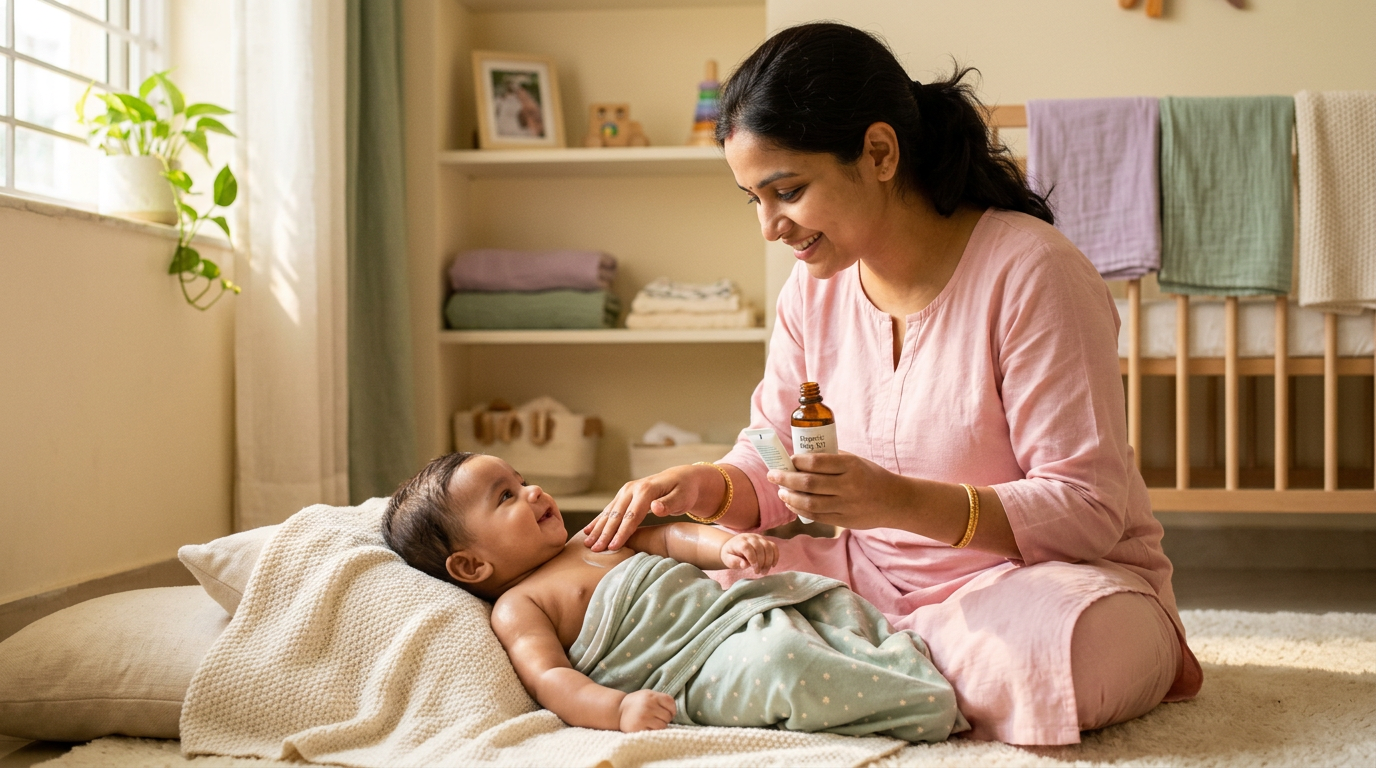
At my clinic in Mumbai, I once had a mother bring in her three-month-old who was covered in tiny red bumps. She was heartbroken, thinking it was a severe allergy. It turned out to be a classic case of 'over-layering'—too much thick mustard oil maalish followed by heavy blankets in 30-degree humidity. For an Indian baby, skincare isn't a 10-step luxury routine; it’s about protecting a barrier that is 30% thinner than ours against dust, heat, and dadi’s well-meaning but heavy-handed oil massages.
The simplest baby skincare routine in India follows a Cleanse-Moisturise-Protect framework, adjusted for our three distinct seasons.
Choosing the Right Products for Indian Skin
When you walk into a pharmacy or browse an app, the options are dizzying. In India, we have everything from ₹50 soaps to ₹1200 imported French creams. Here is what actually matters for your baby’s skin:
* PH-Neutral is Non-Negotiable: A baby’s skin is naturally slightly acidic (pH around 5.5). Using alkaline ‘Glycerine’ soaps or harsh detergents destroys this "acid mantle," leading to dryness and eczema. Look for "Syndet" bars or liquid washes.
* Fragrance is the Enemy: That "new baby smell" in powders and lotions is usually synthetic fragrance, a top cause of contact dermatitis in Indian infants. If it smells like a bouquet of roses, put it back.
The 'No-Paraben' Trap: While avoiding parabens is good, check for Methylisothiazolinone (MIT) or Phenoxyethanol*. Some "herbal" brands use these as preservatives, which can be irritating.
Recommended Ingredients
* Colloidal Oatmeal: Excellent for itchy, dry skin (common in North Indian winters).
Coconut Oil (Virgin/Cold-pressed): The gold standard for maalish* in India. It’s antimicrobial and light.
* Ceramides: Crucial for babies with a family history of atopy (asthma/eczema).
> Real Talk: Don't buy the "fairness" ubtans or soaps. A baby's complexion is determined by genetics, not a ₹200 scrub. Focus on health, not shade.
The Art of the Indian Maalish (Massage)
Massage is deeply ingrained in our culture, and for good reason—it aids weight gain and sleep. However, the technique and timing matter.
How do I manage baby skin in different Indian climates?
This is the North vs. South vs. Coastal dilemma. You cannot use the same routine in Delhi’s dry June and Chennai’s humid October.
Summer and Monsoon (The Humidity Battle)
Heat rash (Ghamori) is the biggest culprit here.
* Bath twice if needed: A quick lukewarm water rinse in the evening helps clear sweat.
* Skip the heavy creams: Switch to a light, water-based lotion or just a dusting of cornstarch-based (talc-free) powder in skin folds like the neck and thighs.
* Light Cotton only: Use 'Mulmul' or soft organic cotton. Synthetic "cute" party wear is for photos only; take it off immediately after.
Winter (The Dryness Battle)
In the North and Central India, the air gets brutally dry.
* Shorten the bath: 5-7 minutes is plenty. Long hot showers strip natural oils.
* The 3-Minute Rule: Apply moisturiser within 3 minutes of patting the baby dry, while the skin is still slightly damp.
* Humidify: If using a heater, keep a bowl of water in the room to prevent the air from drying out the baby's nasal passages and skin.
Dealing with the "Diaper Area"
In India, we often mix traditional cloth nappies (langots) with modern disposable diapers. Both have pros and cons.
* Langots: Breathable but stay wet against the skin. Change immediately after the baby pees. Use a mild, fragrance-free detergent and rinse twice to ensure no soap residue remains.
* Disposables: Great for outings and nights. Look for "criss-cross" absorbent layers.
* The Barrier Cream: You don't need it for every change. Use a Zinc Oxide-based cream only if you see redness. For daily use, a thin layer of plain coconut oil works wonders.
Real Talk from Indian Moms
"I spent a fortune on imported 'organic' ubtans. My daughter ended up with a massive fungal infection because the pulse-flour (besan) stayed damp in her neck folds. Now, it’s just plain water and a basic pharmacist-recommended wash."
— Riya, Delhi (Mom to 8-month-old Kabir)
"My MIL wanted to put kajal in the baby's eyes to 'protect him'. I had to show her an article from the IAP about lead poisoning and eye infections. We compromised by putting a small 'tikka' on his foot instead."
— Ananya, Bengaluru (Mom to 5-month-old Ira)
Case Study: Sunita and the "Winter Itch"
Sunita, a mom from Chandigarh, noticed her 4-year-old was scratching his legs until they bled every December. She was using a popular "baby soap" and a thin almond oil. We switched the soap to a non-soap cleanser and replaced the oil with a thick, ceramide-rich cream applied on damp skin. Within 10 days, the scratching stopped. The lesson? In Indian winters, oils often sit on top of the skin, while creams actually repair the barrier.
When to call your paediatrician
While most rashes are "normal," some need medical intervention. Call your doctor if:
* The rash looks like yellowish crusts or blisters (could be Impetigo).
* The skin feels hot to the touch or the baby has a fever.
* The rash is in the shape of a ring (fungal infection).
* Eczema patches are oozing or bleeding.
* A diaper rash doesn't improve after 3 days of barrier cream and air-time.
Frequently Asked Questions
Can I use Besan and Malai for my baby’s skin?
While traditional, besan (gram flour) can be too abrasive for a newborn’s thin skin, creating micro-tears. Malai is a great moisturiser but can clog pores in humid weather, leading to baby acne. If you must use it, wait until the baby is at least 6 months old and use it only on the limbs, not the face.
Is it safe to use Kajal (Kohl) in India?
No. The Indian Academy of Pediatrics (IAP) strongly advises against it. Most commercial and home-made kajal contains lead, which can be absorbed into the bloodstream. It also increases the risk of conjunctivitis and lacrimal duct blockage.
Should I use talcum powder for heat rash?
Avoid traditional talc. The fine particles are a respiratory hazard if inhaled. Use a cornstarch-based powder and instead of shaking it onto the baby, shake it into your hand away from the baby, then pat it onto the skin folds.
How often should I bathe my baby in India?
In most parts of India, 2-3 times a week is sufficient in winter. During the hot, dusty summer months, a daily bath is fine, provided you use a soap-free cleanser.
Why does my baby have "cradle cap" (crusty scalp)?
It’s common and not due to poor hygiene. It’s caused by maternal hormones. Don't pick at it. Massage a little coconut oil onto the scalp, wait 20 minutes, and gently brush away the flakes with a soft baby brush before washing with a mild shampoo.
Can I use Neem water for baby's bath?
Neem has excellent antifungal properties. Adding a few leaves to warm water is a common Indian practice and is generally safe for babies over 3 months, provided the water is strained well. It’s particularly helpful during the humid monsoon "itchy" season.
Skincare for your little one is less about the brand name and more about the ingredients and the weather outside. Keep it simple, keep it fragrance-free, and always remember: a happy baby is better than a "fair" baby.
Your baby’s skin is their first line of defence; keep it soft, keep it strong.
Sources & further reading
- Indian Academy of Pediatrics (IAP) — Guidelines on Newborn Care
- World Health Organization (WHO) — Skin care of the newborn
- AIIMS — Pediatric Dermatology Protocols
- National Health Portal (NHP) India — Neonatal Health
Written by Dr. Anjali Mehta, MBBS, DCH (Paediatrics)
Reviewed by TheMamaCircle Editorial Team
Last updated: 12 May 2026
This article is for general information only and is not a substitute for personalised medical advice. Always consult your paediatrician or obstetrician for your specific situation.