Baby Skincare Routine India: Dermatologist Guide & Chart
Master baby skincare in India with Dr. Anjali Mehta. From monsoon heat rash to winter dryness, get the best routine, product tips & real talk for Indian moms.
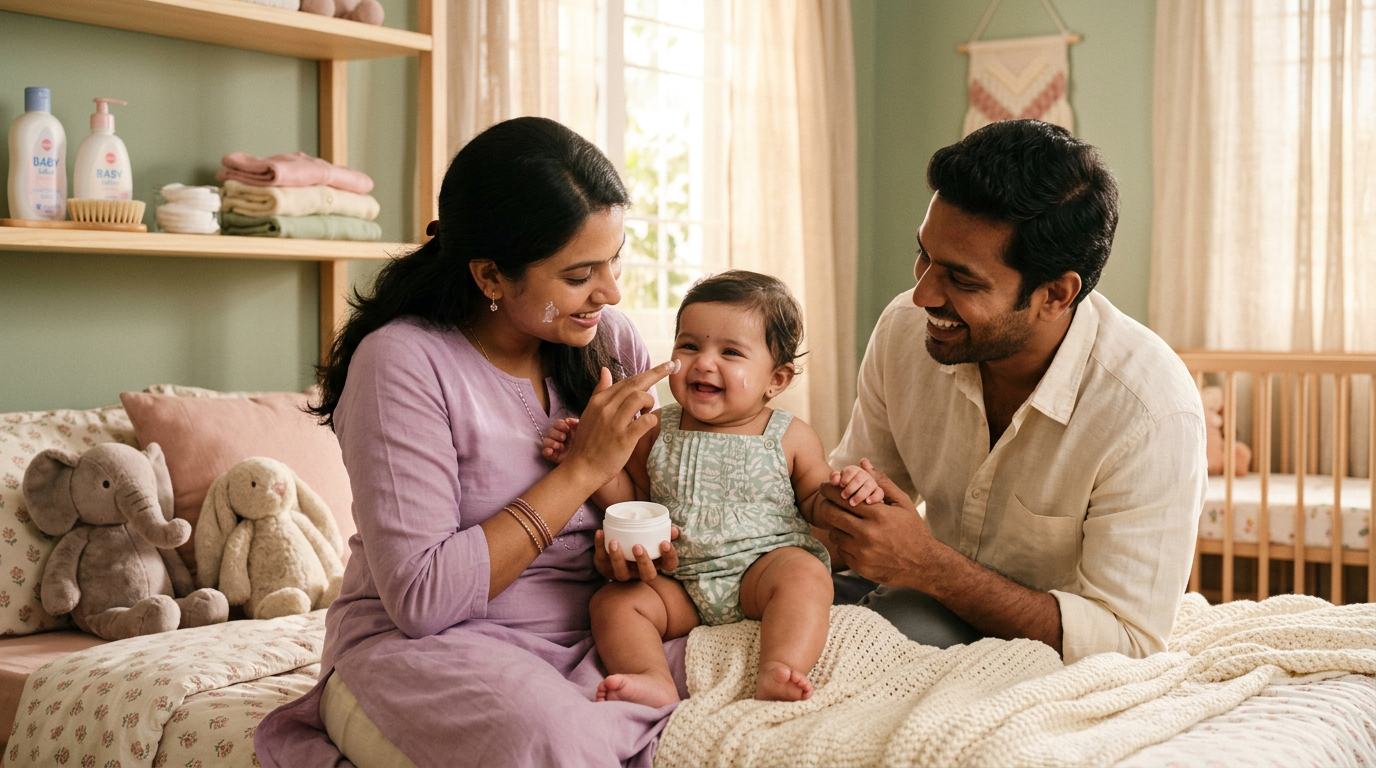
A baby’s skin is 30% thinner than ours, and in India, it faces a unique trifecta of challenges: brutal humidity, intense UV rays, and the well-meaning but sometimes harsh traditional practices like vigorous maalish. The best baby skincare routine in India is one that respects the skin barrier while adapting to our changing seasons. To keep the skin healthy, you only need three things: a pH-neutral cleanser, a barrier-repair moisturiser, and a mineral-based sunscreen (for babies over 6 months).
The 3-Step Foundation: Cleanse, Moisturise, Protect
Most Indian moms think they need a ten-step routine, but the "less is more" rule is gold here. Whether you are dealing with Delhi’s dry winters or Mumbai’s sticky monsoon, these basics remain the same.
1. The Bathing Blueprint
Skip the boiling hot water. Use lukewarm water (around 37°C) and limit baths to 5–10 minutes.
The Product: Look for "syndet" bars or liquid cleansers with a pH of 5.5. Avoid traditional besan (gram flour) or ubtan* every day, as these can strip the natural oils and cause micro-tears in delicate skin.
* Brand Examples: Sebamed Baby Wash (approx. ₹400-600) or Cetaphil Baby Gentle Wash (approx. ₹600-800). For a more budget-friendly option, Himalaya Extra Gentle Baby Wash (approx. ₹150-250) is widely accessible.
2. Moisturising: The "Three-Minute Rule"
Apply moisturiser within three minutes of patting the baby dry. This locks in the moisture from the bath.
* Summer/Monsoon: Use light lotions or gels.
* Winter: Switch to thick creams or white paraffin-based ointments.
* Real Talk: If your baby’s skin feels like sandpaper or they have "chicken skin" bumps (keratosis pilaris), you likely need a cream containing ceramides.
3. Sun Protection in the Tropics
The Indian sun is no joke. For babies under 6 months, keep them in the shade and use breathable cotton clothing + a wide-brimmed hat. For babies 6 months and older:
* Use a mineral sunscreen containing Zinc Oxide or Titanium Dioxide. These sit on top of the skin rather than absorbing into it.
* Indian Brand Tip: La Shield Fisico or Mamaearth Mineral Sunscreen (ensure it’s the mineral version) are popular choices.
How do I manage baby skincare in India’s changing climate?
Our climate isn't one-size-fits-all, so your diaper bag shouldn't be either.
The Dry North Indian Winter
In places like Punjab or Delhi, the air gets incredibly dry. This is when atopic dermatitis (eczema) flares up.
* The Maalish Hack: Traditional mustard oil (sarson ka tel) can be too heating and irritating for many babies. Switch to virgin coconut oil or pressed almond oil. If the baby has eczema, avoid food-based oils entirely as they can trigger allergies; use mineral oil (liquid paraffin) instead.
* Humidify: Use a humidifier if you are running a heater all night.
The Humid Coastal Summer
In cities like Chennai or Kochi, sweat is the enemy. It leads to gharmori (heat rash).
* Skip the Powder: We grew up with Ponds and Johnson’s powder clouds, but the IAP (Indian Academy of Pediatrics) advises against it. If inhaled, it’s bad for the lungs. If it mixes with sweat, it pastes into skin folds, causing fungal infections.
* The Alternative: Use a light calamine lotion or simply bathe the baby twice with plain water to keep pores clear.
The Sticky Monsoon
Fungal infections peak when the humidity is high. Ensure the "creases"—behind the knees, the neck, and the diaper area—are bone dry before putting on clothes.
The Art of the Indian Maalish (Massage)
Maalish is a beautiful bonding ritual, but it needs an update for the 21st century.
* Pressure: It should be a rhythmic stroke, not a deep-tissue workout. If your baby is crying, the pressure is too much.
* Wait Time: Don’t leave massage oil on the skin for hours. It attracts dust and clogs pores. Massage the baby, let it sit for 15-20 minutes, and then wash it off.
* Oil Selection:
* Coconut Oil: Great for most Indian skin types, naturally antimicrobial.
* Olive Oil: Use with caution; some studies suggest it can weaken the skin barrier in prone infants.
* Mustard Oil: Traditional, but can be a skin irritant (dermatitis) and too heavy for summer.
> Mama-to-Mama: Real Talk
> "I spent a fortune on imported French baby creams, only to realise my daughter’s heat rash was actually caused by the heavy cream itself in the Mumbai humidity. I switched to a simple aloe-based light lotion and her skin cleared in two days. Expensive doesn't always mean better for our weather!" — Purnima, Mumbai, Mom to a 9-month-old.
The Diaper Area: Prevention over Cure
Diaper rash is almost inevitable in India’s heat.
* The "Air Time" Rule: Give your baby at least 30 minutes of "nanga punga" (diaper-free) time every day.
* Wipes vs. Cotton: Avoid wipes with fragrance or alcohol. Best practice? Use cotton wool dipped in plain water. Save the wipes for when you are at the mall or traveling.
* Barrier Cream: Use a thick layer of zinc-oxide-based cream (like Rashfree or Desitin) at every night-time diaper change. It should look like frosting on a cake—you shouldn't be able to see the skin through it.
Case Study: Ananya’s "Natural" Mistake
Ananya, a mom from Bengaluru, noticed her 4-month-old had very dry cheeks. Following her mother-in-law’s advice, she applied fresh malai (milk cream) daily. Within a week, the baby developed angry red crusts. This turned out to be infected eczema.
The Lesson: While "natural" sounds safe, kitchen ingredients like malai or honey can harbour bacteria or act as allergens. When the skin barrier is broken (dryness), it's safer to use a sterile, dermatologically tested baby moisturiser than food products.
Real Talk from Indian Moms
"Everyone told me to use besan and haldi to remove baby hair. My poor son turned bright red and started itching. My paediatrician told me that baby hair (lanugo) falls off on its own by 6 months. Please don't scrub your babies!"
— Ishani, Kolkata, Mom to a 1-year-old
"In the South, we use coconut oil for everything. It worked wonders for my baby's cradle cap. I just applied it 20 minutes before a bath and gently brushed the flakes away with a soft comb. Simple is best."
— Lekha, Hyderabad, Mom to a 5-month-old
When to call your paediatrician
While most rashes are "normal," some need medical intervention (especially if you need a steroid or antifungal cream). Call the doctor if:
* A rash develops yellow crusts or pus (sign of a bacterial infection).
* The baby has a fever along with a new rash.
* A diaper rash doesn't improve after 3 days of using barrier cream.
* The rash is in the form of small blisters (could be viral).
* The baby is excessively fussy or not feeding well due to skin itchiness.
Frequently Asked Questions
Can I use soap every day on my baby?
In India, we tend to bathe babies daily because of the heat. However, you don't need soap every time. "Water-only" baths are fine 2-3 times a week, using a gentle cleanser only for the "stinky bits" (diaper area, underarms, and neck) on the other days.
Which oil is best for baby massage in India?
For most climates, Virgin Coconut Oil is the gold standard. In very cold winters, Almond Oil or a specialised baby massage oil (like Figuro) works well. Avoid mustard oil if your baby has sensitive skin.
Is talcum powder safe for babies?
The consensus among modern paediatricians is to avoid talcum powder. It poses a respiratory risk if the fine dust is inhaled. If you must use a powder, choose a cornstarch-based one and put it on your hands first, away from the baby’s face, then pat it onto the skin.
How do I treat heat rash (Gharmori) at home?
Keep the baby in a cool environment, use loose cotton clothes (mulmul is best), and apply a cool compress. Avoid heavy oils or creams on the rash area. If it's very itchy, a doctor-prescribed calamine lotion can help.
How do I identify a fungal diaper rash?
A normal diaper rash is usually just redness on the "flat" surfaces. A fungal (yeast) infection is usually bright red, has "satellite" red spots slightly away from the main area, and sits deep in the skin folds. This requires a specific antifungal cream from your doctor.
Are "organic" products always better?
Not necessarily. "Organic" is a marketing term. Some organic products contain essential oils (like lavender or citrus) which can be highly irritating to an infant's skin. Look for "fragrance-free" and "paraben-free" rather than just "organic."
Your baby’s skin is their first line of defence against our vibrant, dusty, sunny, and humid country. Keep it simple, keep it dry, and trust your gut over the "advice" from every aunty at the park.
Repeat after me: My baby's skin does not need to be 'scrubbed' to be clean.
Sources & further reading
- Indian Academy of Pediatrics — Guidelines on Newborn Skin Care
- Indian Journal of Paediatric Dermatology — Skin Care for the Newborn
- World Health Organization — Training Course on Child Growth Assessment
- National Health Portal of India — Infant and Young Child Feeding and Care
Written by Dr. Anjali Mehta, MBBS, DCH (Paediatrics)
Reviewed by TheMamaCircle Editorial Team
Last updated: 16 May 2026
This article is for general information only and is not a substitute for personalised medical advice. Always consult your paediatrician or obstetrician for your specific situation.