Baby Skincare Routine India: Doctor's Guide & Chart
Expert guide to baby skincare in India. Learn the best products, monsoon vs winter tips, and why 'Maalish' matters. Give your baby the care they deserve.
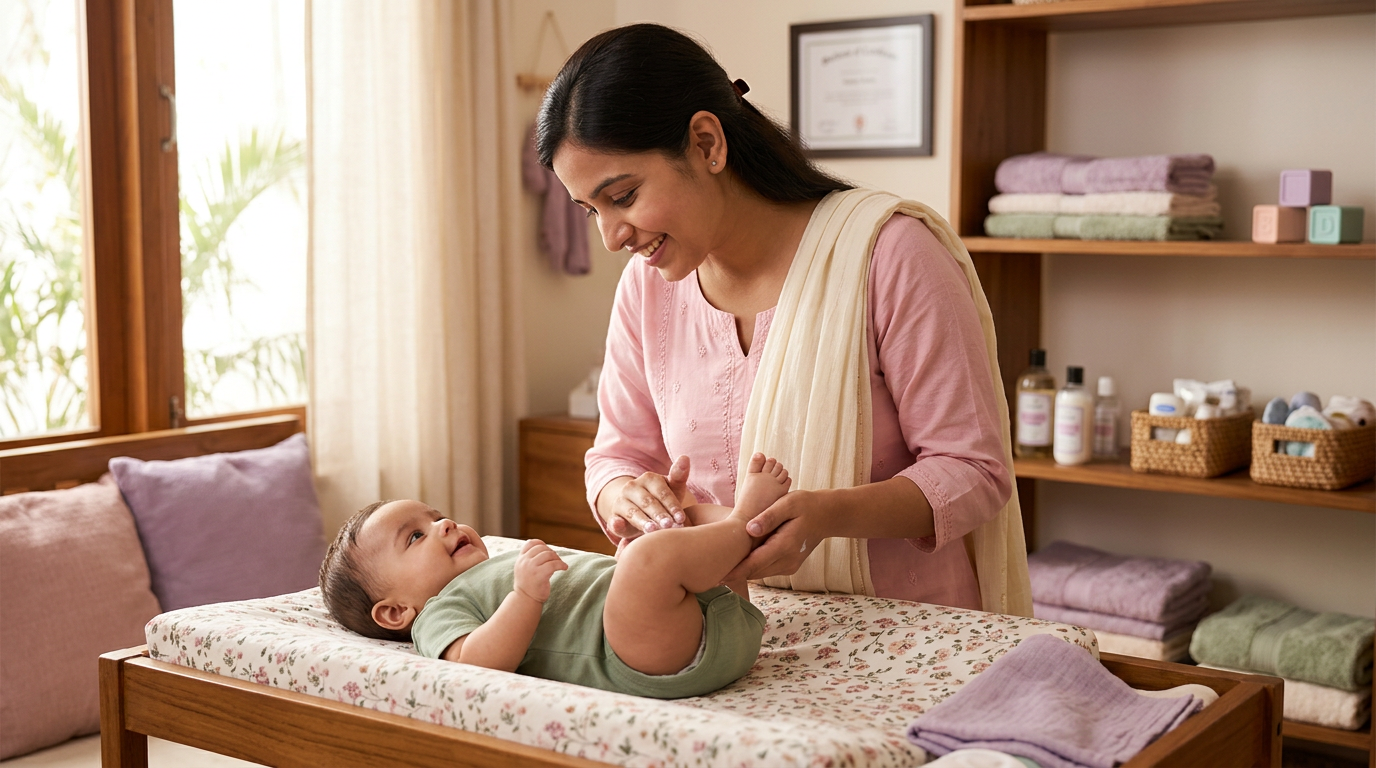
My first winter as a mother in Delhi, I did exactly what my nani told me: I massaged my son with thick mustard oil and kept him wrapped in two layers of wool. By day three, he was covered in tiny red heat bumps. I was a paediatrician, and I’d still fallen into the trap of 'tradition over climate'. The truth is, a baby skincare routine in India isn't about the priciest French cream; it is about managing humidity, harsh sun, and the delicate Indian skin barrier that is prone to prickly heat and dryness.
How to Build a Real-World Indian Baby Skincare Routine
The Indian skin barrier is structurally thinner than adult skin and loses moisture faster. Whether you are in the humid coastal heat of Mumbai or the dry winters of Chandigarh, your routine should follow the 'Cleanse, Moisturize, Protect' triad, but with a local twist.
1. The Maalish (Massage) Ritual
Massage isn't just about bones; it’s the first step in skincare. The Indian Academy of Pediatrics (IAP) highlights that massage improves skin barrier function if done with the right oil.
* What to use: In summer/monsoon, use light oils like virgin coconut oil (easily available, antifungal). In winter, olive oil or sesame oil (til tel) works well.
* What to avoid: Avoid mustard oil (sarson) on newborns as it can be too pungent and irritating. Never put oil in the ears, nose, or navel (umbilicus)—this is a common cause of infections in Indian nurseries.
Timing: Always massage before* a bath, not after. You want to wash away the excess oil so it doesn't clog pores and cause 'ghamauri' (prickly heat).
2. Bathing Without Stripping Moisture
We often over-bathe babies in India because of the sweat and dust.
* Water Temperature: Keep it 'luke-warm' (around 37°C). If it’s too hot for your elbow, it’s too hot for the baby.
The Soap Debate: Use a syndet bar (synthetic detergent) or a liquid wash with a pH of 5.5. Traditional ubtan* (besan and turmeric) can be too abrasive for daily use on newborns and may cause micro-tears.
* Duration: Keep baths under 5-10 minutes.
3. Moisturising: The 3-Minute Rule
Apply moisturiser within three minutes of patting the baby dry. This locks in the hydration from the bath.
* Texture matters: Use a light lotion for humid climates and a thick cream/ointment for dry winters or if your baby has eczema (atopic dermatitis).
* Look for: Ceramides, glycerin, or shea butter. Avoid heavy fragrances which are the #1 cause of contact dermatitis in Indian infants.
What are the best baby skincare products in India?
Parents often ask me if they should buy imported brands or stick to Indian ones. The "best" product is one that is fragrance-free, paraben-free, and fits your monthly budget (because you will use a lot of it!).
* Pharmacy Picks (Reliable & Budget-friendly): Brands like Atogla, Tedibar, and Cetaphil Baby are dermatologist favourites because they focus on pH balance rather than 'smelling like a baby'.
* Consumer Standards: Look for the IS 9873 mark on any accessories and ensure creams are FSSAI/CDSCO regulated.
* The 'Natural' Trap: Just because a label says 'Ayurvedic' doesn't mean it’s safe for a 2-month-old. Many 'natural' products contain essential oils like lavender or citrus which can sensitise young skin.
> Mama-to-mama Real Talk:
> I know the pressure to use 'Janum Ghutti' or 'Ubtan' from your mother-in-law is immense. One way to handle this? Tell her, "The doctor said his skin is a bit too sensitive for besan right now, let's wait until he's a bit older." It shifts the 'blame' to us doctors and saves your peace of mind!
Adapting to the Indian Climate
Our weather changes every 300 kilometres. Your routine must be fluid.
* The Coastal/Humid Routine (Mumbai, Chennai, Kolkata): Focus on preventing prickly heat. Use a very light, water-based lotion. Use a talc-free dusting powder (cornstarch-based) only on skin folds like the neck and thighs, but never puff it near the baby’s face as they can inhale the particles.
* The North Indian Winter Routine: Central heating and room heaters dry out the air. Use a cool-mist humidifier and apply a thick barrier cream at least thrice a day.
* The Monsoon Routine: This is 'fungal season'. Keep the diaper area bone-dry. Give the baby 'air time' without a diaper for at least 20 minutes, 3 times a day.
Case Study: Ananya’s "Mysterious Rash"
Ananya, a mom from Bengaluru, noticed her 4-month-old had rough, red patches on his cheeks every time they visited her parents in dry Hyderabad. She thought it was a food allergy. It turned out to be "Windburn" and dryness. By switching from a light lotion to a thick ceramide-based cream (like Venusia or Aveeno) specifically for the trip, the rash cleared in 48 hours without any medicated ointments.
Real talk from Indian moms
"I stopped using soap every day. In the peak of Bengaluru 'winter', I only use plain water for his body and soap only for the diaper area. His dry skin patches vanished!"
— Meghna R., Bengaluru (Mom to 8-month-old)
"The best advice I got was to stop using those scented baby wipes for everything. Now I use plain cotton balls and warm water for diaper changes at home. No more rashes."
— Sana K., Lucknow (Mom to 1-year-old)
When to call your paediatrician
While most skin issues are heat-related, some need a prescription. Contact us if you see:
* Pus-filled bumps: This could be a bacterial infection (impetigo) common in Indian summers.
* Rashes in the mouth or on palms: Could be Hand, Foot, and Mouth Disease (HFMD).
* Bleeding or oozing skin: Especially in the folds of the neck or groin.
* A rash accompanied by fever: This is always an urgent call.
* Yellowish, crusty scales on the head: This is likely Cradle Cap (Seborrheic Dermatitis). While harmless, don't pick at it; ask for a specific oil/shampoo.
Frequently Asked Questions
Is it safe to use Kajal (Kohl) on a baby's eyes?
No. Medical bodies including the AIIMS and IAP strongly advise against it. Traditional kajal often contains lead, which can be absorbed into the bloodstream. It also increases the risk of conjunctivitis and blocked tear ducts.
Does 'Ubtan' make a baby's skin fairer?
No. A baby’s skin tone is determined by genetics (melanin). Ubtan is a physical exfoliant. Using it harshly to 'remove hair' or 'lighten skin' can damage the delicate skin barrier and cause infections. Embrace your baby's natural glow!
How do I treat 'Ghamauri' (Prickly Heat)?
The best cure is cooling. Dress the baby in loose, single-layer cotton (Mulmul is great). Use a calamine-based lotion if it's very itchy, and keep the baby in a well-ventilated room. Avoid heavy oils until the bumps subside.
Can I use my own moisturiser on the baby?
Adult skin products often contain retinols, AHAs, or heavy fragrances that can migrate and cause chemical burns on infant skin. Stick to products specifically formulated for babies or those labelled 'fragrance-free and hypoallergenic' for sensitive skin.
Should I use sunblock on my 3-month-old?
The WHO recommends keeping babies under 6 months out of direct sunlight entirely. Use physical barriers like umbrellas, hats, and full-sleeve cotton clothes. For babies over 6 months, use a mineral sunscreen (containing Zinc Oxide or Titanium Dioxide) which sits on top of the skin rather than being absorbed.
Your baby’s skin is their first line of defence against the world. Keep it simple, keep it clean, and don't let the 'log kya kahenge' pressure dictate what you put on that precious face.
Remember: A happy baby skin routine is 10% product and 90% common sense.
Sources & further reading
- Indian Academy of Pediatrics — Guide on Newborn Care and Massage
- World Health Organization — Skin care for the neonate
- AIIMS Delhi — Department of Paediatrics Neonatal Protocols
- National Health Portal (NHP) India — Prickly Heat Management
Written by Dr. Anjali Mehta, MBBS, DCH (Paediatrics)
Reviewed by TheMamaCircle Editorial Team
Last updated: 30 April 2026
This article is for general information only and is not a substitute for personalised medical advice. Always consult your paediatrician or obstetrician for your specific situation.