Baby Sleep Schedule by Age: India Guide & Charts 0-2 Years
Struggling with baby sleep? This India-centric guide covers wake windows, maalish routines, and age-wise charts from newborn to age 2. Learn more today.
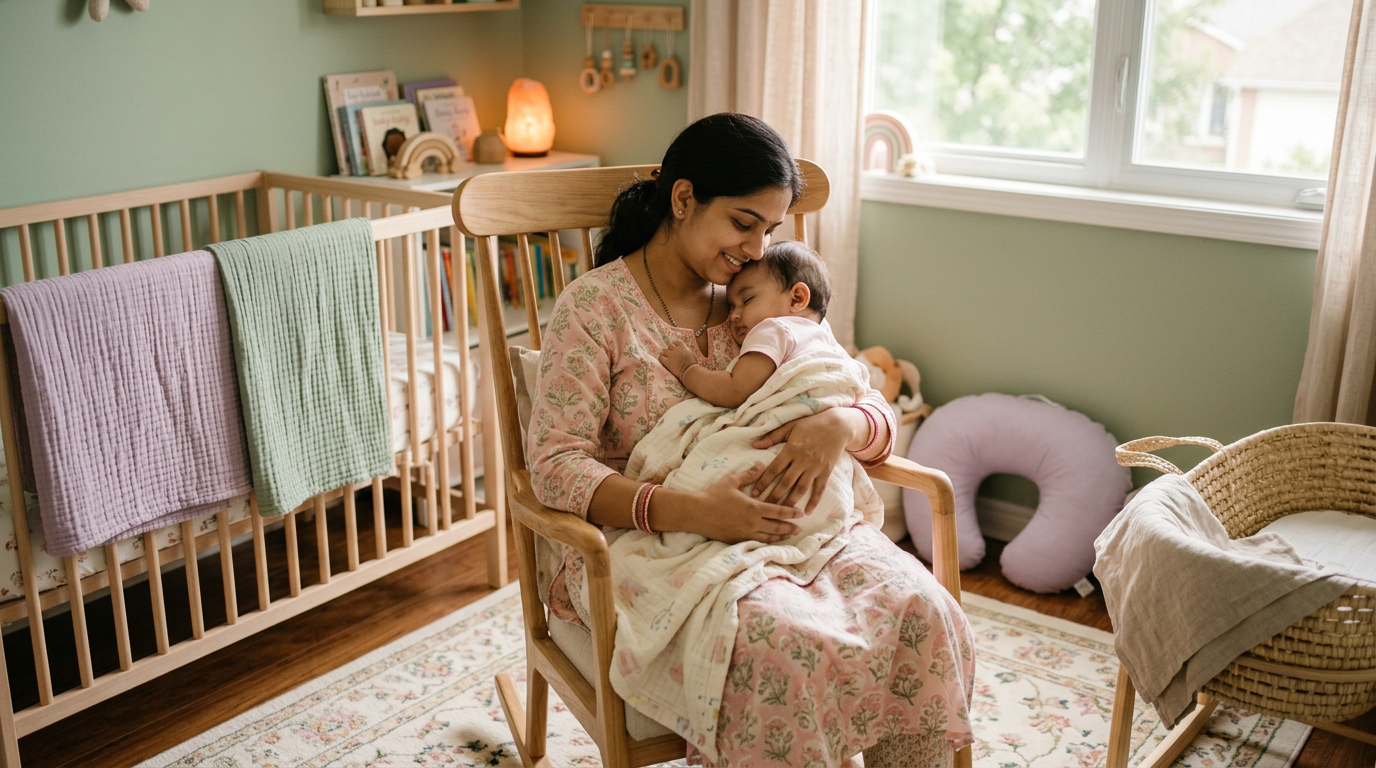
At 3 a.m. in a quiet apartment in Mumbai, I once found myself rocking my screaming four-month-old while my sasu maa whispered from the doorway that the baby was clearly 'nazar-ed' and needed a black thread. The reality? My son was just overtired because I’d missed his sleep window by twenty minutes. If you are wondering when your baby will finally sleep through the night, here is the short answer: most babies start lengthening their night sleep around 4 to 6 months, but a "schedule" in India is less about a rigid clock and more about mastering the rhythm of naps, maalish, and feeding.
The Newborn Phase (0–3 Months): The 'Fourth Trimester' Chaos
During the first twelve weeks, forget the clock. Your baby doesn’t know the difference between day and night because their melatonin production hasn't kicked in yet. In Indian households, this period is often a whirlwind of jaappa (postpartum recovery), visiting relatives, and constant feeding.
What to expect:
* Total Sleep: 14–17 hours in a 24-hour cycle.
* Wake Windows: 45 to 90 minutes. This is the time they spend awake between naps, including feeding and diaper changes.
* The Routine: Focus on "Day/Night Confusion." Keep the room bright and noisy during the day (yes, keep the pressure cooker whistle going!) and pitch dark and boring at night.
Real talk: The "Maalish" Factor
In India, the traditional maalish (massage) by a dai or yourself is a powerful sleep tool. A warm oil massage followed by a lukewarm bath is scientifically proven to lower cortisol. If your baby is fussy, try scheduling the maalish about 30 minutes before their longest midday nap.
4 to 6 Months: The Great Sleep Regression and Routine
This is the "turning point." Around 4 months, a baby’s sleep architecture changes to become more like an adult's. This often leads to the dreaded 4-month sleep regression.
A typical 5-month-old schedule:
* 7:00 AM: Wake up and first feed.
* 8:30 AM: Nap 1 (usually the most reliable nap).
12:00 PM: Nap 2 (after the maalish* and bath).
* 3:30 PM: Nap 3 (the "catnap" to bridge to bedtime).
* 7:30 PM: Bedtime routine (Feed, burp, swaddle/sleep sack, sleep).
> Mama-to-Mama Tip: Don't let your baby fall asleep on the breast or bottle every single time. Try to put them down "drowsy but awake." If they only know how to fall asleep while sucking, they will cry for that same comfort every time they stir at night.
7 to 12 Months: Dropping Naps and Solid Food
By now, many Indian babies are starting solids—ragi kanji, mashed banana, or dal ka paani. This affects sleep! A full tummy often leads to better stretches, but teething and crawling milestones might cause temporary setbacks.
The Nap Transition:
Most babies move from 3 naps to 2 naps around 7-9 months.
* Wake Window: 2.5 to 3.5 hours.
* Night Sleep: 10–12 hours (with 1-2 night feeds, which is perfectly normal in our climate).
Case Study: Ananya from Bengaluru
Ananya’s 8-month-old kept waking up at 10 p.m., ready to play. We realised her baby’s third nap was happening too late (5 p.m. to 6 p.m.). By shifting the afternoon nap earlier and cutting the third nap entirely, her baby started sleeping until 6 a.m.
1 to 2 Years: The Toddler Transition
Between 14 and 18 months, your toddler will likely drop to just one midday nap. This is the era of "nap strikes" and "bedtime battles."
The 1-Nap Schedule:
* Wake up: 7:30 AM.
Nap: 1:00 PM – 3:00 PM (usually after a lunch of khichdi* or curd rice).
* Bedtime: 8:30 PM.
Real talk: The Joint Family Challenge
Living in a joint family means well-meaning relatives might want to play with the baby at 9 p.m. You have to be the "bad cop" here. A toddler who stays up late to see Chacha or Dadi will be overtired and actually sleep worse. Explain firmly that "Baby’s brain grows while sleeping" to get the elders on board.
"How do I get my Indian baby to sleep through the night?"
This is the question I get most in my clinic. In India, "sleeping through the night" is culturally interpreted differently. Many of us co-sleep (bed-sharing or side-car cribs).
Practical steps for better nights:
Real Talk from Indian Moms
"My mother-in-law thought I was being 'modern' and cruel by putting my 6-month-old in a separate cot. It took two weeks of showing her how much happier the baby was after a 12-hour sleep for her to agree." — Megha, Delhi, Mom to 8-month-old.
"The 'Evening Jhoola' was my enemy. My daughter would only sleep if rocked in the cloth swing. We had to slowly transition her to the bed over a month because my back couldn't take it anymore!" — Kavita, Pune, Mom to 18-month-old.
When to call your paediatrician
While sleep issues are usually behavioural, sometimes there is a medical cause. Consult us if:
* Your baby snores loudly or seems to struggle to breathe (could be adenoids/tonsils).
* They are waking up more than 4-5 times a night after age 1.
* Extreme restlessness or "head banging" to fall asleep.
* Excessive sweating during sleep even in a cool room (can sometimes indicate Vitamin D deficiency or anaemia).
* Your baby is not gaining weight despite sleeping long hours.
Frequently Asked Questions
1. Is it okay to use a ghodiyu or jhoola for all naps?
While traditional, a jhoola is not recommended for unsupervised sleep or overnight sleep by modern safety standards due to the risk of chin-to-chest positioning which can restrict airways. Use it for supervised soothing, but try to transition to a flat, firm surface for deep sleep.
2. My baby only sleeps while breastfeeding. Is this bad?
It's not "bad," but it is a sleep association. If you are exhausted, try to break the association by having the father or another caregiver do the final part of the bedtime routine (holding/rocking) after the feed is over.
3. Should I give my baby Janum Rakthi or other gripe waters to help them sleep?
No. Never give any sedation or herbal mixtures for sleep unless prescribed by a doctor. Many traditional "sleep aids" contain alcohol or unverified herbs that are unsafe for a baby’s developing liver.
4. At what age should a baby stop night feeds?
Most babies are physically capable of going 6–8 hours without a feed by 6-9 months (if they are growing well), but many Indian moms choose to continue one night feed until age 1. It is a personal choice based on your baby’s growth chart.
5. How do I handle co-sleeping safely?
If you share a bed, use a firm mattress (no soft toppers). Keep pillows and heavy rajais (quilts) away from the baby. Use a light cotton sheet instead. Ensure the baby cannot fall through a gap between the mattress and the wall.
6. Does formula help babies sleep longer than breast milk?
There is no conclusive evidence that formula leads to better sleep. While formula takes longer to digest, sleep is a developmental milestone related to the brain, not just the stomach.
Navigating sleep in an Indian household is a balancing act between tradition and survival. You don't need a "perfect" Instagram nursery to have a well-rested baby; you just need a consistent routine and the courage to tell your relatives "No, he's sleeping" once in a while.
Sleep is a skill your baby is learning—and you are their teacher. Breathe, this too shall pass.
Sources & further reading
- Indian Academy of Pediatrics — Parent Resources on Infant Sleep
- WHO — Guidelines on physical activity, sedentary behaviour and sleep for children under 5 years of age
- AIIMS Delhi — Pediatrics Sleep Hygiene Guidelines for Indian Homes
- National Health Portal India — Infant and Young Child Feeding and Care
Written by Dr. Anjali Mehta, MBBS, DCH (Paediatrics)
Reviewed by TheMamaCircle Editorial Team
Last updated: 17 May 2026
This article is for general information only and is not a substitute for personalised medical advice. Always consult your paediatrician or obstetrician for your specific situation.