Babywearing in India: Cool & Compact Picks for the 'Velcro
Struggling with a velcro baby in the Indian heat? Discover the best wraps and carriers that won't leave you sweaty, even in a small apartment. 🤱✨
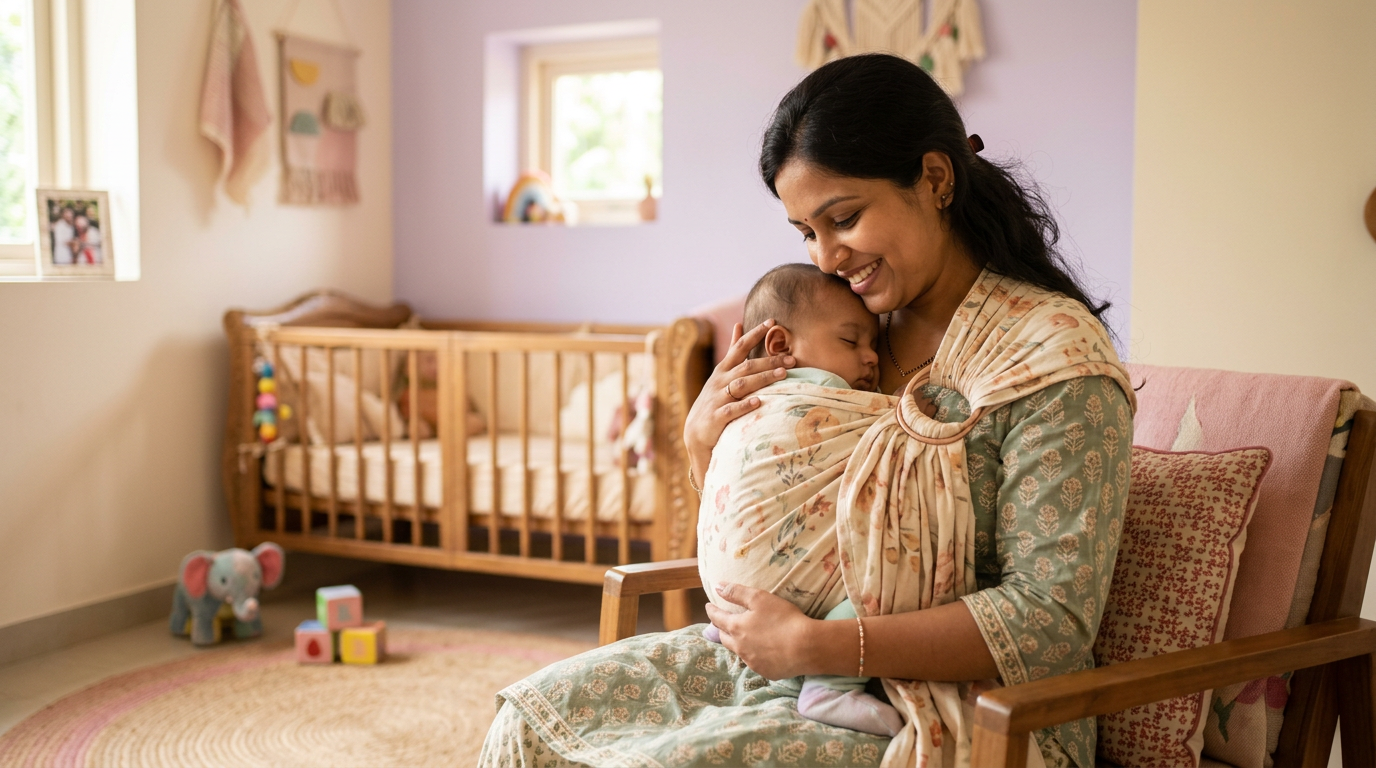
From Dadi’s Dupatta to Modern Buckles: Finding Your Perfect Fit
It’s 3:00 AM. You’ve just spent forty minutes rocking your little one to sleep, your lower back is screaming, and the moment you try to place them in the crib, those eyes snap wide open. Trigger the waterworks.
Every Indian mom has been there. Whether you are living in a bustling 2BHK in Mumbai or a breezy independent house in Bangalore, the "velcro baby" phase is real. You want to finish your chai, you need to check your work emails, or maybe you just want to walk around the house without feeling like your arms are going to fall off.
Back in the day, our mothers and grandmothers used a sturdy cotton saree or a dupatta to tie us to their hips while they went about their day. Today, we have a dizzying array of options—from imported labels to homegrown Indian brands. But with our 40-degree summers and compact apartment hallways, which one actually works?
Let’s break down the "Wrap vs. Structured Carrier" debate, keeping our Indian lifestyle front and center. ☕
1. The Stretchy Wrap: The "Hugging" Phase (0–6 Months)
If you’ve seen those Instagram reels of moms looking serene with their newborns tucked into cocoons of fabric, you’re looking at a wrap. These are usually 5-meter long pieces of fabric that you tie around yourself.
Why it works for us:
* The "Japa" Comfort: In those first 40 days, both you and the baby are sensitive. A wrap feels like a second skin.
* Space-Saver: Living in a small apartment? A wrap folds up smaller than a T-shirt. No bulky gear taking up your precious storage space.
* Breastfeeding Friendly: With a bit of practice, you can discreetly nurse while walking around the house.
The India Reality Check:
Standard wraps can be thick. In Delhi or Chennai heat, you and the baby will end up drenched in sweat.
* Tip: Look for "Summer Wraps" or those made of Bamboo or Modal fabric.
* Local Brands to Love: Soul Slings and Anmol Baby make incredible lightweight wraps designed specifically for the Indian climate. Avoid the heavy fleece versions you see on international sites!
2. The Soft Structured Carrier (SSC): The "Workhorse" (4 Months – 3 Years)
These look like backpacks with buckles and padded waistbands. If you’re planning to visit the local sabzi mandi or navigate a crowded mall like Select CityWalk or Phoenix Marketcity, this is your best friend.
Why it works for us:
Back Support: As your baby starts hitting the 7-8kg mark (thanks to all that ragi sari and dal paani*!), your spine needs help. The padded waist belt transfers the weight to your hips.
* Quick "Click and Go": No complicated tying involved. If the doorbell rings for a BigBasket delivery, you can snap this on in 30 seconds.
* Longevity: Most good SSCs (like the Chicco Myamaki or Ergobaby) will last you until your toddler is 2 years old.
The India Reality Check:
Structured carriers can be bulky. If you have a narrow kitchen or a small balcony, you might feel like you’re wearing a life jacket.
* Tip: Choose a version with 3D Mesh panels. Brands like LuvLap and Himalaya offer budget-friendly options, but ensure they are "Ergonomic" (look for the "M-position" for baby's legs to prevent hip dysplasia).
3. The Ring Sling: The Quick Fix for "Chai" Breaks
Think of this as the modern version of the saree carry. It’s a long piece of fabric with two rings at the shoulder.
Best for: Short durations. It’s perfect for when you’re making a quick pressure cooker khichdi* and the baby wants to see what’s happening.
* The Heat Factor: This is the winner for Indian summers. It’s only one layer of fabric over the baby, allowing for maximum airflow.
* Brand Highlight: Soul Slings (an Indian brand!) is world-famous for their linen ring slings. They are breathable, chic, and very "modern Indian mom."
Heat, Humidity, and Hiranandani: Practical Tips for You
1. The "Two-Finger" Rule
Our humidity can lead to heat rashes (the dreaded ghamori) very quickly. Always ensure there is enough space to fit two fingers between your baby’s chin and their chest. This ensures they are breathing easy and stay a bit cooler.
2. Dress for the Climate
If you are wearing the baby, the carrier counts as one layer of clothing. If it’s June in India, your baby only needs a thin cotton jhabla or a simple onesie inside the carrier. Anything more and they will overheat.
3. Negotiating with the Elders
You might hear your saasu-maa or Mummy say, "Beta, it will hurt the baby's legs" or "He will get used to being carried."
Your response: Explain that modern carriers support the "M-position" (knees higher than the bum), which is actually better for their hip development than being held loosely in arms. And as for "getting used to it"—remind them that a happy, calm baby means a peaceful house for everyone!
The Price vs. Value Debate
* Budget (₹1,500 – ₹3,000): Look at LuvLap or Himalaya. They are sturdy and easily available on FirstCry or Amazon India. Great for occasional use.
* Mid-Range (₹4,000 – ₹7,000): Anmol Baby and Soul Slings. These are homegrown heroes. The quality of fabric is premium, and they are designed for our weather.
* Premium (₹9,000+): Ergobaby or BabyBjörn. If you plan to be a heavy "babywearer" for the next three years and do lots of travel, these are the SUVs of the carrier world.
Your "Do This Today" Action Plan
A Final Word from The Mama Circle
Priya, I know the days feel long and the "to-do" list never ends. But there is something incredibly healing about feeling your baby’s heartbeat against yours while you go about your day. You aren't "spoiling" them; you are giving them the security they need to eventually grow independent.
Choose the carrier that fits your budget and your home size, but most importantly, choose the one that makes you feel confident enough to step out of the house. You’ve got this, Mama! 🌸
Which carrier are you leaning towards? Or do you have a 'jugaad' that works? Tell me in the comments below!☀️