Bedtime stories for kids: Best Indian Tales & Sleep Guide
Discover the best bedtime stories for kids! From Panchatantra to Tenali Rama, learn how short stories for kids in english build bonds and better sleep.
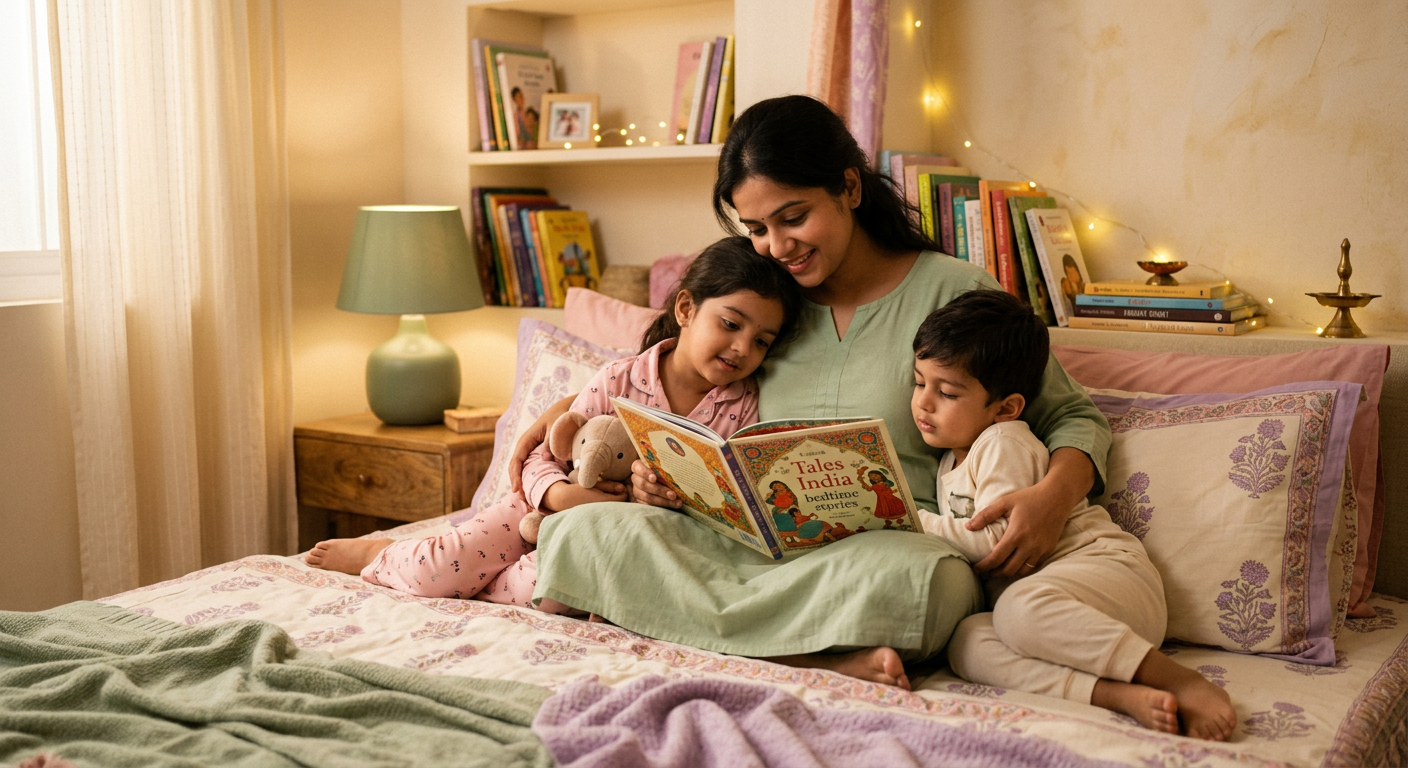
Finding the right bedtime stories for kids in India is about more than just getting them to sleep; it is about building a connection to our roots while calming a hyperactive toddler after a long day. Whether it is a quick 5-minute tale about a clever rabbit or a longer legend from our epics, the goal is to lower their cortisol levels and signal to their brain that the day is done.
Why Bedtime Stories for Kids are Essential for Indian Brain Development
In our culture, the tradition of kahani sunana (storytelling) by Dadi or Nani wasn't just entertainment; it was early childhood education. When you read bedtime stories to your child, you are doing more than just reading words. You are helping them process the day's emotions.
According to the Indian Academy of Pediatrics (IAP), early literacy interventions like reading aloud improve vocabulary and emotional regulation. For an Indian child, hearing stories about festivals like Diwali or characters like Hanuman helps them build a cultural identity.
The Science of the "Cuddle Chemical"
Reading triggers the release of oxytocin. When your little one is tucked under a soft dohaar and listening to your voice, their heart rate slows down. This is particularly helpful if your child is hitting those tricky baby milestones tracker where separation anxiety or night terrors might start appearing.
Top 5 Short Bedtime Stories for Indian Kids (Under 7s)
If you are looking for short stories for kids in english that fit into a busy Indian household schedule, these classics are winners. We have tweaked these to ensure the "scary" parts are softened for younger ears.
1. The Monkey and the Crocodile (Panchatantra)
* The Plot: A monkey lives on a Jamun tree and shares fruit with a crocodile. The crocodile’s wife wants the monkey’s heart, but the clever monkey escapes by saying he left his heart on the tree.
* The Moral: Quick thinking can save you from any trouble.
* Why it works: It introduces the concept of "cleverness" without being overly complex.
2. The Thirsty Crow
* The Plot: A crow finds a pot with very little water. He drops pebbles one by one until the water level rises.
* The Moral: Where there is a will, there is a way.
* Why it works: Perfect for toddlers who are learning cause and effect. You can even use their Montessori baby toys like wooden blocks to demonstrate the "rising water" concept the next day.
3. Birbal and the Ghee Pot
* The Plot: Someone steals a pot of ghee. Akbar asks Birbal to find the thief. Birbal tells everyone a "magic" stick will grow longer if the thief holds it. The thief cuts his stick shorter out of fear and gets caught.
* The Moral: Guilt always gives itself away.
* Why it works: It’s a great introduction to Indian history and the wit of Akbar-Birbal.
4. The Elephant and the Sparrow (Jataka Tales)
* The Plot: A big, arrogant elephant destroys a sparrow’s nest. The tiny sparrow teams up with a woodpecker and a frog to teach the elephant a lesson.
* The Moral: Unity is strength; no one is too small to make a difference.
5. Tenali Rama and the Thieves
* The Plot: Tenali Rama hears thieves in his garden. He tells his wife loudly to hide the "jewels" in the well. The thieves spend all night pumping water out of the well to find the jewels, inadvertently watering Tenali's garden.
* The Moral: Use your wit to turn a problem into a solution.
How Long Should a Bedtime Story Be?
One common mistake I see in my clinic is parents trying to read The Ramayana in one go. The Indian Bureau of Indian Standards (BIS/IS 9873) emphasizes age-appropriate engagement for children's mental well-being.
* Ages 0-2: 2-5 minutes. Focus on high-contrast moral stories in english with pictures. Use board books that can withstand a bit of teething.
* Ages 3-5: 5-10 minutes. This is the prime time for panchatantra stories. They love repetition and animal sounds.
Ages 6-8: 15-20 minutes. You can start "chapter" books or longer folk tales from the Amar Chitra Katha* series (usually priced around ₹90–₹150 per slim volume).
Creating the Perfect Indian Bedtime Routine
To make these bedtime stories for kids effective, the environment matters. We call this "Sleep Hygiene."
Real Talk from Indian Moms
"I used to feel guilty for not reading for 30 minutes. But Dr. Anjali told me even 5 minutes of The Hungry Caterpillar or a short Jataka tale counts. Now, my 3-year-old Kabir won't sleep until I do the 'Voice of the Lion'."
— Shweta R., Bangalore (Mom to 3-year-old Kabir)
"We started reading moral stories in english with pictures because my daughter was struggling with sharing at preschool. Seeing the animals learn lessons helped her understand better than my constant lecturing!"
— Ananya M., Mumbai (Mom to 4-year-old Ira)
When to Call Your Paediatrician
While stories help most children settle, sometimes sleep issues are physiological. Consult your doctor if:
* Your child snores loudly or breathes through their mouth while sleeping (could be enlarged adenoids).
* They have frequent night terrors where they don't wake up but scream inconsolably.
* They are consistently unable to focus on a 2-minute story by age 3.
* They experience extreme "growing pains" in their legs that prevent sleep.
Frequently Asked Questions
Which are the best bedtime stories for kids in India?
The best stories are those that involve animals and simple morals, such as the Panchatantra or Jataka Tales. These stories are culturally relevant and use metaphors that Indian children find easy to understand, like clever monkeys and wise elephants.
How do I find short stories for kids in English that aren't too scary?
Look for modern retellings of Indian folk tales. Many traditional stories have "dark" endings (like the wolf eating the goat). Choose versions where the "bad" character is simply outsmarted or sent away, rather than hurt, to keep the bedtime mood light.
Are panchatantra stories suitable for toddlers?
Yes, but keep them simplified. For a 2-year-old, focus on the animal sounds and the pictures. For a 5-year-old, you can explain the moral, like why the "Blue Jackal" shouldn't have lied about his identity.
Why are moral stories in english with pictures better for early readers?
Pictures provide context clues. If a child hears the word "Banyan tree" and sees the hanging roots in the illustration, their brain makes a faster connection. This visual-auditory link is crucial for language development in bilingual Indian households.
Can bedtime stories help with my child's behavior?
Absolutely. Using bedtime stories for kids as a tool to discuss "big feelings" is very effective. If your child had a fight at school, reading a story about forgiveness helps them process the event without feeling like they are being scolded.
Reading to your child is the greatest gift you can give their developing brain. It doesn't have to be a performance; it just has to be you, a book, and a little bit of love.
I am a calm, loving mother, and my voice is my child's favorite sound.
Sources & further reading
- Indian Academy of Pediatrics - Early Childhood Development
- World Health Organization - Improving Early Childhood Development
- Bureau of Indian Standards - Safety of Toys (IS 9873)
Written by Dr. Anjali Mehta, MBBS, DCH (Paediatrics)
Reviewed by TheMamaCircle Editorial Team
Last updated: 5 September 2026
This article is for general information only and is not a substitute for personalised medical advice. Always consult your paediatrician or obstetrician for your specific situation.