Best Oil for Postpartum Massage in India (Maalish Guide)
Which oil is best for postpartum massage? Compare Dhanwantaram, sesame and coconut oil, plus a step-by-step guide to doing postpartum maalish at home safely.
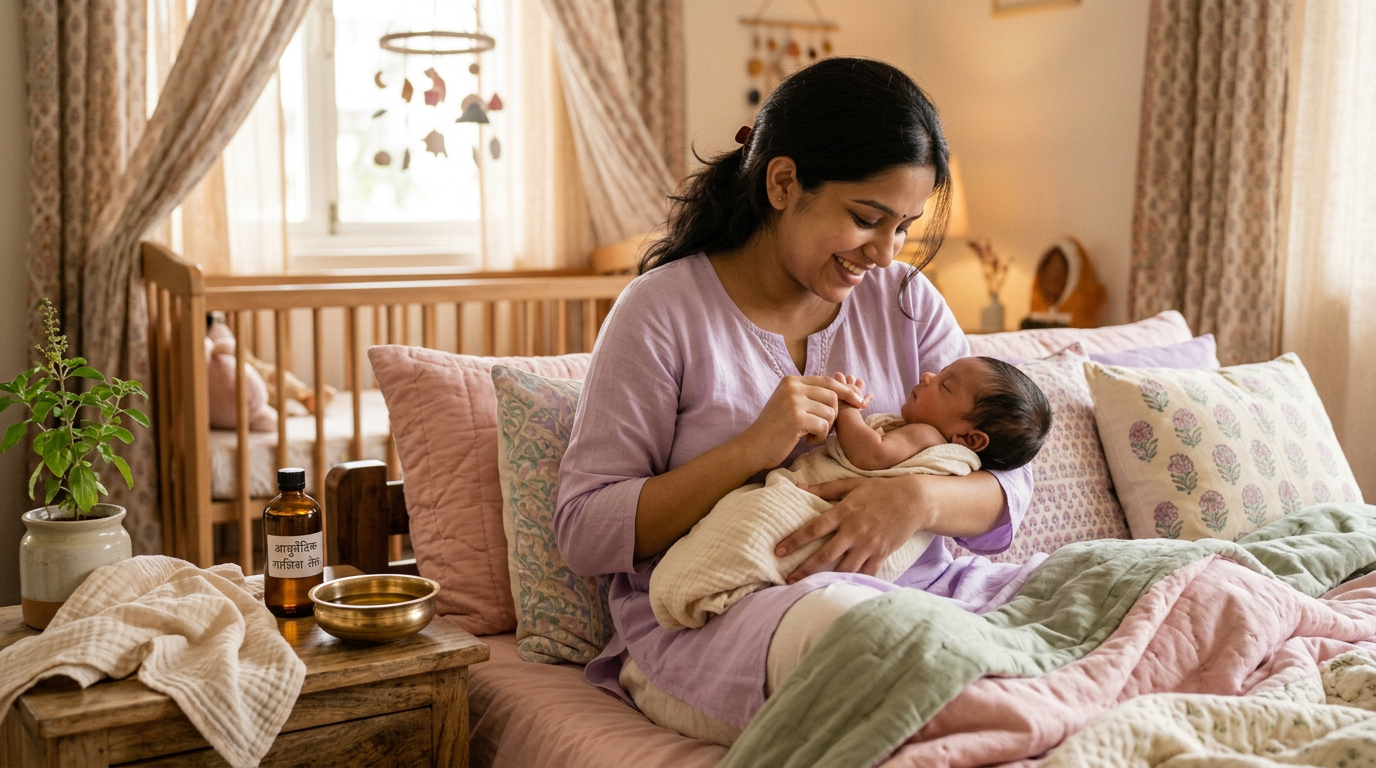
Choosing the right postpartum massage oil is the difference between a sticky, superficial rubdown and a deep, Ayurvedic healing ritual that restores your Vata balance. In the Indian tradition of Sootika Seva, a daily maalish (massage) starting from day 5-10 for vaginal births or day 21 for C-sections is non-negotiable. It helps shrink the uterus, boosts blood circulation, and provides much-needed relief from 'mummy-back' and joint pain.
Why the choice of postpartum massage oil matters in India
In India, we don’t just massage for relaxation; we do it for punarnava—rebirth of the mother. Your body has gone through the Agni (fire) of childbirth, and your skin is often dry, itchy, and depleted. A high-quality oil acts as a carrier for warmth and nutrients back into your tissues. Using the wrong oil (like highly fragranced paraffin-based liquids) can block pores or cause skin rashes for both you and your baby during skin-to-skin contact.
Top Ayurvedic and Traditional Oils Used in Indian Homes
How to use postpartum massage oil for maximum recovery
To get the most out of your postpartum massage, the ritual should follow a specific rhythm. Traditionally, this is done by a Jadai or Dai—an experienced nanny or massage specialist.
The Standard Ritual Steps:
* Warm it up: Never apply cold oil. Place your bottle in a bowl of hot water (bain-marie style) until it reaches a comfortable body temperature.
* Focus on the abdomen: Light, clockwise strokes help the uterus contract and aid digestion, which is often sluggish after birth. However, avoid the incision area if you had a C-section until it is fully healed and cleared by your OB-GYN.
* Don't forget the feet: Reflexology points in the feet are linked to reproductive health. A good 10-minute foot rub with a rich postpartum massage oil can significantly improve sleep quality.
The Post-Massage Bath: Follow up with a warm bath using Ubtan* or a mild soap. This helps wash away the toxins released during the massage.
If you don't have a reliable Dai at home, you can easily look for a postpartum massage at home service that brings trained therapists to your doorstep.
When can you start your maalish?
The timing depends entirely on your mode of delivery and your recovery speed, as recommended by FOGSI (Federation of Obstetric and Gynaecological Societies of India).
For Vaginal Delivery
Most Indian moms start within 5 to 7 days. Once the heavy bleeding (lochia) starts to taper off and you feel stable enough to sit and lie down comfortably, you can begin your full-body postpartum massage.
For C-Section Delivery
Patience is key here. You must wait at least 3 weeks (21 days) or until your doctor confirms the external incision has closed perfectly. Even then, the massage should focus on the limbs, back, and neck, skipping the abdominal area entirely for the first 6 weeks to avoid any internal tissue trauma.
The Cost of Postpartum Massage Rituals in India
The budget for this ritual varies wildly based on whether you are hiring a local Jadai or a specialized agency.
Local Dai/Maalish-wali: Usually charges between ₹500 to ₹1,000 per session, plus a 'gift' at the end of the 40-day period (Chilla*).
* Professional Services: If you are booking a postpartum massage delhi or a postpartum massage gurgaon specialist, prices can range from ₹1,500 to ₹3,000 per session depending on the oils used and the duration.
* Oil Prices: A 500ml bottle of authentic Dhanwantaram Thailam costs roughly ₹450 to ₹800.
Real talk from Indian moms
"My sasu maa insisted on Dhanwantaram oil. I hated the smell at first—it’s very medicinal—but my back pain from the epidural literally vanished within a week of regular maalish." — Ananya, Mumbai (Mom to a 4-month-old)
"We used mustard oil infused with garlic and ajwain because I gave birth in December. It kept me so warm. I think that oil was the only reason I didn't catch a cold during the 40 days of confinement." — Meher, Chandigarh (Mom to an 8-month-old)
When to call your doctor
While postpartum massage oil is generally safe, stop immediately and call your doctor if:
* You develop a fever or chills shortly after a massage (could indicate an infection).
* The massage causes a sudden increase in vaginal bleeding or bright red clots.
* You see redness, swelling, or pus at your C-section or episiotomy site.
* You develop a sudden, sharp pain in your calf or leg (this could be a sign of DVT, a serious condition).
* You develop an itchy, red rash across your body (allergic reaction to the oil).
Frequently Asked Questions
Which is the best postpartum massage oil for C-section moms?
For C-section moms, Dhanwantaram Thailam or Sahacharadi Thailam are excellent for the back and legs. For the scar itself (once healed), many Indian doctors suggest Vitamin E rich oils or plain Virgin Coconut oil to help with tissue suppleness. Avoid heavy pressure on the abdomen for at least 6-8 weeks.
Can I use my postpartum massage oil on my baby too?
While some oils like plain Virgin Coconut oil or Sesame oil are safe for both, many specific "Postpartum Oils" contain strong Ayurvedic herbs or essential oils that might be too harsh for an infant's thin, porous skin. It is better to use a dedicated, BIS-certified baby massage oil for your little one.
Does postpartum massage at home help with weight loss?
Massages do not directly cause weight loss, but they help reduce water retention (oedema) and bloating. By improving lymphatic drainage and blood flow, a postpartum massage at home helps your body shed the excess fluid accumulated during pregnancy.
Where can I find professional postpartum massage delhi services?
In Delhi, several agencies specialize in post-delivery care. You can find postpartum massage delhi providers who offer packages including Ayurvedic oils, herbal baths (Vethu Kulital), and belly wrapping (Tummy Tying).
Is postpartum massage gurgaon service different from traditional maalish?
A postpartum massage gurgaon service often blends traditional techniques with modern physiotherapy. They may focus more on correcting the posture you’ve adopted during breastfeeding, whereas a traditional Jadai will focus on the ritualistic warming of the body.
How long should I continue using postpartum massage oil?
The traditional Indian confinement period is 40 days (Sawa Mahina). Ideally, you should continue the massage for this full duration. If your schedule allows, continuing twice a week for up to 3 months provides excellent long-term support for your joints.
Choosing your postpartum massage oil is your first act of self-care as a new mother. Whether you choose the deep-earthy scent of Ayurveda or the simple purity of cold-pressed coconut oil, remember that this time is about restoring your own strength so you can care for your baby.
You cannot pour from an empty cup, so let this daily ritual refill yours.
Sources & further reading
- Guidelines on Maternal and Newborn Care - NHP India
- Care of the Mother during Postpartum Period - Ministry of Ayush
- Postnatal Care Recommendations - WHO
- FOGSI Postpartum Care Guidelines
Written by Dr. Ritu Sharma, MD (Obstetrics & Gynaecology)
Reviewed by TheMamaCircle Editorial Team
Last updated: 9 July 2026
This article is for general information only and is not a substitute for personalised medical advice. Always consult your paediatrician or obstetrician for your specific situation.