Best Wooden Toys India: Non-Toxic IS 9873 Guide
Looking for the best wooden toys in India? Learn why IS 9873 certification is vital and which non-toxic brands are safest for your baby. Read our expert guide!
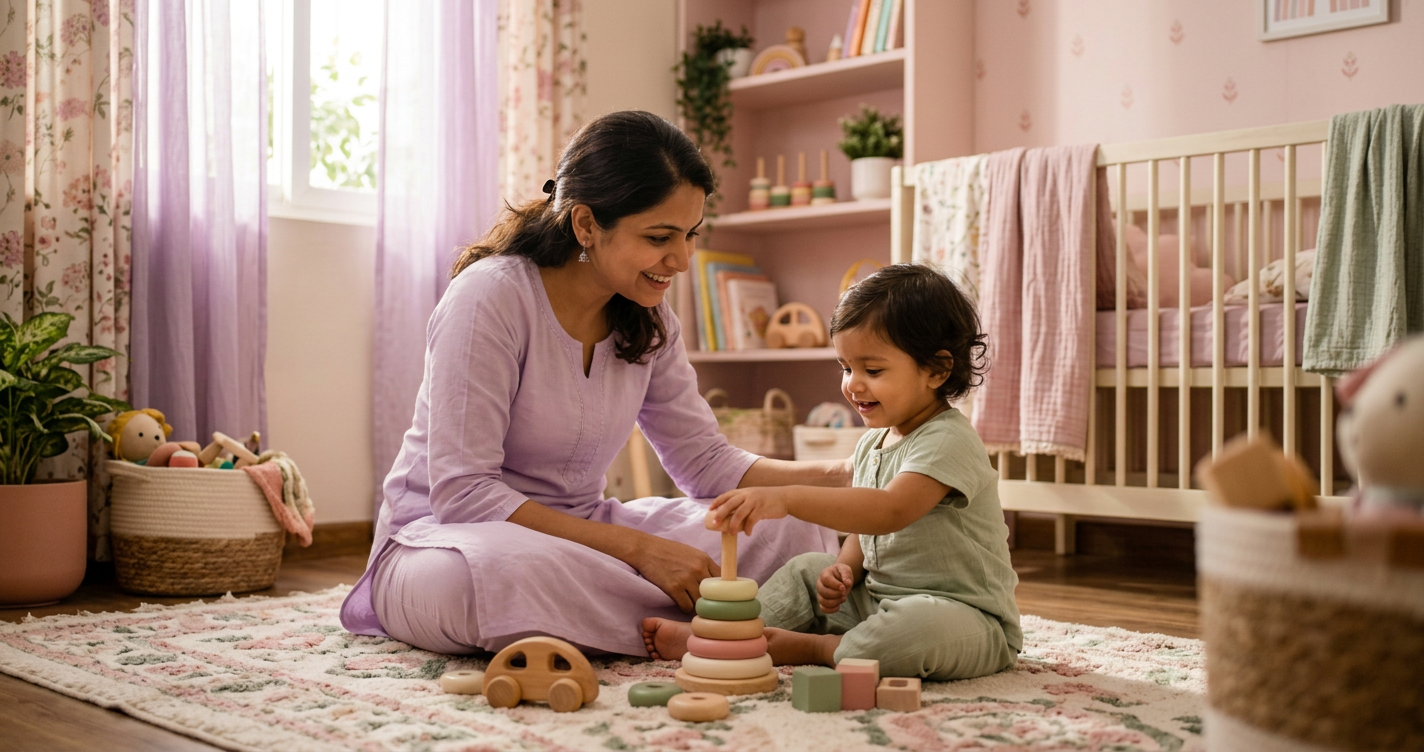
When my firstborn, Aarav, was six months old, my drawing room in South Delhi looked like a plastic explosion. Everything was neon, everything beeped, and everything had a 'Made in China' sticker that smelled suspiciously like a chemical plant. After watching him chew on a plastic rattle for twenty minutes, I fell down a rabbit hole of research. The best wooden toys in India aren't just aesthetic; they are safety-first tools that must meet IS 9873 standards to ensure they are free from lead, phthalates, and choking hazards. If you want to declutter your nursery while protecting your baby from endocrine disruptors, switching to certified Indian wooden brands like Shumee, Ariro, or Skillofun is the single best move you can make.
Why IS 9873 Certification Matters in the Indian Toy Market
In India, the toy industry was largely unregulated until recently. In 2020, the Government of India mandated that all toys—whether imported or domestic—must carry the ISI mark and comply with IS 9873 (Part 1, 2, and 3) standards.
When you see "IS 9873" on a box, it means the toy has passed three critical tests:
The Problem with Roadside or Unbranded Wooden Toys
We all love supporting local karigars (artisans) at Channapatna or Kondapalli. However, "natural" doesn't always mean "safe." A roadside wooden toy might be painted with industrial-grade lacquer containing high lead levels to give it that shiny finish. Unless the brand explicitly mentions water-based, non-toxic paints or natural beeswax/honey wax finishes, proceed with caution.
Best Non-Toxic Wooden Toy Brands in India
There has been a beautiful "vocal for local" revolution in the Indian toy space. Here are the brands our community of moms actually uses and trusts:
1. Shumee (Bengaluru-based)
Shumee is the gold standard for design-led wooden toys. They use neem and beech wood and prioritize open-ended play.
* Price Range: ₹400 – ₹3,500
* Must-buy: Their wooden activity walkers and ninja building blocks.
* Safety: ASTM and EN71 certified (International standards) along with Indian compliance.
2. Ariro Toys (Chennai-based)
If you follow the Montessori method, Ariro is your best friend. They specialize in "first toys" for infants.
* Price Range: ₹300 – ₹5,000
* Must-buy: The Pikler Triangle and their neem wood teethers.
* Why we love them: They use safe finishes like honey wax and vegetable dyes.
3. Skillofun
One of the oldest players in the Indian market, Skillofun is known for educational puzzles and classic wooden alphabet sets.
* Price Range: ₹200 – ₹1,500
* Safety: They are one of the most widely available BIS-certified brands in local toy shops.
4. Brainsmith
Great for high-contrast wooden toys and "Quantum Cards," but their wooden blocks and toddler gyms are exceptionally sturdy.
* Price Range: ₹800 – ₹4,000
> Real Talk: Plastic vs. Wood
> Let’s be real—wooden toys are expensive. A simple set of blocks can cost ₹1,200, while a plastic bucket of blocks is ₹300 at Big Bazaar. But here’s the math: your plastic toy will break in three months and end up in a landfill. A solid neem wood block set will survive three kids, two house moves, and still look beautiful on your shelf. Buy fewer, buy better. Your wallet (and the planet) will thank you.
How to Spot a Truly Safe Wooden Toy (The Senses Test)
You don't always have the box with the ISI mark in front of you. Here is how I vet toys when I'm shopping at local boutiques:
* The Smell Test: If it smells like paint thinner or strong chemicals, put it back. High-quality wooden toys should smell like wood or have a very faint, sweet smell if finished with oils.
* The Touch Test: Run your finger along the edges. If you feel even a tiny splinter, it’s a no-go. High-quality brands use a process called "buffing" to make edges buttery smooth.
* The Weight Test: Hollow, lightweight wood is often "pressed wood" or MDF (Medium Density Fibreboard). These often contain formaldehyde in the glue. Look for solid wood—it feels "heavy" for its size.
A Real Story: Aditi from Mumbai
Aditi, a mom to a 14-month-old in Bandra, shared: "I bought a cheap wooden rattle from a street vendor because it looked 'eco-friendly.' Within a week, the red paint started chipping off onto my daughter's tongue. I panicked and called my paediatrician. Now, I only buy from brands that explicitly state they use food-grade finishes. It’s just not worth the stress."
When to Call Your Paediatrician
If you suspect your child has been playing with or chewing on high-lead or toxic toys, watch for these signs:
* Unexplained irritability or persistent "cranky" behaviour.
* Consistently poor appetite or stomach pain.
* Developmental regressions (losing milestones they already had).
* Red Flag: If you find your child has swallowed a small magnet from a wooden puzzle or a small wooden bead, head to the ER immediately. Magnets are a surgical emergency in toddlers.
> Mama-to-Mama Tip
> Don't throw away all your plastic toys in a fit of "eco-guilt." Keep the ones from reputable brands (like Fisher-Price or LEGO), as they have strict safety protocols. Start by replacing the toys your baby mouths the most—teethers, rattles, and early blocks.
Frequently Asked Questions
Is "Channapatna Wood" safe for babies?
Yes, traditionally Channapatna toys are made from Ivory Wood (Ale Mara) and coloured with vegetable dyes and lac. However, because of high demand, some imitation makers use synthetic dyes. Only buy Channapatna toys from reputable boutiques or those with a GI (Geographical Indication) tag.
How do I clean wooden toys without ruining them?
Never soak wooden toys in water (they will swell and crack!). Wipe them with a damp cloth dipped in a mixture of water and white vinegar. For deep cleaning, use a mild soap but dry them immediately with a soft towel.
Are painted wooden toys safe?
Only if they use water-based, lead-free paints. If the paint is shiny and smells like oil paint, avoid it. Most safe brands will have a matte or semi-matte finish.
Why do some wooden toys have a 'Made in China' tag?
Many international brands manufacture in China but follow strict European (EN71) or US (ASTM) standards. While Indian-made is great for the economy, a "Made in China" toy from a reputable global brand like Hape or PlanToys is still very safe.
Is rubberwood safe?
Rubberwood is excellent! It is a "recovered" wood from rubber plantations that no longer produce latex. It is naturally sturdy and eco-friendly.
Choosing wooden toys is more than a "vibe"—it's a conscious choice to slow down and protect our children's health. Start with a simple set of neem wood blocks; you'll be surprised how much more your child engages with the texture and weight compared to a flashy plastic toy.
Remember: A simple toy does more for a growing brain than a toy that does everything for them.",excerpt:
Sources & further reading
- Bureau of Indian Standards — Toy Safety Standards IS 9873
- Indian Academy of Pediatrics — Guide on Safe Toys for Children
- Quality Council of India — Toy Manufacturing Regulations 2020
- WHO — Lead Poisoning and Health (Toy Safety Impact)
Written by Priya Raman, Certified Prenatal Yoga Instructor & Mama of two
Reviewed by TheMamaCircle Editorial Team
Last updated: 15 May 2026
This article is for general information only and is not a substitute for personalised medical advice. Always consult your paediatrician or obstetrician for your specific situation.