Best Wooden Toys India: Non-Toxic IS 9873 Safety Guide
Switching to wooden toys? Learn why IS 9873 certification is vital for non-toxic play in India. Discover safe brands like Shumee & Ariro. Shop smarter today!
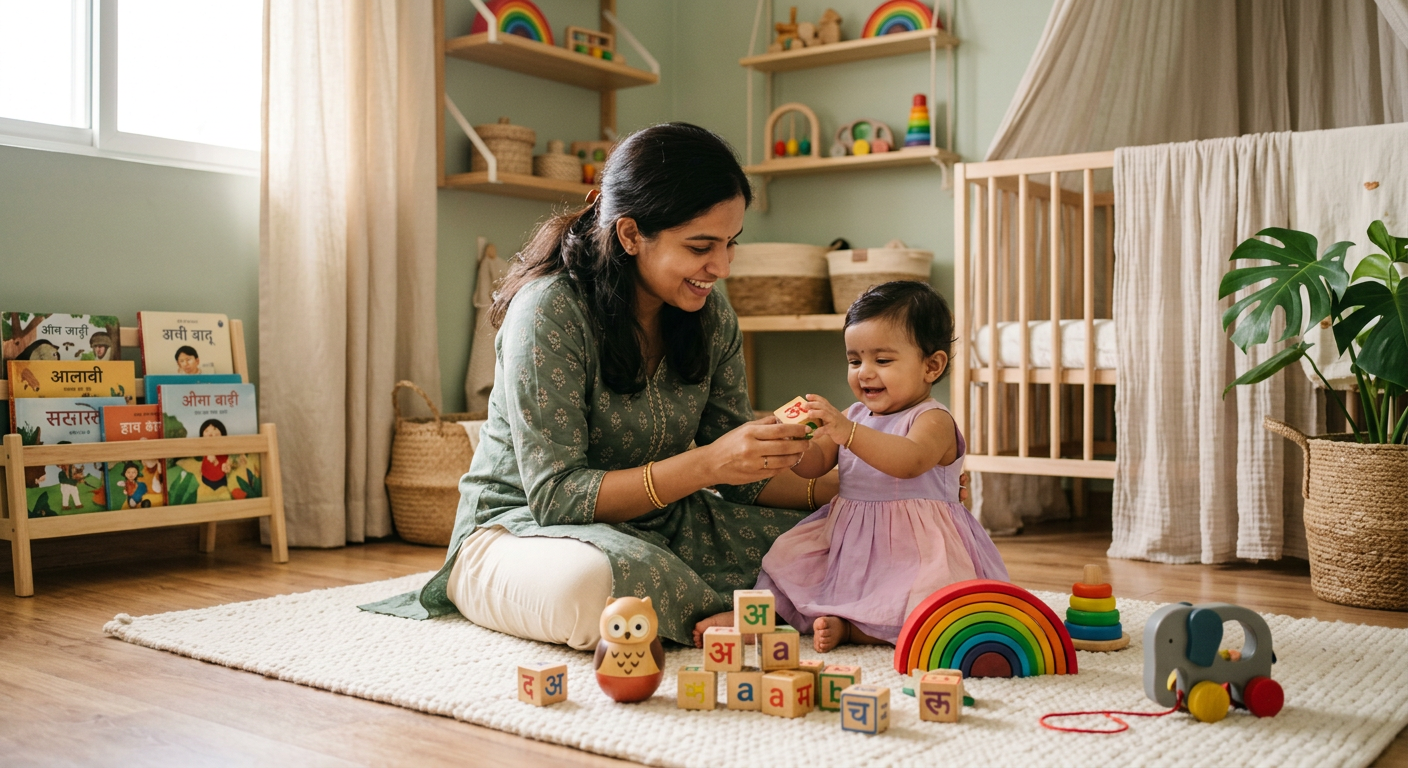
At 10 months, my son Dev’s favourite 'toy' wasn't the expensive musical walker we’d bought—it was a simple wooden ladle from my kitchen and a plastic remote he’d managed to lick twice before I caught him. That ‘click’ of plastic against his new milk teeth sent me down a rabbit hole of research: what exactly are these toys made of? In India, the best wooden toys are those that carry the IS 9873 certification, ensuring they are free from lead and heavy metals. If you are looking for non-toxic play, skip the cheap roadside plastic and look for brands using Neem, Beech, or Ivory wood finished with natural oils or water-based paints.
Why the shift to wooden toys is more than a 'trend'
For decades, Indian homes were filled with Channapatna toys—those bright, lacquered wooden dolls and spinning tops. Then came the era of cheap, brittle plastic imports. We are now seeing a massive 'Ghar Wapsi' to wood, and it isn't just about the aesthetic Instagram nursery look.
Real talk: The 'Plastic' Guilt
Mama-to-mama: You don’t need to throw away every plastic toy you own today. We all have that one noisy, battery-operated plastic fire truck that keeps the toddler busy while we drink cold chai. The goal is replacement over time. Focus on 'high-touch' items first—things they chew on, like teethers and rattle sets.
Understanding the IS 9873 Certification in India
If you take away one thing from this guide, let it be this: Check for the ISI mark and IS 9873 compliance.
In 2020, the Government of India made it mandatory for all toys sold in India to be certified by the Bureau of Indian Standards (BIS). IS 9873 is the specific safety standard that covers:
* Part 1: Physical and mechanical properties (no small parts that are choking hazards).
* Part 2: Flammability.
* Part 3: Migration of certain elements (this is the big one—it ensures no lead, antimony, or arsenic is in the paint).
When you buy a toy from a local market without branding, you have zero guarantee that the bright yellow paint isn't loaded with lead. Lead poisoning is a silent thief of cognitive development; it’s not worth the ₹200 saving.
Best Non-Toxic Wooden Toy Brands in India (IS 9873 Certified)
Our community of moms has tested these extensively. These aren't just shelf-sitters; they survive the 'thun-thun' of being banged on the floor.
1. Shumee (Best for Open-Ended Play)
* Materials: Neem wood and water-based paints.
* Top Pick: Their wooden rockers and rainbow stackers.
* Price Range: ₹400 – ₹3,500.
* Why we love them: They designed their toys specifically to avoid 'over-stimulation.' No lights, no batteries, just pure imagination.
2. Ariro (The Neem Wood Experts)
* Materials: Locally sourced Neem wood.
* Top Pick: The Neem wood teether and the Pikler Triangle.
* Price Range: ₹300 – ₹7,000.
* Why we love them: Neem is a traditional Indian powerhouse. It’s bitter (which some babies actually like when teething) and naturally clean.
3. Skola Toys (Best for Learning/Montessori)
* Materials: High-quality birch ply and solid wood.
* Top Pick: Multi-level puzzles and number towers.
* Price Range: ₹500 – ₹4,000.
* Why we love them: They bridge the gap between 'play' and 'learning' without making it feel like homework.
4. Cubby Foot (Best for Channapatna Heritage)
* Materials: Ivory wood (Aale Mara) and natural lacquer colours.
* Top Pick: The classic pull-along ducks and roly-poly toys.
* Why we love them: They support local artisans while ensuring the finishing meets modern safety standards.
How can I tell if a wooden toy is truly non-toxic?
Don't just take the label's word for it. Here is my 'doctor-mom' checklist for your next haul:
* The Smell Test: If it smells strongly of chemicals, varnish, or 'new car smell,' the paint hasn't cured properly or it’s low-quality synthetic lacquer. Natural wood toys should smell like... wood.
* The Rub Test: Take a damp white cloth and rub a coloured area of the toy firmly. If colour bleeds onto the cloth, it is not properly sealed and will end up in your baby’s stomach.
* The Surface: Run your finger along the edges. Is it splinter-free? High-quality brands sand their toys multiple times to achieve a 'butter-smooth' finish.
* The Joint Check: Are the parts held together by non-toxic glue or wood joints? Avoid toys with visible rusty nails or staples.
Case Study: Ananya’s Switch to Wood
Ananya, a Bengaluru mom to 14-month-old Ishaan, shared her experience: "Ishaan was a big 'mouter.' He chewed everything. I noticed the paint on his cheap plastic blocks was chipping off. I switched to a set of Neem wood building blocks from a local certified brand. Initially, I was annoyed because they cost ₹1,200 compared to the ₹300 plastic ones, but three months later, they still look new, they haven't chipped, and I don't panic when I see him biting them."
Real talk: The 'Dust' Factor
One thing no one tells you about wooden toys? They are heavy. If your toddler is in a 'throwing' phase (usually around 18 months), a wooden block to the TV screen—or your shin—hurts way more than plastic. We recommend keeping the heavy wooden sets for floor play on a rug or dhurrie to dampen the noise and the impact.
When to call your paediatrician (Safety Edition)
While wooden toys are generally safer, accidents happen. Consult your doctor if:
* Your child swallows a small wooden part (like a peg from a puzzle).
* A splinter from a damaged toy gets stuck deep in the skin and shows redness or pus the next day.
* Your child develops a sudden rash on their hands or mouth after playing with a new brightly coloured toy (could be a dye allergy).
* You suspect your child has chewed on an old, vintage wooden toy with chipping paint (risk of lead exposure).
Frequently Asked Questions
Are Channapatna toys safe for infants?
Yes, provided they are from a reputable source. Authentic Channapatna toys use Ivory wood and vegetable dyes (like turmeric for yellow, indigo for blue) mixed with lac. They are one of the safest traditional options in India. Ensure they are polished smooth and have no small detachable parts.
How do I clean wooden toys without ruining them?
Never soak wooden toys in water. They will swell and crack. Instead, wipe them with a cloth dampened in a mix of mild soap and water (or half-vinegar, half-water). Dry them immediately with a towel. For unpainted neem toys, you can occasionally rub a drop of virgin coconut oil to keep the wood moisturised.
Why are wooden toys so expensive in India?
You are paying for the quality of wood (Neem and Beech take years to grow) and the safety of the paint. Most importantly, BIS certification costs money for the brand to maintain. When you buy a ₹500 wooden rattle, you're paying for the peace of mind that it doesn't contain lead.
Can I give my baby wooden kitchen utensils to play with?
Absolutely! A wooden belan (rolling pin) or a large wooden spatula (smooth, no splinters) makes for a great sensory toy. Just ensure they aren't small enough to be a gag hazard and don't have any sharp edges.
Is 'MDF' the same as wooden toys?
No. MDF (Medium Density Fibreboard) is engineered wood held together by resins and glues which can sometimes off-gas formaldehyde. For toys that go in the mouth, always choose Solid Wood (Neem, Beech, Maple, Rubberwood) over MDF or Plywood.
Choosing the right toy is an investment.
As parents in India, we are often caught between tradition and modern safety. By choosing IS 9873 certified wooden toys, you're actually getting the best of both worlds—the timelessness of lakdi ke khilone with the scientific rigor of modern safety labs. Start small, maybe with a single set of blocks or a sturdy push-toy, and watch how it changes the way your child plays.
Your child’s play should be about discovery, not hidden chemicals. Focus on quality, not quantity—your floor (and your sanity) will thank you.
Sources & further reading
- Bureau of Indian Standards (BIS) — IS 9873 Safety Requirements for Toys
- Indian Academy of Pediatrics (IAP) — Environmental Hazards and Child Health
- World Health Organization (WHO) — Lead poisoning and health facts
- Ministry of Commerce & Industry — Quality Control Order for Toys (2020)
Written by Dr. Anjali Mehta, MBBS, DCH (Paediatrics)
Reviewed by TheMamaCircle Editorial Team
Last updated: 3 May 2026
This article is for general information only and is not a substitute for personalised medical advice. Always consult your paediatrician or obstetrician for your specific situation.