C-Section Recovery India Guide: Diet, Scar Care & Tips
Recovering from a C-section in an Indian home? Get doctor-backed tips on diet (khichdi to paya), scar care, and home setup to heal faster. Read more for a smooth recovery!
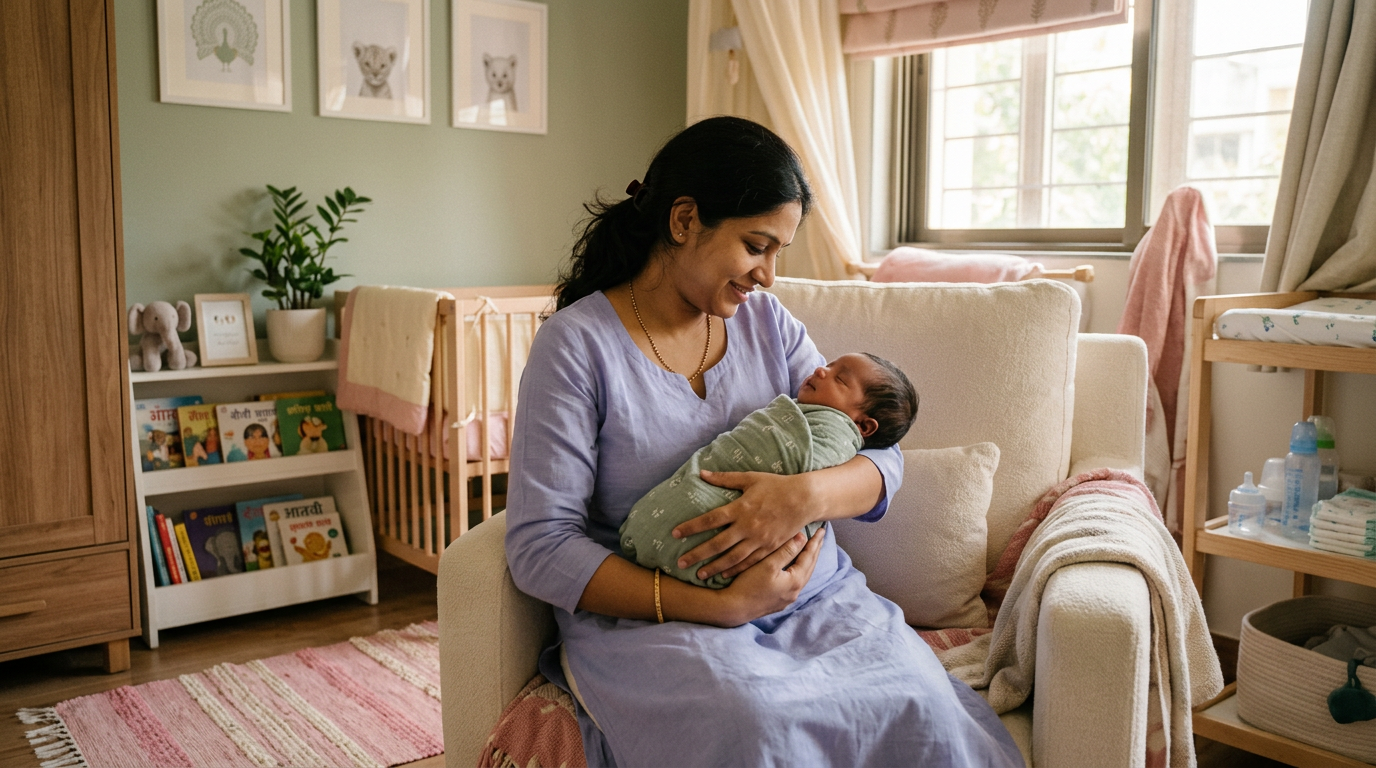
I remember walking into a patient’s room on Day 3 post-op. My patient, Megha, was sitting bolt upright on her bed, clutching a pillow to her stomach, looking absolutely terrified to move. Her sasu maa was insisting she drink only warm water and eat nothing but ajwain water and dry roti. Megha looked exhausted. I told her what I’ll tell you now: C-section recovery isn't about lying perfectly still or starving yourself—it’s about smart movement, a protein-rich Indian diet, and protecting that incision like it’s gold. You can be back on your feet (slowly!) within days, provided you ignore the myths and follow the science.
Helping your body heal: The first 48 hours
The moment that spinal anaesthesia wears off, the "realness" of major abdominal surgery hits. Many Indian hospitals keep you for 3-4 days. Use this time.
* The Log Roll: Never try to sit straight up using your abs. Roll to your side, let your legs dangle off the bed, and push up with your arms.
* The "Pillow Splint": Keep a firm cushion nearby. If you need to cough, sneeze, or laugh, press that pillow firmly against your stitches. It provides counter-pressure and reduces that "ripping" sensation.
* First Steps: Your nurse will push you to walk within 12-24 hours. Do it. It feels like your insides might fall out (they won't!), but walking prevents blood clots (DVT) and helps move the trapped gas that causes those sharp shoulder pains.
Setting up your Indian home for recovery
Most Indian homes involve low sofas and stairs. You need to "bridge" the gap before you arrive.
The Bed Situation: If your bed is very low, consider adding an extra mattress or a firm topper. Getting up from a low charpai-style* height is brutal on stitches.
* The Bathroom: If you only have an Indian-style toilet, you must buy a raised commode chair (available on Amazon India for ₹1,200–₹2,500). Do not attempt to squat for at least 6-8 weeks.
* The "Station": Your nursing station should have a 2-litre copper bottle or thermos of water, your vitamins (don't stop the iron and calcium!), maternity pads, and a charging cable. You shouldn't be getting up every time the baby cries or you're thirsty.
> Real talk: The "Maalish" Dilemma.
> In India, the dai or maalishwali is a household staple. Here is the medical truth: A full-body massage is wonderful for circulation and mental health, but nobody touches your abdomen for at least 6 weeks. Tell your dai to stick to your arms, legs, and back. If she insists on "massaging the uterus back into place," politely but firmly say no.
What to eat for C-section recovery (The Indian Diet)
Traditional Indian postpartum diets are actually quite brilliant for healing, provided we skip the excessive sugar and fats.
Focus on Protein & Collagen
Your skin, muscle, and fascia were cut. To knit them back together, you need building blocks.
* Moong Dal Khichdi: Easy on the gut, high in protein.
* Paneer & Soya: Excellent for vegetarians.
Eggs/Chicken Soup: If you eat non-veg, paya* soup (bone broth) is traditional and scientifically sound for collagen recovery.
The "Gas-Free" Rule
Constipation is your worst enemy because straining hurts your incision.
Fiber: Eat lauki, turai, and kaddu. Avoid heavy gas-producing foods like rajma, chole,* or excessive cauliflower for the first two weeks.
Hydration: Drink at least 3 litres of liquids. This includes water, ajwain* water (great for digestion), and coconut water.
* Ghee: A little is fine for lubrication and vitamins, but don't drink bowls of it. Modern C-section moms are less active than our grandmothers; we don't need 4000 calories a day.
How do I take care of my C-section scar at home?
Indian weather—the heat and humidity—can make scars itchy or prone to fungal infections.
> Real talk: The "Belt" Conversation.
> Moms often ask, "When can I wear a tummy trimmer?" Some doctors say Day 5, others say Week 6. A maternity binder isn't for "getting your shape back"—it’s for abdominal support. If it helps you move with less pain, wear it. If it feels like it’s squeezing your incision, take it off. Usually, a soft cotton dupatta wrapped firmly (not tightly) works just as well.
Real talk from Indian moms
"I was so scared to poop! I thought my stitches would pop. My doctor gave me a stool softener, and honestly, the fear was worse than the act. Just take the meds!"
— Ananya, Bengaluru (Mom to a 4-month-old)
"My mother-in-law didn't want me to climb stairs for 40 days. But our bedroom is on the first floor. I climbed them once a day, very slowly, sideways like a crab. It was fine. Listen to your body, not just the 'rules'."
— Priyanka, Delhi (Mom to a 10-month-old)
When to call your paediatrician (and your OB-GYN)
While this guide focuses on you, your recovery affects the baby. However, for your health, call your OB-GYN immediately if:
* You have a fever over 100.4°F (could indicate infection).
* The incision site is red, swollen, or leaking pus/foul-smelling fluid.
* You have a sudden, sharp pain in your calf or chest.
* Heavy vaginal bleeding that soaks a pad in an hour (lochia should taper off).
* You feel a "gap" opening in your incision.
Frequently Asked Questions
Can I eat rice after a C-section?
Yes! There is a common myth in some Indian communities that rice causes "pus" or "water" in the wound. This is false. Rice is a simple carbohydrate that provides much-needed energy for breastfeeding and healing. Just ensure it's well-cooked.
How soon can I hold my baby?
You can and should hold your baby immediately! Skin-to-skin contact is vital. However, when standing or walking, have someone else hand you the baby. Avoid lifting anything heavier than your baby (like a full bucket of water or a heavy grocery bag) for at least 6 weeks.
When can I start exercising to lose the "C-section pooch"?
Stop right there! Your internal layers take much longer to heal than the skin. No crunches, planks, or heavy lifting for at least 12 weeks. Stick to gentle walking and "pelvic floor" pulses (Kegels) once your catheter is out and you're comfortable.
Is it normal for the area around the scar to feel numb?
Very normal. The nerves were cut during surgery. It can take 6–12 months for the sensation to return, and for some women, a small patch might always feel a bit "different." It’s not a cause for alarm unless there’s burning pain.
Can I take a bath or only a sponge bath?
Once your doctor removes the waterproof dressing (usually around day 5-7), you can typically take a quick shower. Avoid soaking in a bucket-bath (balti-bath) or tub for 4-6 weeks to prevent infection from entering the uterus while it's still healing.
Recovery isn't a race, and the "40-day" sawa mahina period is a great time to let others do the heavy lifting while you focus on bonding and healing. Be patient with your body; it built a human and then underwent surgery to bring them home. You are doing a great job.
Sources & further reading
- Indian Academy of Pediatrics — Postoperative Care Guidelines
- FOGSI — Post-Cesarean Discharge Advice
- WHO — Postnatal care of the mother and newborn
- NHP India — Caesarean Section Recovery
Written by Dr. Ritu Sharma, MD (Obstetrics & Gynaecology)
Reviewed by TheMamaCircle Editorial Team
Last updated: 22 April 2026
This article is for general information only and is not a substitute for personalised medical advice. Always consult your paediatrician or obstetrician for your specific situation.