Delivery Bag Items Checklist India: Complete Hospital List
Complete delivery bag items checklist for Indian moms. Know exactly what to pack for hospital—from documentation to jhablas. Feel ready for your big day!
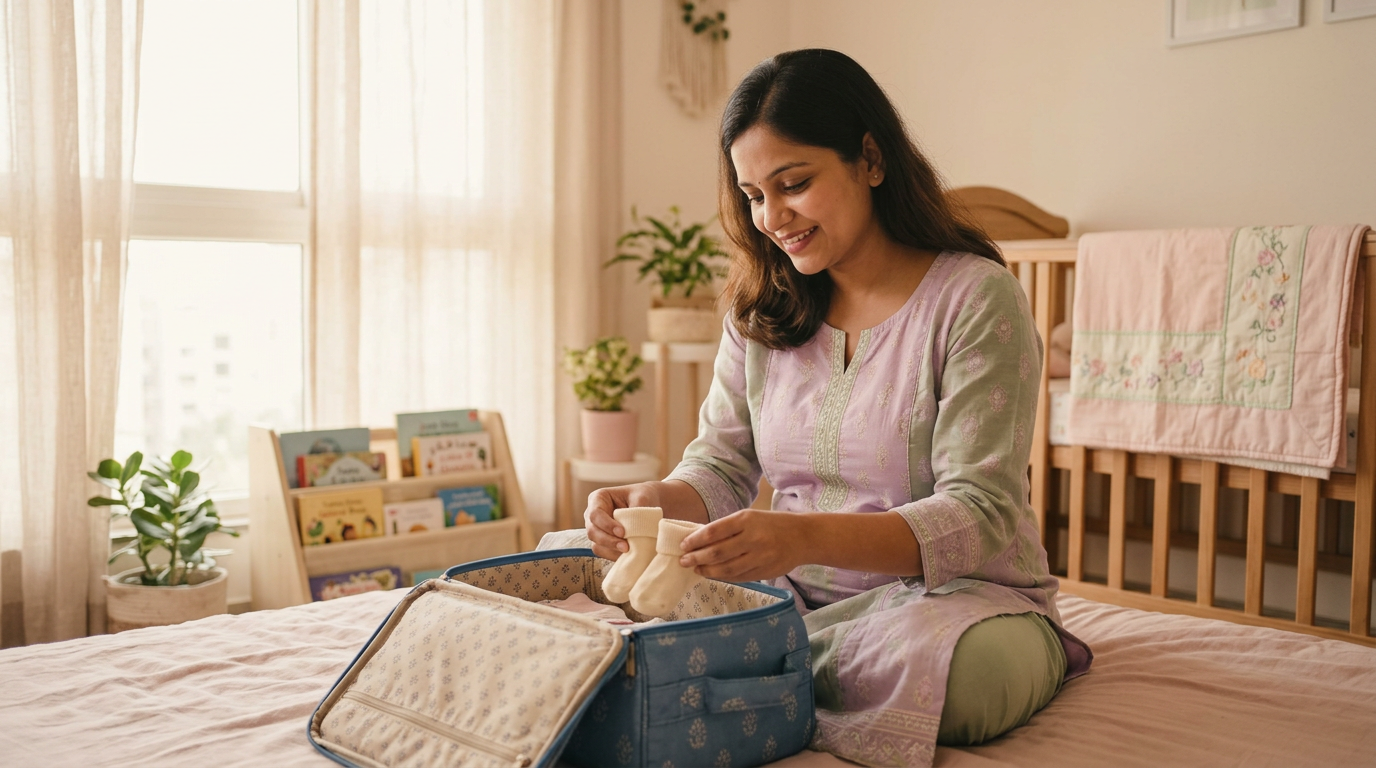
You should start packing your hospital bag around your 34th to 36th week of pregnancy. While your hospital provides the basics, having your own comforts—like your favourite ajwain water thermos or that oversized cotton maxi—makes the transition to motherhood significantly less stressful. In India, most private hospitals provide a kit for the baby, but you will still need your own clothes, breastfeeding essentials, and specific items for the husband or birthing partner.
I remember my own delivery at a busy hospital in Mumbai. Between the sasu maa wanting to bring a literal trunk of steel utensils and the hospital staff asking for my Aadhaar card, things got chaotic. This guide is designed to cut through that noise so you have exactly what you need—no more, no less.
What Mom Needs: The Comfort & Recovery Kit
The post-delivery phase is all about managing bleeding (lochia) and getting breastfeeding started. Don't pack your pre-pregnancy jeans; you’ll want loose, breathable fabrics.
* Documentation Folder: This is the most important item. Include your latest ultrasound reports, blood tests, Aadhaar card copies, and TPA/Insurance papers. Keep these in a waterproof file.
* Maternity Pads: Standard sanitary napkins won't cut it. Buy Maternity Pads (New Born or Romsons extra-large sizes) which are longer and more absorbent. You will need at least 2-3 packs.
* Front-Open Nighties or Kurtas: Whether you choose a private room or a ward, you’ll be nursing every 2 hours. Pack 3-4 cotton, front-open outfits. Avoid synthetic fabrics; they make you sweat and can irritate the baby’s skin.
* Disposable Underpants: Trust me on this—don't ruin your good lingerie. Pack a 10-pack of disposable maternity panties (around ₹300-₹500 on Amazon/FirstCry).
* Nursing Bras & Breast Pads: Get non-wired nursing bras. If your milk leaks (it usually happens by Day 3), breast pads will save your clothes.
* Toiletries: Toothbrush, paste, a mild hair wash, and a lip balm. Hospital air conditioning is notoriously drying, and "labour breath" is a real thing.
> Real talk: The "hospital glow" is a myth for most of us. You will likely feel like a sweaty, leaky, but very proud mess. Pack a large scrunchie or a claw clip to keep your hair off your neck—it's a lifesaver during those first few breastfeeding sessions.
For the Baby: The "Welcome Home" Essentials
While hospitals like Apollo or Cloudnine provide basic swaddles, most Indian moms prefer using mulmul cloths or soft cotton jhablas (sleeveless tops) washed at home with baby-safe detergent.
* Cotton Jhablas (6-8 sets): Babies spit up and pee through things faster than you’d imagine.
* Swaddle Wraps / Mulmul Squares: These are essential for the 'burrito wrap' that keeps newborns calm.
* Diapers (Newborn Size): Even if you plan to use cloth nappies later, use disposables in the hospital for convenience. One pack of 20-30 is enough for a 3-day stay.
* Soft Towels & Bamboo Wipes: Use water-based, fragrance-free wipes or simply cotton wool dipped in warm water to avoid diaper rash.
* Caps, Mittens, and Booties: Hospitals are kept cold to prevent bacterial growth; your baby needs help regulating their temperature.
* Going-home Outfit: A cute, photo-ready set for that first car ride!
For the Partner: The "Survival Bag"
The husband or partner often gets ignored, but they are the ones running to the pharmacy at 3 a.m. or dealing with discharge paperwork.
* Change of Clothes & Basic Toiletries: They’ll be sleeping on a small sofa or a cot. Comfort is key.
* Extra Long Charging Cable: Hospital plug points are never where you need them.
* Cash & Small Change: For the hospital canteen, tea stalls, or tipping staff (if that's your hospital's culture).
Snack Box: Fill it with makhana*, nuts, digestive biscuits, and some fruit. Hospital food is functional, but partners need a boost too.
* A Light Blanket: Most hospitals provide bedding for the patient only.
The "Indian Tradition" Add-ons
Our mothers and grandmothers usually have a list of their own. While some are myths, many are quite practical:
Case Study: Ananya’s Minimalist Bag
Ananya, a 29-year-old mom from Bengaluru, initially packed two heavy suitcases. “By the second day of my C-section, I realized I only used the nursing nighties, my phone charger, and the baby’s swaddles. The hospital gave me almost all the medical supplies. I told my husband to take one suitcase back home because the room felt too cluttered!”
Real talk from Indian moms
"I forgot my own towel! The hospital towels were so thin and scratchy. Next time, I'm carrying my softest old towel from home." — Megha S., Delhi (Mom to a 7-month-old)
"Pro-tip: Bring a power bank. In our government hospital, the plug was way across the room and I couldn't leave the baby to check my phone for updates from my family." — Rina P., Pune (Mom to a 1-year-old)
When to call your paediatrician (Post-Discharge)
Once you leave the hospital, watch for these red flags in your newborn:
* Jaundice: Yellowish tint in the whites of the eyes or on the chest/stomach.
* Dehydration: Fewer than 6 wet diapers in 24 hours.
* Fever: Any temperature above 100.4°F (38°C).
* Lethargy: If the baby is too sleepy to wake up for feeds.
* Umbilical Cord Issues: Any pus, foul smell, or redness around the navel area.
Frequently Asked Questions
Do I need to carry my own breast pump to the hospital?
Usually, no. If you have trouble latching, hospitals have industrial-grade pumps or can help you hand-express. However, if you already own one and want the lactation consultant to show you how to use it, feel free to bring it.
How many sets of clothes should I pack for a C-section?
C-section stays are longer (usually 3-4 days). Pack at least 5 sets of loose gowns or nursing kurtas. Avoid anything with a waistband that sits on your incision.
Should I pack formula milk "just in case"?
Most hospitals in India follow the WHO "Baby-Friendly Hospital Initiative" and discourage bringing your own formula to promote breastfeeding. If medical intervention is needed, the hospital will provide it.
What is the best type of bag to use?
A medium-sized trolley bag for mom and baby, plus a separate backpack for the partner, works best. It keeps things organized and is easy to wheel out during discharge.
Do I need to bring my own bedding for the baby?
No, the hospital provides the bassinet and basic sheets. However, bringing 2-3 of your own soft godaris (handmade cotton mattresses) can make the baby more comfortable.
Packing your bag isn't just about the items; it's about the mental shift of knowing your life is about to change. Keep the bag near the front door or in the car from Week 36 onwards. You’ve got this, Mama!
Repeat after me: I am prepared, I am strong, and I am ready to meet my baby.
Sources & further reading
- Indian Academy of Pediatrics (IAP) — Newborn Care Guidelines
- WHO — Recommendations on Postnatal Care of the Mother and Newborn
- Ministry of Health and Family Welfare (India) — Mother and Child Health Guidelines
Written by Dr. Ritu Sharma, MD (Obstetrics & Gynaecology)
Reviewed by TheMamaCircle Editorial Team
Last updated: 30 April 2026
This article is for general information only and is not a substitute for personalised medical advice. Always consult your paediatrician or obstetrician for your specific situation.