Delivery Bag Items Checklist India: The Complete Hospital
Everything you need for your Indian hospital bag! A complete checklist for mom, baby, and partner including brand suggestions and 'dadi-approved' essentials. Pack with confidence!
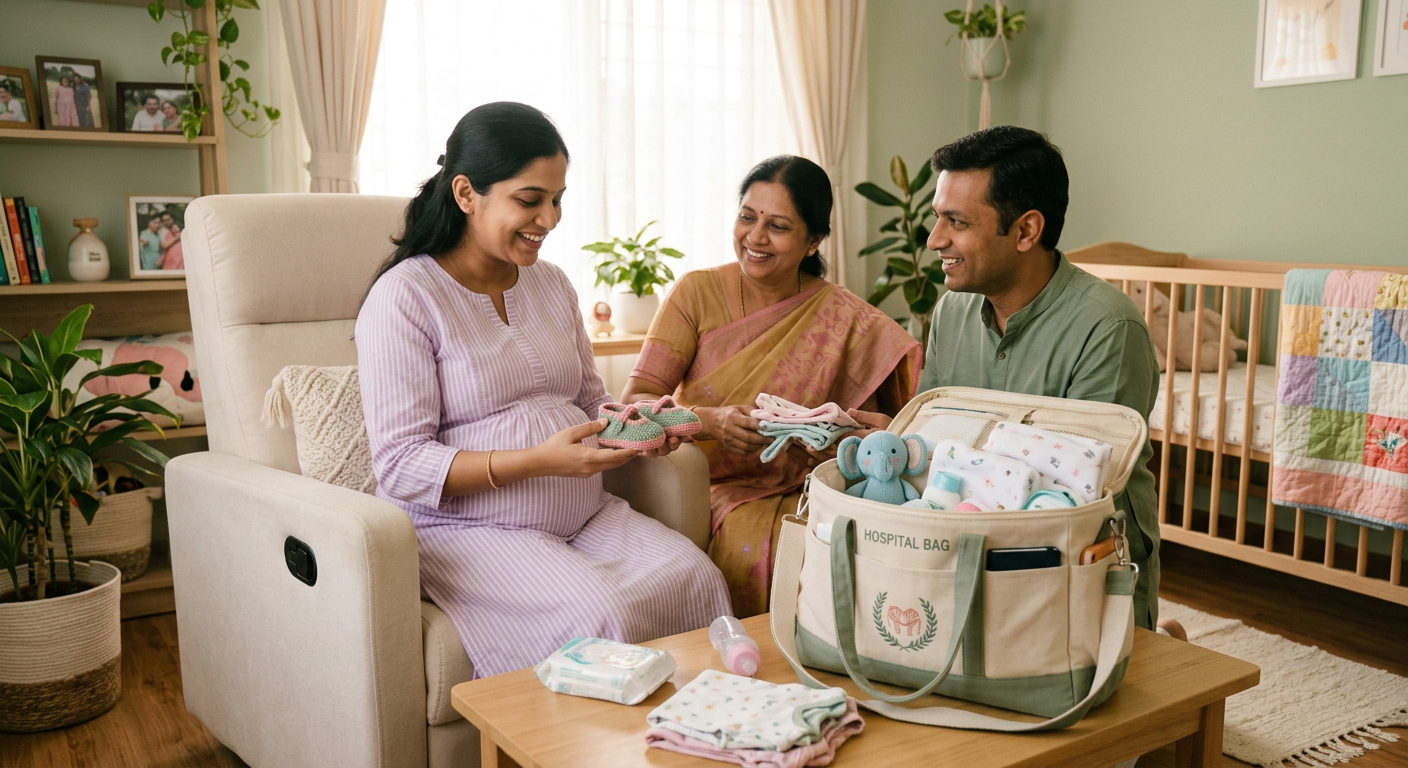
Exactly at 3:15 a.m., during my 37th week with my firstborn, I woke up to a damp bed and a massive realisation: my hospital bag was just a half-empty suitcase sitting in the corner of the room. I spent the next twenty minutes frantically hunting for a comfortable maxi dress while my husband looked for the car keys. Don't be me. Your delivery bag should be ready by week 35, packed with everything from your Aadhaar card to that specific brand of coconut oil your maalish wali insisted on.
The Essentials: What Mom Needs for Labor and After
The biggest mistake Indian moms make is packing too many fancy clothes. You will spend 90% of your time in hospital gowns or front-open nighties. Focus on comfort, hygiene, and the reality of post-delivery bleeding.
Clothing and Personal Care
* Front-Open Cotton Nighties (3-4 sets): Whether you are breastfeeding or not, these are a lifesonner for skin-to-skin and easy check-ups. Opt for dark colours like navy or maroon to hide leaks.
* Maternity Pads (2-3 packs): Regular pads won't cut it. Brands like Friends or Nobel make high-absorbency maternity pads (approx ₹450-₹600 for a pack) that stay in place.
* Disposable Panties: Trust me, you don't want to ruin your good Jockey cottons. Get a pack of 10 disposable ones.
* Nursing Bras (Non-wired): Buy one size larger than your current size. Brands like Zivame or Mothercare offer breathable cotton options.
* Toiletries Kit: Toothbrush, paste, a mild face wash, moisturiser, and a lip balm (hospital AC is notoriously drying).
* Hair Care: A sturdy hair tie or clutch. You’ll want your hair away from your face during labor and breastfeeding.
The "Sasu-Maa Approved" List
* Warm Socks & a Shawl: Even in a Mumbai or Chennai summer, post-delivery chills are real. Your body loses a lot of heat.
* Soft Slippers: Pick something with a good grip. Hospital floors can be slippery, and you’ll be doing a lot of slow walking to get your bowels moving post-op.
> Real Mama Talk: “I spent ₹4,000 on a fancy 'coming home' outfit and ended up leaving the hospital in my husband’s oversized T-shirt and maternity leggings because my C-section incision was too tender for anything else. Pack for comfort, not Instagram!” — Meher, Mumbai (Mom to 6-month-old).
The Baby’s First Wardrobe: Soft, Clean, and Safe
In India, we often have the tradition of using "old" clothes from cousins for the first few days. If you're doing that, ensure they are washed in a baby-safe, fragrance-free detergent like LuvLap or Himalaya and sun-dried.
Documentation and Hygiene
* Cotton Jhablas (6-8): Indian summers and hospital nurseries are perfect for thin, soft cotton jhablas. Avoid buttons; look for tie-ups or velcro.
* Newborn Diapers (1 pack): Even if you plan on using cloth nappies later, the first 48 hours of meconium (that tar-like first poop) are much easier to manage with disposables.
* Cotton Swaddles/Mulmul Cloths (5-6): These are multipurpose—use them to burp, swaddle, or cover while feeding.
* Quick Dry Sheets: A small size (approx ₹300) to keep the hospital bassinet dry.
* Baby Blanket: A soft, flannel blanket for the journey home.
* Coconut Oil or Ghee: For the baby's first massage or to help clean meconium off their delicate skin.
The Partner’s "Survival Kit"
Your husband or birthing partner is your gatekeeper, your snack provider, and your pillow. They need their own bag to stay functional.
* Change of Clothes & Deodorant: Hospitals can get stuffy.
* Phone Chargers (Extra Long): Hospital sockets are never where you need them. Carry a power bank too.
* Cash and Cards: Small change for the hospital canteen or pharmacy runs. Keep around ₹5,000 in small denominations.
* A Light Blanket and Pillow: Most Indian private hospitals provide a couch for the attendant, but it’s rarely comfortable.
The "Must-Have" Paperwork Folder
Keep this in a waterproof folder right at the top of your bag.
Real Talk from Indian Moms
Ananya, Bengaluru (Mom to a 5-month-old): "I forgot a flask! The hospital provided hot water, but having my own Milton flask meant I could have warm ajwain water ready whenever I felt bloated after the C-section. Don't skip the flask."
Priya, Delhi (Mom to a 1-year-old): "Pack a 'going home' outfit for the baby that is car-seat friendly. If you’re using a car seat, a long frilly frock or a heavy 'nani-made' sweater won't allow the straps to fit properly. Think rompers with legs!"
When to Call Your Paediatrician
While you are still in the hospital, the resident paediatrician will visit daily. However, once you are home, call your doctor immediately if you notice:
* Poor Latch/Feeding: If the baby hasn't had a proper feed in over 4 hours.
* Wet Nappy Count: Fewer than 6 wet nappies in 24 hours (after day 5).
* Jaundice: If the skin or whites of the eyes look significantly yellow.
* Fever: Any temperature above 100.4°F (38°C) in a newborn is an emergency.
* Umbilical Cord: Redness, foul smell, or discharge around the navel.
Frequently Asked Questions
Do I need to bring my own breast pump to the hospital?
Usually, no. If you have trouble latching, most hospitals have hospital-grade pumps you can use. However, if you already own one and want the lactation consultant to show you how to use it, feel free to bring it.
How many clothes should I pack for a C-section stay?
A C-section stay is typically 3-4 days. Pack at least 5 sets of front-opening nighties. You'll want a fresh one every day, plus one extra in case of leaks or spills.
Is it okay to use 'Gripe Water' or 'Gutti' in the hospital?
No. The Indian Academy of Pediatrics (IAP) and WHO recommend exclusive breastfeeding for the first 6 months. Do not give any honey, ghutti, or gripe water to a newborn as it can lead to infections.
Should I pack formula milk "just in case"?
Most hospitals discourage this to promote breastfeeding. If there is a medical need, the hospital will provide it. Bringing your own can sometimes discourage you from trying to latch during those first tough 24 hours.
Can I wear jewellery during delivery?
It’s best to leave it at home. If you need an emergency C-section, all jewellery (including your mangalsutra and toe rings) must be removed for safety during cautery.
Do I need to carry my own bedsheets?
In most private hospitals (Apollo, Cloudnine, Motherhood, etc.), you don't need them. However, if you are more comfortable with your own pillowcase, bring one—it smells like home and can be very comforting during labor.
When the contractions start, you want to be thinking about your breathing, not wondering where your nursing pads are. Pack this bag, keep it by the door, and then try to get some sleep. You’ve got this, Mama. Tell yourself: My body knows what to do, and I am prepared for the rest.
Sources & further reading
- Indian Academy of Pediatrics — New Born Care Guidelines
- WHO — Postnatal care of the mother and newborn
- National Health Portal (NHP) India — Birth Preparedness
- FOGSI — Postpartum Care Protocols
Written by Dr. Ritu Sharma, MD (Obstetrics & Gynaecology)
Reviewed by TheMamaCircle Editorial Team
Last updated: 23 May 2026
This article is for general information only and is not a substitute for personalised medical advice. Always consult your paediatrician or obstetrician for your specific situation.