Delivery Bag Items Checklist India: The Complete Hospital
The ultimate delivery bag items checklist for Indian moms. From Aadhaar cards to mulmul swaddles, ensure you're prepared for the hospital with this expert guide.
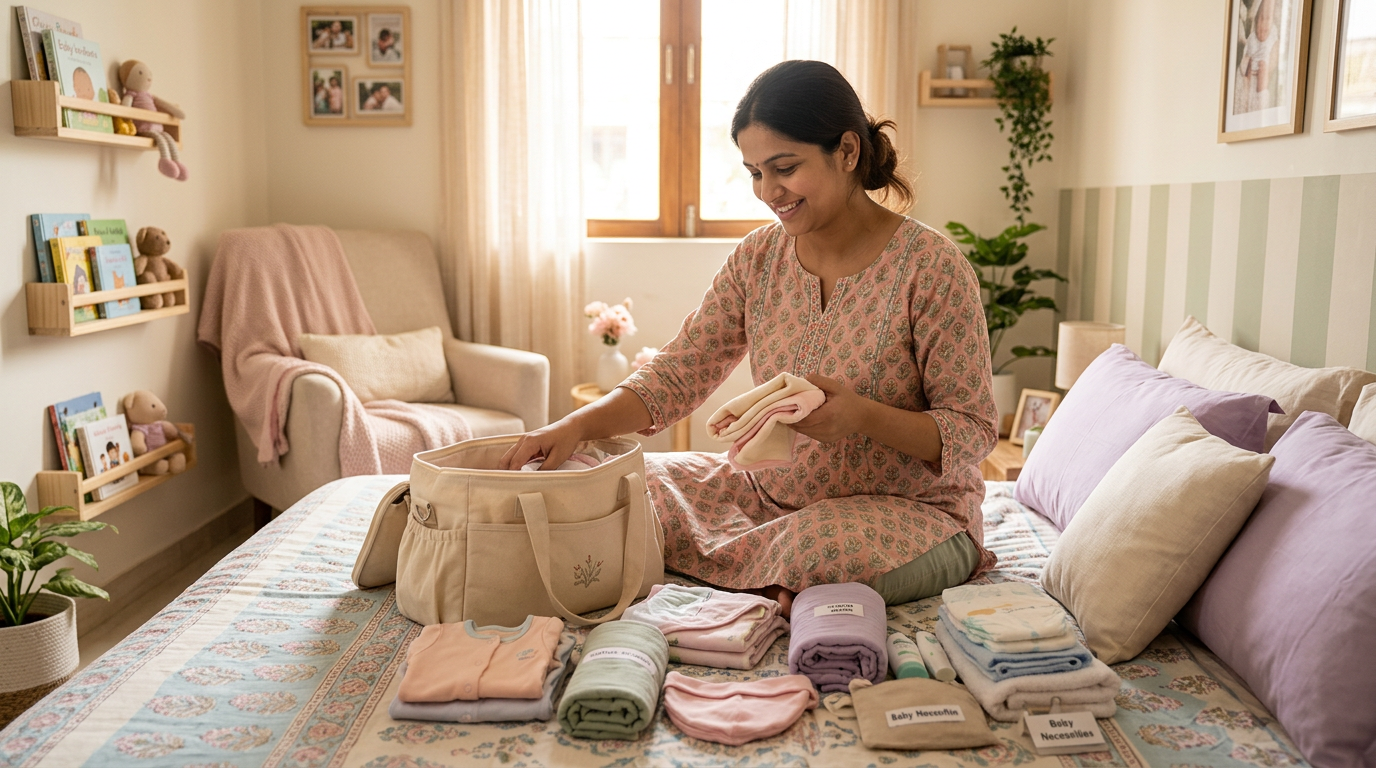
The moment your hospital bag is packed and sitting by the front door, the frantic "am I ready?" anxiety usually drops by about 50%. In India, your delivery bag needs to be ready by week 34 or 35, because as we say, babies have their own timing. You need three main compartments: one for your medical files and essentials, one for yours and your partner's clothes, and a separate small bag for the baby.
I remember when I was heading for my own delivery; I had the fancy silk robe ready, but what I actually needed was a sturdy pair of rubber bathroom slippers and my own copper water bottle because I couldn't stand the smell of plastic. Whether you're at a high-end private hospital like Cloudnine or Apollo, or a government facility, this list covers the "must-haves" that hospitals often forget to mention.
The "Papers First" Folder
Before you pack a single onesie, get an accordion folder. Indian hospitals are paperwork-heavy.
* The Medical File: Every ultrasound report, blood test (especially your blood group and RH factor), and your GTT (glucose) results from the last nine months.
* Aadhaar Cards: Original and 3-4 photocopies of both you and your husband. You’ll need these for the birth certificate registration and hospital admission.
* Insurance/TPA Cards: Have the TPA desk number saved and the physical card handy. If you’re using corporate insurance, keep your employee ID card too.
* Birth Plan (if you have one): Keep it simple. "I’d prefer a delayed cord clamping if possible" or "I am planning to exclusively breastfeed."
For the New Mama: Comfort is Queen
Post-delivery, your body is going through a massive hormonal shift. You will be sweaty, leaky, and incredibly sore. Forget the Instagram-worthy pajamas for the first 24 hours.
* Front-Open Nighties or Kaftans (3-4 sets): Whether you have a C-section or a vaginal birth, you will need easy access for breastfeeding. Cotton is your best friend. Marks & Spencer or local brands like Apollo Pharmacy have great nursing-friendly sets.
Maternity Pads (2 packs): Normal pads will not cut it for lochia* (postpartum bleeding). Brands like Pee Safe or Noraa have extra-long, wide maternity pads. Some moms prefer adult diapers (like Friends) for the first two days – it’s a game changer for overnight leaks.
* Disposable Panties: They cost about ₹300 for a pack of 5. Trust me, you don't want to be scrubbing bloodstains out of your regular underwear in a hospital bathroom.
* Dark-Coloured Bath Towels: Hospital towels can be scratchy and thin. Carry a soft, dark one from home.
* The Toiletries Kit: Lip balm (hospital air is drying!), hair ties, a small mirror, dry shampoo, and a mild face wash.
* Nipple Cream: A lanolin-based cream (like Lansinoh) or even simple cold-pressed coconut oil. Start applying it after every feed from day one to prevent cracks.
> Real Mama Talk: “I spent so much money on a 'labor gown' from an ad. In reality, the hospital made me wear their sterilized green gown for the actual delivery. Save your money for high-quality feeding bras instead.” — Aditi, Pune (Mama to 6-month-old Kabir).
For the Baby: The "Welcome Home" Kit
Most Indian hospitals provide basic swaddles while you are in the ward, but you’ll want your own for skin-to-skin and the journey home.
* Cotton Jhablas (6-8): Simple, tie-up cotton shirts are better than over-the-head onesies for newborns whose necks are still wobbly.
Swaddle Cloths / Mulmul Sheets (4-5): In India, we love our mulmul*. It’s breathable and gets softer with every wash. brands like Ariyro or Little West Street are great, but local handloom shops work just as well.
* Newborn Diapers & Bamboo Wipes: Even if you plan to use cloth later, use disposables in the hospital for easy tracking of the baby’s first "meconium" (the sticky black first poop). Carry one pack of 'Newborn' size (don't buy bulk, some babies outgrow them in a week!).
* Baby Cap, Mittens, and Booties: Hospitals are kept cold (usually 22-24°C) to prevent bacterial growth. Your baby needs to stay warm.
* Quick-Dry Sheets: Small size (₹200 range) to place under the baby while changing.
For the Support Person (The 'Papa' Bag)
Often, fathers or birth partners forget they’ll be sleeping on a tiny sofa or a cot for 2-3 nights.
* Power Bank & Extra Long Charging Cable: Hospital sockets are rarely next to the bed.
* A Light Blanket & Pillow: Hospital bedding for attendants is notoriously thin.
* Change of Clothes & Basic Toiletries: Especially a razor and deodorant.
The "Snack Box": Makhana, digestive biscuits, nuts, and maybe some thepla or laddoos* from home. Hospital food is functional, not joyful.
What NOT to Pack
Don't clutter your room. Leave these at home:
* Gold Jewellery: Take off your rings and earrings before you go. Swelling is real, and things get lost in hospital bedding.
Formula/Bottles (unless advised): Most baby-friendly hospitals in India discourage bottles to help establish breastfeeding. If needed, they will provide a sterilized paladai* (a small traditional feeding spoon).
* Too Many Toys: The baby only needs you.
When to Call Your Paediatrician (Post-Discharge)
Once you're home, watch for these red flags in the first week:
* Jaundice: If the yellow tint spreads to the baby's palms or soles.
* Dehydration: If the baby has fewer than 6 wet diapers in 24 hours (after day 5).
* Fever: Any temperature above 100.4°F (38°C) in a newborn is an emergency.
* Feeding Issues: If the baby is too sleepy to wake up for feeds or cries inconsolably after a long feed.
* Umbilical Cord: If the stump looks red, smells, or has pus.
Real Talk from Indian Moms
"My sasu maa insisted on carrying a small stove for making 'ajwain water' in the room. The hospital obviously said no! Instead, we carried a good thermos flask that kept water hot for 12 hours. Best decision ever." — Megha, Bengaluru (Mama to 4-month-old).
"Pack a 'going home' outfit for yourself that fit you when you were 6 months pregnant. Don't expect to fit into your pre-pregnancy jeans immediately. The 'post-delivery' bump stays for a while, and that’s okay." — Isha, Delhi (Mama to 1-year-old).
Frequently Asked Questions
Do I need to carry my own sanitary pads?
Yes. While hospitals provide some, they are often bulky and uncomfortable. Carrying a brand you trust (like Whisper Koala or maternity-specific pads) ensures you don't get rashes during an already sensitive time.
Should I carry a breastfeeding pillow to the hospital?
If you have space in the car, yes. It helps position the baby correctly from the first feed, saving your back. However, hospital pillows can be propped up to do the same job if you're trying to travel light.
How many clothes should I pack for the baby?
Plan for 3 changes per day. If you stay for 3 days (normal delivery) or 5 days (C-section), pack accordingly. Babies spit up and leak often, so 8-10 jhablas is a safe number.
Can I wear my own clothes during labour?
Most Indian private hospitals allow you to wear your own clothes in the early stages, but for the actual delivery or OT, they will insist on a hospital-issued, sterilized gown for hygiene and easy access for monitoring.
Do I need to carry a pump to the hospital?
Usually, no. If there is a latch issue, the hospital will have a hospital-grade pump. Focus on skin-to-skin contact in the first 48 hours to naturally stimulate milk supply.
What is a 'Paladai' and do I need one?
A paladai is a traditional Indian feeding spout used to give expressed milk or formula without causing nipple confusion. Most Indian NICUs and nurseries use them. You don't need to buy one; the hospital will provide it if necessary.
You’ve got this, Mama. Whether your bag is a designer suitcase or a series of plastic grocery bags (we’ve seen it all!), the most important thing going into that hospital is your confidence. Reach for your partner's hand, take a deep breath, and get ready to meet your heartbeat.
Repeat after me: My body knows how to do this, and I am prepared for the journey.
Sources & further reading
- Indian Academy of Pediatrics (IAP) — Postpartum Care Guidelines
- WHO — Recommendations on Maternal and Newborn Care for a Positive Postnatal Experience
- AIIMS — Department of Obstetrics and Gynaecology Patient Education
- FOGSI — Postpartum Health for Mothers in India
Written by Dr. Ritu Sharma, MD (Obstetrics & Gynaecology)
Reviewed by TheMamaCircle Editorial Team
Last updated: 11 May 2026
This article is for general information only and is not a substitute for personalised medical advice. Always consult your paediatrician or obstetrician for your specific situation.