Garbh Sanskar Tips: 5 Ancient Indian Rituals Backed by
Learn how Garbh Sanskar rituals like womb talk & Sattvic diet affect foetal brain development. Discover ancient Indian pregnancy tips backed by science. Read more!
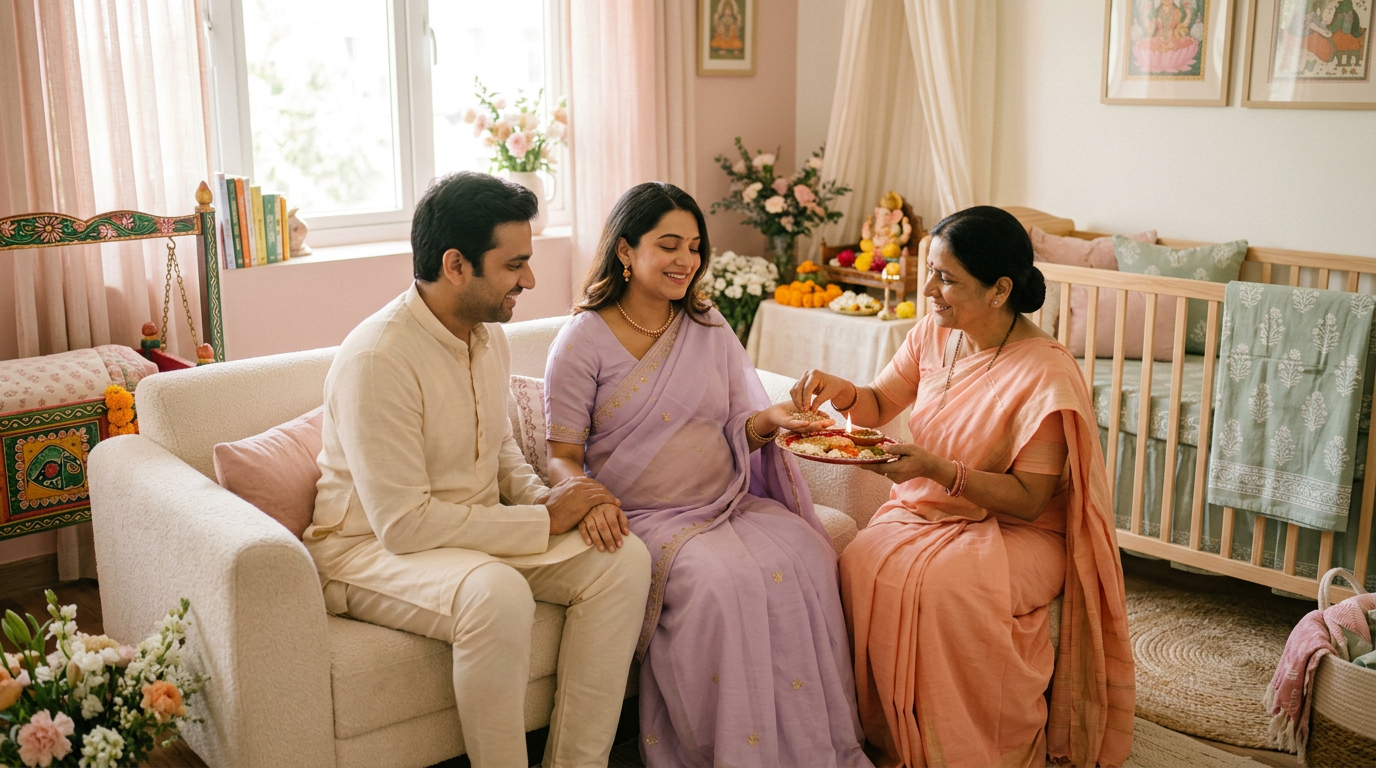
The moment that pink line appeared on the U-Prega strip, your mother-in-law probably started talking about Garbh Sanskar. Whether it’s listening to Shlokas or eating specific dry fruit ladoos, these ancient Indian practices are more than just "grandma’s tales." Modern epigenetics now confirms what our Vedas suggested: your baby’s brain development is actively influenced by your environment, thoughts, and diet from the first trimester. Garbh Sanskar isn't just about religious rituals; it is the science of prenatal education and foetal programming.
What exactly is Garbh Sanskar?
In Sanskrit, Garbh means foetus in the womb, and Sanskar means educating or refining. Essentially, it is the process of teaching your baby while they are still inside you. While it sounds mystical, the biological basis is solid. By the 24th week, your baby’s ears are fully developed and they can hear your heartbeat, your voice, and even the muffled sounds of the Gayatri Mantra or your favourite A.R. Rahman playlist.
The Five Pillars of Prenatal Bonding
* Vichar (Positive Thinking): Managing cortisol levels through mindfulness.
* Aahar (Sattvic Diet): Nutrient-dense foods like ghee, walnuts, and seasonal fruits.
* Vihar (Lifestyle): Gentle movement like Yogasana and walking.
* Dhyana (Meditation): Visualising your baby’s health and happiness.
* Sangeet (Sound Therapy): Using specific frequencies (like Raag Yaman or Malkauns) to soothe the foetal nervous system.
The Science of Sound: Why 'Garbh Samvad' Matters
Garbh Samvad or 'womb talk' is the practice of talking to your belly. You might feel a bit silly doing it at first, but science backs you up. Studies published in the Journal of Clinical Child & Adolescent Psychology show that newborns prefer their mother’s voice over any other sound.
How to do it:
> Mama-to-mama Real Talk: Let’s be honest. Between morning sickness and work deadlines, sometimes you just want to scroll through Instagram, not meditate for an hour. That’s okay. If all you can manage is five minutes of deep breathing while waiting for the pressure cooker whistle, you are still doing Garbh Sanskar. It’s about the intent, not the perfection.
Eating for Two (Centuries of Wisdom)
In our culture, the Sattvic diet is recommended during pregnancy. This isn't about restriction; it's about vitality. High-Prana (life force) foods are thought to improve the baby’s Buddhi (intellect).
Modern Science says:
* A2 Ghee: Ayurvedic texts swear by it for foetal brain development. Modern science agrees that healthy fats are crucial for the myelin sheath (insulation) of the baby’s neurons.
* Soaked Almonds & Walnuts: Wealthy in Omega-3 fatty acids, which are the building blocks of the foetal retina and brain.
* Coconut Water: A natural electrolyte-rich drink that matches the body's pH, often used in Indian traditions to keep the 'fire' (acidity) in the stomach low.
Traditional Recipe Swap: Instead of a sugary protein powder, try a homemade Ladoo made of Ragi (nachni), jaggery, and sesame seeds. It’s an iron and calcium powerhouse that your body will actually absorb.
Creating a 'Sanskar' Environment at Home
Your baby isn't just growing physically; they are absorbing your stress hormones. If you are constantly stressed by your Sasu Maa or your manager, your body produces cortisol. This passes through the placenta.
Small Shifts for Huge Impact:
* The No-Argue Zone: Make your bedroom a "conflict-free zone." If a family discussion gets heated, walk away. Explain to your family that "The baby is listening." This usually shuts down any argument in an Indian household faster than anything else!
* Visual Stimulation: Ancient texts suggest looking at beautiful things. In a modern context, this means looking at photos of nature, happy memories, or art. Skip the violent Netflix thrillers for a few months; your nervous system will thank you.
* The Power of Raag: Indian Classical Music, especially instrumental flute or Sitar, has been shown to stabilise the foetal heart rate.
Real talk from Indian moms
"I used to think my dadi was being extra when she told me not to watch scary movies. But I noticed when I watched any high-tension drama, my baby would kick aggressively. When I switched to morning Shlokas, the movements felt calmer. It might be a coincidence, but it helped me feel more peaceful, and that’s what mattered." — Ananya S., Bengaluru (Mom to a 6-month-old)
"My Garbh Sanskar was just 10 minutes of journaling every night where I told my baby about my day. It became my favourite 'me-time' ritual." — Priyanka M., New Delhi (Mom to a 3-year-old)
When to call your paediatrician (or OB-GYN)
While Garbh Sanskar is wonderful for mental and spiritual health, it does not replace medical care. Consult your doctor if:
* You are trying a new herbal supplement or 'kadha' recommended by relatives.
* Your baby’s movement patterns change significantly (less than 10 kicks in 2 hours after the 28th week).
* You feel overwhelmed by "pregnancy blues" or anxiety that prevents you from eating or sleeping.
* You experience any spotting, leaking, or intense abdominal pain.
Frequently Asked Questions
Can I start Garbh Sanskar in the third trimester?
Yes! While the earlier the better, the third trimester is when the baby’s brain is most active and reactive to sounds and your emotional state. It is never too late to start a bonding ritual.
Does it have to be religious?
Absolutely not. You can replace Shlokas with affirmative poetry, classical music, or even just peaceful silence. The goal is a relaxed, positive mother.
Will Garbh Sanskar make my baby a genius?
There is no "genius pill." However, reducing maternal stress and providing good nutrition creates the optimal environment for your baby to reach their full genetic potential.
Is 'Maalish' (massage) part of Garbh Sanskar?
Yes, it falls under Vihar. A gentle Abhyanga (massage) with warm sesame or coconut oil improves maternal circulation and reduces the stress hormone cortisol, which directly benefits the baby.
Are there any foods I should strictly avoid despite traditional advice?
Be careful with high-mercury fish or unpasteurised dairy, even if suggested as "pure." Also, avoid "hot" foods like excessive papaya or pineapple in the first trimester, as per traditional and some clinical observations regarding uterine contractions.
Final Thoughts
Garbh Sanskar isn't another chore to add to your long pregnancy to-do list. It is an invitation to slow down. In our fast-paced lives, these rituals give us permission to stop and connect with the little soul growing inside. Whether you choose to chant, paint, or just sit in the sun, do it with the knowledge that you are already your child's first and most important teacher.
You aren't just growing a baby; you are nurturing a legacy.
Sources & further reading
- Indian Academy of Pediatrics — Guidelines on Prenatal Care
- WHO — Recommendation on antenatal care for a positive pregnancy experience
- Journal of Clinical Child & Adolescent Psychology — Foetal Learning study
- National Health Portal India — Ayurveda in Pregnancy
- ICMR — Food and Diet During Pregnancy guidelines
Written by Dr. Ritu Sharma, MD (Obstetrics & Gynaecology)
Reviewed by TheMamaCircle Editorial Team
Last updated: 4 May 2026
This article is for general information only and is not a substitute for personalised medical advice. Always consult your paediatrician or obstetrician for your specific situation.