Newborn Baby Care in Hindi: The Terminology Every New Mom
*Jaappa*, *ghutti*, *nazar*, *sooth*, *langot* — decode the Hindi baby-care vocabulary your *dadi* and *nani* use, with what's evidence-based and what's just tradition.
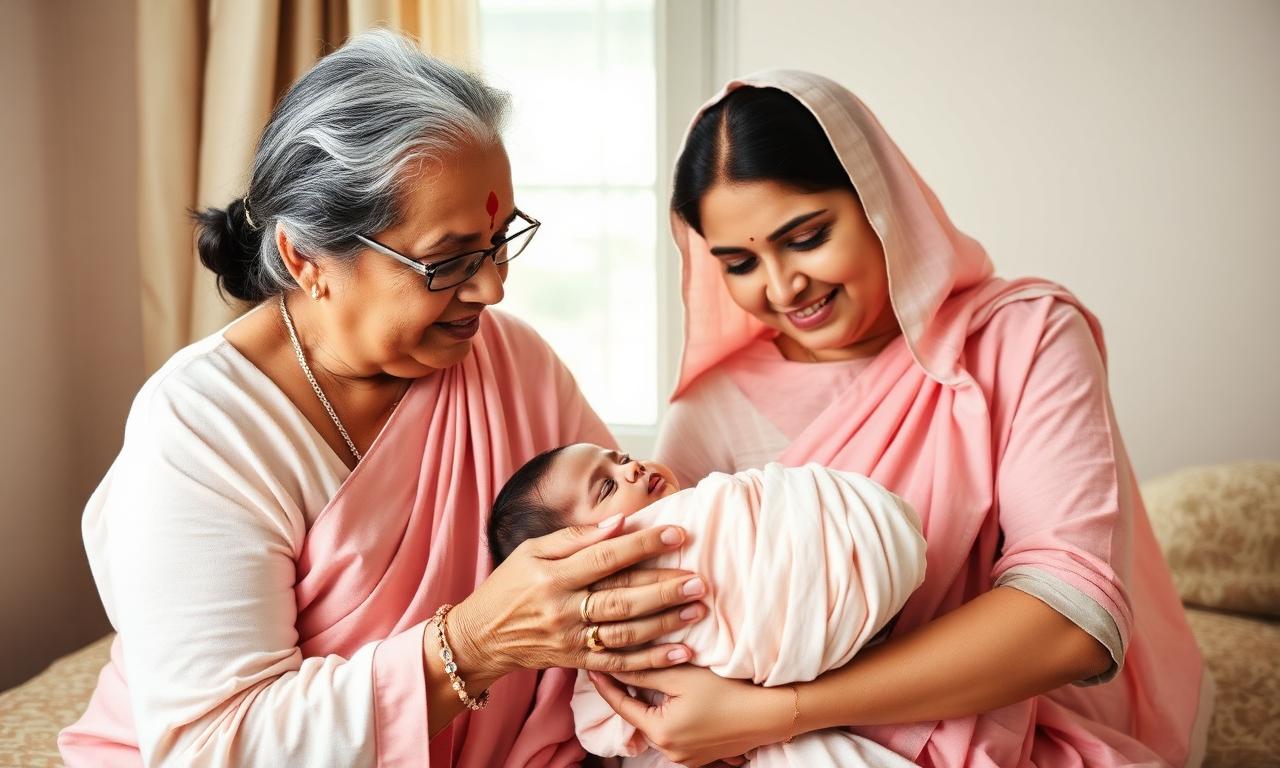
The low hum of the air conditioner is the only sound in the room, other than the soft snuffly noises from the tiny bundle in your arms. Your phone buzzes – it’s a video call from your mother-in-law. You answer, and her loving, concerned face fills the screen, “Beta, so gaya? Cry toh nahi kar raha? Gas ke liye thoda sa ghutti de dena, aaram milega.” You smile and nod, but a knot of confusion tightens in your stomach. Ghutti? What exactly is in it? Is it safe?
Welcome to motherhood, sweetie. It’s a beautiful journey, but it’s also a crash course in navigating a world of new (and very old!) terminology, especially when loving advice from our elders comes wrapped in traditional terms we don’t fully understand. You’re not alone. We’ve all been there, caught between generations, trying to do the best for our babies.
This is your go-to guide, your personal translator from traditional wisdom to modern-day parenting. Let’s decode it all together.
Postpartum & Mom Care Terms
The baby is here, but the focus is also on you, mama. The first 40 days are a sacred period of recovery, and our culture has a rich vocabulary for it.
Jaappa
* English Equivalent: Postpartum Confinement
* What it means: This is the traditional 40-day period after delivery where the new mother rests completely. She is given special foods, massages, and is shielded from household chores and stress to help her body heal and recover from childbirth.
Evidence-Based Take (SAFE & RECOMMENDED): The core principle of jaappa* – rest and recovery – is universally recommended by doctors, including AIIMS and WHO. Your body has just run a marathon! However, you can modify the traditional practice. Complete isolation isn't necessary and can sometimes lead to postpartum depression. Focus on getting maximum rest, eating nutritious food, and bonding with your baby. Don't be afraid to ask for help!
Sooth
* English Equivalent: A Postpartum Herbal Drink
What it means: A warm concoction, often made with carom seeds (ajwain), dill seeds (suva*), ginger, and other herbs. It's believed to help with uterine contraction, cleaning the womb, and improving digestion.
Evidence-Based Take (MODIFY): While many of these ingredients like ginger and ajwain* are known for their digestive benefits, there’s no scientific substitute for modern medicine. Use these traditional drinks for warmth and comfort, but for any serious postpartum issues like heavy bleeding or pain, please trust your gynaecologist, not just a herbal drink.
Paani Peena (Drinking Water)
* English Equivalent: Water Consumption
* What it means: Traditionally, some elders advise new mothers to drink less water, believing it can cause water retention or an increase in tummy size.
* Evidence-Based Take (AVOID THIS ADVICE): This is one tradition to politely ignore. Medical experts globally stress the importance of hydration, especially for breastfeeding mothers. Your body needs water to produce milk, recover, and flush out toxins. Aim for at least 8-12 glasses of water a day.
Garam Taasir & Thandi Taasir
* English Equivalent: 'Hot' & 'Cold' Food Properties
What it means: This is an Ayurvedic concept where foods are classified by their "thermal effect" on the body, not their literal temperature. Garam (hot) foods like ginger, nuts, and ajwain are believed to promote healing and lactation. Thandi* (cold) foods like cucumber, curd, and bananas are sometimes restricted.
Evidence-Based Take (MODIFY): A balanced diet is key. Many garam taasir foods are indeed nutrient-dense and great for recovery. However, there’s no scientific reason to completely avoid all thandi taasir* foods. If you’re craving a banana, have it! Listen to your body. Moderation is your best friend.
Gond ke Laddoo & Panjiri
* English Equivalent: Edible Gum Sweets & a Nut-Flour Mix
What it means: These are superfoods for new moms! Gond ke laddoo (made from edible gum, nuts, ghee, and jaggery) and panjiri* (a roasted whole-wheat flour mixture with nuts, seeds, and ghee) are calorie-dense and packed with energy, believed to strengthen the back and boost milk supply.
Evidence-Based Take (SAFE & RECOMMENDED): Go for it! These are fantastic sources of energy and good fats, which you desperately need. A single laddoo* can be a great snack. Just be mindful that they are rich, so one or two a day is plenty.
> Real Mama Talk
> "My Marwari MIL flew down to Bangalore after my son was born and the first thing she did was take over the kitchen to make a giant dabba of panjiri. I was skeptical at first, thinking it was just 'old people food'. But honestly, those 4 pm hunger pangs while feeding Vivaan were real, and a small bowl of panjiri with warm milk was a lifesaver! It felt like a warm hug in a bowl."
> \- Priya, Bangalore, mama to Vivaan (6 months)
Feeding Terms
Feeding your newborn is a journey of its own. Here’s how to navigate the advice you’ll hear.
Ghutti or Gripe Water
* English Equivalent: Herbal/Commercial Digestive Tonic
What it means: Given to babies to relieve colic, gas, or indigestion. Traditional ghutti* is a homemade mix of herbs, while commercial gripe water (like Woodward's) is readily available.
Evidence-Based Take (AVOID): The Indian Academy of Pediatrics (IAP) and WHO strongly advise against giving anything other than breast milk or formula to a baby under 6 months. Many homemade ghuttis* have unknown ingredients, and some older gripe water formulations contained alcohol and high amounts of sugar. They can interfere with feeding and are not proven to be effective.
Upri Doodh
* English Equivalent: Top Milk / Other Milk
* What it means: Any milk other than mother's milk – this could be formula, or more traditionally, cow's or goat's milk. It’s often suggested if there's a perception that the mother's milk is insufficient.
Evidence-Based Take (AVOID BEFORE 6 MONTHS UNLESS MEDICALLY ADVISED): The official recommendation is exclusive breastfeeding for the first six months. Formula is a safe alternative if needed, but animal milk is a strict no-no for babies under one year as their kidneys cannot handle the high protein and mineral content. If you're worried about your supply, see a lactation consultant before starting any upri doodh*.
Maa ka Doodh & Doodh Sukhna
* English Equivalent: Mother's Milk & Milk Drying Up
What it means: Maa ka doodh is, of course, breast milk – liquid gold! Doodh sukhna* is the fear that the milk supply will dry up.
* Evidence-Based Take: Breast milk is the perfect food for your baby. The fear of it "drying up" is common but often unfounded. Milk production is a demand-and-supply system. The more you feed, the more you make. Don't fall for myths that stress or certain foods will instantly dry up your supply. Stay hydrated, eat well, and feed on demand.
Bathing & Skin Terms
That first bath is a milestone! But newborn skin is delicate, and traditional practices need a second look.
Maalish
* English Equivalent: Massage
* What it means: The daily ritual of massaging the baby. It's believed to strengthen bones, improve circulation, and aid sleep.
* Evidence-Based Take (SAFE & HIGHLY RECOMMENDED): A gentle massage is wonderful for your baby! It’s a beautiful way to bond, and studies show it can help with sleep and relieve colic. Use firm but gentle strokes.
Sarson Tel
* English Equivalent: Mustard Oil
What it means: The traditional oil of choice for baby massage in many parts of India, sometimes infused with garlic or ajwain*.
* Evidence-Based Take (MODIFY): While traditional, pure mustard oil can be pungent and sometimes irritating to a newborn’s sensitive skin. It’s better to use a cold-pressed, organic coconut or almond oil. Or, opt for specially formulated baby massage oils from brands like Himalaya (around ₹220) or Mamaearth (around ₹300). Always do a patch test first!
Ubtan
* English Equivalent: Traditional Cleansing Paste
What it means: A paste, usually of gram flour (besan), turmeric (haldi), and milk or cream, used to bathe the baby and remove fine body hair (lanugo*).
Evidence-Based Take (AVOID/MODIFY): Besan* can be very drying and can strip the natural oils from your baby's skin. Vigorous rubbing to remove hair can cause rashes. It’s much safer to use a gentle, soap-free baby wash from a trusted brand like Sebamed or Chicco (prices range from ₹250 to ₹600). The fine hair will fall off on its own.
Kajal & Dittho
* English Equivalent: Kohl Eyeliner & a Protective Dot
What it means: Kajal is applied to the baby's eyes to make them look big and beautiful, and to ward off the evil eye (nazar). A dittho* is a small black dot, often placed on the forehead, cheek, or sole of the foot for the same purpose.
Evidence-Based Take (AVOID KAJAL IN EYES, DITTHO IS HARMLESS): This is a non-negotiable. Do not apply kajal inside your baby's eyes. Most commercially made kajal, and even homemade versions, can contain high levels of lead, which is a neurotoxin. It can also cause allergies, watery eyes, and block tear ducts. The IAP explicitly warns against it. A small dittho* on the sole of the foot is a harmless compromise to honour the tradition.
> Real Mama Talk
> "In my family in Lucknow, putting kajal on a baby is everything. When my daughter Myra was born, the pressure was immense. My mother and aunts were convinced I was leaving her unprotected from nazar. I finally had to get my paediatrician to speak to my mom on the phone. Now, we put a tiny dot behind her ear where no one can see it. It's our little secret compromise!"
> \- Fatima, Lucknow, mama to Myra (4 months)
Sleep & Comfort Terms
"Sleep like a baby," they say. If only it were that simple!
Lori* (Lullaby): The gentle act of singing to your baby. SAFE & BEAUTIFUL. Your voice is the most comforting sound in the world to your little one.
Jhula (Swing/Cradle): A traditional cloth cradle. SAFE WITH SUPERVISION. The gentle rocking motion is soothing. Ensure the mattress is firm and there are no loose blankets. Never leave a baby unattended in a jhula*.
Patti (Headband): A tight band worn around the baby's head to shape the skull or press the ears flat. AVOID. A baby's skull is meant to be soft and will round out on its own. A patti* is uncomfortable and completely ineffective.
Langot / Nappy* (Cloth Nappy): A small, triangular piece of soft cotton cloth used as a diaper. SAFE, BUT LABOUR-INTENSIVE. These are eco-friendly and breathable. However, they need to be changed the second they are wet to prevent painful diaper rash. Modern cloth diapers (like those from Superbottoms) or disposables (Pampers, Huggies) are often more practical for urban parents.
Health & Belief Terms
Is it gas or is it colic? Is he yellow? Here's the breakdown.
Nazar (Evil Eye): The belief that an admiring or envious gaze can cause harm to the baby. HARMLESS BELIEF. The dittho* or tying a black thread is a way to manage this belief without doing any harm.
Peela Hona* (Jaundice): The yellowing of skin and eyes. This is due to a buildup of bilirubin. MEDICAL CONDITION, NOT A BELIEF. Mild newborn jaundice is common and often resolves on its own. However, high levels can be dangerous. If your baby looks yellow, don't rely on sunlight through a window or herbal remedies. See a doctor immediately.
Gas* / Colic: General fussiness, crying, and pulling legs up to the tummy. COMMON & NORMAL. Gas is very common as their digestive systems mature. Colic is defined as inconsolable crying for more than 3 hours a day, 3 days a week. SAFE SOLUTIONS include proper burping, tummy time, "bicycle legs," and a gentle tummy massage.
Teething / Daant Nikalna*: Crying, drooling, and a desire to chew on everything. NORMAL MILESTONE. Offer safe, chilled teethers (Pigeon and Mee Mee make good ones, around ₹150-₹300). You can gently massage their gums with a clean finger. Avoid teething necklaces (choking hazard) and most teething gels.
Hichki* (Hiccups): Those cute little spasms of the diaphragm. PERFECTLY NORMAL. Hiccups are common in newborns and usually don't bother them at all. It's often caused by feeding too quickly. You can try offering a feed to help them stop, but it's fine to just let them pass.
Ceremonies & Milestones
These are the beautiful cultural events that mark your baby's journey.
* Chatti: A ceremony held on the sixth day after birth to celebrate and seek blessings for the baby.
* Naamkaran: The naming ceremony, held around the 12th day or later, where the baby is officially given their name.
* Mundan: The baby's first haircut, a ritual of purification.
* Annaprashan: The baby's first taste of solid food, usually around the six-month mark.
Enjoy these moments! They are about creating a community of love around your child.
Red Flags: Traditional Practices to Politely Skip
Let's be crystal clear. While we respect tradition, your baby's safety comes first. Politely but firmly decline these:
Putting kajal* or any substance in the baby's eyes.
* Giving honey before the age of one. WHO warns this can cause infant botulism, a serious illness.
Giving ghutti*, gripe water, or any other liquid besides milk/formula before 6 months.
* Aggressive head shaping with pillows or hands.
* Using talcum powder, which can be inhaled and cause respiratory issues. Stick to cornstarch-based powders if you must, or better yet, just keep the area dry.
A Sample Script: How to Say No Without Hurting Feelings
Navigating conversations with loving elders can be the hardest part. Try the "Acknowledge-State-Reassure" method.
Scenario: Your MIL insists on giving a bit of honey for a cough.
You: "Mummy-ji, thank you for thinking of this, I know you just want her to feel better. Our doctor was very strict about not giving honey before her first birthday because of a risk called botulism. We are so lucky to have your experience, but for this one thing, I really have to follow the doctor's orders. Maybe we can try giving her some extra breast milk instead?"
This approach shows you value their input while holding your ground on a critical safety issue.
Remember, mama, you are the expert on your baby. You are blending the love of generations with the knowledge of today. You are strong, you are smart, and you are doing an absolutely amazing job.
> 📚 This post is part of our Complete 0–3 Month Newborn Care Guide — your complete 0–3 month roadmap for Indian moms.