How to Choose Age-Appropriate Montessori Toys for Your Baby (0–3 Years)
A practical, stage-by-stage guide to picking Montessori toys that actually match what your baby can do — from newborn contrast cards to toddler pretend play.
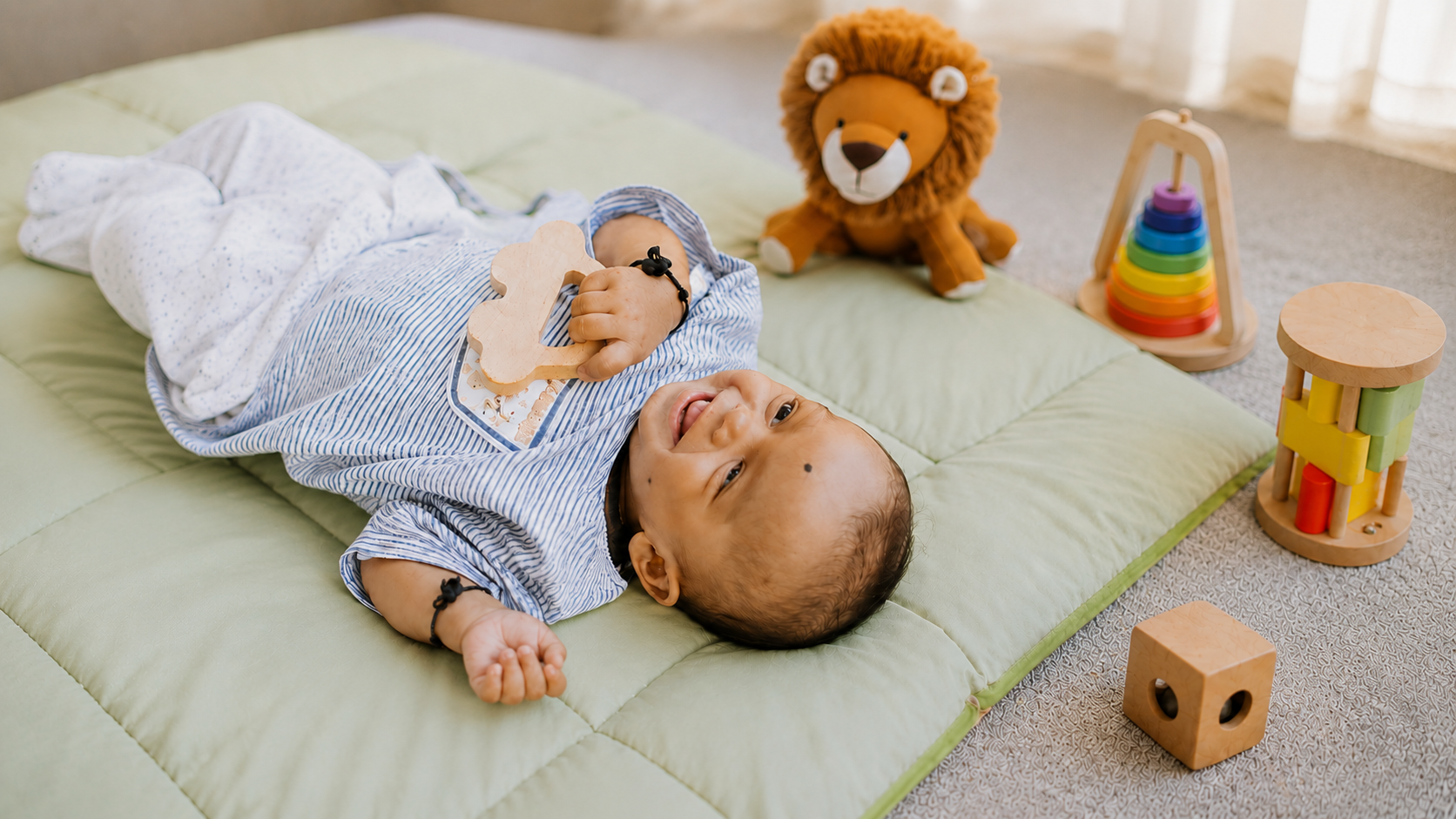
I still remember standing in a toy aisle, my nephew's birthday list in hand, totally stuck. Everything either blinked, sang, or needed six AA batteries just to make noise. At some point I just stood there thinking, does any of this actually teach a baby something, or are we all just buying noise machines with bows on them?
Turns out a lot of parents ask themselves the same question eventually. And that's usually when someone mentions Montessori toys.
Now, Montessori isn't some fancy new parenting trend that showed up on Instagram last year. Maria Montessori started this whole approach over a hundred years back, and honestly the core idea hasn't really changed since - kids pick things up faster when you let them explore on their own instead of constantly stepping in to show them how.
So how do you pick the right one? Age, more than anything else, is what most of us end up ignoring while we're busy grabbing whatever's trending that month.
Why the age stage actually matters
Here's the thing nobody really explains at the store - a toy your toddler will obsess over at 2 years old might be completely pointless to a 6-month-old, and could even be a safety risk. Babies change so much in these first three years that what worked last month might not work this month.
So instead of following what's trending, it helps to go by what your child can actually do right now.
0 to 6 months
Newborns are basically taking everything in through their senses. They can't really grab things properly yet, so at this stage it's less "playing" and more just soaking things in.
Things that tend to work well here:
- Black, white and red contrast toys (newborns see these shapes much more clearly than pastel colours, which honestly surprised me when I first heard it)
- Soft rattles that don't have harsh or loud sounds
- Fabric toys with different textures for grabbing and yes, chewing
- Wooden teethers, as long as they're made with safe, natural materials since everything ends up in their mouth anyway
This is also a nice age to bring in tummy-time toys - something as simple as a small unbreakable mirror placed near them during floor time works surprisingly well. Babies are oddly obsessed with faces, including their own, so it turns tummy time from a chore into something they actually enjoy.
Steer clear of anything with parts small enough to come loose, or toys loud enough to startle them mid-play.
6 to 12 months
This is when babies really start moving - sitting, reaching, sometimes crawling by the end of it. They also get obsessed with cause and effect. Drop something, watch what happens, do it again. And again.
Worth trying:
- Simple stacking rings
- An object permanence box (if you haven't seen one, it's basically a small box where a ball drops through a hole and disappears, then reappears when they pull a little tray out - sounds simple but babies genuinely love it)
- Soft blocks for banging together
- Toys with mixed textures
1 to 2 years
Repetition is the name of the game here. Toddlers will do the exact same puzzle piece removal fifteen times in a row, and that's not boredom - that's literally how their brain is wiring itself.
Good options:
- Wooden puzzles with big knobs that are easy for little hands to grip
- Shape sorters
- Nesting cups
- Push toys that help with walking
2 to 3 years
By now there's more talking, more understanding, and pretend play starts becoming a big part of how they learn.
Things worth having around:
- Building blocks
- Pretend play sets - a toy kitchen set, doctor kit, whatever sparks their interest
- Slightly more complex puzzles
- Chunky crayons or washable paints for early art
A few things I'd keep in mind regardless of age
Open-ended toys tend to win over single-purpose ones almost every single time. A block can turn into a tower one day and a pretend phone the next - whatever the kid decides. A toy that only does one trick gets old fast.
And weirdly, simpler toys often work better. Sounds backwards, but toys loaded with lights, sounds and buttons can overstimulate a baby instead of helping them focus. Fewer distractions actually means the child has to think a bit instead of just reacting to flashing lights.
Material is something worth paying attention to too, especially in the early years when literally everything gets chewed. A lot of parents are moving away from plastic toys and looking at wooden ones instead, mainly because they tend to use safer, non-toxic finishes. Brands like NESTA TOYS have leaned into this fully, which is honestly useful if you'd rather not spend an evening reading ingredient label on toy packaging (we've all been there).
And maybe the most underrated tip - you really don't need a mountain of toys. Five or six that actually match your child's stage will get used far more than twenty sitting untouched in a bin.
Something that's actually worked for us is toy rotation. Instead of keeping everything out at once, pack a few away and swap them back in every couple weeks. Kids tend to "rediscover" a toy they'd forgotten about and get just as thrilled as the first time around. Small habit, but it makes even a handful of toys feel like a much bigger collection.
Before your next toy purchase
Ask yourself - will this still interest my child in a month? Can it be used more than one way? Can they figure it out mostly on their own, without me hovering and showing them every step?
If most of the answers are yes, you're probably picking well.
At the end of the day, this isn't really about hunting down the prettiest wooden toy set on the internet (though yeah, they usually do look great). It's more about stepping back a little and letting your child work things out with their own hands, at their own pace - which, if I'm honest, is a lot harder for us parents than it sounds.