Indian Pregnancy Food List: First Trimester Guide & Chart
Confused about raw papaya or ragi? Get the ultimate Indian pregnancy food list for your first trimester. Discover what to eat, skip, and local superfoods. Read more!
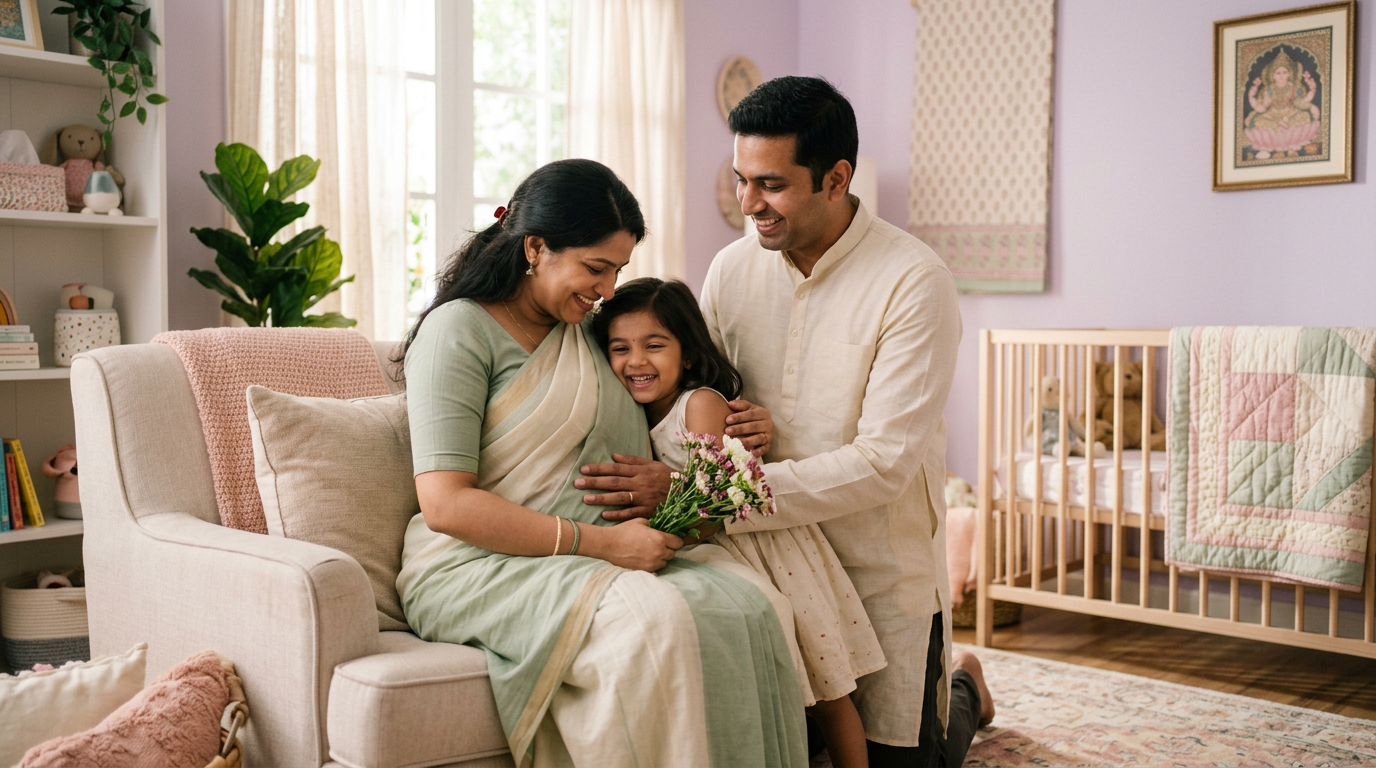
The moment those two pink lines appear on the Prega News strip, your kitchen suddenly feels like a minefield. During my first pregnancy, my sasu maa hid the papayas, my mother insisted on ajwain water, and all I actually wanted was a bowl of cold dahi-chawal. In the first trimester, your body is working overtime to build the placenta and your baby's vital organs, so your diet needs to focus on Folic Acid, Iron, and Vitamin B6—while navigating the morning sickness that makes everything smell like laundry detergent.
What is the ideal Indian pregnancy food list for the first trimester?
In the first 12 weeks, quality beats quantity. You don’t need "extra" calories yet (that starts in the second trimester), but you do need nutrient-dense Indian staples. Focus on folate-rich dals (moong, masoor), iron-packed green leafy vegetables (palak, methi), and Vitamin C sources like amla or nimbu paani to help with iron absorption. If you can’t stand the sight of a full thali, small "snack-meals" every 2-3 hours are your best friend to keep nausea at bay.
Essential Nutrients: The "Big Three" for Indian Moms
1. Folic Acid (The Brain Builder)
The Indian Dietetic Association emphasizes folate to prevent neural tube defects. While your doctor will prescribe a folic acid supplement (don't skip it!), you can boost levels naturally:
Dals & Legumes: A bowl of yellow moong dal or chana* provides a solid base.
Green Leafy Veggies: Palak (spinach) is the gold standard. Try a simple palak paneer or methi paratha*.
* Oranges: Great for folate and better than juice because of the fibre.
2. Vitamin B6 (The Nausea Fighter)
If the mere smell of tadka makes you run for the bathroom, B6 is your ally.
* Bananas: The ultimate "first trimester survival food." Easy on the stomach.
Ginger: Not a vitamin, but a medicinal powerhouse. Adrak wali chai* (with limited caffeine) or simply sucking on a piece of ginger with black salt can settle the stomach.
Peanuts: A handful of roasted mungfali* is great if you aren't allergic.
3. Iron & Vitamin C
Indian women are prone to anaemia. Since your blood volume is increasing, you need:
Poha: Flattened rice is surprisingly high in iron. Squeeze a whole nimbu* (lemon) over it; the Vitamin C ensures the iron actually gets absorbed.
Beetroot: A small portion of chukandar* salad or raita.
* Amla: The Indian gooseberry is a Vitamin C bomb and helps with that metallic taste many moms get in their mouth.
*
> Real talk from the clinic: I often see moms-to-be forcing themselves to eat "healthy" broccoli or oats because a Western website said so. Stop. If your soul craves khichdi or lemon rice, eat it. Your body is more likely to keep down familiar, "home" foods during this nauseous phase than a kale smoothie you’ve never liked anyway.
*
Regional Indian Superfoods for the First Trimester
India’s diversity is our biggest nutritional strength. Depending on where you are, these local options are fantastic:
North India: Paneer (protein), Dahi (probiotics for digestion), and Desi Ghee* (in moderation, for fat-soluble vitamins).
South India: Idli and Dosa (fermented foods are great for gut health), Ragi Malt (calcium and iron), and Curd Rice* (the ultimate tummy-soother).
West India: Thalipeeth (multi-grain power), Amsul/Kokum Sharbat* (excellent for morning sickness and acidity).
East India: Sattu (protein-rich drink), grilled fish (ensure it's well-cooked for Omega-3s), and Lauki* (easy to digest).
Foods to Skip: Separating Myth from Fact
There is a lot of "dadi-nani" advice that can be confusing. Let’s look at what the science (and your gynae) says:
The Absolute No-Nos (Medical Grounding)
Items to Limit
* Caffeine: Limit to one small cup of tea or coffee a day. Excess caffeine is linked to lower birth weights.
Sugar & Maida: Avoid the mithai* shop binging. First-trimester fatigue is real, and sugar crashes make it worse.
Excessive Spices: Spicy mirchi* can worsen the heartburn that often starts early.
Real Talk: "I can't even look at food!"
Ananya, a 28-year-old software engineer from Bengaluru, told us: "By week 7, the smell of sambhar tadka made me cry. I lived on cold dahi-chawal and Marie biscuits for three weeks. I felt like a failure."
The truth: Ananya isn't a failure; she's normal. If you are struggling with "all-day" sickness:
When to call your paediatrician (or Gynaecologist)
While some discomfort is expected, these are red flags in the first trimester:
* Hyperemesis Gravidarum: If you cannot keep even water down for 12-24 hours.
* Severe Cramping: Mild stretching is normal, but sharp, persistent pain is not.
* Any Spotting or Bleeding: Even "light pink" should be reported immediately.
* High Fever: Above 100.4°F (38°C).
* Burning Sensation: If you have pain while urinating (UTIs are common and need treatment).
Frequently Asked Questions
Can I eat saffron (Kesar) in the first trimester?
Traditionally, it's believed to improve the baby's complexion (a myth!). Scientifically, a strand or two in milk is fine, but avoid large quantities as it can cause uterine stimulants. Most doctors recommend waiting until the second trimester when the pregnancy is more stable.
Is it safe to eat Ajwain during the first 3 months?
Tiny amounts in your paratha are okay for digestion. However, concentrated ajwain water or large doses are traditionally considered "garam" (hot) and are best minimized until later in pregnancy.
How much water should I drink?
Aim for 2-2.5 litres. In India’s heat, dehydration triggers nausea and dizziness. If plain water feels "heavy," try coconut water (nariyal paani) or buttermilk (chaas).
Do I really need to eat for two?
No! This is a total myth. In the first trimester, your baby is the size of a kidney bean. You need 0 extra calories. Focus on the quality of nutrients, not the quantity of rotis.
Can I eat Chinese food or street food?
Limit MSG (Ajinomoto) as it can cause headaches and dehydration. As for street food like pani puri, the risk is mainly water-borne diseases like Typhoid or Hepatitis. If you're craving it, make the "teekha paani" at home with RO water.
The first trimester is about survival and foundational growth. Listen to your body—it’s smarter than any app. If you can only eat khichdi this week, eat the best, most lovingly made khichdi possible. You're doing great, Mama.
Repeat after me: "I am nourishing my baby, even on the days I can only eat crackers."
Sources & further reading
- Indian Academy of Pediatrics (IAP) — Nutrition Guidelines for Pregnancy
- ICMR-National Institute of Nutrition — Dietary Guidelines for Indians, 2024
- FOGSI — Good Clinical Practice Recommendations on Antenatal Care
- WHO — Antenatal care for a positive pregnancy experience
Written by Dr. Ritu Sharma, MD (Obstetrics & Gynaecology)
Reviewed by TheMamaCircle Editorial Team
Last updated: 23 May 2026
This article is for general information only and is not a substitute for personalised medical advice. Always consult your paediatrician or obstetrician for your specific situation.