Kitchen Organization 101: Meal Prepping for New Mamas in
Survive the fourth trimester with ease! Learn how to organize your Indian kitchen and meal prep effectively while caring for a newborn. 🍼🍲
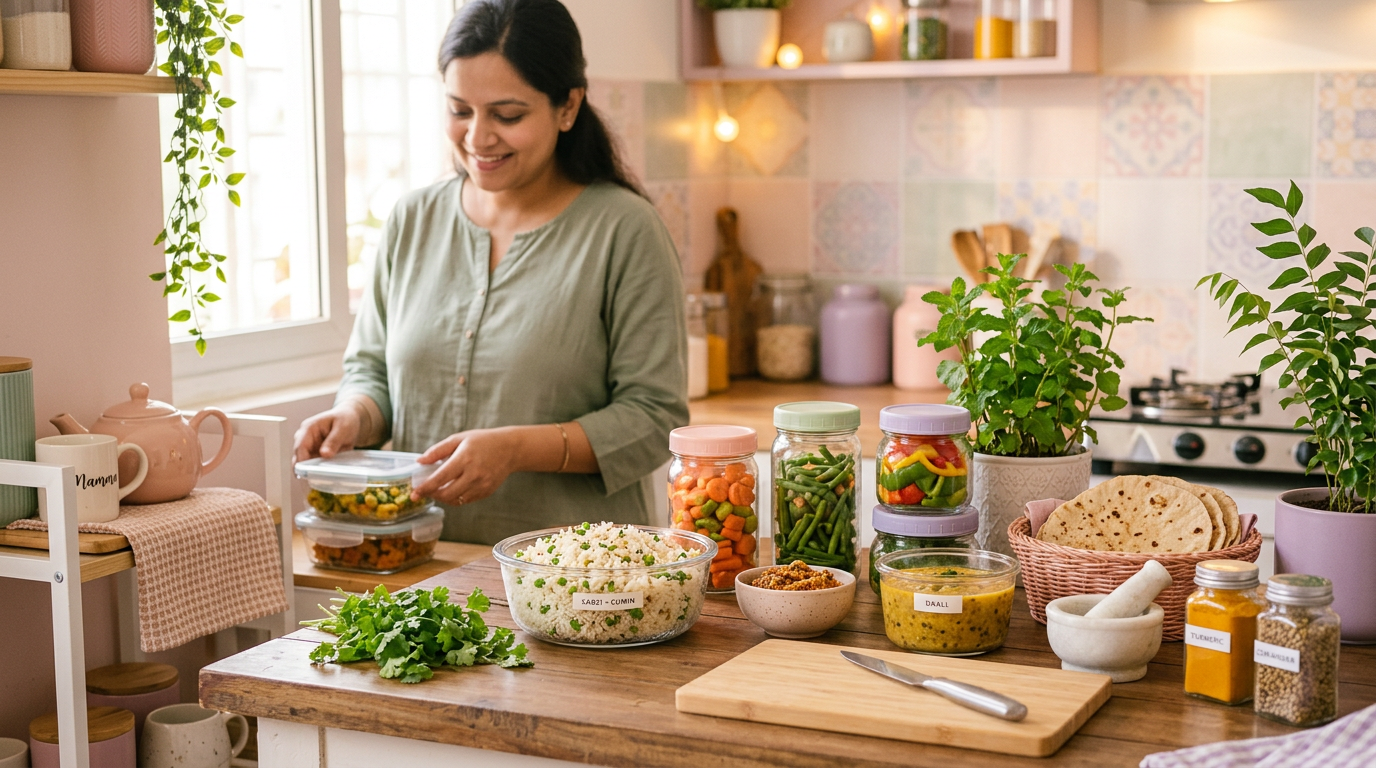
The Newborn Fog and the Kitchen Chaos
Congratulations, Mama! You’ve brought your little bundle of joy home, and life is now a beautiful, albeit slightly blurry, whirlwind of diaper changes, sweet snuggles, and late-night feeds. Amidst all this magic, there’s one reality we all face: the hunger hits hard.
When you’re nursing or recovering from birth, you need nutritious meals more than ever. But let’s be honest—standing in the kitchen for an hour to sauté onions and grind masalas feels like running a marathon right now. The secret to surviving (and thriving) during the "fourth trimester" isn't about being a MasterChef; it's about setting up a kitchen system that works for you, even when you’re operating on three hours of sleep.
Here is how you can organize your Indian kitchen to make meal prep a breeze with a newborn in the house. 🥣
1. The "Golden Zone" Strategy
In kitchen organization, the "Golden Zone" is the area between your shoulders and knees—the drawers and shelves you can reach without a stool or bending down too far (which is especially important if you’ve had a C-section).
* Relocate your heavy Kadais: Move those heavy cast iron pans and large pressure cookers to the counter or a waist-high shelf. You shouldn’t be straining your core to reach for them.
The Daily Spice Box (Masala Dani): Keep your primary Masala Dani* right next to the stove. Ensure it’s topped up with the essentials: turmeric, cumin, mustard seeds, coriander powder, and salt.
* Daily Dals & Grains: Move your moong dal, toor dal, and primary rice container to the front of the pantry. These are your quick-cooking lifesavers.
2. Set Up a "Grab-and-Go" Snack Station
Nursing hunger is real and it is intense! When you’re trapped under a sleeping baby, you need snacks that can be eaten with one hand.
The Countertop Basket: Keep a basket on your kitchen island or dining table filled with healthy, lactation-friendly snacks. Think Makhana (fox nuts) roasted in ghee, dry fruits, and Laddoos* (traditional Gond or Methi laddoos made by your mom or MIL).
* Pre-cut Fruits and Veggies: Spend 15 minutes twice a week washing and chopping grapes, papaya, or cucumber. Store them in clear glass containers at eye level in the fridge.
The Hydration Hub: Breastfeeding requires immense hydration. Keep a dedicated spot for your 1-liter water copper jug or a high-quality insulated bottle. Add some Ajwain* (carom seeds) water if that's part of your postpartum tradition!
3. The Power of "Batch-Prepping" Ingredients
In an Indian kitchen, the "base" of most meals takes the most time. If you can automate the base, you can cook a fresh meal in 10 minutes.
* The Ginger-Garlic Paste Ritual: Don't buy the store-bought stuff if you can help it. Once a week, ask your partner or a helper to grind a large batch of ginger-garlic paste. Store it in a glass jar with a layer of oil on top to keep it fresh.
* Boiled Legumes: Boil a large batch of chickpeas (chole) or kidney beans (rajma). Portion them into small steel containers or silicone bags and freeze them. Now, making a curry is just a matter of adding them to a quick tomato base.
Chopped Greens: If you love your Saag or Palak*, wash and chop them as soon as they come from the market. Store them in a dry cloth bag in the fridge.
4. Modern Tools are Your Best Friends
Now is the time to let technology do the heavy lifting. If your budget allows, these tools are game-changers:
* The Vegetable Chopper: A simple manual pull-chopper (like the ones from Pigeon or Wonderchef) can dice onions and tomatoes in seconds without the cleanup of a heavy food processor.
* Electric Kettle: Essential for making quick oats, soothing herbal teas, or warming up water for a quick sterilization of pump parts.
* Rice Cooker/Multi-cooker: Being able to "set it and forget it" is a luxury. A rice cooker with a steamer basket allows you to cook your rice and steam veggies at the same time.
5. Simplify Your System for Utensils
A newborn means more dishes—bottles, pump parts, and your own plates.
* The "Dirty" Zone: Designate one specific corner of the sink for baby-related items only. This prevents peppermint oil or spicy curry residue from your dishes getting onto baby's things.
Open Shelving for Daily Wear: Don't hide the plates you use three times a day behind a cabinet door. Keep your daily thalis* and bowls on an open rack near the sink.
The "One-Pot" Mentality: For the next few months, embrace Khichdi, Pulao*, and one-pot pastas. The fewer pots you use, the less time you spend at the sink.
6. Create a "Help Wanted" List
When relatives or friends visit and ask, "How can I help?", we often say "Nothing, I'm fine." Stop doing that, Mama!
Keep a small whiteboard or a sticky note on the fridge with a "Kitchen To-Do" list. It could include:
People genuinely want to help, and giving them a specific task takes the mental load off your shoulders.
7. A Note on Tradition: The Postpartum Diet
In many Indian households, the first 40 days (Sawa Mahina) involve a specific diet intended to heal the body. If you are following this, organize a small "Hearth Corner" in your kitchen where your specific ingredients—like Ghee, Ajwain, Suwa (Dill) seeds, and Dalia—are kept together. This ensures whoever is cooking for you doesn't have to hunt for these special ingredients.
Wrapping Up with Love
Mama, your kitchen might not look like a Pinterest board right now. There might be a stray bottle nipple next to the spice box, and that's perfectly okay. The goal of organizing your kitchen during this phase isn't perfection; it's accessibility and ease.
By spending just a little time setting up these systems, you’re giving yourself the gift of more time—time to rest, time to heal, and most importantly, more time to stare at those tiny toes.
You’re doing an amazing job. Take a deep breath, grab a cookie from your new snack station, and remember: this phase is short, but your health is a priority.
Happy nesting (and snacking)! 🥣✨❤️🌍