Menu List of Food for Breastfeeding Mothers: India Guide
Looking for a menu list of food for breastfeeding mothers? Discover Indian galactagogues like methi & shatavari to boost supply naturally. Eat well, Mama!
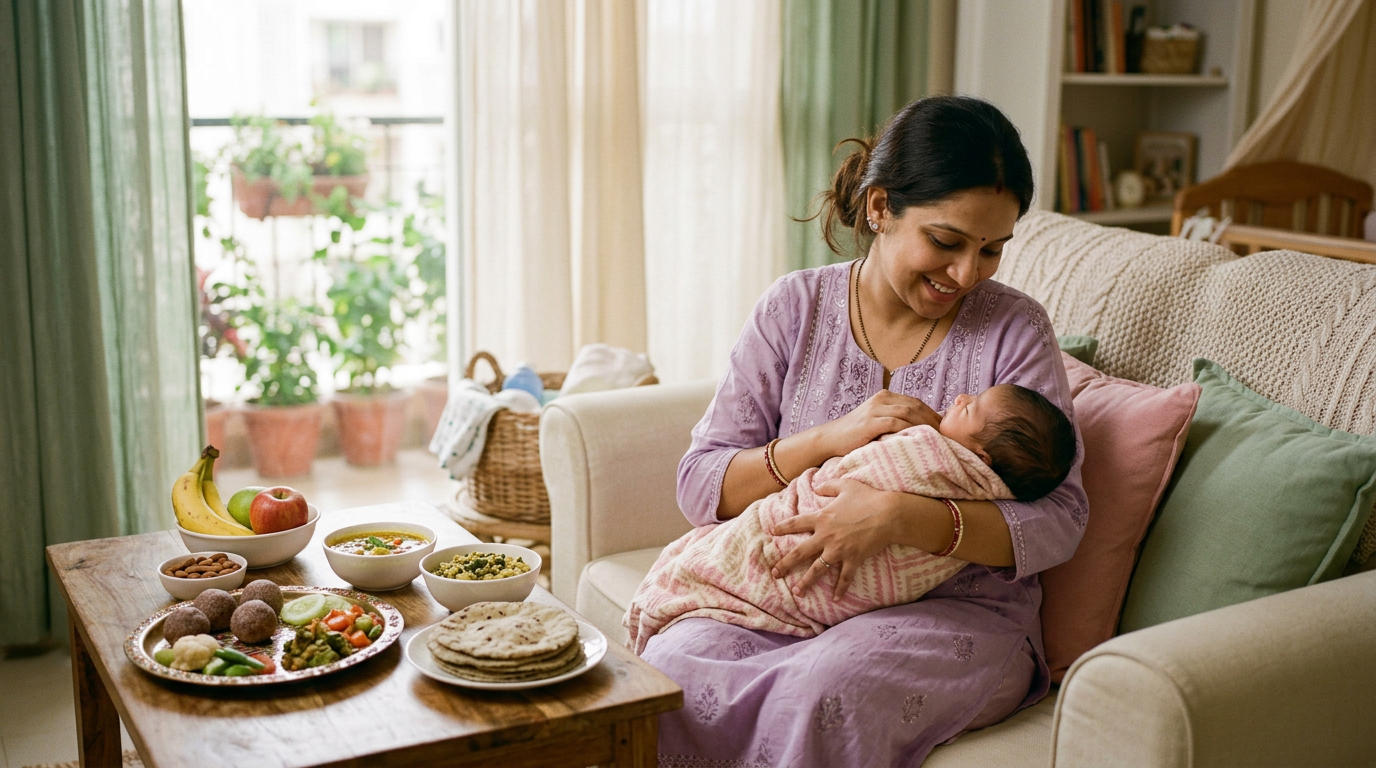
You just brought a tiny human home, and suddenly, your kitchen looks like a mini-pharmacy of dabbas filled with methi ladoos, gond panjiri, and ajwain ka paani. Your sasu maa is hovering with a bowl of ghee-laden sheera, while your Instagram feed is shouting about kale smoothies. If you are looking for a menu list of food for breastfeeding mothers that respects Indian traditions but follows modern nutritional science, you are in the right place.
During the postnatal recovery period (also called postnatal), your body is doing the heavy lifting of healing from birth—whether it was vaginal or C-section—while producing a literal life-source. According to the ICMR (Indian Council of Medical Research), a breastfeeding mother needs about 500-600 extra calories a day. But those calories shouldn't just come from sugar and ghee; they need to be nutrient-dense to ensure you don't end up feeling like a zombie by 4 PM.
Why a Postnatal Menu List is Different in India
In India, the Prasava Kaalam or the first 40 days is treated with extreme sanctity. We focus on Pathyam (dietary discipline) that avoids "gas-forming" foods and emphasizes warming ingredients. While some old-school myths (like avoiding papaya or citrus) are medically unnecessary, the focus on hydration and easy-to-digest khichdi is actually genius. A solid menu list of food for breastfeeding mothers helps stabilize blood sugar, prevents the dreaded "postnatal hair fall," and supports your milk supply.
If you are struggling with low supply, understanding how to increase breast milk involves more than just eating; it requires frequent nursing and proper latching. However, the right fuel makes the process significantly easier.
The Ultimate Menu List of Food for Breastfeeding Mothers
Here is a sample Indian menu list of food for breastfeeding mothers that balances traditional galactagogues (milk-boosting foods) with modern nutritional needs.
Early Morning (6:00 AM – 7:00 AM)
A glass of warm water with a teaspoon of soaked ajwain (carom seeds) or jeera* (cumin). This helps with postnatal digestion.
* 5-6 soaked almonds and 2 walnuts.
* 1 Methi Ladoo: A classic Indian staple. Methi for breastfeeding is one of the most studied herbs for increasing prolactin levels.
Breakfast (8:30 AM – 9:30 AM)
Option 1: Ragi Malt or Ragi Dosa*. Ragi is a calcium powerhouse, essential since nursing leaches calcium from your bones.
Option 2: Oats Upma* with lots of carrots and beans. Oats contain beta-glucan, which is fantastic for supply.
Option 3: Stuffed Paneer Paratha* (made with minimal oil/ghee) with a bowl of curd.
Mid-Morning Snack (11:00 AM)
* A seasonal fruit: Chickoo, Banana, or Pomegranate. (Ignore the "cold food" myth; Vitamin C is vital for healing).
* Shatavari Kalpa in Milk: Many Indian moms use shatavari for breastfeeding as it is an adaptogenic herb that helps regulate hormones. You can find 250g tins of Shatavari Kalpa from brands like Baidyanath or Kottakkal for approximately ₹250–₹400.
Lunch (1:00 PM – 2:00 PM)
* 1 bowl of Masoor Dal or Moong Dal: Easy on the gut.
* 2 Chapatis (spread with a little ghee).
* 1 bowl of Lauki (Bottle Gourd) or Torai (Ridge Gourd) sabzi. These water-heavy vegetables are the gold standard in Indian postnatal care for hydration.
A small portion of rice with Rasam* (if you prefer South Indian flavors).
Evening Snack (4:30 PM – 5:30 PM)
* Roasted Makhana (Fox Nuts): High in calcium and protein.
* Gond Ke Ladoo: Made with edible gum, these provide the healthy fats needed for foods to increase breast milk.
* A cup of herbal tea (caffeine-free).
Dinner (7:30 PM – 8:30 PM)
* Mixed Vegetable Khichdi: The ultimate comfort food.
* Grilled Fish or Chicken (if non-vegetarian): Excellent for DHA and protein.
* Avoid heavy legumes like Rajma or Chole at night if you or the baby are prone to gas, though medically, gas doesn't pass through breast milk, the maternal discomfort is real!
Specific Needs: How to Increase Breast Milk After C-Section
If you have had a surgical birth, your menu list of food for breastfeeding mothers needs a slight tweak. Recovery is slower, and the first few days can be painful. Many moms worry that the surgery delays milk "coming in." While it might take an extra 24-48 hours, your body will produce milk.
To learn more about the specifics of post-surgical nursing, read our guide on how to increase breast milk after c section. Focus heavily on protein (dals, eggs, paneer) to help the incision site heal. You can use our scar analyzer to monitor how your incision is healing during this period.
The "Big Three" Indian Galactagogues
Every Indian household has its secret recipe, but these three are backed by the most anecdotal and emerging scientific evidence:
Real talk from Indian moms
> "My mother-in-law insisted I eat nothing but khichdi and ghee for 40 days. I was miserable until my paediatrician told me I could eat normal home-cooked food. Adding drumsticks (moringa) to my sambar was a game-changer for my energy!" — Ananya R., Bengaluru (Baby 3 months)
> "After my C-section, I was so constipated I was scared to eat. My nutritionist suggested a menu list rich in papaya and oats. It helped both my gut and my supply." — Meher V., Mumbai (Baby 5 months)
When to call your paediatrician
While you focus on your menu list of food for breastfeeding mothers, keep a close eye on your baby’s output. A well-fed baby is a healthy baby. Use a baby growth chart to track their progress, but call the doctor if:
* The baby has fewer than 6-8 heavy wet diapers in 24 hours (after day 5).
* The baby appears lethargic or has a yellowish tint to the skin/eyes (jaundice).
* The baby is not regaining their birth weight by day 10-14.
* You notice blood in the baby's stool or persistent projectile vomiting.
* The baby's cry sounds unusual or weak (you can use an AI cry analyzer to help distinguish different types of cries).
Frequently Asked Questions
What is the best menu list of food for breastfeeding mothers to lose weight?
Focus on high-protein, high-fiber Indian foods. Replace white rice with brown rice or foxtail millet. Include plenty of dal, sprouts, and green leafy vegetables. Breastfeeding itself burns about 500 calories, so avoid "dieting" which can tank your milk supply.
Which foods to increase breast milk are most effective in the Indian diet?
The most effective foods to increase breast milk in an Indian context include oats, garlic, fenugreek (methi), drumsticks (moringa), and fennel seeds. Staying hydrated with water and coconut water is equally vital.
How to increase breast milk after C-section if supply is low?
The best way is "skin-to-skin" contact and frequent pumping or nursing (every 2-3 hours). Supplement your diet with galactagogues like Shatavari and ensure you are eating enough protein and iron to recover from blood loss.
Is shatavari for breastfeeding safe for every mother?
Generally, yes. Shatavari for breastfeeding is widely used in Ayurveda as a galactagogue. However, if you have PCOS or estrogen-sensitive conditions, consult your doctor first, as it has phytoestrogenic properties.
Can I eat spicy food while breastfeeding?
Yes, you can! Most babies tolerate the spices in a standard Indian diet just fine. If you notice your baby is unusually fussy or gassy after you eat a specific spicy dish, try eliminating it for a few days to see if there is a correlation.
Does methi for breastfeeding cause gas in babies?
There is no clinical evidence that methi for breastfeeding causes gas in the baby. However, it can sometimes cause a maple-syrup odor in the mother's sweat or urine, and in rare cases, mild diarrhea in the mother if taken in very large quantities.
Your body is an incredible machine that has just performed a miracle. Feed it with kindness, warmth, and nutrition. You are doing a great job, Ma.
Main hoon na, tension mat lo. (I am here, don't worry.)
Sources & further reading
- ICMR Dietary Guidelines for Indians
- Indian Academy of Pediatrics (IAP) - Breastfeeding FAQs
- World Health Organization (WHO) - Maternal nutrition during breastfeeding
- FOGSI - Postnatal Care Guidelines
Written by Kavita Iyer, IBCLC Lactation Consultant
Reviewed by TheMamaCircle Editorial Team
Last updated: 23 August 2026
This article is for general information only and is not a substitute for personalised medical advice. Always consult your paediatrician or obstetrician for your specific situation.