Monsoon Baby Care Guide: Humidity, Mosquitoes & Hygiene Tips
Learn essential monsoon baby care tips for Indian moms. Master humidity control, safe mosquito protection, and mould prevention. Keep your little one happy this rain!
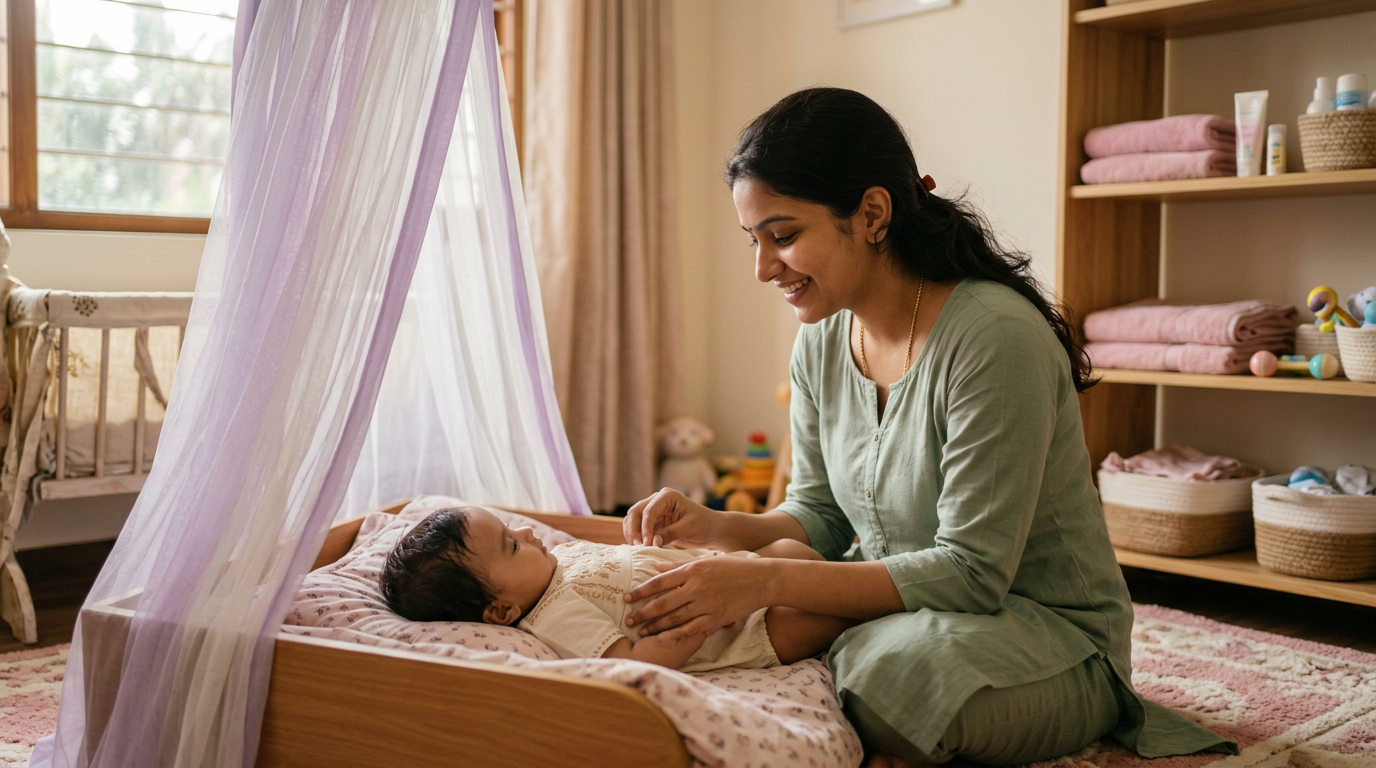
The monsoon brings a much-needed break from the Indian heat, but for a new mother, it often brings more anxiety than relief. Between the damp walls, the sudden drop in temperature, and those aggressive Indian mosquitoes, keeping a baby comfortable and safe is a full-time job. The golden rule for monsoon baby care is simple: focus on dryness, mosquito physical barriers, and impeccable hygiene. If you can keep the moisture away from their skin and the pests away from their cot, you’ve won 90% of the battle.
I remember my first monsoon with my son in Mumbai. The humidity was so thick it felt like we were breathing water, and my biggest fear wasn’t just the rain—it was the damp smell coming from the cupboard that seemed to appear overnight. I spent more time checking his neck folds for rashes than I did sleep. If you’re currently staring at a pile of laundry that refuses to dry or wondering if that’s a new mosquito bite on your little one’s cheek, this guide is for you.
How to manage Indian humidity and "Sillan" (Dampness)
Humidity in India during July and August often crosses 80%, creating the perfect breeding ground for mould (faphundi) and bacteria.
* Dry the laundry properly: This is the biggest challenge. Drying clothes indoors increases humidity and can lead to mould spores. If you don't have a dryer, try to hang clothes in a room with a pedestal fan on high or use a dehumidifier if your budget allows.
* The Ironing Hack: Always iron your baby’s clothes, including their nappies and vests. The heat from the iron kills any lingering fungal spores and ensures the fabric is bone-dry before it touches your baby's skin.
Check the walls: Move the crib or jhoola* at least 2 feet away from external walls. Indian monsoon "sillan" (seepage) is real, and sleeping near a damp wall can trigger respiratory issues or allergies in infants.
* Nappy holidays: Humidity makes diaper rash much worse. Give your baby "nappy-free time" several times a day on a dry cotton towel. Use a thin layer of a barrier cream containing Zinc Oxide if you notice even a hint of pinkness.
The Mosquito War: Protection without the chemicals
Mosquito-borne diseases like Dengue and Chikungunya peak during this season. However, your baby’s skin is too delicate for many over-the-counter heavy chemical repellents.
* The Mosquito Net (Machhardani): This is your best friend. Whether it’s a standalone net for the crib or a large one covering your bed, physical barriers are the safest and most effective method. Ensure the net is tucked in tightly with no gaps.
* Clothing as Armour: Dress your baby in light, breathable, full-sleeved cotton clothes. Choose light colours (white, cream, pastel yellow); mosquitoes are actually attracted to darker colours like navy and black.
* Safe Repellents: For babies under 6 months, avoid applying repellents directly to the skin. You can use fabric patches or "mosquito bands" placed on the stroller or the headboard of the bed, out of the baby’s reach. For babies over 6 months, look for DEET-free, natural sprays containing Citronella or Lemongrass, but always do a patch test first.
* Natural Deterrents: Use a few drops of Neem oil or Citronella oil in the water when mopping the floors. It helps keep some insects at bay without filling the room with toxic fumes.
Real Talk: The "Maalish" Dilemma
During the monsoon, many elders will insist on heavy mustard oil (sarson ka tel) massages to keep the baby "warm." Real talk: Be very careful. Heavy oils can clog pores and trap sweat in this humidity, leading to painful heat rashes (miliaria) or fungal infections. Switch to a lighter, cold-pressed coconut oil or a water-based lotion. If the skin feels sticky an hour after the massage, you’re using too much oil or not wiping it off well enough.
Bathing and Skin Hygiene in the Rain
You might think the weather is cooler, so the baby doesn't need a daily bath. Actually, the humidity makes babies sweat more in their "hidden" areas—the neck, underarms, and behind the knees.
> Mama-to-Mama Tip: Keep a "Monsoon Kit" ready by the door. It should have a change of clothes for you and the baby, a small pack of wipes, and a plastic bag for wet items. If you get caught in a sudden downpour on the way back from the paediatrician, you won't be scrambling.
Food and Water Safety (The Monsoon Tummy)
If your baby has started solids, this is the time to be extra vigilant about water-borne illnesses.
* Sterilize Everything: Go back to basics. Sterilize bottles, spoons, and bowls. Even if you usually just wash them with soap, a quick 5-minute boil during the monsoon provides extra peace of mind.
* Boil the Water: Even if you have a high-end RO filter, boil the baby’s drinking water (and the water used to make formula) for at least 3-5 minutes. Store it in a clean, narrow-necked stainless steel flask.
Avoid Raw Foods: This isn't the time for raw salads or pre-cut fruits from the market. Steam everything. Whether it's apple puree or khichdi*, ensure the food is piping hot when served.
Case Study: Anika’s Bout with "Ghamori"
Anika, a Bengaluru mom of a 7-month-old, noticed her daughter was extremely fussy and had tiny red bumps all over her back and chest during a particularly humid week in August. She thought it was an allergy to a new cereal. Upon consultation, it turned out to be severe heat rash (ghamori) caused by a combination of a thick synthetic "fancy" onesie and the dadi's insistence on a heavy oil massage. By switching to 100% thin cotton vests, stopping the oil for three days, and staying in a well-ventilated room, the rash cleared up without any medicated creams.
When to call your paediatrician
Monsoon symptoms can be tricky. What looks like a simple cold could be something more. Call your doctor if:
* Your baby has a fever over 100.4°F (38°C).
* There is a persistent cough or "wheezing" sound when they breathe.
* You notice any red, circular, itchy patches (could be Ringworm/fungal infection).
* The baby has more than 5-6 watery stools in a day or shows signs of dehydration (sunken soft spot, no tears when crying).
* There are multiple mosquito bites that look swollen, pus-filled, or extremely angry.
Frequently Asked Questions
Can I use the AC during the monsoon for my baby?
Yes, you can. In fact, an AC in "Dry Mode" is excellent for removing excess humidity. Set the temperature between 24°C and 26°C. Ensure the vent isn't blowing directly on the baby and dress them in a single layer of light cotton with socks.
Is it okay to give "Kadha" or herbal concoctions to a baby for immunity?
No. For babies under 6 months, only breastmilk or formula is allowed. For babies over 6 months, stick to age-appropriate nutritious food. Kadha can be too harsh for an infant's stomach lining and may cause acidity or electrolyte imbalances.
My baby’s clothes smell regular "musty." Is it dangerous?
That musty smell is actually a sign of mould/mildew. While a slight smell might just be annoying, breathing in high concentrations of mould spores can trigger asthma or respiratory allergies. Re-wash the clothes in hot water and iron them thoroughly.
How do I prevent my baby from catching a cold if we get wet in the rain?
If you get caught in the rain, the priority is to get the baby dry and warm. Strip off the wet clothes immediately. Give them a quick lukewarm bath to regulate their body temperature, dry their hair thoroughly (use a hair dryer on the lowest, coolest setting from a distance if needed), and offer a warm feed (breastmilk or formula).
Should I stop "Maalish" (massage) entirely during the rains?
You don't have to stop, but you must adapt. Use less oil, choose a light oil like coconut, and ensure you wipe it off with a warm, damp cloth after 15-20 minutes. If your baby has any active heat rash or fungal infection, stop the oil until the skin is clear.
The monsoon is a beautiful time to snuggle and watch the rain from the window, but it does require a bit of "command centre" energy from us moms. Keep the windows shut during the dawn and dusk hours (mosquito prime time), keep those little neck folds dry, and trust your gut. You’ve got this!
"A dry baby is a happy baby—invest in a good iron and a sturdy mosquito net."
Sources & further reading
- Indian Academy of Pediatrics (IAP) — Guidelines on Common Childhood Illnesses during Monsoon
- National Health Portal (NHP) India — Prevention of Dengue and Malaria
- World Health Organization (WHO) — Water, Sanitation and Hygiene (WASH) during Rainfall Events
- ICMR-National Institute of Nutrition (NIN) — Feeding Guidelines for Infants and Children
Written by Dr. Anjali Mehta, MBBS, DCH (Paediatrics)
Reviewed by TheMamaCircle Editorial Team
Last updated: 21 May 2026
This article is for general information only and is not a substitute for personalised medical advice. Always consult your paediatrician or obstetrician for your specific situation.