Newborn Face Rash Cream: Best Care Guide for Indian Moms
Dealing with baby acne or eczema? Find the best newborn face rash cream and baby skin care tips for Indian weather. Expert advice for your little one's glow.
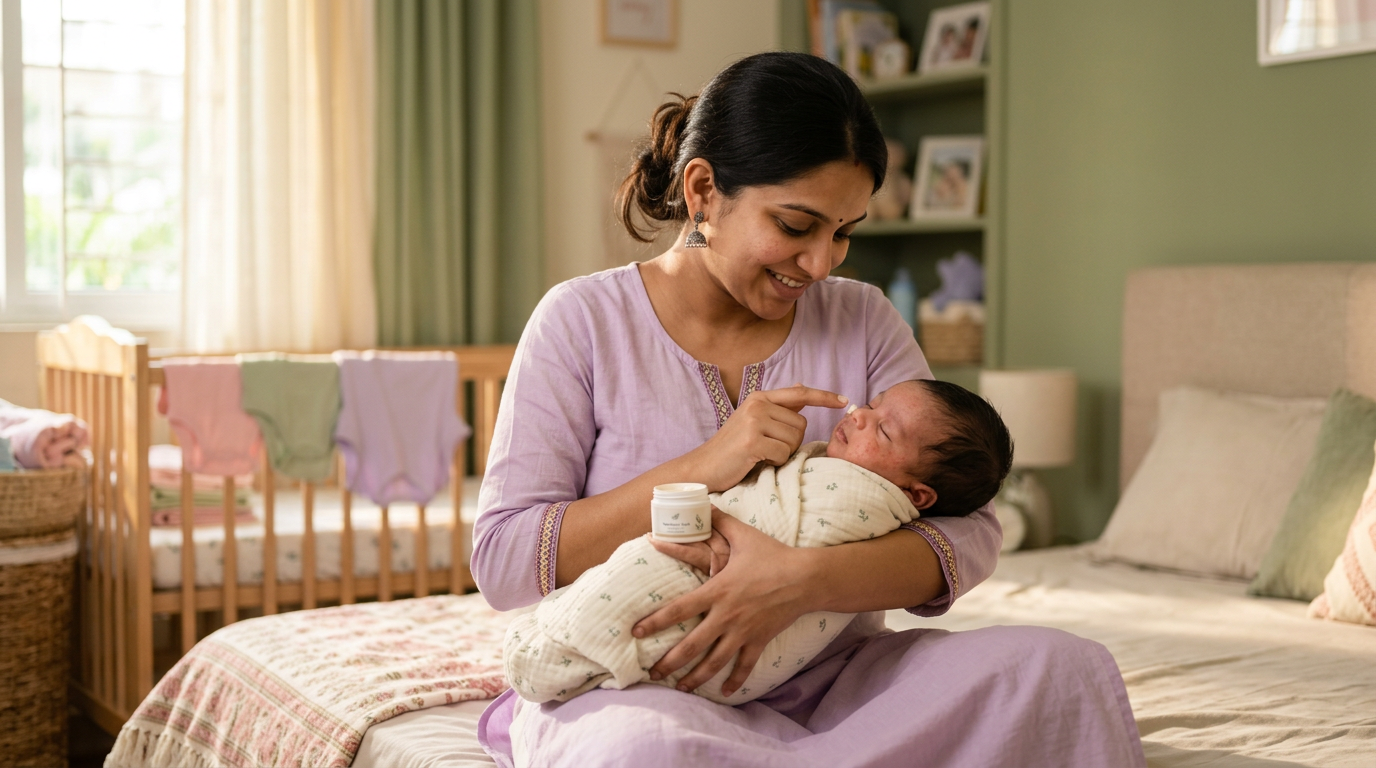
That first sight of tiny red bumps on your baby’s velvet-soft cheeks can send any new mom into a Google-spiral at 3 AM. If you are looking for the best newborn face rash cream, the short answer is that it depends on the type of rash. For neonatal acne, you often need nothing; for milk spots (milia), patience is key; but for dry eczema or heat rash, a barrier cream with zinc oxide or a mild emollient is your best friend.
In India, we often deal with the double whammy of extreme humidity and family pressure to use ubtan or besan. While our nanis mean well, a newborn’s skin is 30% thinner than ours. Whether it’s 'heat boils' in a Chennai summer or 'dry patches' in a Delhi winter, choosing the right newborn face rash cream requires understanding what is going on beneath the surface.
Why is your baby’s face breaking out?
Before you shop, you must identify the culprit. Indian homes are often warm, and we have a cultural habit of over-layering babies (topi, socks, swaddle), which leads to more skin issues than the weather itself.
1. Neonatal Acne (Garbh ki Garmi)
About 20% of newborns develop small red pimples. This isn't because of the soap or your diet; it's due to maternal hormones still circulating in the baby's blood. Most of the time, you don't need a medical newborn face rash cream—just plain lukewarm water.
2. Erythema Toxicum
Sounds scary, looks like flea bites (red blotches with a white/yellow centre). It usually appears in the first week and vanishes by the second.
3. Atopic Dermatitis (Eczema)
This is the big one. It looks like dry, scaly, itchy patches. This is where a high-quality face cream for infants becomes mandatory to repair the skin barrier.
4. Heat Rash (Miliaria)
Common in tropical climates, these are tiny clear or red bumps caused by blocked sweat ducts. The cure isn't a heavy cream; it’s cooling the baby down and using a light, breathable baby skin care routine.
How to choose a newborn face rash cream in India
The Indian market is flooded with "natural" and "herbal" claims. However, the Indian Bureau of Standards (BIS) and IS 4707 (standards for cosmetics) are the benchmarks you should look for.
What to look for in the ingredients list:
* Zinc Oxide: The gold standard for soothing inflammation and creating a moisture barrier.
* Colloidal Oatmeal: Excellent for itchy, eczemic skin.
* Ceramides: Think of these as the 'glue' that holds skin cells together.
* Calendula: A gentle anti-inflammatory that works well for mild rashes.
What to avoid (The 'No-No' List):
* Parabens and Phthalates: Endocrine disruptors that have no business near a baby.
* Strong Fragrance: Even if it smells like 'heavenly baby powder', fragrance is the #1 trigger for contact dermatitis.
* Harsh Essential Oils: Avoid tea tree or peppermint oil on the face of a baby under 6 months.
The 'Dadi-Nani' Audit: To use or not to use?
Our elders swear by the kitchen pantry. Let’s look at common Indian home remedies through a clinical lens:
* Malai (Milk Cream): While hydrating, it is too heavy and can clog pores, leading to more "milk spots." Stick to a formulated face cream for infants instead.
Besan/Haldi Ubtan: Hard No. The particles in besan (gram flour) act as a physical exfoliant that is too abrasive for newborn skin. Haldi* (turmeric) can be an irritant in high concentrations.
* Coconut Oil (Virgin/Cold-pressed): Yes, but with a caveat. It’s a great moisturiser for the body, but on the face, it can sometimes worsen neonatal acne if the baby's skin is already oily.
* Breastmilk: Yes. Believe it or not, breastmilk has antimicrobial properties. Dabbing a little on a mild rash is often safer than an OTC medicated cream.
Essential Newborn Face Care Routine
Real talk from Indian moms
> "My MIL insisted on rubbing sarson ka tel (mustard oil) on Kabir's face rash. It made him turn bright red! I switched to a simple zinc-based cream recommended by my paediatrician, and it cleared in two days."
> — Ananya R., Gurgaon, Mom to 3-month-old
> "Living in Kochi, the humidity is killer. I realized the 'rash' on my daughter's forehead was just tiny heat boils. I stopped the heavy creams, dressed her in light cotton, and just used a calamine-based lotion. Magic!"
> — Meera T., Kochi, Mom to 5-moth-old
When to call your paediatrician
While most face rashes are "cosmetic" and bother the mother more than the baby, watch out for these red flags (Lal Nishan):
* Pus or crusting: If the rash is oozing yellow fluid or has a honey-coloured crust (could be Impetigo).
* Fever: If the rash is accompanied by a temperature over 100.4°F (38°C).
* Bleeding: If the skin is cracked and bleeding.
* Pain: If the baby cries when the rash is touched or is extremely fussy/irritable.
* Spread: If the rash is rapidly spreading to the chest or limbs.
Frequently Asked Questions
What is the best newborn face rash cream for milk spots?
Actually, for milia (milk spots), you shouldn't use any cream. These are tiny cysts filled with keratin that disappear on their own as the baby's skin matures. Applying heavy creams can actually block the pores further.
Which is the best soap for newborns with sensitive skin?
Look for "soap-free" syndet bars with a pH of 5.5. In India, brands like Sebamed or Cetaphil Baby are popular because they don't strip the natural oils. Avoid highly scented "pink" or "blue" soaps common in local grocery stores.
Can I use a regular face cream for infants on a rash?
A regular moisturising face cream for infants is great for prevention and maintaining the skin barrier, but if there is active inflammation or a fungal element, you may need a specific rash cream containing zinc or an antifungal, as prescribed by your doctor.
Do I need sunscreen for newborn babies in India?
The Indian Academy of Paediatrics (IAP) generally recommends physical shade (umbrellas, hats, stroller covers) for babies under 6 months. For older infants, using a mineral-based sunscreen for newborn containing zinc oxide or titanium dioxide is vital, especially during peak UV hours (10 AM to 4 PM).
How often should I apply newborn face rash cream?
Most therapeutic creams should be applied 2-3 times a day on clean, dry skin. Do not "cake" it on; a thin, translucent layer is usually enough to do the job.
Is baby powder safe for face rashes?
No. We strongly advise against using talcum powder on a baby’s face. The fine particles can be inhaled, leading to respiratory issues. For moisture absorption, a cream-to-powder formulation or a zinc-based cream is much safer.
Your baby’s skin is a learning curve. In most cases, the "less is more" rule applies beautifully. Avoid the urge to experiment with every nuska told to you over a WhatsApp group. Trust your doctor, trust the science, and keep those chubby cheeks clean and dry.
Your baby’s skin will clear up, and you are doing a great job, Ma.
Price Range Note: In India, effective paediatrician-approved face rash creams typically range from ₹250 to ₹800 depending on the brand and active ingredients. Always check the manufacturing and expiry date on the crimp of the tube.
Sources & further reading
- Indian Academy of Paediatrics (IAP) Guidelines on Newborn Skin Care
- National Health Portal of India - Skin Care for Infants
- Bureau of Indian Standards (BIS) - IS 4707 (Part 1 & 2) for Cosmetic Safety
Written by Dr. Anjali Mehta, MBBS, DCH (Paediatrics)
Reviewed by TheMamaCircle Editorial Team
Last updated: 16 June 2026
This article is for general information only and is not a substitute for personalised medical advice. Always consult your paediatrician or obstetrician for your specific situation.