Pikler Triangle India: When to Introduce, Safety & Buying
Wondering if a Pikler triangle is worth it? Learn when to introduce this climbing frame, safety tips for Indian homes, and where to buy the best brands.
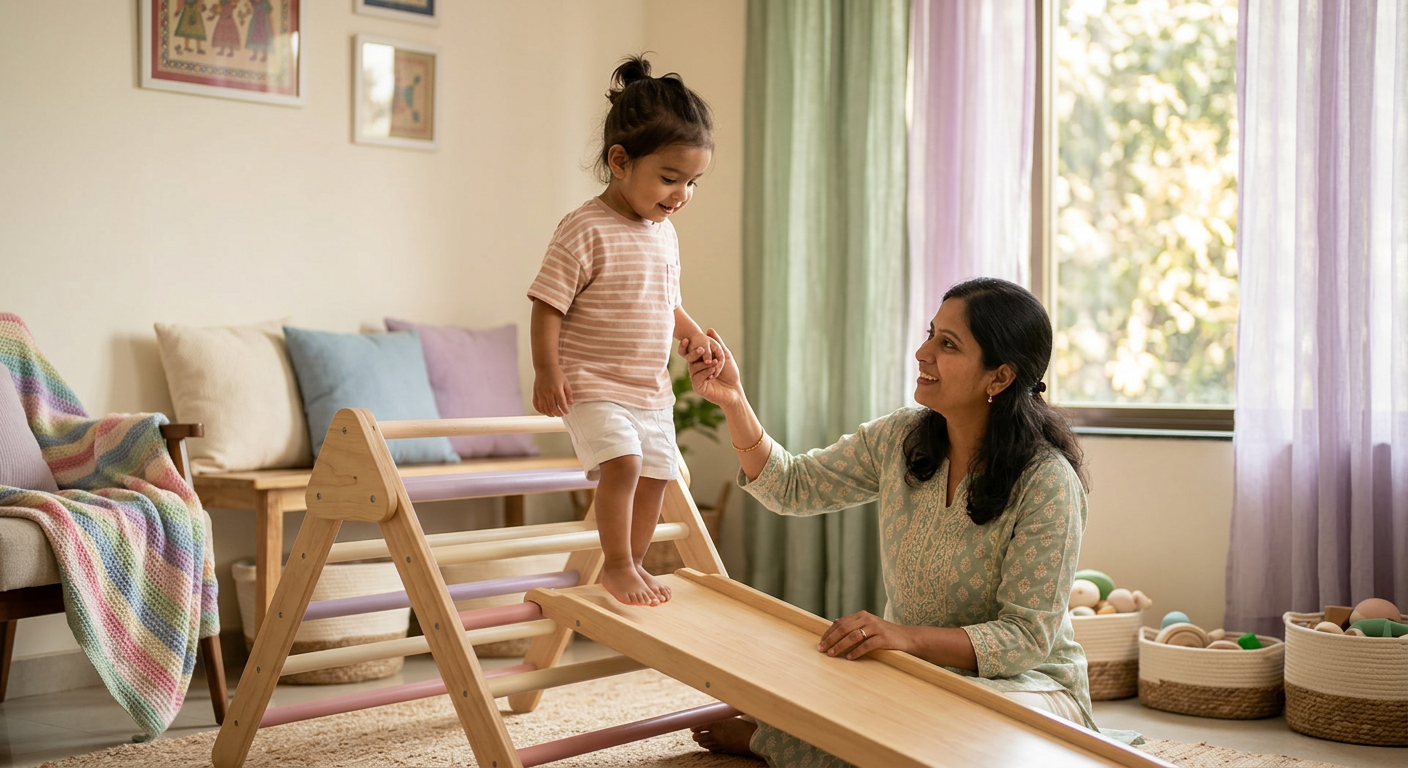
At a playdate in Gurgaon last month, I watched a 14-month-old scale a wooden triangle with the focus of a mountain climber while his mother sipped her chai, completely unbothered. If you are wondering if a Pikler triangle is worth the ₹7,000–₹15,000 investment in India, the answer is a resounding yes—provided your child is at least 6 months old and you have the floor space for it. It is the single best tool for developing gross motor skills, confidence, and 'physical literacy' right in your living room.
What is a Pikler Triangle and why is everyone in India buying one?
Invented by Hungarian paediatrician Dr. Emmi Pikler over a century ago, this climbing frame is designed to let children move at their own pace. Unlike a playground slide where you might feel the need to hover and catch them, the Pikler triangle encourages "independent play."
In our Indian context, where outdoor parks are often dusty, crowded, or inaccessible during the monsoon and peak summer, having an indoor climbing outlet is a lifesaver. It turns your 2BHK into a developmental gym.
The Developmental Philosophy
Dr. Pikler believed that "respecting" a child means not pushing them into positions they aren't ready for.
* Don't place them on it: If they can't climb up, they shouldn't be at that height.
* Don't "help" them climb: Let them figure out where to put their feet. This builds spatial awareness and critical thinking.
* Trust the process: Your baby will first use it to pull themselves up to stand, then to climb one rung, and eventually to reach the top.
When to introduce a Pikler Triangle?
You can introduce a Pikler triangle as early as 6 months.
* 6-10 Months: At this stage, it serves as a sturdy support for "cruising." Instead of pulling on the edge of a shaky coffee table, the rungs of a Pikler are the perfect diameter for tiny hands to grip.
* 12-18 Months: This is the "golden age." Your toddler will start climbing the rungs. You will see their confidence soar every time they reach a new height.
* 2-5 Years: It becomes a fort, a mountain, or part of an obstacle course. Most Indian-made triangles (like those from Woodentales or Ariro) support up to 40-50kg, meaning it lasts well into the preschool years.
> Mama-to-mama: Real talk
> We bought our Pikler when my son was 8 months old. For the first two months, he just used it to lick the wood. I thought I’d wasted my money. Then, one Tuesday, he just... climbed. Don’t rush it. They know when their body is ready.
Buying Guide: Where to buy a Pikler Triangle in India?
A few years ago, we had to DIY these or pay astronomical shipping from Etsy. Today, we have amazing local brands using sustainable Indian wood.
1. The Big Players
* Ariro Toys: Famous for using Neem wood and non-toxic finishes. They are based in Chennai and ship pan-India. Expect to pay around ₹8,000 - ₹12,000.
* Woodentales: Known for their foldable designs (a must-have for Mumbai or Bangalore apartments).
* Curious Cub: They often sell "bundles" that include a reversible ramp (slide on one side, rock climber on the other).
2. What to look for (The Checklist)
* Wood Quality: Ensure it is solid wood (Birch plywood, Neem, or Beech) and not cheap MDF which can splinter.
* Certifications: Look for BIS (Bureau of Indian Standards) IS 9873 compliance. This ensures the paint is lead-free and the structure can handle the weight.
* Foldability: Unless you have a dedicated playroom, get a foldable one. It slides under a bed or behind a sofa when not in use.
* Rung Spacing: The gap between rungs should be narrow enough so a baby’s head cannot get stuck, but wide enough for their feet. Standard safety is usually around 3-4 inches apart.
Is it safe? (The Safety Deep Dive)
"But what if they fall?" is the first thing every Dadi or Nani asks. Safety with a Pikler triangle isn't about preventing every stumble; it's about creating a safe environment for those stumbles to happen.
Safe Setup in an Indian Home:
Real talk from Indian moms
"We live in a high-rise in Bangalore. During the monsoon, the park is a slush-fest. The Pikler triangle is the only reason my 2-year-old isn't bouncing off the walls of our apartment. It’s her 'energy burner'."
— Ananya, Bengaluru (Mom to 24-month-old)
"I was worried about the price. But compared to the plastic toys that break in two months, this has stayed in perfect condition for three years. It’s now my younger one's favorite spot to hide under and 'read' picture books."
— Meher, Mumbai (Mom to 4-year-old and 10-month-old)
When to call your paediatrician
While the Pikler triangle is a tool for physical development, contact your doctor if you notice:
* Your child is over 15 months and shows no interest in pulling up or standing even with support.
* A "favouring" of one side (e.g., they only ever use their right leg to step up and seem unable to move the left).
* Any significant fall where the child loses consciousness, vomits, or seems unusually drowsy (standard head injury protocol).
* If your child has diagnosed hypermobility or low muscle tone (hypotonia), consult your paediatrician or a paediatric physiotherapist before introducing a climber.
Frequently Asked Questions
Can I build one myself?
If you have a reliable local carpenter and can source high-quality Birch plywood and chemical-free varnish, yes. However, ensure they follow exact specifications for rung diameter and weight-bearing joints. A poorly made DIY triangle is a major tipping hazard.
How is it different from a Jungle Gym?
A Pikler is generally smaller and lower to the ground, specifically designed for the developmental needs of infants and toddlers. A jungle gym is usually for older children (3+) and involves more complex climbing heights.
Is the ramp/slide necessary?
It’s not "necessary," but it doubles the life of the toy. The ramp can be used as a slide, a bridge between two structures, or even a car ramp for small toys. In India, most parents find the "Triangle + Ramp" combo offers the best value.
Can we use it outdoors?
Most Indian brands use water-based finishes. While you can take it to a balcony or garden for an hour, do not leave it outside. The harsh Indian sun and humidity will warp the wood and make it unsafe.
How do I clean it?
Just wipe it down with a damp microfibre cloth. Avoid harsh cleaners or "Dettol water" as it can strip the protective wood finish.
Investing in a Pikler triangle is an investment in your child’s bravery. Watching them navigate that first move over the top bar is a lesson for us parents too—a lesson in letting go and trusting their capabilities.
Your child is more capable than you think; sometimes they just need the right rung to hold onto.
Sources & further reading
- Indian Academy of Pediatrics (IAP) — Physical Activity Guidelines for Toddlers
- Bureau of Indian Standards (BIS) — IS 9873 Safety of Toys
- World Health Organization (WHO) — Guidelines on physical activity, sedentary behaviour and sleep for children under 5 years of age
Written by Priya Raman, Certified Prenatal Yoga Instructor & Mama of two
Reviewed by TheMamaCircle Editorial Team
Last updated: 16 May 2026
This article is for general information only and is not a substitute for personalised medical advice. Always consult your paediatrician or obstetrician for your specific situation.