Postpartum Meaning in Tamil — Prasava Kaalam Explained
Postpartum meaning in Tamil is Prasava Kaalam — the 40-day recovery window after birth. Symptoms, diet, rituals and warning signs explained in English for Tamil families.
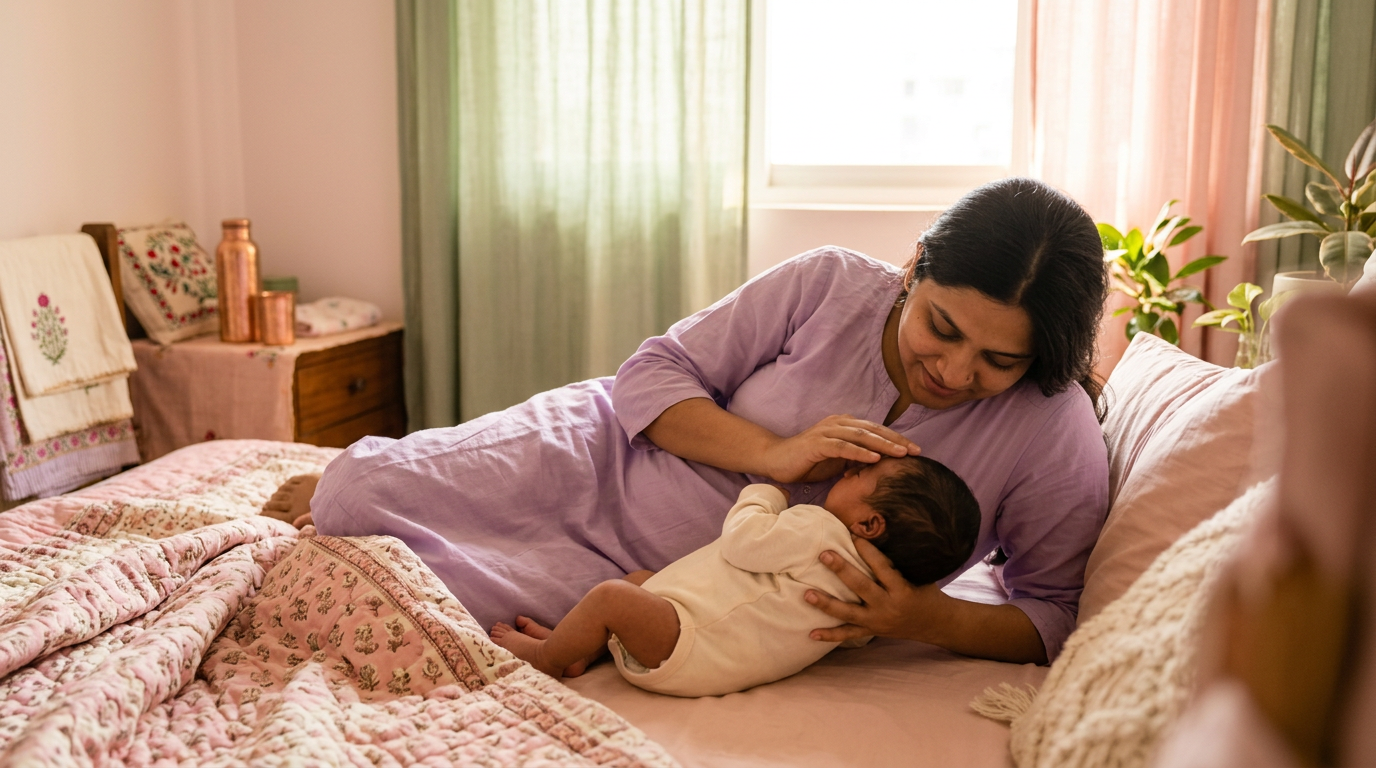
Finding out the postpartum meaning in tamil is often the first thing new mothers in Tamil Nadu and across India do when the initial "baby bliss" wears off and the reality of physical recovery sets in. In simple terms, postpartum (known as Prasava Kaalam or Piruputham in Tamil) refers to the period immediately following childbirth. While many think it is just the 40 days of Pathiyam (dietary restrictions), it is a complex medical and emotional phase where your body returns to its non-pregnant state.
Understanding the postpartum meaning is crucial because Indian society often focuses entirely on the baby, leaving the mother’s health as an afterthought. Whether you call it the "fourth trimester" or the Sutika period, this is a time for healing, hormonal shifts, and bonding.
What is the exact Postpartum Meaning in Tamil Culture?
In a traditional Tamil household, the postpartum period is deeply rooted in the concept of Maruthuvam (traditional medicine) and Pathiyam (strict diet). The postpartum meaning in tamil translates most closely to Prasava Pinbu Kaalam (the time after delivery).
Historically, this lasted for six weeks or 40 days, often referred to as the Thalaiprasavam care period. During this time, the new mother is encouraged to stay indoors to prevent infections, a practice that aligns with the medical need for recuperation.
The Components of Tamil Postpartum Care:
* Prasava Lehyam: A potent herbal jam made of ginger, carom seeds (ajwain), and long pepper to aid digestion and uterine cleansing.
* Vethu Kuliyal: A ritualistic hot water bath infused with neem leaves and turmeric, believed to reduce body aches.
* Angaya Podi: A bitter but healing powder consumed with rice to help in "drying" the uterus and improving lactation.
How long does the Postpartum period actually last?
While many search for postpartum meaning in english to find a clinical definition, the Federation of Obstetric and Gynaecological Societies of India (FOGSI) typically defines the immediate postpartum period as the first 6 to 8 weeks. However, modern maternal health experts now recognize that "full" recovery—both nutritional and hormonal—can take up to a year.
Why is it important to know the Postpartum Meaning in Hindi or Tamil?
Language matters because it connects us to our support systems. If you tell your Sasu Maa or your Amma about your "postpartum depletion," she might not get it. But if you explain the postpartum meaning in tamil using terms like Prasava Soruva (post-delivery exhaustion), she understands the need for that extra bowl of garlic milk or Poondu Paal.
Similarly, understanding the postpartum meaning in hindi as Prasavottar helps in navigating healthcare in North Indian hospitals where staff might use regional terminology.
Physical Changes to Expect:
* Lochia: This is the vaginal discharge after birth. It starts bright red and fades to yellowish-white over 4-6 weeks.
Afterpains: These feel like mini-contractions as the uterus shrinks. They are often stronger during Stanpaan* (breastfeeding) due to oxytocin release.
* Hormonal Shift: An abrupt drop in estrogen and progesterone, which can lead to the "Baby Blues."
The Financial Aspect of Postpartum Care in India
In India, postpartum care isn't just medical; it’s an ecosystem. Depending on your city, a Japa Maid or Malishwali can cost anywhere from ₹15,000 to ₹35,000 per month. High-end postnatal recovery resorts in metros like Chennai or Bangalore can charge upwards of ₹1,00,000 for a two-week stay involving Ayurvedic treatments and lactation support.
Even if you are doing it at home, budget for:
* Lactation Consultant visits: ₹1,500 – ₹3,000 per session.
* Postpartum Supplements: Iron, Calcium, and Vitamin D3 (as per IAP guidelines) usually cost around ₹1,000 per month.
* Diapers and Maternity Pads: ₹2,000+ monthly.
Real talk from Indian moms
> "I thought the postpartum meaning in tamil was just staying in a dark room and eating Poondu Kuzhambu. I didn't realize it also meant the crying spells. I wish someone told me the mental part is as real as the stitches." — Abirami S., Chennai (Mom to a 4-month-old)
> "In our house, we called it the Sawa Mahina (1.25 months). My mother-in-law insisted on the Maalish every day. At first, I hated it, but that sesame oil massage was the only thing that fixed my back pain." — Megha R., Pune (Mom to an 8-month-old)
> "I was searching for the postpartum meaning while sitting in the nursery at 3 AM. Knowing that my 'night sweats' were just hormones and not a fever saved me from a panic attack." — Kritika V., Bengaluru (Mom to a 2-month-old)
Nutrition: The Indian Postpartum Plate
The Indian Council of Medical Research (ICMR) suggests that breastfeeding mothers need an additional 600 kcal/day for the first six months.
Galactagogues: Foods like Methi (fenugreek), Sauf (fennel), and Gond Katira* (edible gum) are traditional Indian staples used to boost milk supply.
Hydration: In Tamil households, Seeraga Thanni* (cumin water) is preferred over plain water to aid digestion for both mom and baby.
Protein: Since many Indian diets are carb-heavy, ensuring adequate Dal, Paneer*, or eggs is vital for tissue repair, especially after a C-section (LSCS).
When to call your paediatrician (and your OB-GYN)
Postpartum isn't always smooth sailing. While the "Baby Blues" (mild sadness, irritability) are common in 70-80% of Indian moms, Postpartum Depression (PPD) is a serious condition requiring medical intervention.
Red Flags for the Mother (Call your OB-GYN):
* Heavy Bleeding: Soaking more than one sanitary pad in an hour.
* Fever: A temperature over 100.4°F (38°C) which could indicate a uterine or breast infection (Mastitis).
* Severe Headache: Especially if accompanied by blurred vision (possible post-preeclampsia).
* Leg Pain: Swelling or redness in the calf, which could be a blood clot (DVT).
* Thoughts of Self-Harm: Or thoughts of hurting the baby.
Red Flags for the Baby (Call your Paediatrician):
* Poor Feeding: Baby refusing to latch or take the bottle for multiple sessions.
* Jaundice: Deepening yellow colour of the skin or eyes.
* Dehydration: Fewer than 6 wet diapers in 24 hours.
* Lethargy: Difficulty waking the baby for feeds.
Frequently Asked Questions
What is the postpartum meaning in tamil?
The postpartum meaning in tamil refers to Prasava Pinbu Kaalam, the time of physical and emotional recovery following childbirth, typically involving specialized care and diet.
How do you explain postpartum meaning in hindi to family?
You can explain postpartum meaning in hindi as Prasavottar Avastha. It is the "fourth trimester" where the mother needs Vishram (rest) and Poshan (nutrition) to recover from the physical toll of delivery.
What is the postpartum meaning in telugu?
In Telugu, the postpartum meaning in telugu is referred to as Purudu. It involves a specific period of seclusion and ritual cleansing for the mother and newborn, usually lasting 11 to 40 days.
What is the postpartum meaning in english for medical purposes?
In medical terms, the postpartum meaning in english is the "puerperium," the six-week period following childbirth during which the reproductive organs return to their approximately non-pregnant state.
Is the postpartum period only 40 days?
While traditional Indian culture focuses on the first 40 days (Chilla or Pathiyam), modern medicine acknowledges that the body and mind may take 6 to 12 months to fully recover from the depletion of pregnancy.
Can I exercise during the postpartum period?
For a vaginal delivery, light walking can start within days. However, you must wait for your 6-week check-up and clearance from your doctor before starting core exercises or heavy lifting, especially if you had a C-section.
Understanding your body during this phase is not a luxury; it is a necessity. While you are busy learning your baby’s cues, don't forget to listen to your own. You cannot pour from an empty cup, and your recovery is the foundation of your baby's well-being.
Ennoda udambu, ennoda nalam (My body, my health)—repeat this to yourself every morning. You are doing a great job, Mama.
Sources & further reading
- FOGSI - Postpartum Care Guidelines
- Indian Academy of Pediatrics (IAP) - Postnatal Care
- National Health Portal India - Postnatal Care
- ICMR - Nutrient Requirements for Pregnancy and Lactation
Written by Priya Raman, Certified Prenatal Yoga Instructor & Mama of two
Reviewed by TheMamaCircle Editorial Team
Last updated: 9 July 2026
This article is for general information only and is not a substitute for personalised medical advice. Always consult your paediatrician or obstetrician for your specific situation.