Postpartum Recovery India: 40-Day Guide to Healing & Food
Focus on postpartum recovery with our Indian guide to Jaapa diet, C-section healing, and exercises. Learn why the 40-day rest period is vital for new moms.
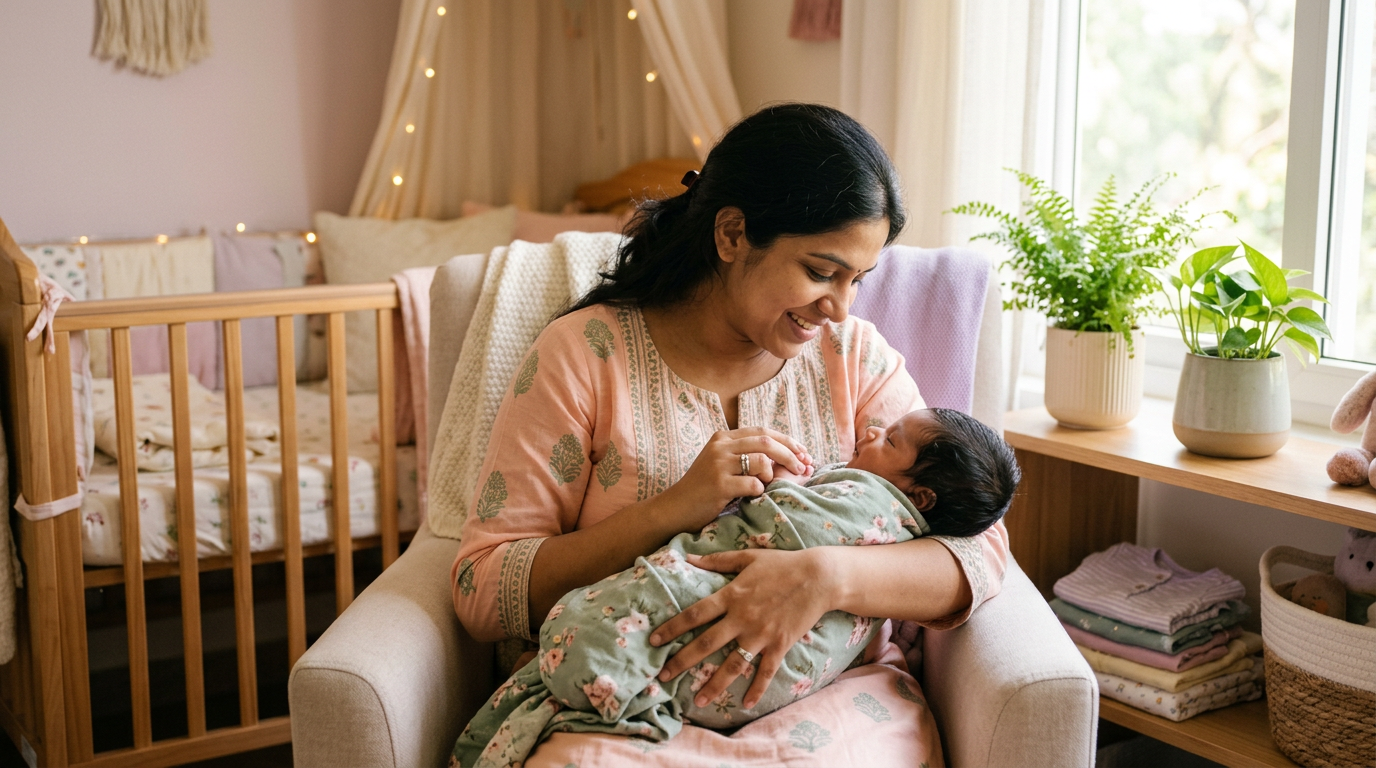
Postpartum Recovery in India: Your 40-Day Guide to Healing
The reality of postpartum recovery is that while your baby has arrived, your body is still in a state of 'labour' for at least six to eight weeks. In the Indian context, we call this the Sawa Mahina (the first 40 days) or the Jaapa period. This isn't just about resting; it is a physiological necessity for your uterus to involute, your hormones to recalibrate, and your pelvic floor to regain its integrity. Whether you had a vaginal birth or a C-section, your body has just performed a marathon, and the finish line is where the healing begins.
The Indian 'Jaapa' Perspective: Why the 40 Days Matter
In India, the tradition of confinement or Jaapa is often dismissed as old-fashioned, but from an OB-GYN perspective, it has merit when modern hygiene meets traditional wisdom. The postpartum recovery process is accelerated when you have a support system (the Sasu Maa or a hired Jhai) taking over housework so you can focus on stanpaan (breastfeeding) and sleep.
The Role of Maalish (Massage)
* Abdominal Wraps (Bandhan): Using a cotton saree or a specialized postpartum belt helps support weakened abdominal muscles.
Oil Massage: While maalish* improves blood circulation, avoid the incision area if you are focusing on postpartum recovery after c section. Wait at least 3 weeks or until the scar is fully closed before any deep tissue pressure on the belly.
Warm Water Baths: The traditional garam pani* bath is soothing, but ensure the water isn't scalding, as your skin may be sensitive or numb.
What is a Normal Postpartum Recovery Time?
One of the most frequent questions in my clinic is about the postpartum recovery time. While the standard answer is six weeks, the truth is more nuanced.
0-2 Weeks: The 'Acute Phase'. Expect heavy bleeding (lochia*), intense fatigue, and uterine cramping (afterpains).
* 2-6 Weeks: The 'Healing Phase'. Bleeding tapers to a brownish or yellowish discharge. Perineal stitches or C-section incisions begin to feel less sharp.
* 6-12 Weeks: The 'Rebuilding Phase'. This is when you can gradually reintroduce postpartum recovery exercises like pelvic floor tilts and walking.
Essential Postpartum Recovery Food: The Indian Kitchen Pharmacy
Your diet is the fuel for your recovery. The ICMR (Indian Council of Medical Research) recommends an additional 600 calories per day for breastfeeding mothers.
Laddoos for Strength: Gond (edible gum) laddoos and Methi* (fenugreek) laddoos are excellent for bone health and boosting milk supply.
Hydration: Drink Ajwain* (carom seed) water to help with digestion and reduce gas—a common issue post-delivery.
Protein Focus: Include Moong Dal khichdi, eggs, or paneer in every meal. If you are non-vegetarian, Paaya* soup (bone broth) is a traditional powerhouse for collagen and joint repair.
Avoid: Extremely spicy mirch* and heavy oily fried foods that can cause constipation—the last thing you want with stitches.
Reclaiming Strength with Postpartum Recovery Exercises
Do not jump into a HIIT workout or heavy gymming the moment you feel better. Your ligaments are still loose due to the hormone relaxin.
Real talk from Indian moms
"I felt so guilty staying in bed while my mother-in-law did everything. But once I accepted that the 40 days were for my healing, my milk supply improved and I felt human again by week five." — Priyanka, Mumbai (Baby 3 months)
"For my postpartum recovery after c section, I thought I shouldn't move at all. My doctor told me to start walking slowly the very next day. It was hard, but it prevented the gas pain and helped me heal much faster than my first time." — Deepa, Bengaluru (Baby 6 months)
"The best postpartum recovery food wasn't just the laddoos; it was the simple, warm Dalia my mom made. It kept things 'moving' easily, if you know what I mean!" — Sanya, Delhi (Baby 2 months)
When to Call Your Gynecologist (The FOGSI Red Flags)
While most recovery follows a predictable path, the Federation of Obstetric and Gynaecological Societies of India (FOGSI) highlights these as non-negotiable emergencies:
* Secondary Postpartum Haemorrhage: If you are soaking more than one pad an hour or passing clots larger than a lemon.
* Fever: A temperature over 100.4°F (38°C) could indicate a uterine or incision infection.
* Foul-smelling discharge: Lochia should smell like a normal period; any "fishy" or offensive odour needs attention.
* Unilateral Leg Swelling: If one calf is swollen, red, or painful, seek immediate help to rule out DVT (Deep Vein Thrombosis).
* Postpartum Depression: If you feel "the blues" lasting longer than two weeks, or have thoughts of hurting yourself or the baby.
When to call your paediatrician
Recovery isn't just about you; it's also about monitoring your newborn's transition. Call the paediatrician if you notice:
* Jaundice: If the yellow tint extends to the baby’s chest, abdomen, or legs.
* Dehydration: Fewer than 6 wet diapers in 24 hours after day 5.
* Lethargy: If the baby is too sleepy to wake up for feeds or has a weak, high-pitched cry.
* Umbilical Cord Issues: Any pus, foul smell, or redness around the navel.
* Breathing Trouble: If the baby is grunting, flared nostrils, or chest retractions (skin pulling in between ribs).
Frequently Asked Questions
What is the average postpartum recovery time?
The initial physiological postpartum recovery time is approximately 6 to 8 weeks. However, complete emotional and physical restoration, especially regarding bone density and abdominal strength, can take up to 12 months.
How is postpartum recovery after c section different?
In postpartum recovery after c section, you are healing from major abdominal surgery as well as childbirth. You will have more restrictions on lifting weights (nothing heavier than your baby) and will need to monitor your incision for any oozing or redness. Pain management is also more intensive in the first 10 days.
When can I start postpartum recovery exercises?
For vaginal births, gentle walking and Kegels can start almost immediately. For C-sections, wait for your 6-week check-up before starting core-specific postpartum recovery exercises. Listen to your body; if bleeding increases after activity, you are doing too much.
What are the best postpartum recovery foods in India?
Focus on postpartum recovery food that is easy to digest. Ingredients like Ajwain, Jeera, Ghee, and Daliya are staples. Ensure you are getting enough Vitamin C (Amla or Citrus) to help with tissue repair and Iron (Spinach, Pomegranate) to replenish blood loss.
Is it safe to have an oil massage (maalish) immediately?
For a vaginal delivery, a gentle full-body massage can usually start once you are home and comfortable. For C-sections, wait at least 3 weeks and ensure the daai avoids the abdominal area completely until cleared by your doctor.
Can I eat curd and rice during the 40-day period?
There is no medical reason to avoid curd unless it is straight from the fridge and causes you throat irritation. Curd is a great probiotic that helps with gut health and provides much-needed calcium. Just ensure it is at room temperature.
Recovery is not a race to get back into your "pre-pregnancy jeans." It is a vital period of laying the foundation for your health for the next thirty years. Take the rest, eat the laddoos, and remember: you are not just "doing nothing," you are literally rebuilding a human's first home.
Be patient with your body; it spent nine months growing a life, give it at least nine months to feel like its own again.
Sources & further reading
- FOGSI: Postpartum Care Guidelines
- ICMR: Dietary Guidelines for Indians
- NHP India: Postnatal Care
- WHO: Postnatal care of the mother and newborn
Written by Dr. Ritu Sharma, MD (Obstetrics & Gynaecology)
Reviewed by TheMamaCircle Editorial Team
Last updated: 4 July 2026
This article is for general information only and is not a substitute for personalised medical advice. Always consult your paediatrician or obstetrician for your specific situation.