Pregnancy Care Tips: Indian Guide to Diet & Daily Routine
Essential pregnancy care tips for Indian moms: diet, routine & emotional health. Learn what to eat (and avoid) + when to call your doctor. Read for a healthy garbh.
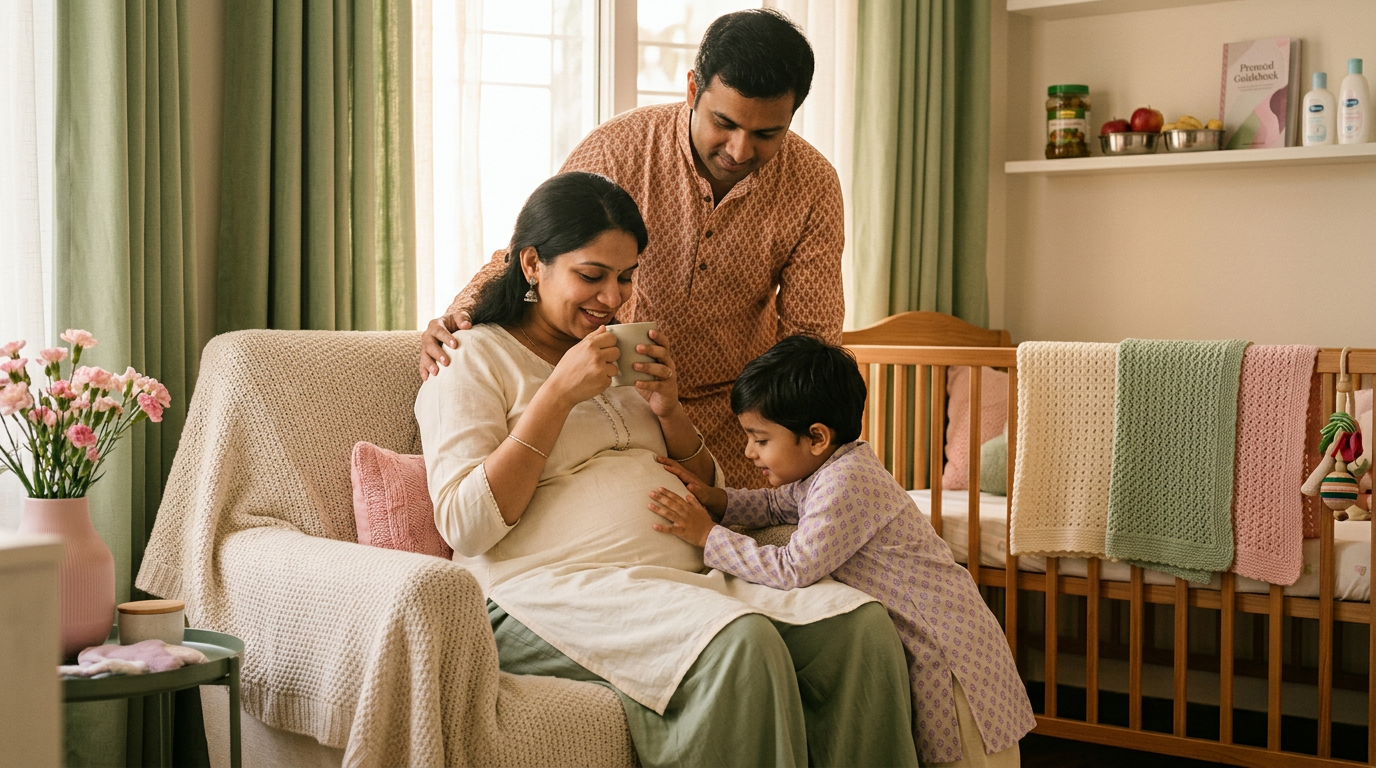
I’ll never forget Meera, a 28-year-old software engineer in Pune, who walked into my clinic at 10 weeks pregnant, clutching a list of 40 different 'don’ts' her sasu maa and WhatsApp groups had given her. She was terrified to eat a papaya, scared to walk fast, and hadn't slept because she wasn't sure which side to lie on. Let’s clear the air right now: Pregnancy care in India is about balancing our rich traditions with modern medical evidence. You don’t need to live in a glass bubble; you just need a routine that nourishes both you and your nanha munna.
1. The Ideal Indian Pregnancy Diet: Beyond Just 'Eating for Two'
The biggest myth in Indian households is that you must eat for two people. In reality, you only need about 350 extra calories in the second trimester and 450 in the third. It’s about quality, not just piling on extra ghee (though a little is fine!).
What your plate should look like:
Iron-Rich Foods: Anaemia is incredibly common in India. Load up on palak (spinach), methi*, beetroot, and pomegranate. Pair these with Vitamin C (like a squeeze of lemon) to help absorption.
Protein is King: Most Indian veg diets are low on protein. Include moong dal, chickpeas (chole*), paneer, tofu, and sprouts. If you eat eggs, two boiled eggs a day are a gold standard for choline, which helps baby’s brain development.
Calcium for Bone Health: You need about 1200mg daily. A glass of milk, a bowl of curd (dahi), and ragi (finger millet) are your best friends. Ragi malt or ragi roti* is an underrated Indian superfood.
The 'Forbidden' Foods: Contrary to popular belief, a few pieces of ripe golden papaya or a slice of pineapple won't cause a miscarriage. However, avoid unpasteurised milk, raw sprouts (risk of salmonella), and high-mercury fish like shir mashi* (king mackerel).
2. Your Daily Routine (Dinacharya) for a Healthy Garbh
A predictable routine reduces cortisol (stress hormone) which can cross the placenta.
The Morning Kickstart
Start your day with soaked almonds and walnuts. This isn't just a nani-ma tip; those Omega-3 fatty acids are crucial for the baby's eyes and brain. Follow this with a 20-minute walk. The Indian Academy of Pediatrics (IAP) suggests moderate exercise is not only safe but recommended to prevent gestational diabetes.
The Afternoon Slump
In India’s heat, dehydration is a real threat. Drink nariyal paani (coconut water), buttermilk (chaas with roasted cumin), or homemade shikanji. Avoid too many cups of chai or coffee; limit caffeine to under 200mg (about 1.5 cups).
The Evening Wind-down
Prenatal yoga or simple stretching helps with the pelvic pain that kicks in around week 24. Spend 10 minutes in 'Garbh Sanskar'—essentially talking or singing to your bump. By 20 weeks, your baby can hear you. It’s not 'woo-woo'; it’s bonding.
3. Real Talk: Managing Traditional Expectations vs. Reality
Mama-to-Mama Talk: You will be bombarded with advice. Someone will tell you that drinking saffron (kesar) milk makes the baby fair (it doesn't—skin colour is genetic) or that the shape of your stomach predicts the gender (it doesn't—it’s about your muscle tone). Thank them for their concern, then follow your doctor's advice.
Real Talk on Maalish: While a gentle maalish (massage) on your legs and back feels divine, avoid deep abdominal massages. Traditional dais can sometimes be too rough. Stick to light strokes with coconut or sesame oil yourself or with a trained prenatal therapist.
4. Emotional Wellness: Handling the 'Pregnancy Blues'
In many Indian homes, pregnancy is treated as a purely physical event, but your mental health is the foundation.
* Setting Boundaries: If the constant visits from relatives are draining you, it is okay to say, "I’m resting now."
The Hormone Rollercoaster: It is normal to cry because the dhobi* was late or because you saw a cute puppy. This isn't "weakness"; it's biology.
Case Study: Ananya, a 30-year-old mom from Bengaluru, felt immense guilt because she wasn't 'glowing' like the women in advertisements. She felt anxious about the upcoming labour. We shifted her focus from 'perfection' to 'preparation'—joining a birthing class helped her realise everyone else was just as nervous.*
5. When to Call Your Paediatrician or Obstetrician
Don't wait for your next scheduled appointment if you experience:
* Vaginal bleeding: Any spotting or bleeding needs an immediate check.
* Decreased Fetal Movement: By late second trimester, you should feel regular kicks. If movements drop below 10 in 2 hours (when you're focused on counting), call us.
* Severe Swelling: While some foot swelling is normal in the Indian humidity, sudden swelling of the face and hands could be Preeclampsia (high blood pressure).
* High Fever: Anything over 100.4°F (38°C) needs investigation.
* Leaking Fluid: If you feel a 'gush' or constant trickling, your water may have broken early.
6. Popular Pregnancy Questions in India (FAQ)
Is it safe to travel in an auto-rickshaw during pregnancy?
Generally, yes, if the road isn't extremely bumpy and you are not in a high-risk category (like having a low-lying placenta). Try to sit in the middle of the seat and ask the driver to go "dheere" (slowly) over potholes.
Can I eat spicy food? I'm craving 'chaat'.
Yes, you can. Spicy food doesn't hurt the baby, but it can give you terrible heartburn (acidity). If you eat gol-gappas, ensure the water is made with RO/filtered water to avoid typhoid or hepatitis.
Do I really need to take Iron and Calcium tablets? Can't I just eat well?
In the Indian context, diet alone often isn't enough to meet the 60mg of elemental iron and 1200mg of calcium required. Think of the supplements as an "insurance policy" for your baby's growth.
Is it okay to sleep on my back?
After 20 weeks, try to sleep on your left side. Sleeping on your back allows the heavy uterus to compress a major vein (the vena cava), which can reduce blood flow to the baby and make you feel dizzy. Use a long pillow or a rolled-up dupatta between your knees for comfort.
Can I continue working until my 9th month?
Absolutely, as long as your pregnancy is uncomplicated. However, ensure you stand up and stretch every hour to prevent swelling and blood clots.
Real Talk from Indian Moms
> "I spent my whole first trimester terrified of 'garam' foods like papaya and eggs because of what my chachi said. Once I finally spoke to my doctor, I realised I was missing out on much-needed protein. Eat the eggs!" — Ria, Delhi, Mom to a 4-month-old.
> "The 'pregnancy glow' is a scam for some of us. I had acne and pigmentation (melasma). But honestly, once I started my evening walks in the park, I felt so much better mentally. Find your small joy." — Sana, Hyderabad, 32 weeks pregnant.
Pregnancy is a marathon, not a sprint. You are growing a whole human being while probably managing a household or a career. Be kind to yourself. If today all you managed to eat was some khichdi and a nap, you've still done a great job. Your body knows what it's doing, and so do you.
Stay hydrated, stay happy, and keep those check-ups regular.
Sources & further reading
- FOGSI — Good Clinical Practice Recommendations on Iron Deficiency Anemia in Pregnancy
- National Health Portal India — Antenatal Care Guidelines
- ICMR — Dietary Guidelines for Indians, Maternal Nutrition Section
- WHO — Recommendations on Antenatal Care for a Positive Pregnancy Experience
Written by Dr. Ritu Sharma, MD (Obstetrics & Gynaecology)
Reviewed by TheMamaCircle Editorial Team
Last updated: 13 May 2026
This article is for general information only and is not a substitute for personalised medical advice. Always consult your paediatrician or obstetrician for your specific situation.