Safe Exercises During Pregnancy India: Guide & Trimester
Safe exercises during pregnancy India: Your guide to walking and prenatal yoga by trimester. Includes Malasana tips and heat safety. Stay active for a smoother delivery!
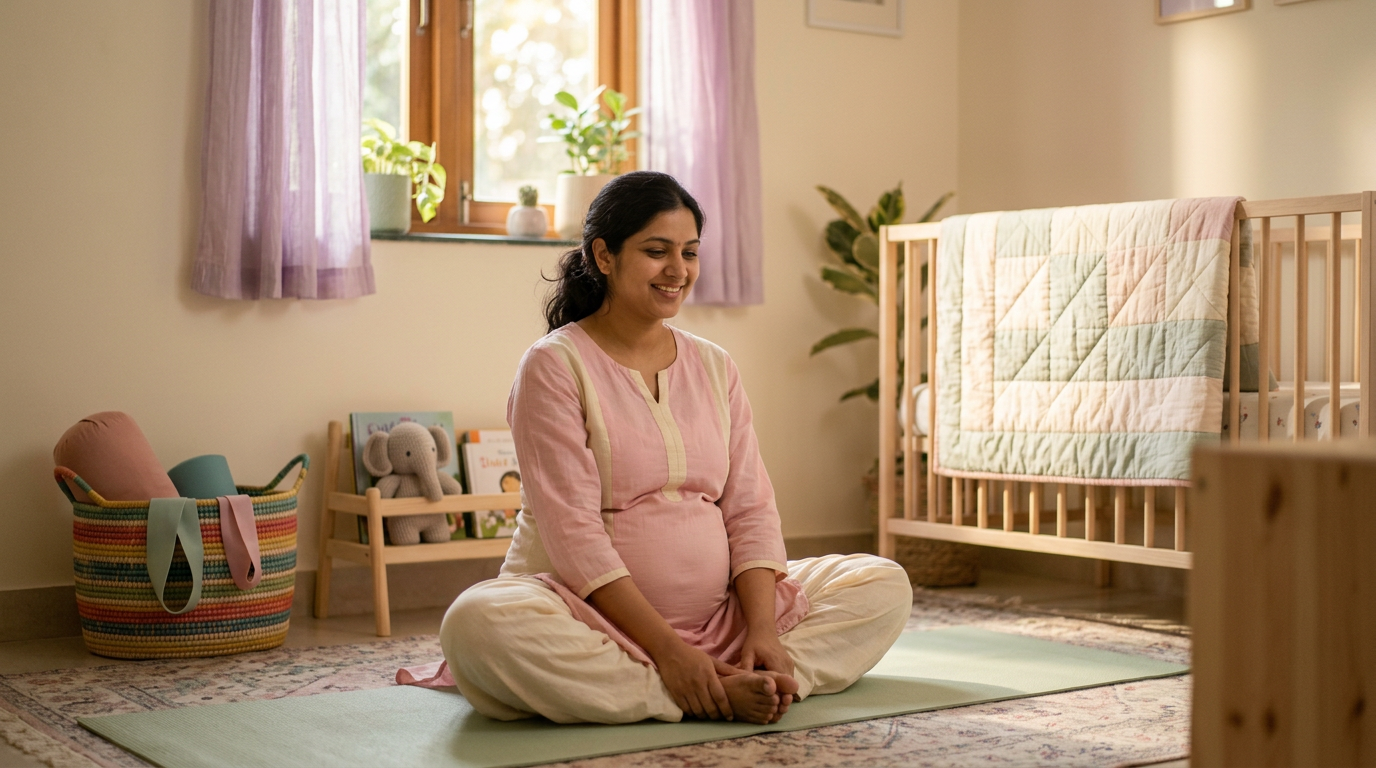
Safe exercises during pregnancy in India aren’t about "bouncing back" or hitting a gym; they are about preparing your body for the marathon of labour and the sleepless nights of motherhood. To answer the most pressing question: Yes, walking and modified prenatal yoga are generally safe and highly recommended for most healthy pregnancies in India, provided you avoid "hot yoga," heavy lifting, and any movement that puts sudden pressure on your belly.
At four months pregnant with my first, I remember my sasu maa looking horrified because I picked up a bag of groceries. "Beta, don’t lift! Just sit and eat ghee," she’d say. While her love was real, the science is clearer: staying active reduces your risk of gestational diabetes (common in Indian ethnicities), manages back pain, and helps with that inevitable pregnancy constipation.
First Trimester (Weeks 1-12): The Foundation
The first trimester is often a blur of nausea (ultis) and bone-deep exhaustion. This isn't the time to start a marathon. Your body is busy building a placenta and a whole human from scratch.
Walking: The Gold Standard
Aim for 20-30 minutes of brisk walking at a pace where you can still hold a conversation. If you are gasping for air, slow down.
* The Indian Context: Avoid walking outdoors between 10 AM and 4 PM to prevent overheating. If you live in a high-pollution city like Delhi or Mumbai, use a treadmill or walk in a ventilated corridor during peak smog months.
* Gear up: Invest in a good pair of walking shoes (brands like Skechers or Decathlon offer great arch support for ₹3,000-₹5,000). Your centre of gravity will shift soon; you need grip.
Prenatal Yoga: Gentleness First
Focus on breathing (Pranayama) rather than complex poses.
* Marjaryasana-Bitilasana (Cat-Cow): Excellent for relieving the early back tension.
* Vrikshasana (Tree Pose): Use a wall for support. It helps with the balance issues that start as your hormones shift.
* Avoid: Deep twists or anything that compresses the abdomen.
> Real talk: Let’s be honest—some days in the first trimester, your "exercise" will be walking from the bed to the bathroom to throw up. That is okay. Listen to your body, not your fitness tracker.
Second Trimester (Weeks 13-26): The "Golden" Phase
This is usually when the "pregnancy glow" kicks in and your energy returns. This is the best time to build strength.
The PAA (People Also Ask): Is it safe to do squats during pregnancy?
Yes, squats are the secret weapon for an Indian normal delivery. We call them Malasana (Garland Pose). They open the pelvic floor and strengthen the thighs.
* How to do it: Stand with feet wider than hip-width, toes out. Slowly lower your hips. If your heels lift, place a folded yoga mat or "Yoga bricks" (available on Amazon for ₹500) under them.
Script for Dadi: If she worries squats will "push the baby out too soon," explain that you are strengthening the muscles needed to carry* the weight of the baby.
Walking Intensity
You can increase your walks to 40 minutes. Wear a supportive maternity bra—breast tenderness and growth are real, and you need the support to prevent ligament pain.
Yoga for the Second Trimester
* Trikonasana (Triangle Pose): Great for stretching the sides of the body as your bump grows.
* Baddha Konasana (Butterfly Pose): A classic in Indian households for a reason—it improves flexibility in the hip region.
Third Trimester (Weeks 27-40): The Home Stretch
You’re heavy, your ankles are swollen, and you’re probably "waddling." Exercise now is about mobility and mood.
Walking for Labour Prep
Keep walking, but break it into two 15-minute sessions if a long walk feels too heavy. Walking helps the baby’s head engage in the pelvis.
* Safety Tip: Always carry a water bottle and a small snack (like makhana or almonds). Low blood sugar can strike fast.
Prenatal Yoga: Preparing for the Big Day
* Upavistha Konasana (Seated Wide Angle): Helps create space in the pelvis.
* Pelvic Tilts: These are lifesavers for lower back pain.
* Deep Belly Breathing: Practice the "Ah" sound during exhalation. This is extremely helpful during the transition phase of labour.
Real talk from Indian moms
"I was told that if I exercised, the baby would get 'tangled' in the cord. My doctor laughed and told me that's a myth. I walked 4km every day until the day I went into labour, and it made my recovery so much faster." — Ananya, Bengaluru, mom to a 6-month-old.
"The heat in Chennai was my biggest enemy. I switched my prenatal yoga to 6 AM on my terrace. The cool air and the quiet time helped my prenatal anxiety more than the physical workout did." — Meera, Chennai, mom to a 10-month-old.
Safety First: The "Talk Test" and Temperature
In India, the heat is a genuine medical risk for pregnant women. Overheating (hyperthermia) can be dangerous for the foetus.
When to call your paediatrician (or OB-GYN)
Stop exercising immediately and call your doctor if you experience:
* Vaginal bleeding or leaking of fluid.
* Sudden swelling in hands, face, or ankles (could be Pre-eclampsia).
* Dizziness or feeling faint.
* Chest pain or palpitations.
* Decreased foetal movement.
* Contractions that don't stop when you rest.
Frequently Asked Questions
Can I continue my pre-pregnancy gym routine?
If you were a regular lifter, you can often continue with modifications (lower weights, no breath-holding). However, do not start a heavy weightlifting or HIIT program now. Switch to pregnancy-specific routines.
Is Surya Namaskar safe?
Traditional Surya Namaskar involves a "plank" and "cobra" which can strain the abdominal midline (linea alba). We recommend a Modified Prenatal Surya Namaskar that uses a chair for support and avoids lying on the belly.
What should I wear for prenatal yoga in India?
Stick to breathable cotton. While fancy leggings look great on Instagram, high-quality cotton leggings or loose "Aladdin" pants are better for the Indian humidity to avoid sweat-induced rashes or yeast infections.
Can I climb stairs as exercise?
Stairs are great for the heart, but as your bump grows, your balance changes. Always hold the railing. In the third trimester, excessive stair climbing can sometimes put too much pressure on the pelvic floor if you have condition like SPD (Symphysis Pubis Dysfunction).
Is it okay to walk after meals?
A "Shatpavali" (100 steps) after meals is a wonderful Indian tradition. It helps with digestion and manages blood sugar spikes after a heavy desi meal. Just keep it a gentle stroll, not a power walk.
Pregnancy is a season of your life, not a permanent state. Some days you will feel like a Goddess in a yoga pose; other days, you will feel like a potato. Both are fine. Move because it feels good, not because you feel pressured. Your body is already doing the hardest workout of all—growing a human.
Repeat after me: My body is strong, my breath is steady, and I am preparing my home for my baby.
Sources & further reading
- IAP (Indian Academy of Pediatrics) — Physical Activity Guidelines
- FOGSI — Perinatology Committee Guidelines on Exercise in Pregnancy
- Ministry of Health and Family Welfare (NHP) — Antenatal Care and Yoga
- WHO — Physical activity during pregnancy and postpartum
Written by Priya Raman, Certified Prenatal Yoga Instructor & Mama of two
Reviewed by TheMamaCircle Editorial Team
Last updated: 7 May 2026
This article is for general information only and is not a substitute for personalised medical advice. Always consult your paediatrician or obstetrician for your specific situation.