Safe Exercises During Pregnancy India: Yoga & Walking Guide
Safe exercises during pregnancy India: A trimester-wise guide to prenatal yoga and walking. Build strength for labour and manage back pain safely. Read more!
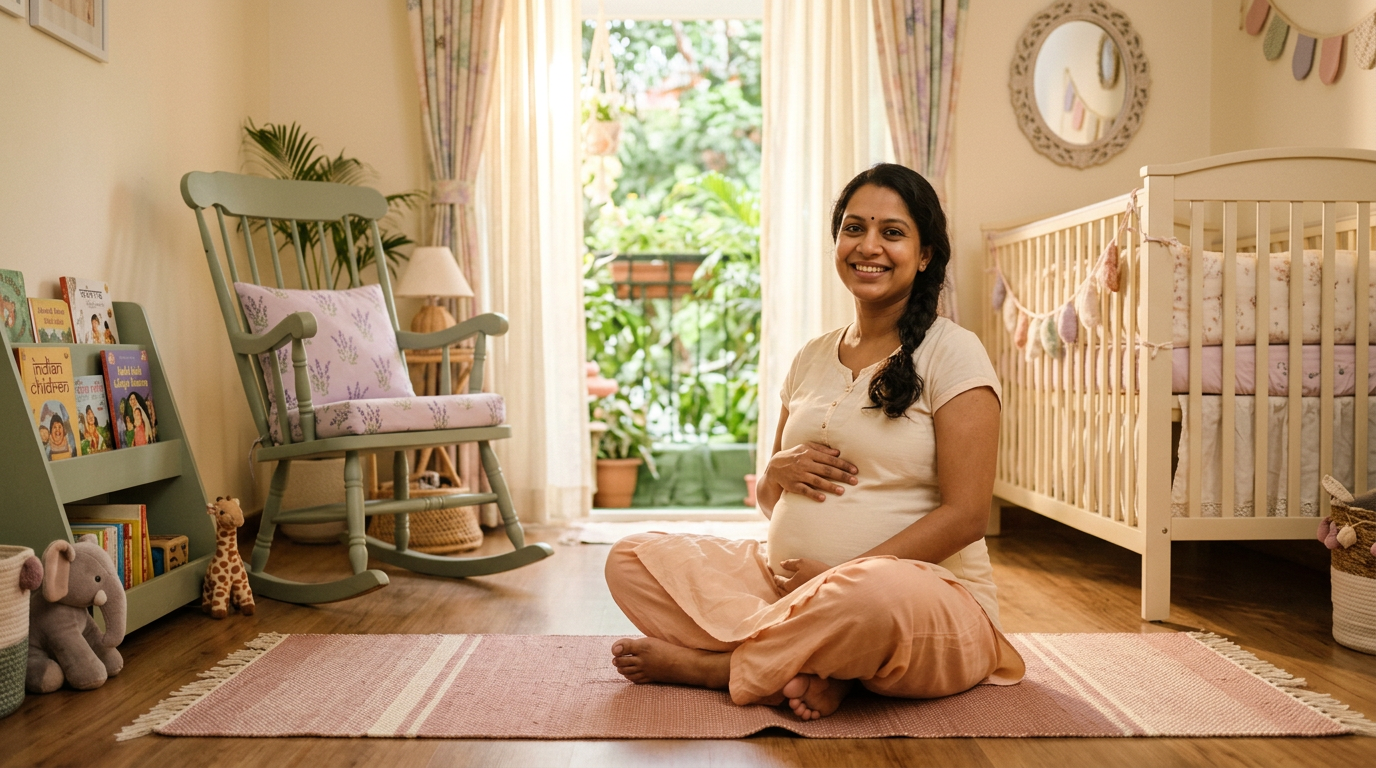
Yes, you can and should exercise during pregnancy, provided your OB-GYN has given you the green light after your first ultrasound. For most Indian moms, the safest and most effective routine combines walking for 30 minutes and 30 minutes of modified prenatal yoga at least five days a week. This isn't about "losing weight" or "getting a flat stomach"; it’s about managing back pain, keeping your gestational sugar levels in check, and building the stamina you’ll need for the marathon that is labour.
I remember my own first trimester in Chennai—between the humidity and the morning sickness that felt like a permanent hangover, the last thing I wanted to do was move. My Sasu Maa was convinced that even lifting a bucket of water would cause a "downward pull." But here is the medical truth: unless you have specific complications like placenta previa or a weak cervix, staying sedentary is actually riskier for you and the baby.
Why "Aaram" doesn't mean bed rest
In many Indian households, the moment a pregnancy test shows two lines, the family wants to put the mother on a sofa with a plate of ghee-laden laddoos. While the love is real, the science says otherwise. The Federation of Obstetric and Gynaecological Societies of India (FOGSI) recommends moderate-intensity physical activity to prevent gestational diabetes and pre-eclampsia.
Moving your body helps with:
* Controlling the "Sugar" scare: Walking after a meal (especially a heavy dinner) helps manage blood glucose levels.
* The "Morning Poop" struggle: Progesterone slows down your gut. Movement is the best natural remedy for pregnancy constipation.
* Back and Pelvic Pain: Strengthening your core and pelvic floor helps carry the extra 10–15kg without your spine screaming for help.
* Mental Health: Pregnancy hormones are a rollercoaster. A simple walk in the colony park can reduce the "baby blues" feel before they even start.
> Mama-to-mama Real Talk: Let’s be honest—some days you’ll feel like an exhausted potato. On those days, don’t force a power walk. Just do 10 minutes of gentle Marjaryasana (Cat-Cow pose) on your bedroom floor. Consistency beats intensity every single time.
First Trimester: Focus on Breath and Stability (Weeks 1–12)
This is the "fragile" phase, mostly because your body is busy building a whole new organ (the placenta). You might feel exhausted and nauseous.
What to do:
Walking: 20 minutes at a "Brisk but Chatty" pace. If you can’t talk while walking, you’re going too fast. Use a good pair of sneakers; don’t walk in flat chappals* as your ligaments are already loosening.
* Prenatal Yoga: Focus on Anulom Vilom (Alternate Nostril Breathing). It calms the nervous system and helps with that first-trimester anxiety.
* The Squat (Malasana): If your knees are okay, practice the supported squat. This is the "Indian toilet" position our grandmothers were so used to, and it’s the best way to keep the pelvic floor flexible.
What to avoid:
* Hot yoga or exercising in the afternoon sun (overheating is dangerous in the first trimester).
* Deep abdominal twists or "crunch" style movements.
High-impact jumping or intense dancing (skip the heavy Zumba* for now).
Second Trimester: The "Golden Phase" (Weeks 13–27)
Usually, the nausea subsides, and you get a burst of energy. This is your time to shine and build strength.
What to do:
* Walking: Increase to 30–40 minutes. Try a morning walk before the Indian sun gets too harsh.
* Yoga Poses:
* Baddha Konasana (Butterfly Pose): Excellent for opening the hips.
* Tadasana (Mountain Pose): Helps improve posture as your "bump" starts pulling your shoulders forward.
* Virabhadrasana (Warrior Pose): Builds leg strength for carrying the extra weight.
* Pelvic Floor (Kegels): Start these now! Imagine you are trying to stop the flow of urine while stuck in a long traffic jam on the Western Express Highway. Hold for 5 seconds, release for 5.
Ananya’s Story: The Bengaluru Commuter
Ananya, a 28-year-old techie from Bengaluru, found herself sitting for 9 hours a day. By week 20, she had severe sciatica (shooting pain in the buttock and leg). We adjusted her routine to include "Desk Yoga"—specifically seated pigeon stretches and 10-minute walks every two hours. By week 26, her pain had reduced by 80% without any painkillers.
> Real Talk: Invest in a good maternity sports bra now. Your breasts are getting heavier and "bouncing" during a walk can lead to stretch marks and discomfort that no bio-oil can fix.
Third Trimester: Preparing for the Finish Line (Weeks 28–40)
You’re heavy, your feet might be swelling like batatas, and you’re probably pee-ing every 20 minutes. The goal now is mobility and baby positioning.
What to do:
* Walking: Keep it slow. 15–20 minutes, twice a day. Walking helps the baby’s head engage into the pelvis.
* Yoga Poses:
* Cat-Cow (Marjaryasana): Helps take the pressure of the baby off your spine. It can also help turn a "back-to-back" (OP) baby.
* Upright positions: Use a birthing ball (exercise ball) to sit on while watching TV. It keeps the pelvis active.
* Deep Belly Breathing: Practice exhaling through the mouth with a "soft jaw." A tight jaw means a tight pelvic floor—remember that for labour!
What to avoid:
Lying flat on your back (Savasana must be done on the left side now). This prevents the baby from pressing on your vena cava*, which can make you feel dizzy.
* Balance-heavy poses without a wall for support. Your centre of gravity has shifted, and falls are a real risk.
When to call your paediatrician (or OB-GYN)
Stop exercising immediately and call your doctor if you experience:
Frequently Asked Questions
Can I continue my gym workout or weight lifting?
If you were lifting weights before pregnancy, you can usually continue with lower weights and more repetitions. Avoid the 'Valsalva maneuver' (holding your breath while lifting). However, do not start a heavy weight-lifting routine now if you weren't doing it before.
Is it safe to do Surya Namaskar?
Modified Surya Namaskar is great! Skip the Ashtanga Namaskara (knees-chest-chin) once your belly grows, and don't jump back into plank. Step back slowly and use wall-supported versions if needed.
My mother says walking too much will cause "premature delivery." Is this true?
No. For a healthy pregnancy, walking is the most recommended exercise by the IAP and FOGSI. It does not cause premature labour; in fact, it can lead to a shorter, easier labour when the time comes.
What should I eat before my walk or yoga?
Never exercise on an empty stomach (it triggers nausea) or a very full stomach. A small banana, two dates, or a handful of soaked almonds 30 minutes before your session is the perfect Indian "pre-workout."
How many steps a day should I aim for?
Don't obsess over the 10,000 steps rule. Aiming for 5,000 to 7,000 consistent steps is fantastic for most pregnant women. Quality of movement and posture matters more than the number on your Fitbit.
Can I do yoga during my periods? (Wait—I'm pregnant!)
Force of habit! But seriously, if you have any spotting that feels like a period during pregnancy, stop everything and go to the ER.
Pregnancy is a marathon, not a sprint. Some days you will feel like a Goddess in a FabIndia ad, and other days you will feel like a tired panda. Both are okay. Just keep moving, keep breathing, and trust that your body was built for this.
Your body is the first home your baby will ever know—keep it strong, keep it steady.
Sources & further reading
- FOGSI — Good Clinical Practice Recommendations on Pregnancy and Exercise
- Indian Academy of Pediatrics — Physical Activity Guidelines for Children and Adolescents (with Maternal Health Context)
- ICMR — Dietary Guidelines for Indians (Maternal Nutrition and Activity)
- WHO — Physical Activity During Pregnancy and Postpartum
Written by Priya Raman, Certified Prenatal Yoga Instructor & Mama of two
Reviewed by TheMamaCircle Editorial Team
Last updated: 1 May 2026
This article is for general information only and is not a substitute for personalised medical advice. Always consult your paediatrician or obstetrician for your specific situation.