Safe Sleep Practices for Newborn India: A Parent's Guide
Learn safe sleep practices for newborn india. Expert tips on crib safety, co-sleeping in joint families, and newborn holding positions for better rest.
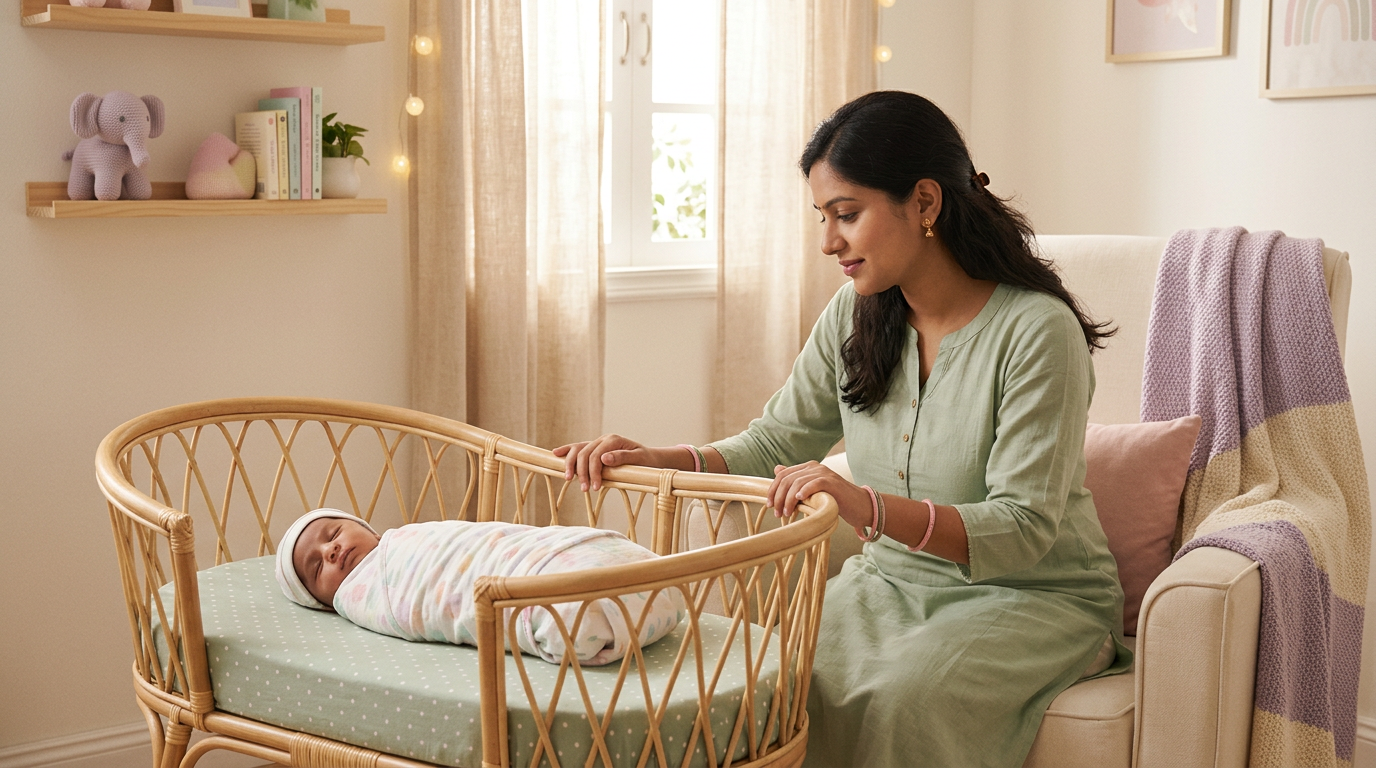
Setting up a nursery is a dream, but in India, safe sleep practices for newborn india usually involve a wooden crib (palna), a bedside co-sleeper, or sharing the family bed. The goal is simple: your baby must sleep on their back, on a firm surface, free from loose pillows or heavy razais. While Dadi might insist on a mustard seed pillow (rai ka takiya), modern paediatric guidelines from the Indian Academy of Pediatrics (IAP) prioritize a flat, clear space to reduce the risk of SIDS (Sudden Infant Death Syndrome).
Why Safe Sleep Practices for Newborn India Matter
In the Indian context, our homes are often louder and more crowded than Western setups. Whether you live in a joint family in Jaipur or a high-rise in Bengaluru, the principles of safe sleep remain the same. The postnatal period (also called postnatal) is a time of immense transition. Following safe sleep protocols ensures that while you recover, your baby is resting in an environment that supports their developing respiratory system.
When you are learning how to hold a newborn, you realize how fragile their neck muscles are. This same fragility is why their sleep environment cannot have plush toys or soft mattresses that could lead to accidental smothering.
The Golden Rules of Newborn Sleep in Indian Homes
1. Back to Sleep, Always
Every single nap and night sleep must start with the baby on their back. Do not worry about "flat head syndrome"—supervised Tummy Time during awake hours is the solution for that. If you are worried about the baby spitting up, rest assured that a healthy newborn's airway anatomy actually protects them better when they are on their back.
2. The Mattress Choice
The sleeping surface should be firm. If your finger leaves an indent when you press down on the mattress, it is too soft. In India, many families use a thin godri or cotton quilt on the floor or a firm mattress. This is acceptable as long as it is tucked in tightly. Avoid memory foam or loose waterbeds.
3. Clear the Cot (The "No-Khilona" Zone)
Your baby’s sleep area should look "boring."
No Pillows: Even the traditional rai ka takiya* is discouraged by the IAP for unsupervised sleep.
No Bolsters: Those long lodhs* used to keep babies from rolling are a suffocation hazard.
* No Soft Toys: Keep the teddy bears for playtime.
* No Heavy Blankets: Use a wearable blanket or a light cotton swaddle instead.
Managing the Indian Climate: AC vs. Fan
Overheating is a significant risk factor for SIDS. In peak Indian summers (April–June), a room temperature of 24–26°C is ideal.
* Using a Fan: A ceiling fan at a moderate speed is excellent as it improves air circulation.
* Using an AC: Ensure the vent isn't blowing directly onto the baby. Dress the baby in one extra layer than what you are wearing comfortably.
* The Neck Test: To check if your baby is too hot, feel their chest or the back of their neck. Sweating or redness here means they are overdressed. Ignore cold hands and feet; that is normal for newborns.
Safe Co-sleeping in a Joint Family
In India, co-sleeping is the cultural norm. However, there is a difference between "room-sharing" (safe) and "bed-sharing" (high risk). The safest way to practice sleep routine newborn habits is to have the baby in a separate cot or a side-car sleeper in your room.
If you must bed-share due to space constraints:
* Ensure the mattress is firm and flat.
* Keep the baby away from pillows and heavy adult duvets.
* Never bed-share if any adult in the bed has consumed alcohol, sedative medication, or smokes.
* Avoid letting older siblings or pets sleep next to the newborn.
Holding and Soothing Before Bed
Establishing a calm routine involves specific newborn holding positions. The "Chest-to-Chest" hold is perfect for winding down, allowing the baby to hear your heartbeat. Once they are drowsy, transfer them to their firm sleep surface. If you are struggling with a fussy baby, our AI cry analyzer can help you distinguish between a hunger cry and a "tired" cry.
As you monitor your baby's growth using a baby growth chart, you will notice their sleep patterns consolidate. In the first few weeks, expect sleep in 2-3 hour chunks, dictated by their tiny stomachs.
Real Talk from Indian Moms
> "My mother-in-law was adamant about using a heavy hand-knitted blanket from our village. I had to politely explain that while it’s beautiful, we only use it for photos, and he sleeps in a BIS-certified cotton sleep sack for safety." — Ananya R., Pune (Baby age: 3 months)
> "Living in a joint family meant everyone wanted to hold the baby to sleep. I had to set a firm rule: no sleeping on the sofa with the baby. If you're tired, put her in the crib. It was awkward at first, but safety comes first." — Meher V., Delhi (Baby age: 6 weeks)
When to Call Your Paediatrician
While sleep grunts and occasional startles (Moro reflex) are normal, keep an eye out for these red flags:
* Blue tint on the lips or tongue (Cyanosis).
* Difficulty breathing: You see the chest sinking in deeply (retractions) or hear grunting with every breath.
* Extreme lethargy: The baby is too drowsy to wake up for feedings.
* Fever: Any temperature above 100.4°F (38°C) in a newborn.
* High-pitched, inconsolable crying that is different from their usual hunger cry.
Frequently Asked Questions
What are the most recommended safe sleep practices for newborn india?
The primary recommendations include placing the baby on their back on a firm, flat surface (like a BIS-approved crib mattress), room-sharing without bed-sharing, and keeping the sleep environment free of loose bedding, pillows, and toys. In the Indian heat, ensuring the room is well-ventilated with a fan or AC set to 24-26°C is also crucial.
How should I go about holding infant safely during the night?
When holding infant during night feedings, ensure you are sitting up in a chair or bed where you won't accidentally fall asleep. Use the cradle hold or football hold to keep the baby secure. If you feel yourself nodding off, immediately place the baby back in their safe sleep space (crib or bassinet).
What is the best way to learn how to hold an infant for sleep?
Learning how to hold an infant for sleep involves supporting the head and neck at all times. Use the "shoulder hold" to burp them thoroughly before laying them down; a trapped gas bubble is a common reason for sleep disturbances. Always transition them from your arms to the mattress once they are calm.
Is it safe to use a mosquito net over the crib?
Yes, in India, mosquito nets are essential. However, ensure the net is pulled taut and is not sagging into the crib where the baby could pull it over their face. Use a stand-alone net or one that attaches firmly to the frame of the palna.
Can I use a traditional sarree cradle (jhoola)?
While a jhoola or thottil is great for soothing, it is not recommended for unsupervised overnight sleep. The curved surface and soft fabric can cause the baby’s chin to drop to their chest, potentially obstructing their airway (positional asphyxia). Use it only while you are actively watching the baby.
Should I swaddle my baby in the Indian summer?
Swaddling is excellent for preventing the startle reflex, but use only single-layer, breathable muslin cotton. If the room isn't air-conditioned and the temperature is high, a diaper and a very thin muslin wrap are enough. Ensure the swaddle is loose around the hips to prevent hip dysplasia.
Your journey into motherhood is a marathon, not a sprint. While the nights feel long and the advice from relatives can be overwhelming, trust your maternal instinct backed by science. Safe sleep isn't about being perfect; it's about creating the most secure environment possible for your little one to grow.
I am doing my best, and my baby is safe and loved.
Sources & further reading
- Indian Academy of Pediatrics (IAP) Guidelines on Newborn Care
- WHO: Standards for Improving Quality of Maternal and Newborn Care in Health Facilities
- Ministry of Health and Family Welfare (MoHFW) - Home Based Newborn Care
Written by Dr. Anjali Mehta, MBBS, DCH (Paediatrics)
Reviewed by TheMamaCircle Editorial Team
Last updated: 14 August 2026
This article is for general information only and is not a substitute for personalised medical advice. Always consult your paediatrician or obstetrician for your specific situation.