Second Trimester Symptoms: Energy, Kicks & India Guide
The second trimester brings energy & kicks! Learn what's normal, from quickening to acidity, and red flags to watch for in this Indian pregnancy guide. Read more.
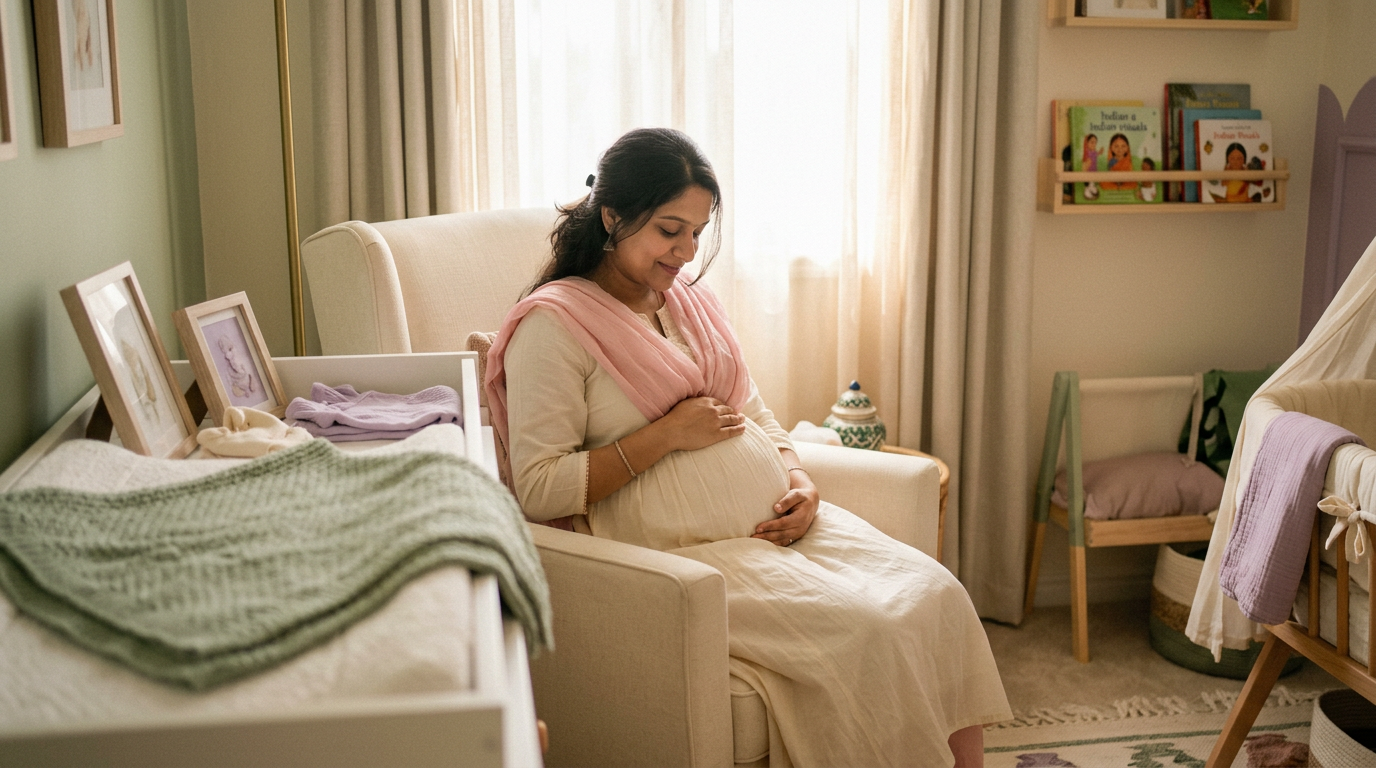
The second trimester—roughly weeks 13 to 27—is famously dubbed the 'honeymoon phase' of pregnancy because, for most Indian moms, the constant mil-sec (nausea) of the first few months finally starts to fade. You’ll likely trade your morning sickness for a sudden craving for chatpata street food and that elusive pregnancy glow. However, it’s also the time your body undergoes its most visible transformation, from the first flutter of 'quickening' to the rapid growth of your nanhi jaan.
What happens to your energy levels?
After weeks of feeling like a zombie, you might suddenly wake up with the urge to deep-clean the kitchen or finally organise the baby’s almirah. This surge in energy is thanks to stabilising hormone levels and the fact that your body has finished the exhausting task of building the placenta.
Managing the 'Glow' and the 'Go'
* The Second Trimester Surge: Around week 16, many women feel a 'rebound.' Use this time for light exercise. Whether it’s a 20-minute walk in the local park or prenatal yoga, moving helps with the backaches that are coming.
The Afternoon Slump: Don't be surprised if you still need a power nap after a heavy lunch of dal-chawal*. Progesterone is still high, which can make you drowsy.
* Iron Matters: If you feel unusually breathless or tired despite the 'honeymoon phase,' check your iron levels. Anaemia is incredibly common in Indian pregnancies (affecting over 50% of expectant mothers according to NFHS-5). Don't skip your iron and folic acid (IFA) tablets provided by your doctor.
> Mama-to-mama real talk:
> "Everyone told me I'd be glowing and energetic. While the vomiting stopped, I spent most of my second trimester dealing with 'pregnancy brain.' I once put the dahi container in the cupboard instead of the fridge. If you aren't feeling like a 'superwoman,' don't stress. Your body is still doing heavy lifting!" — Preeti, Mumbai, Mom to a 7-month-old.
When will I feel the first kicks?
The most magical moment of the second trimester is 'quickening'—those first tiny movements. For first-time moms, this usually happens between 18 and 22 weeks. If this is your second baby, you might feel it as early as 16 weeks because you know what to look for.
From 'Gas' to 'Gubbare'
Initially, a baby’s kicks don't feel like kicks at all. Most Indian moms describe it as:
* Butterflies: A light fluttering in the lower abdomen.
Bubbles: Like digestive gas, but more rhythmic (often confused with gastric*).
* Fishes: A gentle 'swish' or 'rolling' sensation.
By week 24, these flutters turn into distinct jabs. This is the time your partner or the excited dadi and nani might finally be able to feel the movement by placing a hand on your belly.
Pro-tip: If you want to encourage a kick, try lying on your left side after a meal or drinking a glass of cold coconut water. The glucose spike and the change in position often get the baby moving!
Common physical symptoms you shouldn't ignore
While the second trimester is generally comfortable, your expanding uterus is moving organs out of the way, which leads to some specific 'Indian pregnancy' discomforts.
1. The 'Gas and Acidity' Battle
With your growing belly pressing against your stomach, acidity becomes a constant companion.
The Fix: Instead of three big meals, have 5-6 small snacks. Avoid heavy, oily pakoras or overly spicy masala late at night. Sip on saunf (fennel) water or buttermilk (chaas*) to cool the system.
2. Round Ligament Pain
As your uterus grows, the ligaments supporting it stretch. This often feels like a sharp, sudden jab in the lower abdomen or groin when you sneeze, cough, or stand up too quickly from the sofa.
* The Fix: Move slowly. When getting out of bed, roll to your side first instead of sitting straight up.
3. Skin Changes and the 'Linea Nigra'
You might notice a dark vertical line appearing down your stomach (Linea Nigra) or patches of darkened skin on your face (melasma, or the 'mask of pregnancy').
* Real Talk: These are hormonal. Don't waste money on expensive 'whitening' creams which might contain steroids. Use a good physical sunscreen (SPF 30+) even when indoors and moisturise your stretching belly with coconut oil or shea butter to help with the itching.
Is it normal to have 'Braxton Hicks' this early?
Yes. Around week 20, you might feel your stomach tightening for 30 to 60 seconds. These are 'practice contractions' or Braxton Hicks. They are usually painless and irregular.
How to tell them apart from real labour:
* Braxton Hicks: Go away if you walk, change position, or drink water. They stay in the front of the belly.
* Preterm Labour: These are regular, get stronger, and often involve back pain or a 'heavy' feeling in the pelvis. If you have more than 4 tightenings in an hour, call your doctor.
The 20-Week Anomaly Scan: The Big Milestone
In India, the "Level 2" or Anomaly Scan is typically done between 18-20 weeks. This is perhaps the most important ultrasound of your pregnancy. The radiologist will check the baby's heart, brain, spine, and limbs in detail. It’s also when they check the position of the placenta (checking for placenta previa) and the length of your cervix.
> Case Study: Ananya’s Story
> Ananya, a 29-year-old software engineer from Bengaluru, felt great at 22 weeks but noticed her feet were swelling significantly by the end of the day. Her mother-in-law insisted it was just "nature," but Ananya mentioned it at her check-up. Her BP was slightly elevated. By catching it early and reducing her salt intake and work stress, she avoided more serious complications later on. Lesson: Never dismiss a symptom if it feels 'off' to you.
When to call your paediatrician (or OB-GYN)
While most second-trimester symptoms are annoying but harmless, certain "Red Flags" require an immediate trip to the hospital:
* Vaginal Bleeding: Any amount of spotting or bleeding needs an immediate check.
* Leaking Fluid: If you feel a constant trickle or a gush of watery fluid (this could be amniotic fluid).
* Severe Swelling: Sudden swelling in the face, hands, or significantly uneven swelling in one leg.
* Reduced Movement: Once you have a regular pattern of kicks (usually by week 26-28), if you notice a significant drop in activity that doesn't improve after a snack.
* High Fever: Any temperature over 100.4°F (38°C) should be reported.
* Severe Abdominal Pain: Pain that is constant and doesn't go away with rest.
Frequently Asked Questions
1. Is it safe to travel during the second trimester?
Generally, yes. Weeks 14 to 28 are the safest time to travel. If you are flying, domestic airlines in India usually allow travel up to 32-36 weeks with a 'Fit to Fly' certificate. Always carry your latest scans and doctor’s contact. If travelling by car, take breaks every 2 hours to stretch your legs and prevent blood clots.
2. Can I sleep on my back now?
As you head into the late second trimester, try to avoid sleeping flat on your back. The weight of the uterus can compress a major vein (the vena cava), reducing blood flow to the baby. Sleeping on your left side is the gold standard for optimal blood flow. Use a long 'body pillow' or a rolled-up dhoti/saree between your knees for support.
3. Why am I getting leg cramps at night?
Leg cramps are very common in the second trimester, often due to a lack of magnesium or calcium, or simply pressure from the uterus on nerves. If a cramp hits, flex your foot upward (toes towards your shin) to stretch the calf muscle.
4. Is the 'Garbh Sanskar' music actually helpful?
While there is no "medical" proof that specific music makes a baby smarter, the baby’s hearing is well-developed by week 24. They can hear your heartbeat, your voice, and loud noises outside. If listening to calming ragas or shlokas makes you feel relaxed, your body produces fewer stress hormones (cortisol), which is definitely good for the baby!
5. My gums are bleeding when I brush—is this normal?
Yes, "pregnancy gingivitis" is common due to increased blood flow and hormonal changes. Don't stop brushing! Use a soft-bristled brush and see a dentist for a cleaning. In India, many elders say you shouldn't go to a dentist during pregnancy, but this is a myth—untreated gum infections are actually linked to preterm labour.
6. Can I continue having sex in the second trimester?
Unless your doctor has specifically told you that you have a "low-lying placenta" or a history of preterm labour, sex is safe. Your baby is well-protected by the amniotic sac and the mucus plug. You might find you have an increased libido during this trimester due to increased blood flow to the pelvic region.
The second trimester is your time to breathe, eat well, and bond with your bump. Don't let the "what ifs" steal your joy—listen to your body, trust your doctor, and enjoy those first tiny somersaults happening inside you.
You are growing a whole human being; you are doing enough.
Sources & further reading
- Indian Academy of Pediatrics (IAP) — Guide on Maternal Nutrition and Antenatal Care
- National Health Portal (NHP) India — Pregnancy Care and Milestones
- World Health Organization (WHO) — Antenatal Care for a Positive Pregnancy Experience
- ICMR — Dietary Guidelines for Indians
Written by Dr. Ritu Sharma, MD (Obstetrics & Gynaecology)
Reviewed by TheMamaCircle Editorial Team
Last updated: 6 May 2026
This article is for general information only and is not a substitute for personalised medical advice. Always consult your paediatrician or obstetrician for your specific situation.