Summer Newborn Care in India: Beating Heat, Rashes &
From safe AC settings and prickly-heat fixes to power-cut survival and the 7 AM Vitamin D window — a heatwave-tested newborn care guide for Indian summers.
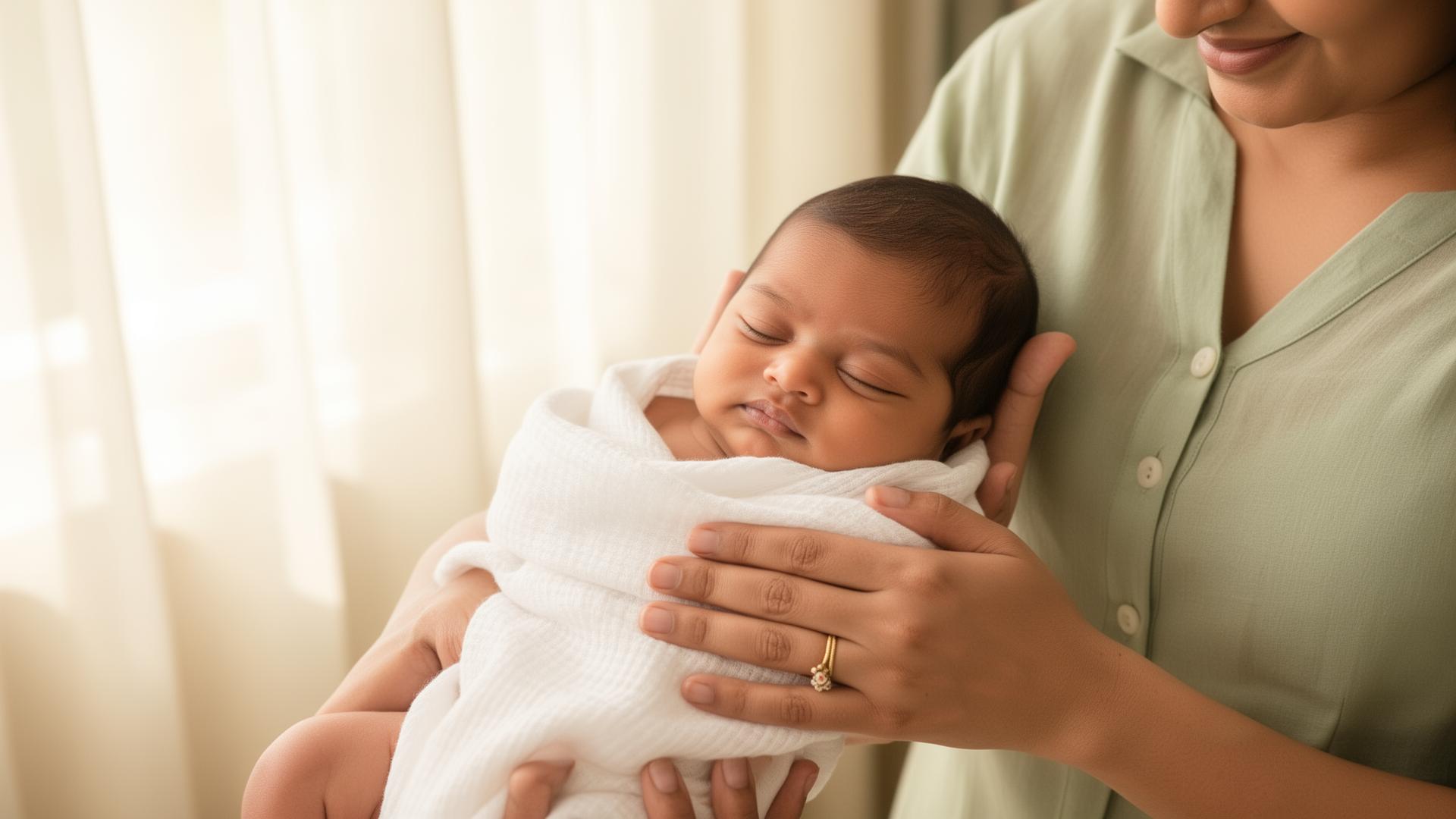
I remember it like it was yesterday. My first May with my newborn son. I’d be sitting in our Mumbai apartment, the fan whirring on its highest setting, looking at this tiny, perfect human sleeping in my lap. His skin would be flushed pink, a single, delicate bead of sweat on his temple, and my heart would be doing a frantic tango of love and anxiety. "Is he too hot? Is he thirsty? Am I doing this right?" The questions were as relentless as the summer sun outside.
If this sounds like you right now, take a deep breath, mama. You’re not alone. Navigating a baby’s first Indian summer is a rite of passage, and we’re here to walk you through it, one sweaty day at a time.
The Indian Summer Reality: 35–45°C, Power Cuts & Humidity
Let’s be real, an Indian summer isn’t just ‘warm’. It's a whole different ball game. And where you are in the country dramatically changes the challenge.
* Dry Heat (Delhi, Jaipur, Lucknow): We’re talking temperatures soaring to 40-45°C. It feels like standing in front of an open oven. The air is dry, which can be harsh on a baby’s delicate nasal passages, but sweat evaporates faster. The biggest enemy here? The dreaded afternoon power cut during a heatwave.
* Humid Heat (Mumbai, Chennai, Kolkata): The thermostat might say ‘only’ 35°C, but the humidity makes it feel like you’re breathing water. Everything is sticky. Sweat doesn't evaporate, leading to blocked pores and, you guessed it, rashes. It’s a constant battle against dampness.
Understanding your local climate is the first step to creating a comfortable little bubble for your baby.
The Clothing Rule: Why Less is More
Our first instinct, lovingly passed down by our mothers and grandmothers, is to swaddle and bundle. For a summer baby, you need to gently resist this urge, at least during the day. A baby’s thermostat is still under development, and they can overheat much faster than we do.
The golden rule is: Dress your baby in one more light layer than you are comfortably wearing. But in peak summer, it's often just a single layer.
The MVP: Light, breathable cotton. Think soft cotton jhablas* (traditional sleeveless tops that tie at the back), muslin onesies, or simple cotton vests. Brands like Mothercare, Mee Mee, and even affordable options on FirstCry have fantastic multi-packs (around ₹600-900 for a pack of 3-5).
Skip the Extras Indoors: Mittens, booties, and especially the topi* (cap) are not needed indoors during a hot day. Babies regulate their temperature through their head and feet, so keeping them open helps them cool down.
Diaper-Only Time: Don't be afraid of letting your baby chill in just a diaper for a while in a well-ventilated room (no direct drafts!). It's the best way to air out their skin and prevent diaper rash. A simple cotton langot* (nappy) is also a fantastic, breathable option for at-home use.
AC, Cooler or Fan? Safe Cooling for a Newborn
This is the big question that keeps new parents up at night. Is AC safe? Will my baby catch a cold? Here’s the expert-backed, fuss-free guide.
The Indian Academy of Pediatrics (IAP) and WHO both agree that using an AC or cooler is safe for newborns, provided you follow some simple rules.
Air Conditioner (AC)
* The Sweet Spot: Set the temperature between 24–26°C. This is comfortable and safe. The goal is a cool, pleasant room, not a Himalayan cave.
* No Direct Drafts: This is non-negotiable. Never place the crib or cot directly under the AC vent. The constant blast of cold air can be too much for their system. Use the swing/louver function to circulate air around the room.
* Service is Key: Get your AC serviced before the summer hits to ensure the filters are clean and it’s not circulating dust and allergens.
Desert Cooler
* Humidity Hero (or Villain): Coolers work by adding moisture to the air. This is fantastic for the dry heat of North India but can be a nightmare in already humid cities like Mumbai or Chennai, where it can actually make the room feel clammier and increase the risk of mould.
* Cleanliness is Godliness: The water tank in a cooler can become a breeding ground for bacteria and mosquitoes. Clean it thoroughly every few days.
* Ventilation is a Must: Unlike an AC, a cooler needs a window or door slightly ajar to work effectively and prevent the room from becoming overly damp.
The Humble Fan
A ceiling or pedestal fan is a great tool. Just ensure it's not blowing directly onto the baby. An oscillating pedestal fan can be a good option to keep air moving without a constant draft in one spot.
> Real Mama Talk
> "Delhi summers are brutal. I remember a 44°C day when Aarav was just 3 weeks old, and the power went out for four hours in the afternoon. I honestly panicked. My husband and I took turns fanning him with a piece of cardboard. After that, we immediately bought a rechargeable battery-operated fan. It was about ₹1500, but the peace of mind has been priceless."
> \- Aarti, Delhi, Mom to Aarav (now 6 months)
Bath Time in Summer: Frequency, Water Temp & The Powder Debate
A summer bath is pure bliss for a little one. It cools them down, cleans away sweat and grime, and can be a beautiful bonding ritual.
* Frequency: While one bath a day is standard, giving a quick, lukewarm sponge bath or a second quick dip in the evening before bedtime is perfectly fine in summer. It can help soothe a cranky, overheated baby and promote better sleep.
* Water Temperature: Always use lukewarm water. Test it with your elbow or the inside of your wrist; it should feel comfortably warm, not hot.
* The Powder Debate: For generations, a post-bath dusting of Johnson's Baby Powder was the norm. However, doctors now advise against using talcum powder, especially on the face or genitals. The fine particles can be inhaled, posing a risk to a baby’s tiny lungs. If you love that fresh, powdery feel, opt for a talc-free "dusting powder" from brands like Himalaya or Mamaearth (around ₹150-250) and apply it sparingly on the back and chest, away from the baby's face.
Heat Rash, Prickly Heat & Diaper Rash: The Indian Summer Trifecta
Ah, the rashes. If you haven't seen one yet, you likely will. Don't panic! Most are harmless and easily treated.
Heat Rash / Prickly Heat (Ghamori*): These look like tiny red dots or pimples, usually on the neck, back, chest, or in skin folds (like those chubby armpits!). They happen when sweat ducts get blocked.
* The Fix: Keep the area cool and dry. Dress baby in loose cotton. A sprinkle of a prickly heat powder like Nycil or Dabur Cool King Icy Powder on the back and chest (not the face!) can provide relief. A soothing calamine lotion can also help.
* Diaper Rash: This angry red rash on the bum is caused by prolonged contact with wetness and friction. Summer sweat makes it worse.
* The Fix: The best cure is prevention!
1. Change diapers frequently, even if they don't feel full.
2. Give diaper-free time every day.
3. Clean thoroughly with water or gentle, alcohol-free wipes during each change.
4. Pat dry completely before putting on a new diaper.
5. Use a good barrier cream. Sebamed Diaper Rash Cream (around ₹450) or Mamaearth Dipeey Doo Nappy Cream are excellent. They create a protective layer between the skin and the diaper.
> Real Mama Talk
> "In Chennai, the humidity is the real killer. My daughter Diya had constant heat rash in her neck folds when she was 2 months old. My paediatrician told me to gently wipe the folds with a cool, wet muslin cloth several times a day and pat it completely dry. It worked like a charm! No fancy creams, just keeping it clean and dry."
> \- Priya, Chennai, Mom to Diya (now 1 year)
Hydration: Why Newborns Still Don't Need Water
This is a big one. Well-meaning relatives might insist that the baby is thirsty and needs some water. Please listen to your doctor on this.
The WHO and IAP state clearly that exclusively breastfed or formula-fed babies under 6 months old do NOT need any extra water. Your breast milk is over 80% water and is perfectly designed to quench their thirst and provide all the nutrition they need. Giving water can fill up their tiny tummies, making them nurse less and potentially leading to malnutrition or even water intoxication.
So, how do you keep them hydrated?
Simply offer the breast more frequently. In hot weather, your baby might want shorter, more frequent "snack" feeds. This is their way of drinking water. Trust their cues.
Signs your baby is well-hydrated:
* 6 to 8 wet nappies (cloth or disposable) in 24 hours.
* Pale yellow urine.
* Active and alert when awake.
* Moist mouth and eyes.
Sun Exposure & Vitamin D: The Safe 7–9 AM Window
Newborns need Vitamin D for bone development, and sunlight is the best source. But the harsh Indian sun requires caution.
The safest time for a little sun is the early morning, between 7 AM and 9 AM.
This isn't about placing your baby directly under the sun to "bake." Just 10-15 minutes in a shady spot (like a balcony or near a window) with their arms and legs exposed to the indirect morning light is enough. Their skin is far too sensitive for direct midday sun, which can cause severe sunburns.
Travel & Outings: Stroller Covers, Mosquito Nets & Repellents
Need to step out for a doctor’s appointment? Plan it for the cooler parts of the day—early morning or late evening.
* Stroller Sense: Use a light, breathable stroller cover, preferably one made of mesh or muslin, to provide shade without trapping heat. Avoid thick blankets or plastic covers that turn the stroller into a greenhouse.
* Mosquito Menace: Dengue and malaria are real risks. Use a mosquito net over the cot and stroller. For babies over 2 months, you can use natural mosquito repellent patches like Goodknight Fabric Roll-On or Mamaearth's Natural Repellent patches on their clothes or stroller (never on their skin). Skin-based repellents like Odomos are generally not recommended for infants under 6 months.
Power Cut Survival Kit
The power goes out. The AC dies. The baby starts to fuss. Don't panic. Be prepared.
* Rechargeable Fan: A small, battery-operated fan is an absolute lifesaver.
* Ice Gel Packs: Keep a few of these in your freezer. During a power cut, you can place them AROUND the baby's cot (never directly on the baby or in the cot) to cool the surrounding air.
* The Wet Muslin Trick: Dip a few muslin cloths in cool water, wring them out, and hang them near the baby's cot. As the water evaporates, it will cool the air slightly. You can also use a cool, damp cloth to gently wipe your baby's face, neck, and limbs.
Red Flags: When to Rush to the Pediatrician
While most summer issues are minor, it’s crucial to know the signs of serious trouble like heatstroke or dehydration. Call your doctor or go to the nearest hospital immediately if you notice:
* Extreme Lethargy or Irritability: Your baby is unusually floppy, sleepy, and difficult to wake, or is crying inconsolably.
* No Wet Nappies: Fewer than 6 wet nappies in 24 hours, or no wet nappy for more than 6-8 hours.
Sunken Fontanelle: The soft spot on their head (the taalu*) appears sunken.
* Dryness: Dry mouth, no tears when crying.
* High Temperature: A fever of 100.4°F (38°C) or higher in a newborn.
* Rapid Breathing or Heartbeat.
That first summer can feel like a marathon run in the scorching sun. But remember, you and your baby are a team. By trusting your instincts, following these simple guidelines, and responding to your baby’s cues, you’ll both get through it beautifully.
You've got this, mama.
> 📚 This post is part of our Complete 0–3 Month Newborn Care Guide — your complete 0–3 month roadmap for Indian moms.