The Mama’s Guide to Postpartum Hair Loss: Causes and
Don't panic, Mama! Postpartum hair loss is normal. Discover why it happens and how to regrow your hair using natural Indian remedies and healthy habits.
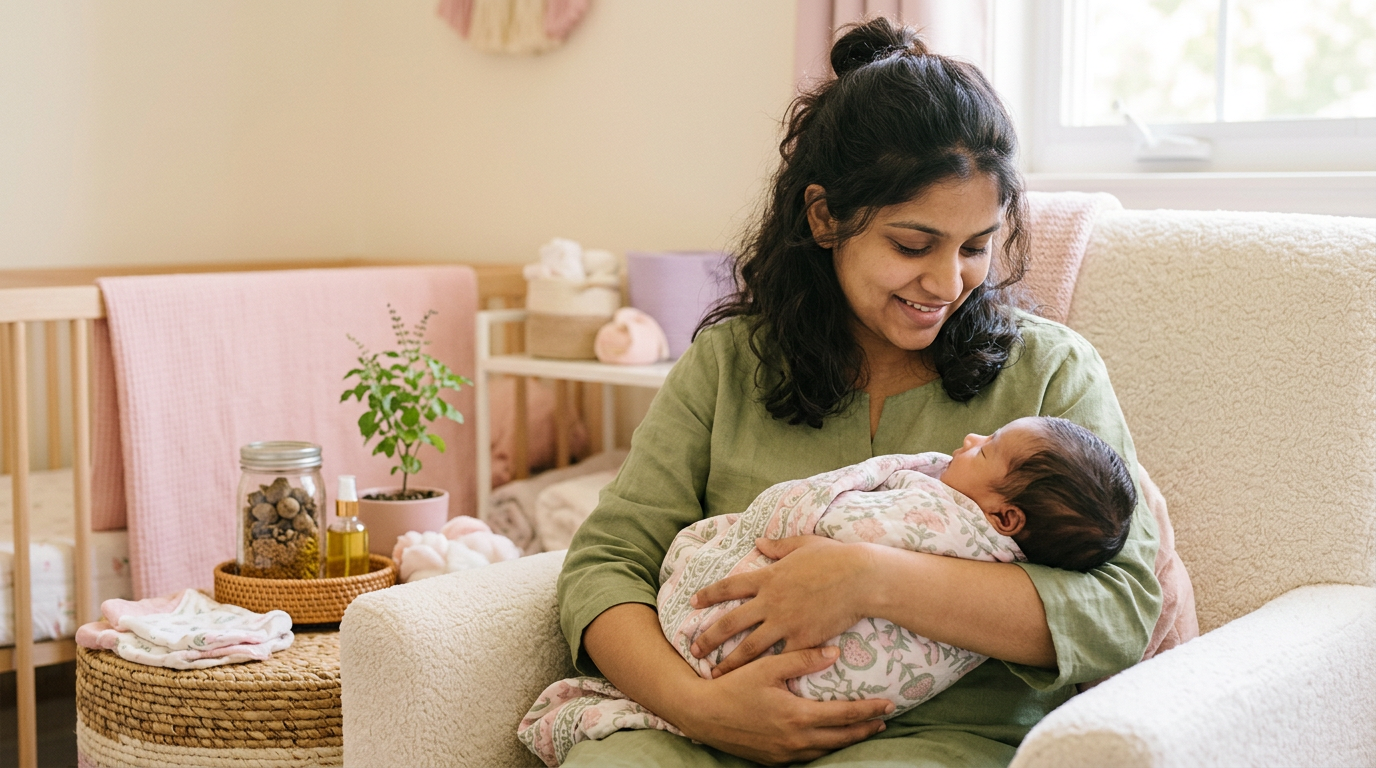
Hi Mama! If you’ve recently found more hair on your hairbrush or in the shower drain than usual, let me first give you a big, reassuring hug. You aren't alone. I remember the panic I felt about four months after my little one was born—I felt like I was losing half my hair every time I ran a comb through it.
Postpartum hair loss, or what doctors call telogen effluvium, is one of those motherhood "surprises" that no one really prepares you for. While you’re marveling at your newborn, you might also be mourning your pregnancy glow (and your thick pregnancy hair!).
But here’s the good news: this is almost always temporary. Today, let’s talk about why this happens and how we can use our rich Indian heritage of natural remedies—plus a few lifestyle tweaks—to get those tresses back to their former glory. 🌸
Why Is This Happening? (The Science Bit)
When you were pregnant, those high levels of estrogen kept your hair in the "growth phase" for much longer than usual. You probably noticed your hair felt thicker and shinier.
Once the baby arrives and your hormones start to level out, that "growth phase" ends abruptly. All the hair that should have fallen out over the last nine months decides to fall out all at once. Usually, this peaking around 3 to 4 months postpartum. It’s not that you’re going bald; it’s just your body’s way of hitting the reset button.
Natural Remedies from the Indian Kitchen
In India, we are blessed with ancient wisdom when it comes to hair care. Before reaching for expensive chemical serums, try these time-tested Dadima ke nuskhe (Grandmother's tips).
1. The Magic of Bhringraj and Amla
Bhringraj is known as the "King of Hair" in Ayurveda. Combining it with Amla (Indian Gooseberry), which is rich in Vitamin C and antioxidants, can work wonders.
* How to use: You can find Bhringraj oil or powders at most local Ayurvedic stores. Mix Amla powder with warm water to make a paste, apply it to your scalp for 20 minutes, and rinse. It strengthens the roots and prevents premature greying.
2. Curry Leaves and Coconut Oil
This isn't just for your tadka! Curry leaves are rich in beta-carotene and proteins that limit hair loss.
* How to use: Heat a cup of pure coconut oil with a handful of fresh curry leaves until they turn black. Strain the oil and massage it into your scalp twice a week. The Medium Chain Fatty Acids in coconut oil penetrate deep into the hair shaft.
3. Methi (Fenugreek) Seeds
Methi seeds are a powerhouse of nicotinic acid and lecithin, which are effective in treating hair fall and dandruff.
* How to use: Soak two tablespoons of methi seeds in water overnight. Grind them into a fine paste the next morning and apply it to your scalp. Leave it on for 30 minutes before washing with a mild, sulphate-free shampoo.
4. Onion Juice (The Smelly but Effective Cure)
It might not smell like roses, but onion juice is rich in sulfur, which prevents hair breakage and thinning.
* How to use: Extract the juice of one red onion, dab it onto your scalp using a cotton ball, and leave it for 15-20 minutes. Wash it off with a gentle shampoo. Do this once a week—the results are worth the smell!
Nutrition: Eating Your Way to Thicker Hair
Postpartum recovery requires a lot of energy, and often, our hair is the last priority for our bodies when distributing nutrients.
* Iron-Rich Foods: Anemia is a common cause of hair loss in Indian moms. Include plenty of spinach (palak), beetroot, pomegranate, and jaggery (gur) in your diet.
* Protein is Key: Your hair is made of protein. Ensure you’re getting enough dal, paneer, eggs, or lean meats.
* The Power of Seeds: Flaxseeds (alsi) and chia seeds are great sources of Omega-3 fatty acids, which add shine to your hair from the inside out.
* Biotin and Zinc: Talk to your doctor about continuing your prenatal vitamins or moving to a postnatal supplement that includes biotin.
Daily Habits to Protect Your Hair
Sometimes, it’s not just about what you put on your hair, but how you treat it.
* Be Gentle: Avoid vigorous towel-drying. Instead, use an old soft cotton T-shirt to squeeze out excess water.
* Skip the Heat: I know we want to look polished for those baby photos, but try to limit blow-drying, straightening, or curling. Your hair is fragile right now.
* Wider Combing: Use a wide-toothed comb to detangle, starting from the ends and moving upward to the roots.
* Low-Tension Hairstyles: While a 'mom bun' is the unofficial uniform of motherhood, pulling your hair back too tightly can lead to traction alopecia. Opt for loose braids or low ponytails with soft scrunchies.
When Should You See a Doctor?
While most postpartum hair loss is normal, you should consult your dermatologist or GP if:
A Final Word of Encouragement
Mama, I know it can be disheartening to see those clumps of hair. In a season where so much of your body feels shifted and changed, losing your hair can feel like losing a bit of yourself.
But remember: your body has just performed a miracle. This phase is just a transition. Be patient with yourself, keep up your nutrition, and indulge in a little self-care with these natural remedies. Before you know it, you’ll start seeing those tiny "baby hairs" sprouting at your hairline—the beautiful sign that your hair is coming back.
Sending you lots of love and healthy hair vibes! ✨
*
Do you have a favorite hair care secret passed down in your family? Share it with our community in the comments below!