The Safe Sleep Sanctuary: Preparing Your Bedroom for
Learn how to set up your bedroom for safe co-sleeping or bedside bassinet use with our practical guide for Indian moms. Safety tips for better rest!
Welcome to Your Dreamy (and Safe) New Normal! 🌙
Hello, mama! If you are reading this while nursing at 2 AM or staring at your growing bump wondering how you’ll ever get any sleep once the baby arrives, you are in exactly the right place. Creating a sleep sanctuary is one of the most important things you’ll do during your nesting phase.
In India, the tradition of sleeping close to our babies—often called 'cuddle-ups' or co-sleeping—is deeply rooted in our culture. Whether you plan to have your baby right in the bed with you or tucked safely into a bedside bassinet (side-car style), the goal is the same: maximum safety and maximum rest for everyone.
Let’s walk through how to transform your bedroom into a safe, functional, and cozy sleep space for you and your little one.
1. The Bedding Breakdown: Firm is Best
The most important rule for safe infant sleep is a firm surface. While we love our plush, pillow-top mattresses or those extra-soft razais passed down from grandmothers, they aren't the safest for a newborn.
* The Mattress: Ensure your mattress is firm and doesn't sag. If you are co-sleeping in the big bed, the baby should not sink into the surface.
* The Sheets: Use tight-fitting cotton sheets. In the Indian climate, breathable organic cotton or bamboo is your best friend to prevent the baby from overheating. Avoid loose sheets or heavy silk covers that can easily bunch up.
* Clear the Clutter: This is the hardest part! Your bed should be free of decorative cushions, heavy quilts, stuffed toys, and loose blankets. If you are co-sleeping, you should use separate, light covers for yourself that only come up to your waist, ensuring they stay far away from the baby’s face.
2. Choosing Your Setup: Bassinet vs. Bed-Sharing
Every family is different, and what works for your neighbor might not work for you. Here’s how to prep for the two most common setups:
The Bedside Bassinet (The "Side-Car")
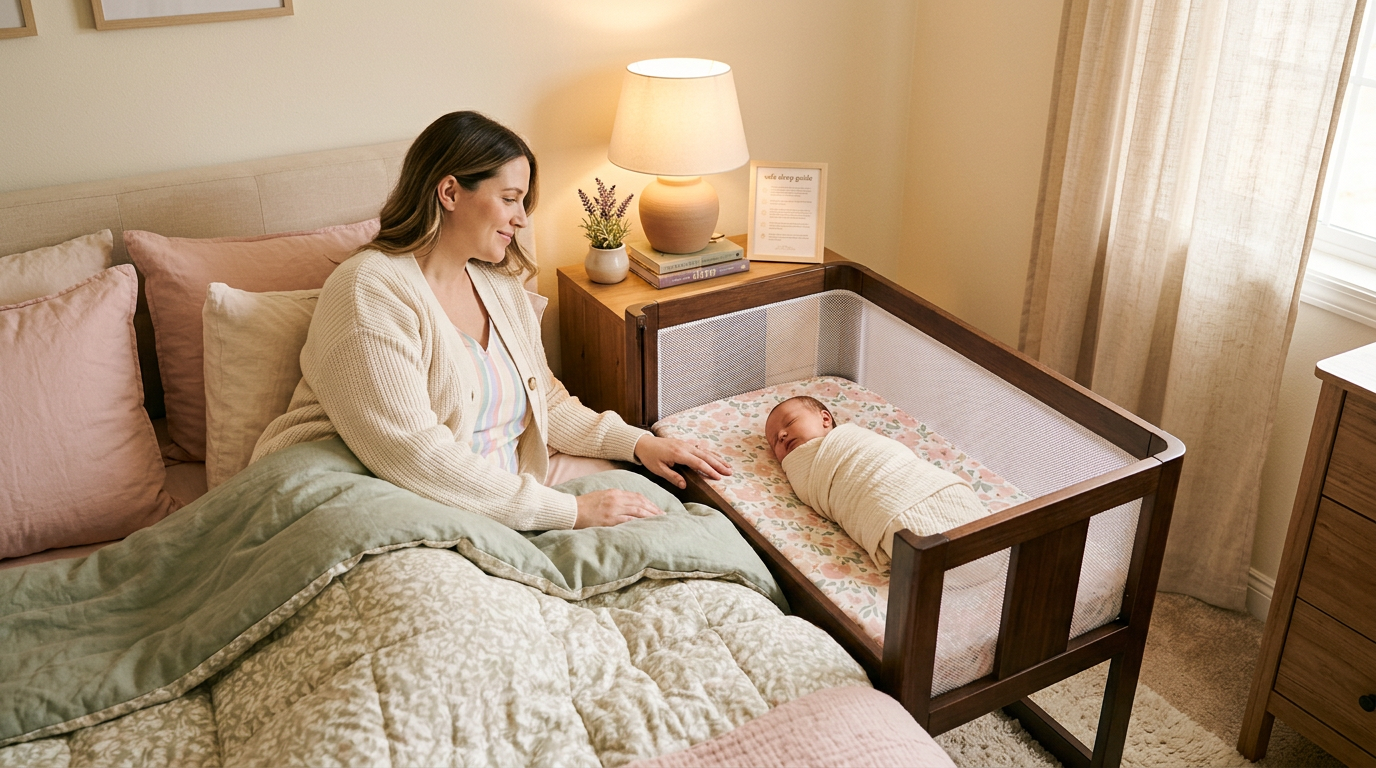
A bedside bassinet or a co-sleeper crib that attaches to your bed is often considered the "gold standard" for safety.
* Height Match: Ensure the bassinet height is flush with your mattress so there’s no "gap" for the baby to roll into.
* Breathable Walls: Look for bassinets with mesh sides. This ensures airflow and allows you to peek at your baby without even lifting your head.
* Accessibility: Place it on the side of the bed where the mother sleeps to make nighttime breastfeeding sessions easier.
Shared Surface (Co-sleeping)
If you choose to sleep in the same bed, follow the Safe Sleep Seven guidelines:
Pro-Tip: If your bed has a wooden headboard with slats, ensure the gaps are narrow enough so a baby’s head cannot get stuck. Ideally, move the bed away from the wall to prevent entrapment, or ensure it is pushed tightly against the wall with no gap at all.
3. Light and Ambience: Setting the "Sleep Mode"
Setting the right mood isn't just for luxury; it’s about signaling to your baby’s developing circadian rhythm that it's time to rest.
* Zero-Glare Nightlights: Instead of your bright overhead tube lights, opt for a dim, warm-toned nightlight (amber or red tones are best). This allows you to see for diaper changes or latching without fully waking the baby (or yourself!).
* Blackout Curtains: Especially for those afternoon naps during our bright Indian summers, blackout curtains are a lifesaver.
* White Noise: If you live on a busy street with honking rickshaws or loud neighbors, a white noise machine (or even a dedicated old phone with an app) can work wonders in masking external sounds.
4. Temperature Control (The Indian Context)
In many parts of India, we deal with extreme heat. It is a common misconception that babies need to be wrapped in multiple layers.
* The AC/Fan Rule: It is perfectly safe to use an AC or ceiling fan. In fact, a ceiling fan on a low-to-medium setting is linked to a lower risk of SIDS because it keeps the air circulating.
* The Sweet Spot: Aim for a room temperature between 24°C and 26°C.
* Clothing: Dress the baby in one more layer than you are wearing comfortably. Usually, a simple cotton onesie or a lightweight swaddle is enough. Check the baby's chest or back of the neck—if it’s sweaty, they are too hot!
5. The "Midnight Station" Prep
You don't want to be stumbling across the room in the dark looking for a burp cloth. Prepare your bedside table or a small rolling cart with these essentials:
* Hydration for You: A large bottle of water (breastfeeding makes you incredibly thirsty!).
Healthy Snacks: Dry fruits, makhana*, or granola bars.
* Diapering Essentials: A few diapers, wipes, and a changing mat so you can do a quick change right on the bed if needed.
* Burp Cloths: Keep at least three within arm's reach. Trust me on this one!
6. Safety Check: Hair and Jewelry
This is a small but vital detail. If you are co-sleeping, keep your hair tied back in a braid or a bun. Long hair can accidentally wrap around a baby's tiny fingers or neck (a hair tourniquet). Similarly, avoid wearing long necklaces or heavy mangalsutras while sleeping with the baby to prevent entanglement.
Final Thoughts 🌸
Preparing your room for a baby is about more than just aesthetics; it's about creating a secure cocoon where you can bond and recover. Remember, the first few weeks are a learning curve. If you find that one setup isn't working for you, it’s okay to pivot!
Trust your instincts, stay informed on safety, and don't forget to take a deep breath. You are doing a wonderful job, and soon, those quiet nighttime cuddles will become some of your most cherished memories.
Sleep tight, Mama! (Or at least, as tight as a new mom can!)
*
Disclaimer: Always follow the latest pediatric guidelines for safe sleep. If you have concerns about your baby's health or sleep environment, please consult your pediatrician.❤️☀️