The Ultimate Maalish Guide: Which Oil is Actually Best for
Confused between Sarson, Coconut, or Olive oil? Learn the best Indian oils for your baby’s skin and the right 'maalish' technique for a happy, sleepy baby.
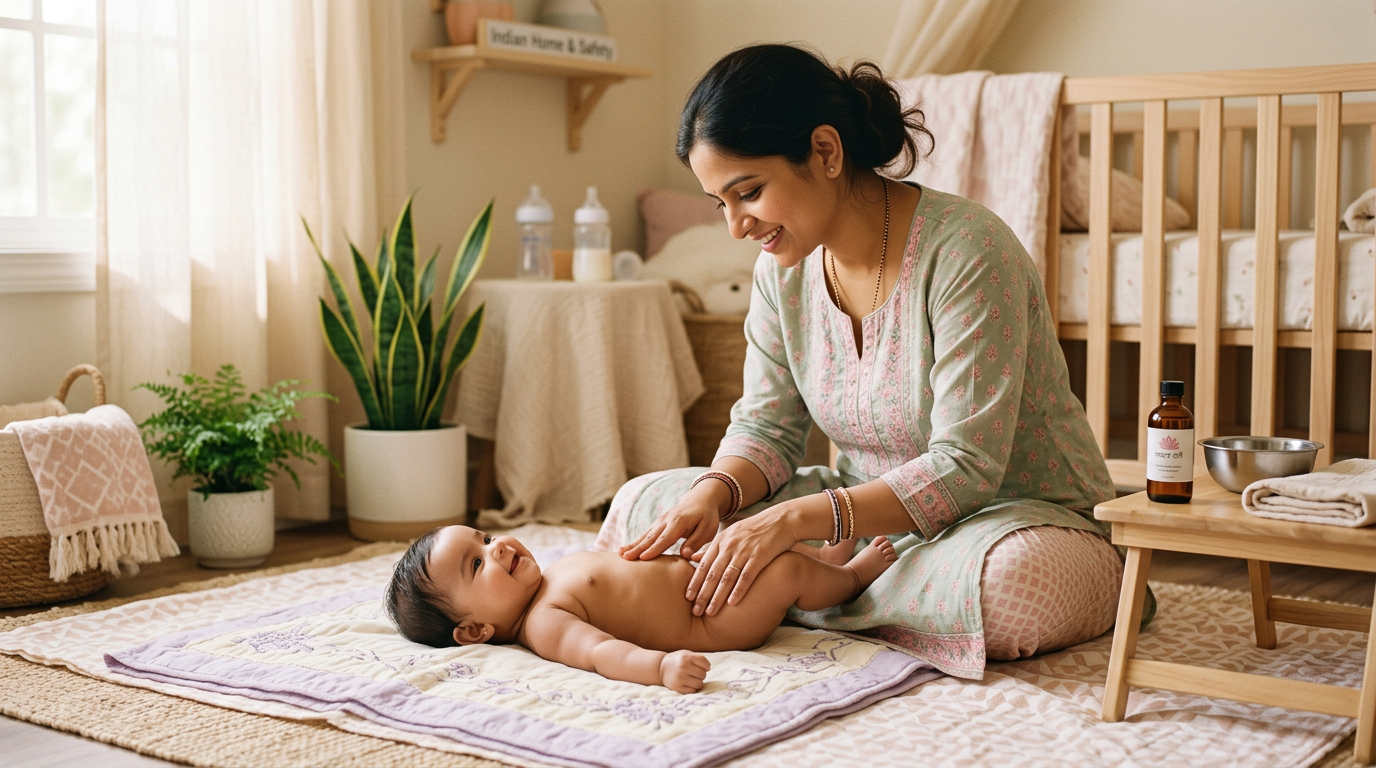
It’s 6 PM. The house is transitioning from the afternoon lull to the evening madness. Your little one is a bit cranky, and your mother-in-law is already heating up a small bowl of oil, calling out, "Chalo, baby ki maallish ka time ho gaya!"
If you’re anything like me when I first came home from the hospital, you probably have a million questions running through your head. Is the oil too hot? Is the pressure too much? And wait—why are we using sarson ka tel (mustard oil) when my WhatsApp group says virgin coconut oil is the only way to go?
Massaging your baby, or maalish, is an ancient Indian tradition that is much more than just a skincare routine. It’s a bonding ritual, a way to strengthen those tiny bones, and honestly? It’s often the only way to get a fussy baby to finally sleep.
But with so much conflicting advice from Nanis, Dadis, and Instagram influencers, the "oil war" can feel overwhelming. Let’s break it down, sister-to-sister, so you can stop worrying and start bonding.
The Big Oil Debate: Coconut vs. Mustard vs. Olive
In India, our choice of oil often depends on where we live and what the weather is like. Here’s the "TheMamaCircle" guide to picking what’s right for your baby’s skin.
1. Virgin Coconut Oil: The All-Rounder Champion
If you’re a summer mom or live in humid cities like Mumbai, Chennai, or Kolkata, coconut oil is your best friend.
* Why it works: It’s lightweight, non-greasy, and gets absorbed quickly. Most importantly, it has antifungal and antibacterial properties (thanks to lauric acid), which is great for preventing diaper rash or heat rashes.
* Top Pick: Look for MaxCare Cold Pressed Virgin Coconut Oil or Mamaearth’s Coconut Oil for Babies.
* Best for: Summer, monsoon, and babies with sensitive skin or eczema.
2. Mustard Oil (Sarson ka Tel): The Winter Warrior
In North India, sarson ka tel is king. You’ve probably seen your mom heating it with garlic cloves and ajwain (carom seeds).
* Why it works: It’s a "warming" oil. It provides deep insulation and helps keep the baby warm during harsh Delhi winters. It’s also known to help with congestion and "chest colds."
* The Caution: Mustard oil is very potent. Pure, pungent mustard oil can sometimes irritate a newborn's delicate skin or cause a rash.
Pro-tip: My Dadi* always said to "tame" the oil by heating it until it smokes, adding a few garlic flakes, and then cooling it down. Use it only in peak winter and avoid it if your baby has very dry or broken skin.
3. Olive Oil: The International Guest
Olive oil (like Figaro) has become huge in urban Indian households.
* Why it works: It makes the skin very soft and is loaded with Vitamin E.
* The Reality Check: Here is something your pediatrician might not tell you—pure olive oil has high oleic acid content, which can actually break down the skin barrier if your baby already has dry skin or eczema.
* The Verdict: If your baby has perfect, normal skin, go for it! But if you notice any redness or scaling, switch back to coconut or a dedicated baby oil like Himalaya Baby Oil or Chicco Baby Moments Massage Oil.
The Right Maalish Technique: It’s Not a Gym Workout!
I remember watching a professional Maalish-wali (traditional masseuse) for the first time and feeling terrified. She was flipping the baby like a paratha!
You don't need to be that aggressive. Your touch should be firm but gentle. Here is a simple 5-step routine:
3 Tips to Make Maalish Time Stress-Free
* Timing is Everything: Never massage a hungry baby or a baby who just finished a feed (wait at least 45 minutes). The "sweet spot" is usually midway between two feeds when they are alert but calm.
* The Patch Test: Before you douse your baby in a new oil, apply a small amount on their leg and wait 24 hours to check for any reaction.
* Listen to the Cues: If your baby starts crying or stiffening their body, stop. Sometimes they just aren't in the mood, and that’s okay! You can try again tomorrow.
A Note on "Ubtans" and Traditional Pastes
Many Indian families use besan (gram flour) or atta (wheat flour) rubs after the massage to "remove hair." Please be gentle with this, Priya. Newborn skin is 3x thinner than ours. Vigorous rubbing with flour can cause tiny abrasions and infections. If you must use it, make it a very thin, watery paste and use it as a gentle wash rather than a scrub.
You've Got This, Mama!
Massaging your baby is perhaps the most beautiful 15 minutes of your day. It’s when the phone is away, the world is quiet, and it’s just you and your little one. Don't worry about being "perfect" at the technique. Your baby doesn't need a professional therapist; they just need their mom’s warm, loving touch.
Whether you choose the traditional sarson ka tel or a modern bottle of Chicco, the "magic" isn't just in the oil—it's in your hands.
Relax, take a deep breath, and enjoy the scent of your baby. You're doing a great job! ❤️
Found this helpful? Share it with a mom friend who's currently staring at 5 different oil bottles in her nursery!