Upar Ka Khana: The Ultimate Guide to Starting Solids for
From the first spoonful of Ragi to the Dal Water debate, here is your stress-free guide to starting solids the Indian way. No more 3am weaning anxiety! 🥘🍼
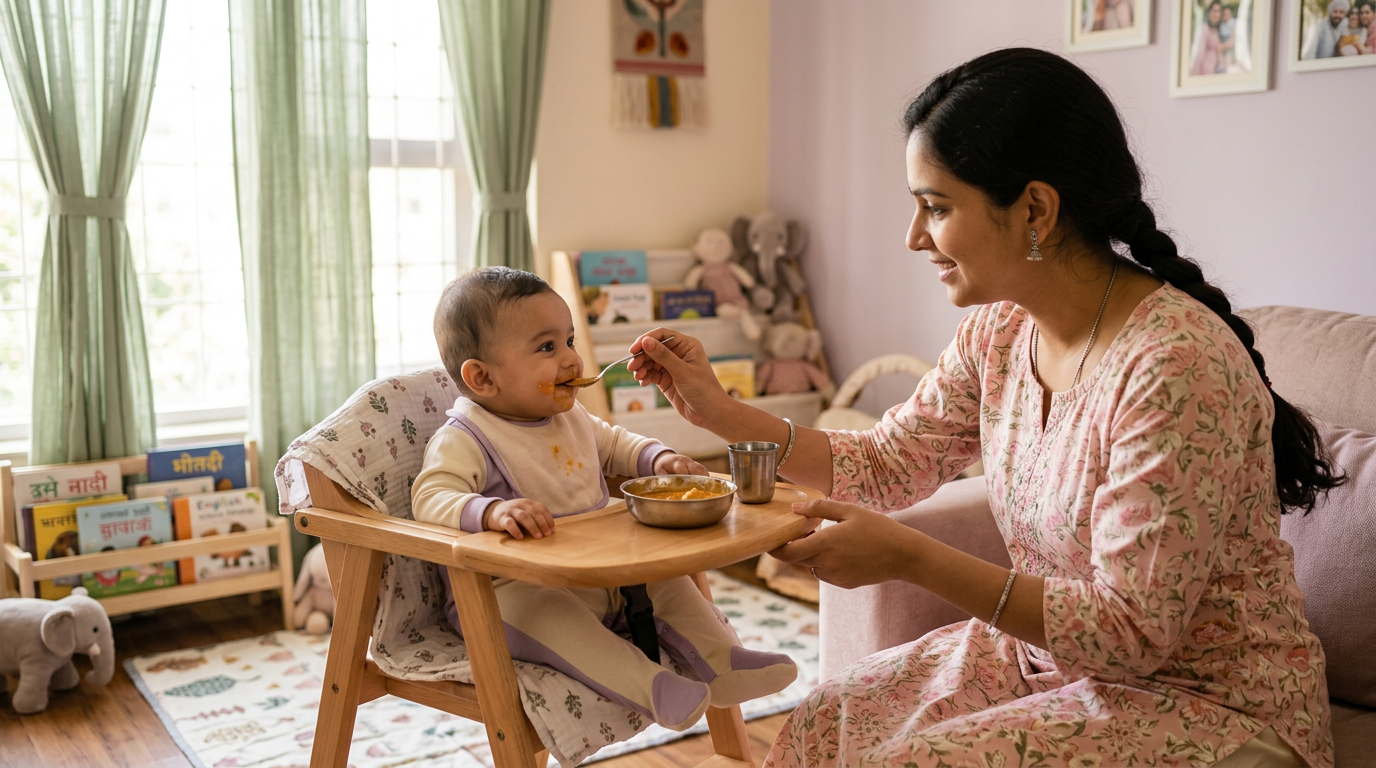
It’s 3:00 AM, and you’re scrolling through Instagram. Between the cute reels of babies eating avocados and the frantic WhatsApp messages from your ‘July Moms’ group, your head is spinning. Your little one is turning six months old, and suddenly, the "Milk-only Phase" is ending.
In India, this is more than just a diet change; it’s a family event! Your saas is suggesting ghutti, your mom is already soaking rice for kanji, and your pediatrician just gave you a printout that looks like a chemistry lab manual.
Priya, take a deep breath. 🌸
I remember sitting on my kitchen floor, staring at a pressure cooker, wondering if I was about to ruin my baby’s digestion forever. I wasn't. And neither will you. Today, let’s talk about the real deal: how to start solids in an Indian home without losing your mind.
Signs Your Baby is Actually Ready (Ignore the Calendar!)
While 6 months (180 days) is the WHO gold standard, every baby is different. Don't rush just because your neighbor’s baby started at 4 months. Look for these signs:
* Good neck control: They can hold their head steady while sitting.
The "I want that" look: They follow your spoon with their eyes and try to grab your roti*.
* Disappearing Tongue-Thrust: They stop pushing everything out of their mouth with their tongue automatically.
The Great "Dal Water" Debate: Let’s Set the Record Straight
For generations, Dal Ka Pani (the watery liquid on top of boiled dal) has been the first step. But here’s the "Modern Didi" truth: Dal water is mostly just water and salt.
Your baby’s stomach is the size of their tiny fist. If you fill it with water, there’s no room for the actual protein and iron they need. Instead of just the water, mash the cooked dal into a smooth paste.
Pro Tip: Start with Moong Dal* (yellow). It’s the easiest on those brand-new tummies. Skip the salt and red chili—just a pinch of turmeric (haldi) and a tiny drop of homemade ghee is enough.
Ragi: The Indian Superfood Every Mom Swears By
If there’s one thing you should definitely include, it’s Ragi (Nachni). It’s a powerhouse of calcium and iron.
How to make it "Mummy-style":
Your Realistic 6-Month "Pehla Kadam" Meal Plan
Don't try to replace milk sessions yet. Solids at 6 months are just for "tasting." Milk (breastmilk or formula) is still the main meal.
| Week | What to Introduce | Frequency |
| :--- | :--- | :--- |
| Week 1 | Single grain/Fruit (Mashed Banana or Stewed Apple) | Once a day (Morning) |
| Week 2 | Pureed Veggies (Steamed Pumpkin or Lauki) | Once a day |
| Week 3 | Ragi Porridge or Well-mashed Moong Dal | Once a day |
| Week 4 | Rice Mash or Dal-Rice (very soft) | Once a day |
The 3-Day Rule: Introduce only one new food at a time. Wait for 3 days to check for allergies (rashes, tummy pain, or vomiting) before trying something else.
Essential Gear (The Non-Instagrammable Version)
You don't need a ₹10,000 high chair yet, but these help:
Dealing with the "Japa" Maid and Elders
This is the hardest part of weaning in India! Your Nani might insist on adding sugar or salt. Calmly explain that "the doctor said their kidneys are too small for salt." It usually works better than arguing! If the Japa maid wants to feed the baby while they are lying down—stop her. Babies must always sit upright to eat to avoid choking.
3 Quick Tips for Today:
* Buy a small pressure cooker (1 liter or 1.5 liter): It’s easier to cook half a cup of pumpkin in a small cooker than a giant one.
* Don't force-feed: If they turn their head away, they are done. Don't do the "one last bite for Papa" trick. We want them to love food, not fear it.
* Keep the Ghee ready: Add a drop of pure desi ghee to everything. It helps with brain development and keeps constipation away.
Priya, there will be more food on the floor than in the baby for the first month. That’s okay. You aren't "failing." You're teaching a human how to eat!
You’ve got this, Mama! One spoonful at a time. ❤️🥘🍼🥣