10 Life Skills Activities for Indian Kids: A Guide to
Master life skills activities for Indian kids aged 2-7. From folding dupattas to kirana shop math, teach your child independence with these easy games.
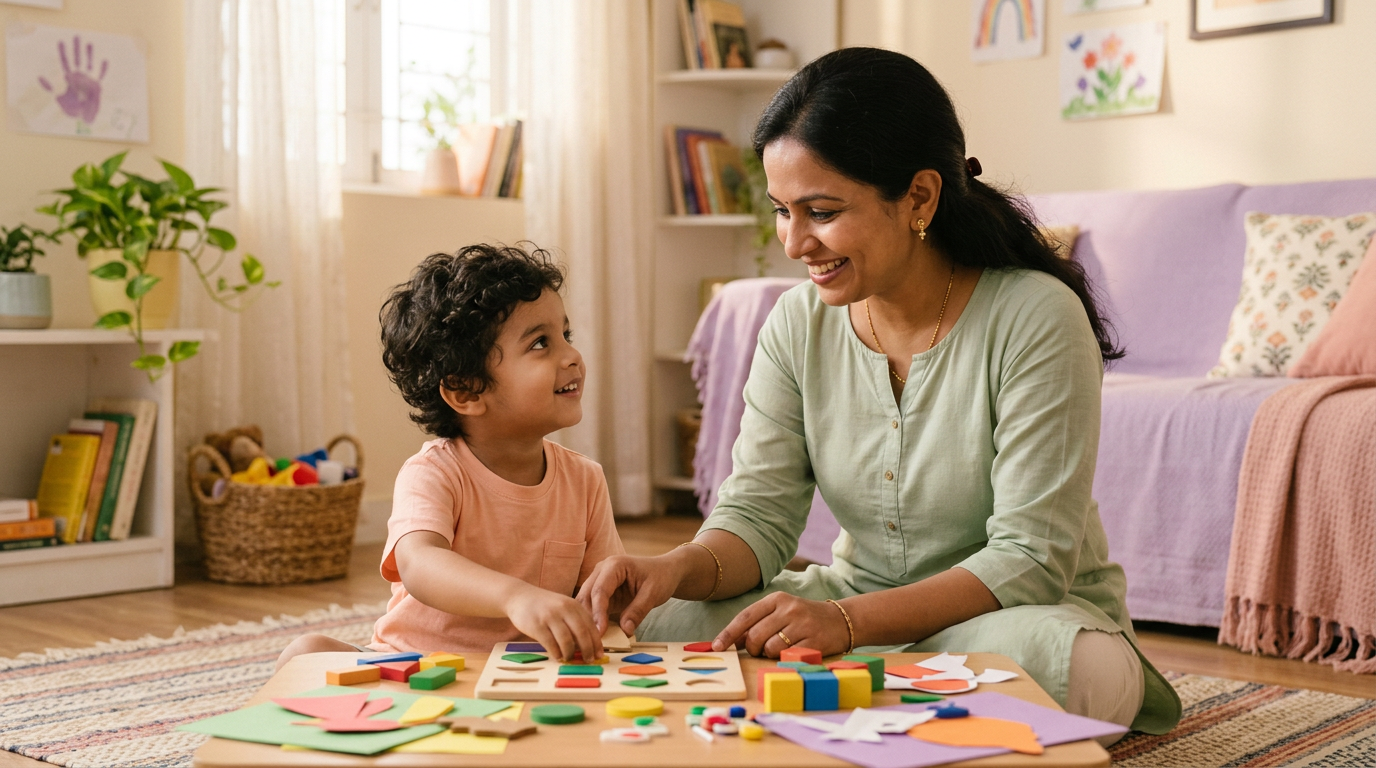
Teaching your child to navigate the world isn’t just about the 3 Rs—reading, writing, and 'rithmetic. In our Indian homes, it is about teaching them to be aatmanirbhar (self-reliant) from the toddler years. Life skills activities are the daily habits, like sorting the sabzi or putting away their chappals, that transform a dependent toddler into a confident, capable child. These activities don't require expensive kits; they happen right in your kitchen and living room.
Why Montessori Practical Life Activities are the Secret Sauce
You might have heard the fancy term montessori practical life activities, but for us, this is just how our nani and dadi raised us. It is the art of involving children in real-work tasks. When a 3-year-old pours water from a small lota into a glass without spilling, they aren't just hydrating; they are developing hand-eye coordination, focus, and executive function.
In the Indian context, these activities serve a dual purpose. They build independence and root the child in our cultural rhythms. Using a baby milestones tracker can help you see if your child is hitting physical markers, but life skills are the "software" that makes the hardware work.
Age-Appropriate Life Skills Activities for Indian Kids (2-7 Years)
The Toddler Phase (2-3 Years): The Helper Habit
At this age, your child is your shadow. Instead of giving them a screen to keep them away from the kitchen, give them a task.
Sorting the Dal: Mix a handful of rajma and chana dal*. Ask them to separate the "big beans" from the "small ones." This is early math and fine motor refinement.
* The Chappal Stand Challenge: Teach them to place their footwear neatly on the rack. It builds a sense of order (and saves you from tripping!).
* Watering the Tulsi: Using a small mug, let them water the household plants. It teaches care for living things.
The Preschooler Phase (4-5 Years): The Little Manager
This is the prime time for life skills for kids. They want to feel "big," so give them real responsibilities.
Folding the Laundry: Start with small items like handkerchiefs or their own cotton banyans. Moving up to folding a dupatta* with a partner (you!) is a lesson in cooperation.
* The Kirana Shop Math: When you go to the local Mother Dairy or Kirana store, let them hand over the ₹20 note and collect the change. It’s the first step in financial literacy.
* Setting the Dastarkhan/Table: Whether you eat on a dining table or a floor mat, let them lay out the plates, spoons, and napkins.
The Early Schooler (6-7 Years): The Problem Solver
By now, life skills for children should focus on safety and more complex home management.
Making a Sandwich: Let them use a blunt butter knife to spread malai* or jam on bread.
Packing the School Bag: Instead of doing it for them, use a checklist. "Do you have your dabba*, your water bottle, and your diary?"
Safety Scripts: Role-play what to do if they get lost at a crowded mela* or mall. Teach them your phone number by turning it into a catchy song.
Teaching Value for Money and the "Kirana" Sense
In India, we often shield kids from money talk, but financial life skills activities are crucial. According to the National Institute of Nutrition (NIN) guidelines, involving children in food selection also improves their nutritional choices.
* Budgeting at the Mandi: Give them ₹50 and ask them to choose two types of fruit. Discuss why they can get six bananas but only two apples for that price.
Saving in a Gullak: The traditional clay gullak* is better than a digital app. The weight of the coins gives them a physical sense of accumulating wealth.
Creating a "Yes" Space for Chores
If you want to implement age appropriate chores for kids, you must make the environment accessible. If the sabzi basket is on a high counter, they can't help.
* Lower the Hooks: Place hooks at their height for their school bags and raincoats.
Child-Sized Tools: Buy a small broom (the traditional phool jhadu* can be cut down) so they can actually help clean up their biscuit crumbs.
Safety First: Ensure all cleaning supplies and spices like lal mirch* (which can sting eyes) are out of reach, but safe items like dried beans are accessible.
For parents of younger toddlers, providing Montessori baby toys that mimic real-life objects—like wooden pounding sets or pouring kits—can bridge the gap between play and skill-building.
Real Talk from Indian Moms
> "I started letting my 4-year-old, Advik, peel boiled potatoes for aloo paratha. Yes, it takes three times longer and the potatoes look mangled, but the pride on his face when we eat 'his' parathas is worth every second." — Megha S., Bengaluru, Mom to a 4-year-old.
> "In our house, 'Safaai Sunday' is a game. My daughter Zara (6) is in charge of dusting the lower shelves of the mandir and the TV unit. She gets a 'Super Helper' sticker, and it has taught her that a house doesn't clean itself!" — Ritu V., Lucknow, Mom to a 6-year-old.
When to Call Your Paediatrician
While life skills are about development, sometimes a struggle to learn basic tasks can signal an underlying developmental delay. Consult your paediatrician if:
* Your child is 3 and lacks the fine motor skills to pick up small objects (pincer grasp).
* Your child shows extreme distress or sensory meltdowns when touching different textures (like flour or wet clay).
* Your child is 5 and cannot follow a simple two-step instruction (e.g., "Pick up the toy and put it in the box").
* There is a significant loss of a skill they previously mastered.
Frequently Asked Questions
What are some basic life skills activities for a 3-year-old?
Start with "Practical Life" tasks. These include pouring water from a small jug, helping to put torn pieces of roti in a bowl, or matching pairs of socks from the laundry pile. These build focus and motor skills without feeling like "work."
How can I teach life skills for kids without making it boring?
Turn it into a game! Use a timer for "The Great Toy Race" to see how fast they can tidy up. Use "I Spy" at the grocery store to help them identify different vegetables. The key is to keep it high-praise and low-pressure.
Are there specific life skills for children that help with school readiness?
Yes! Independence in the bathroom, being able to open their own lunchbox (check if the seal is too tight!), and the ability to put on their own shoes are the most helpful skills for a smooth transition to nursery or KG.
What are age appropriate chores for kids in a joint family?
In a joint family, chores can be social. A child can be the "Message Runner," taking a glass of water to Dada or fetching Chachi's phone. They can also help the elders by bringing the newspaper or helping to sort flowers for the daily puja.
How do montessori practical life activities differ from regular chores?
Montessori activities are designed specifically for the child's developmental stage, using child-sized tools and focusing on the process rather than the result. The goal isn't just a clean floor; it's the child’s internal development through the act of sweeping.
It is easy to do everything for our children because we love them, but the greatest gift you can give your bacha is the ability to do it themselves. Start small, be patient with the mess, and watch their confidence grow.
You are raising a human, not just a student. You’ve got this, Mama.
Sources & further reading
- Indian Academy of Pediatrics (IAP) - Growth and Development
- National Institute of Nutrition (NIN) - Dietary Guidelines for Indians
- WHO - Early Childhood Development
- Ministry of Health and Family Welfare - Rashtriya Bal Swasthya Karyakram (RBSK)
Written by Dr. Anjali Mehta, MBBS, DCH (Paediatrics)
Reviewed by TheMamaCircle Editorial Team
Last updated: 7 September 2026
This article is for general information only and is not a substitute for personalised medical advice. Always consult your paediatrician or obstetrician for your specific situation.