10 Month Baby Food Chart Indian: Recipes & Meal Plan
Get the best 10 month baby food chart indian style! Discover regional recipes like ragi and dalia, plus tips for transitioning to finger foods safely.
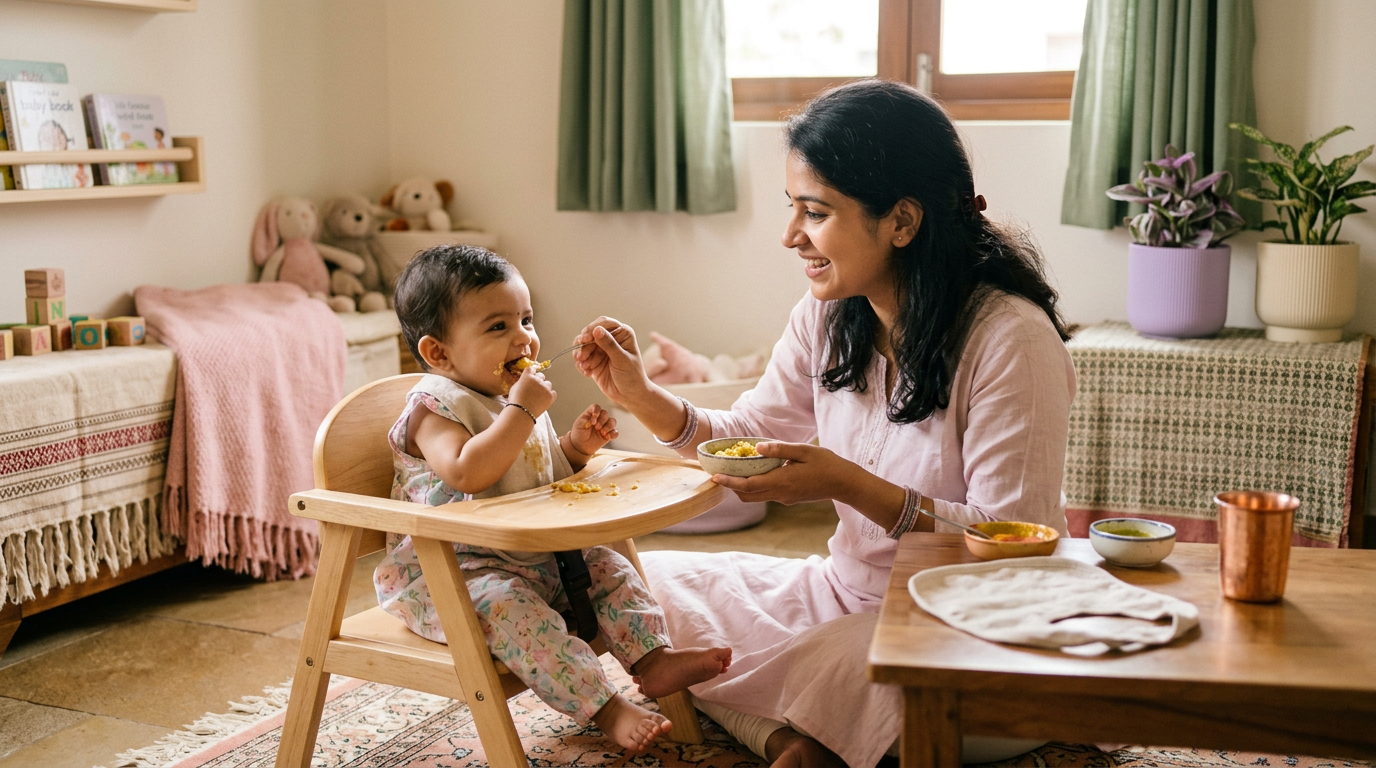
At 10 months, your baby is no longer just a 'beginner' with solids. They are likely crawling at lightning speed, pulling up to stand, and perhaps even waving 'bye-bye'. This burst in physical activity means their nutritional needs are shifting. A 10 month baby food chart indian style focuses on transitioning from smooth purees to chunky textures, finger foods, and a variety of family meals—minus the salt and chili. This is the 'Golden Age' of weaning where soft khichdi, parathas, and idlis become the primary fuel for those busy legs.
What should a 10 month old baby eat in India?
By the time your baby hits the double-digit month mark, the Indian Academy of Pediatrics (IAP) suggests that solids should make up a significant portion of their daily calories, though breast milk or formula remains essential. The goal is 3 solid meals and 2 healthy snacks, along with 2-3 nursing sessions.
Key Nutrients for the 10-Month Milestone
Iron: Your baby’s birth iron stores are long gone. Focus on ragi* (finger millet), spinach, and lentils.
Zinc & Protein: Essential for growth spurts. Include paneer, well-cooked egg yolk, and mashed daals*.
Calcium: For those emerging milk teeth. Curd (dahi*) and ragi are your best friends here.
* Vitamin C: Always pair iron-rich foods with a squeeze of lemon or amla to help absorption.
If you are just starting this journey or have a younger baby, you might want to look back at our 6 month baby food chart indian to ensure the foundation is solid.
The Ultimate 10 Month Baby Food Chart Indian (Weekly Plan)
This plan balances traditional Indian grains with modern nutritional needs. Remember, the consistency should now be "lumpy" or finely chopped to encourage chewing, even if they only have two bottom teeth!
| Day | Breakfast (8:30 AM) | Lunch (12:30 PM) | Evening Snack (4:00 PM) | Dinner (7:00 PM) |
| :--- | :--- | :--- | :--- | :--- |
| Mon | Mini Idlis with a drop of ghee | Palak & Moong Dal Khichdi | Mashed Banana with Cardamom | Vegetable Sooji Upma |
| Tue | Ragi Sheera (Jaggery/Dates) | Curd Rice with grated Carrot | Stewed Apple/Pear | Mashed Paneer & Peas |
| Wed | Moong Dal Chilla (Soft) | Pumpkin & Potato Mash | Papaya Cubes (Small) | Oats Porridge with Banana |
| Thu | Poha (washed & soft-cooked) | Sabudana Khichdi (Non-spicy) | Roasted Makhana Powder in Milk | Dalia with mixed Veggies |
| Fri | Scrambled Egg Yolk/Paneer | Rice with Sambar (No chili) | Chikoo (Sapota) Mash | Suji Kheer (Stevia/Dates) |
| Sat | Wheat Pancake with Jaggery | Mashed Rajma & Rice | Steamed Beetroot Sticks | Whole Wheat Pasta (Soft) |
| Sun | Mashed Avocado/Banana Toast | Curd with Soft Rice & Ghee | Seasonal Mango/Melon | Veggie Khichdi & Dahi |
Texture Transition: From Mash to Bite-Sized
At 10 months, stop using the blender. Your sasu maa might worry about choking, but the National Institute of Nutrition (NIN) emphasizes that texture progression is vital for oral motor development. Use a fork to mash subzis or your clean fingers to crumble rotis into tiny, pea-sized bits soaked in dal.
Tips for Success with the 10 Month Baby Food Chart Indian
1. Introduce Finger Foods
Don't be afraid! Give them a soft-cooked carrot stick or a piece of paneer. This helps develop the "pincer grasp"—using the thumb and forefinger to pick up objects. Avoid hard snacks like raw carrots or whole nuts which are choking hazards.
2. The Power of Ghee
In India, we value shuddh desi ghee. Adding half a teaspoon to your baby's meal provides essential fats for brain development. At this age, you can also start introducing mild spices like turmeric, cumin powder, and coriander powder to make the food palatable.
3. Hydration is Key
With 3 solid meals, your baby needs water. Offer water in a sippy cup or an open steel moon-cup (paladai) after meals. Avoid fruit juices; stick to the whole fruit or plain water.
If your baby is slightly younger and still struggling with textures, check out our 9 month baby food chart indian for a gentler transition. For those who are just beginning their protein journey, the 8 month baby food chart indian offers great lentil-based ideas.
Real talk from Indian moms
> "I was so scared of choking that I kept blending everything until my 10-month-old refused to eat. My paediatrician told me to let him 'play' with soft upma. It was messy, but now he eats everything we eat!"
> — Ananya S., Bengaluru (Mom to 11-month-old Kabir)
> "I make a big batch of sprouted ragi powder at home. It’s a lifesaver for those mornings when the house is chaotic. Just mix with hot water and a bit of jaggery, and breakfast is sorted."
> — Meenakshi R., Chennai (Mom to 10-month-old Aditi)
Budgeting for Baby Food in India
Feeding a 10-month-old doesn't require expensive organic brands.
* Locally sourced grains: Ragi, Bajra, and Jowar cost roughly ₹60–₹120 per kg and are nutritional powerhouses.
* Seasonal Fruits: Banana, Papaya, and Watermelon are affordable (₹40–₹80 per dozen/kg) and better than imported blueberries.
Homemade vs. Store-bought: Making your own cerelac* style powder at home can save you nearly ₹300-₹500 per month.
When to call your paediatrician
While most babies transition smoothly, keep an eye out for these red flags:
* Refusing all solid foods for more than 48 hours.
* Persistent vomiting after meals (different from a small spit-up).
* Signs of an allergic reaction: Hives, swelling of lips, or difficulty breathing (especially after introducing egg or dairy).
* Chronic constipation (hard, pebble-like stools) that doesn't improve with water and fibre.
If your baby is not gaining weight according to their growth curve in the Mamta* card or Paediatrician's chart.
Frequently Asked Questions
What is the 10 month baby food chart indian schedule?
A typical schedule includes breakfast at 8:30 AM, a small mid-morning fruit snack at 10:30 AM, lunch at 1:00 PM, an evening snack/milk at 4:30 PM, and dinner by 7:30 PM. Breastfeeding or formula should be offered on demand or 2-3 times a day.
Can I give cow's milk to a 10 month old?
According to WHO and IAP guidelines, whole cow’s milk should not be the main drink until 12 months. However, you can use small amounts of milk to prepare kheer, sooji, or dahlia.
Can I follow a 7 month baby food chart indian for a 10 month old?
You can use the recipes from a 7 month baby food chart indian, but you must change the texture. A 10-month-old needs lumpy, mashed, and finger-sized pieces rather than the thin purees recommended for 7-month-olds.
My baby has no teeth, can they eat solids?
Yes! Babies use their strong gums to 'munch' and grind soft food. Teeth are not a prerequisite for starting the 10 month baby food chart indian routine; just ensure the food is soft enough to be mashed between your fingers.
What should be in a 12 month baby food chart indian?
By 12 months, your baby should be eating almost exactly what the family eats. A 12 month baby food chart indian will include more spices, small pieces of roti, and cow's milk as a beverage.
Is salt allowed for a 10 month old?
It is best to avoid added salt until 1 year. A baby’s kidneys are still maturing. Use natural flavours like cumin, cinnamon, or lemon to enhance the taste instead.
Your baby is an individual, not a textbook; some days they will eat like a king, and other days they will live on air and vibes. Trust the process, keep the dinner table happy, and remember: Khao, piyo, khush raho (Eat, drink, and be happy).
Sources & further reading
- Indian Academy of Pediatrics (IAP) - Complementary Feeding Guidelines
- National Institute of Nutrition (NIN) - Dietary Guidelines for Indians
- WHO: Infant and young child feeding
Written by Neha Kapoor, RD (Registered Dietitian, Maternal & Child Nutrition)
Reviewed by TheMamaCircle Editorial Team
Last updated: 19 June 2026
This article is for general information only and is not a substitute for personalised medical advice. Always consult your paediatrician or obstetrician for your specific situation.