9 Month Baby Food Chart Indian: Monthly Meal Plan & Tips
Ready for lumpy foods? This 9 month baby food chart indian covers ragi, khichdi, and finger foods to boost your baby's pincer grasp and growth. Read more!
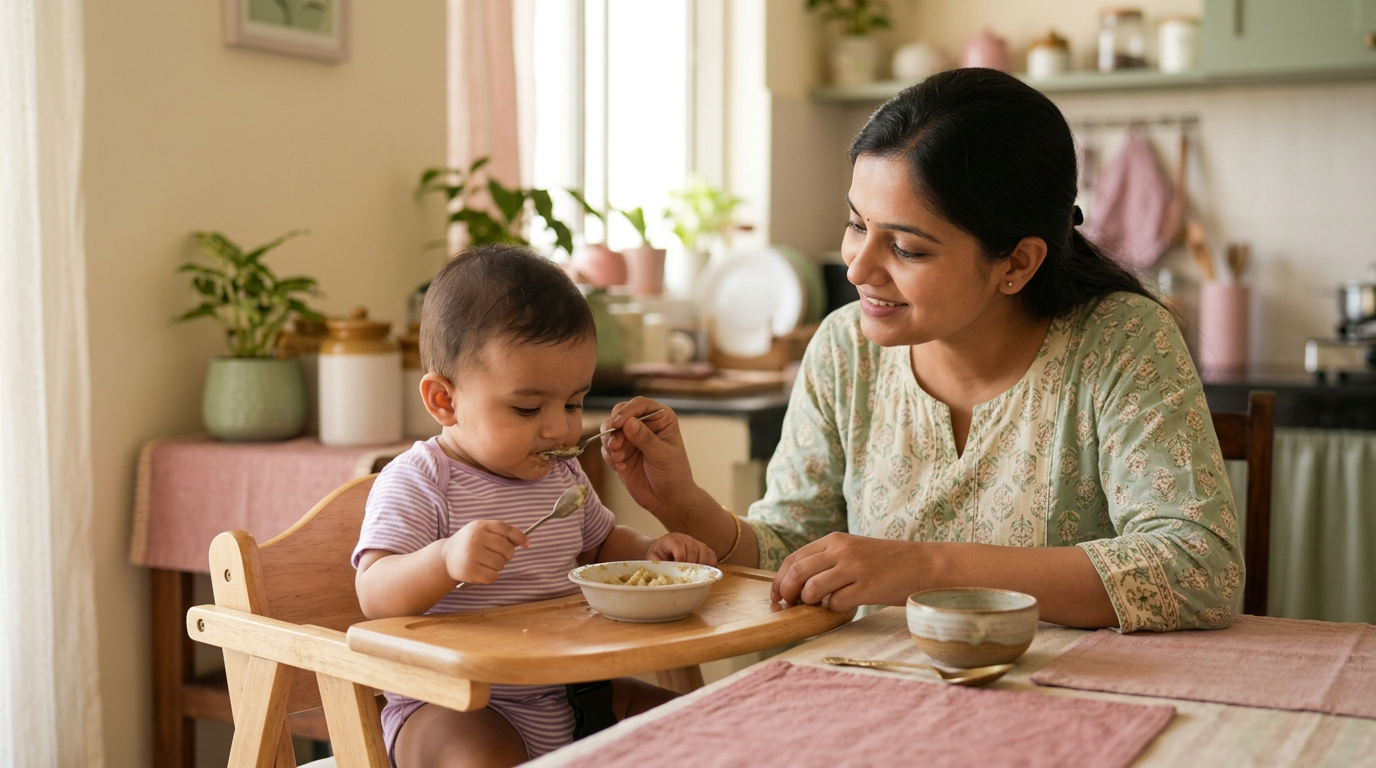
By nine months, your little one is likely transitioning from "tasting" to actually "eating." Your 9 month baby food chart indian needs to reflect this shift from smooth purees to lumpy textures and mashed finger foods. At this stage, your baby’s pincer grasp is developing, meaning they can pick up small pieces of food between their thumb and forefinger. This is the golden window to introduce a variety of ghar ka khana, ensuring they get the iron and zinc necessary for brain development.
What Should a 9 Month Old Indian Baby Eat?
At nine months, breast milk or formula remains a vital source of nutrition, but solids now provide a significant portion of their daily calories. According to the Indian Academy of Paediatrics (IAP), infants should be consuming 3 to 4 meals a day, plus nutritious snacks.
The focus should be on nutrient density. Unlike the early days of the 6 month baby food chart indian, you are no longer limited to watery dal ka paani. Your baby can now enjoy:
* Complex Carbohydrates: Ragi (nachni), bajra, suji (semolina), makhana, and broken wheat (dalia).
* Proteins: Well-cooked moong dal, masoor dal, chickpeas (chole), paneer, eggs, and finely minced chicken or fish.
* Healthy Fats: A teaspoon of homemade desi ghee or white butter (makkhan) added to their khichdi.
* Vitamins & Minerals: Seasonal Indian fruits like cheeku, papaya, mango, and steamed vegetables like lauki, kaddu (pumpkin), and parwal.
Sample 9 Month Baby Food Chart Indian Style (Weekly Plan)
This chart balances traditional Indian ingredients with modern nutritional guidelines. Remember to maintain a gap of 2-3 hours between meals and milk feeds.
| Time | Monday - Wednesday | Thursday - Saturday | Sunday Special |
| :--- | :--- | :--- | :--- |
| 8:00 AM | Breast milk or Formula | Breast milk or Formula | Breast milk or Formula |
| 9:30 AM | Ragi Porridge with Jaggery/Dates | Suji Upma (mashed) with carrots | Banana Wheat Pancakes |
| 12:30 PM | Moong Dal Khichdi with Ghee | Curd Rice with mashed Beetroot | Dalia with Mixed Veggies |
| 4:00 PM | Mashed Papaya or Cheeku | Stewed Apple with Cinnamon | Pear Puree |
| 6:30 PM | Paneer Bhurji (soft) or Idli | Moong Dal Chilla (soft) | Vegetable Soup with Makhana |
| 8:30 PM | Breast milk or Formula | Breast milk or Formula | Breast milk or Formula |
Note on seasoning: We strictly follow the No Salt, No Sugar policy until the first birthday. For sweetness, use dates syrup or banana. For saltiness, the natural sodium in vegetables and breast milk is sufficient.
Transitioning from 8 Month Baby Food Chart Indian to 9 Months
If you followed the 8 month baby food chart indian, you know it was all about thick mashes. Now, at nine months, the focus shifts to texture and self-feeding.
1. The Pincer Grasp Milestone
Your baby is likely trying to pick up mustard seeds from your plate (don't let them!). Use this urge to introduce finger foods. Think of steamed carrot sticks, soft paneer cubes, or well-cooked pasta spirals. This helps with oral-motor development, which is crucial for speech later on.
2. Increasing Caloric Density
Since babies at this age are often crawling or cruising, their energy needs spike. This isn't the time for watery soups. Ensure every spoonful counts. Add a drop of oil or ghee to their meals. Use NIN (National Institute of Nutrition) guidelines by including iron-rich foods like spinach (palak) and legumes to prevent anaemia.
3. Introducing "Ghar ka Khana"
By nine months, your baby can eat almost everything the family eats, provided it is prepared without salt and heavy chillies. If you are making Aloo Gobhi, take out a portion for the baby before adding the masala and salt, mash it well, and serve.
Essential Nutrients for a 9-Month-Old
* Iron: This is the most critical nutrient. If your baby isn't getting enough iron from ragi, green leafy vegetables, or meat, they might become lethargic. IAP recommends iron-rich complementary feeding to prevent IDA (Iron Deficiency Anaemia).
* Calcium: Essential for those sprouting milk teeth. Paneer, curd (dahi), and ragi are excellent sources available at every local Indian kirana store.
* Vitamin C: Always pair your iron-rich food with Vitamin C (like a squeeze of lemon on dal) to help the body absorb the iron better.
Real Talk from Indian Moms
"I was so scared of choking that I kept giving Myra purees until she was 10 months. My Sasu Maa finally sat me down and showed me how to mash a paratha in dal. Myra actually preferred the texture!"
— Ananya S., Bengaluru (Mom to 11-month-old)
"We live in a joint family, so making separate meals was hard. I started using the 'Family Pot' method recommended by my paediatrician. I just pull out baby's portion of Khichdi before seasoning the rest for us. Saves so much time!"
— Preeeti V., Delhi (Mom to 9-month-old)
Hygiene and Safety Standards
In India, the BIS (Bureau of Indian Standards) IS 9873 sets safety standards for toys, but for food, we must be vigilant about water quality and pesticide residue. Always wash vegetables in a vinegar-water soak. If using formula, ensure the water is boiled and cooled. For store-bought cereals, look for those without added maltodextrin or preservatives, typically costing between ₹300 to ₹600 per tin.
When to Call Your Paediatrician
While weaning is a natural process, stay alert for these "Red Flags":
* Persistent Constipation: If your baby hasn't passed stool for 3+ days after starting a new food.
* Allergic Reactions: Hives, swelling around the lips, or sudden vomiting (common with eggs or nuts).
* Refusal to Eat: If the baby consistently refuses all solids and acts lethargic.
* Choking episodes: If you notice frequent gagging that turns into a struggle for breath (ensure you know the difference between gagging and choking).
* Poor Weight Gain: If the growth curve on your WHO growth chart flattens out.
Frequently Asked Questions
What can I give in a 7 month baby food chart indian compared to 9 months?
In a 7 month baby food chart indian, the focus is on smooth purees and single-ingredient foods to check for allergies. By 9 months, we move to multi-ingredient meals (like vegetable pulao) and coarser textures.
Is cow's milk allowed in a 10 month baby food chart indian?
No. Whether you are looking at a 9-month plan or a 10 month baby food chart indian, cow's milk as a primary drink is restricted until 12 months. Small amounts used in cooking (like suji kheer) are usually acceptable after 10 months, but check with your doctor first.
Can I include eggs in a 9 month baby food chart indian?
Absolutely. Modern guidelines from AIIMS and WHO suggest that introducing common allergens like eggs (well-cooked) after 6 months may actually reduce the risk of allergies. Start with the yolk and move to the white if the baby tolerates it.
How much water should a 9 month old drink?
Around 60-120ml of water per day is usually sufficient, as they still get plenty of hydration from breast milk/formula and watery foods like dal and curd.
My baby has no teeth, can I still give finger foods?
Yes! Babies use their strong gums to "munch" and "gnaw." As long as the food is soft enough to be smashed between your fingers (like a boiled potato), your baby can handle it.
Feeding your baby is not just about calories; it’s about building a relationship with food. Some days they will eat like a king, and other days they will live on "hawa" (air) and breast milk. Don't stress. Your job is to offer a variety of healthy options; their job is to decide how much to eat.
Tum akele nahi ho, Ma. You are doing a great job.
Sources & further reading
- Indian Academy of Paediatrics (IAP) Guidelines on Complementary Feeding
- National Institute of Nutrition (NIN) - Dietary Guidelines for Indians
- WHO Complementary Feeding Standards
- AIIMS New Delhi - Infant and Young Child Feeding Speciality
Written by Neha Kapoor, RD (Registered Dietitian, Maternal & Child Nutrition)
Reviewed by TheMamaCircle Editorial Team
Last updated: 13 June 2026
This article is for general information only and is not a substitute for personalised medical advice. Always consult your paediatrician or obstetrician for your specific situation.