Ajwain Potli for Babies: Safe India Guide & Remedies
Discover how to safely use an ajwain potli for babies to relieve cold and colic. A traditional dadi-nani remedy for baby cold and cough home remedy success.
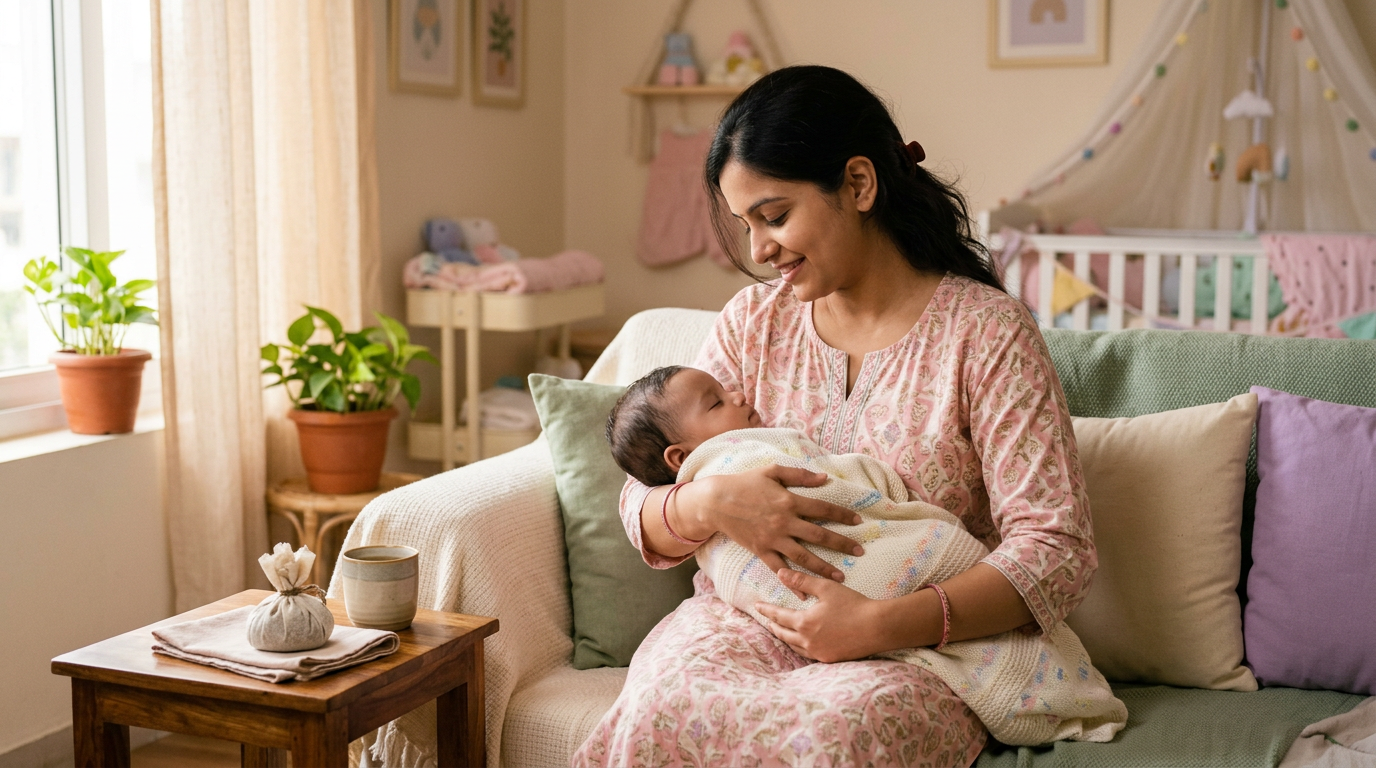
If you have walked into a traditional Indian household where a newborn is sneezing, you have likely smelled it: that sharp, earthy, toasted aroma of Carom seeds. Using an ajwain potli for babies is a time-honoured dadi-nani remedy passed down through generations in every corner of India, from Punjab to Kerala. While modern medicine has its place, this warm compress is often the first line of defense for Indian moms dealing with a fussy, congested little one. It acts as a natural decongestant, helping to clear tiny nasal passages without the immediate need for harsh medicines.
What exactly is an ajwain potli and how does it work?
An ajwain potli for babies is essentially a warm dry compress. You take ajwain (carom seeds), roast them slightly on a tawa, and wrap them in a clean muslin or cotton cloth to create a small pouch or 'potli'.
The science behind it is simple: Ajwain contains thymol, an essential oil that has antibacterial and antifungal properties. When heated, these oils are released into the air. When a baby inhales this warm, medicated air, it helps in dilating the airways and loosening mucus. For a mother navigating the postnatal recovery phase, having these simple kitchen remedies at hand can significantly reduce the stress of those first few colds.
How to safely prepare an ajwain potli for babies
Preparation is key. You aren't just making a spice bag; you are creating a therapeutic tool.
Using ajwain potli as a baby cold and cough home remedy
When your little one is struggling with congestion, the potli can be used in two main ways. First, as an inhalation aid: hold the warm potli near the baby's nose (not touching) so they can breathe in the thymol-rich vapours. Second, as a light chest compress: gently dab the warm potli on the baby's chest, back, and the soles of their feet.
Many moms find that using an ajwain potli for babies works best when combined with other gentle methods. If the congestion is making the baby irritable, you can use our AI cry analyzer to figure out if the fussiness is due to physical discomfort or just overtiredness.
Age-specific guidelines for ajwain use
* 0-3 Months: Inhalation only. Do not place the potli on the skin as newborn skin is incredibly thin and prone to burns.
* 3-6 Months: Light dabbing over a layer of clothing is acceptable.
* 6 Months+: Can be used more freely, but always check the temperature.
Is it an effective home remedy for baby stomach pain?
In India, we don't just use ajwain for colds; it is the ultimate ramban ilaj (sure-shot cure) for pet dard (stomach pain) and colic. If your baby is pulling their legs up to their tummy and crying, it might be gas.
A warm ajwain potli for babies applied gently around the navel in clockwise circular motions can help release trapped gas. The heat relaxes the abdominal muscles, while the aroma helps calm the nervous system. If you notice your baby is hitting their baby milestones tracker but suddenly becomes lethargic due to tummy issues, this simple warm compress can be a lifesaver.
For older babies (above 6 months) who have started solids, you might also consider adding a tiny pinch of roasted ajwain powder to their khichdi, but for infants, the external potli remains the safest route.
The "Do's and Don'ts" of traditional Indian home remedies
While we respect the wisdom of our elders, as a paediatrician, I insist on safety boundaries.
* DON'T put ajwain oil or potli inside the baby’s nostrils or ears.
* DO ensure the cloth is clean to avoid skin infections.
* DON'T leave the baby alone with the potli; the seeds could be a choking hazard if the bag opens.
* DO use it in a well-ventilated room.
* DON'T use it on broken skin or if the baby has a high fever. For fever, you should instead look for a specific baby fever home remedy.
Real talk from Indian moms
"My mother-in-law insisted on the ajwain potli when Advait had his first monsoon cold at 4 months. I was skeptical, but the smell alone seemed to clear his nose so he could finally latch and feed properly. It’s now my go-to before reaching for the nebulizer."
— Meera V., Bengaluru, Mom to 8-month-old
"I use the potli along with a little bit of sarson ka tel (mustard oil) infused with garlic on the feet. The ajwain potli for babies is great because it’s dry heat, which feels safer than messy oils at night."
— Jaspreet K., Chandigarh, Mom to 1-year-old
When to call your paediatrician
Home remedies are meant for comfort, not for treating severe illness. You must stop home care and seek medical attention if:
If you are worried about your baby's physical growth during a bout of illness, you can check their progress against the baby growth chart.
Frequently Asked Questions
Can I use an ajwain potli as a baby cold and cough home remedy every day?
It is best used only when symptoms are present. Overuse of strong aromatic vapours can sometimes irritate a baby's sensitive respiratory lining. Use it 2-3 times a day for 5-10 minutes during the peak of congestion.
Is the potli a good home remedy for baby stomach pain caused by colic?
Yes, the gentle warmth of the potli can help soothe colicky symptoms. However, ensure you are not applying pressure. If the crying persists for more than 3 hours a day, 3 days a week, consult your doctor to rule out other issues.
What is the best home remedies for baby cough at night?
Besides the ajwain potli, keeping the baby's head slightly elevated and using a cool-mist humidifier can help. For babies over 1 year, a teaspoon of honey may help, but never give honey to a baby under 12 months due to the risk of botulism. You can read more in our guide on home remedies for baby cough.
Can I reuse the ajwain in the potli?
You can reuse the same seeds for about 24-48 hours. However, you will need to re-heat the potli on a tawa each time. Once the aroma fades, the essential oils are gone, and it’s time to use fresh seeds.
Will an ajwain potli work for a baby fever home remedy?
No. An ajwain potli provides heat, which is the last thing a feverish baby needs. For fever, focus on lukewarm sponge baths, increased fluids (breastmilk/formula), and doctor-prescribed paracetamol. Refer to our baby fever home remedy guide for safe cooling techniques.
Does the Indian Academy of Paediatrics (IAP) recommend this?
The IAP generally advises against putting anything into a baby's nose or mouth other than breastmilk or prescribed medicine. However, external use of warm compresses like an ajwain potli is considered a traditional comfort measure, provided safety protocols regarding temperature and hygiene are strictly followed.
Taking care of a sick baby is exhausting, especially when you are still in your own postnatal phase. Remember to breathe, trust your instincts, and know that you are doing a great job. This phase of sniffles will pass, and soon your little one will be back to their bouncy self.
Main apna aur apne bachhe ka khayal rakh sakti hoon (I am capable of taking care of myself and my baby).
Sources & further reading
- Indian Academy of Paediatrics (IAP) - Parent Resources
- National Health Portal of India - Home Remedies for Common Ailments
- World Health Organization - Integrated Management of Childhood Illness
Written by Dr. Anjali Mehta, MBBS, DCH (Paediatrics)
Reviewed by TheMamaCircle Editorial Team
Last updated: 22 September 2026
This article is for general information only and is not a substitute for personalised medical advice. Always consult your paediatrician or obstetrician for your specific situation.