Baby Care Items: 2024 Guide to Indian Newborn Essentials
Setting up your nursery? From mulmul jhablas to BIS-safe baby hygiene products, here are the must-have baby care items for Indian homes. Get mama-ready today!
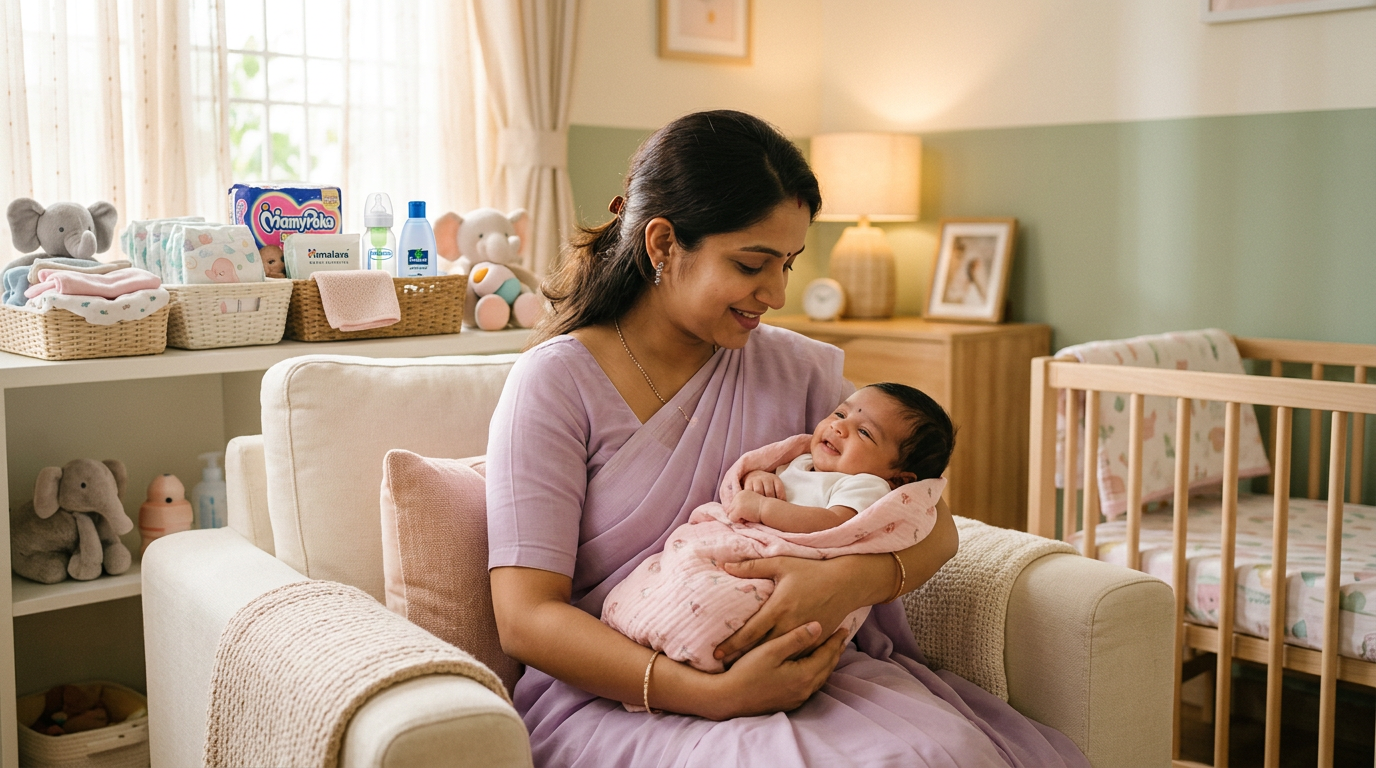
Setting up your nursery isn't just about Pinterest-worthy cribs; it’s about having the right baby care items within arm's reach when the clock strikes 3 AM and your little one has just had a 'poo-nami'. In India, our needs are unique. We deal with humidity, hard water, dust, and the wisdom (sometimes unsolicited) of our sasu maas. This guide breaks down exactly what you need—from mulmul swaddles to BIS-approved hygiene—to keep your baby safe, comfortable, and thriving.
What are the most essential baby care items for Indian homes?
When building your kit, think about the Indian climate and our domestic lifestyle. Most of us don't have massive climate-controlled nurseries; we have bedrooms that get hot in May and chilly in January. Your baby care items need to bridge the gap between traditional wisdom and modern safety standards.
1. The Clothing Kit: Beyond the Jhabla
In the first three months, skip the fancy denim or heavy polyester 'party' wear. Your baby’s skin is 30% thinner than yours.
* Mulmul Jhablas: These are the gold standard for Indian summers. They are breathable, soften with every wash, and don't irritate the umbilical cord stump.
Cotton Langots: While disposable diapers are great for outings, many Indian parents prefer padded cloth langots* for airtime at home to prevent diaper rash.
* Bamboo or Organic Cotton Onesies: Look for 'nickel-free' snaps (as per IS 15530 standards) to avoid skin allergies.
* Swaddle Wraps: A thin cotton sheet or a zip-up swaddle helps mimic the snugness of the womb, crucial for the 'moro reflex' (startle reflex).
2. Hygiene and Skincare: The 'Maalish' Protocol
In India, maalish (massage) isn't just a luxury; it’s a ritual. However, your baby hygiene products must be chosen with clinical care.
Massage Oils: While ghani* (cold-pressed) coconut oil or almond oil is fantastic, ensure your choice is paraben-free and doesn't contain heavy fragrances.
* Nappy Cream: Look for a thick paste containing Zinc Oxide. It creates a physical barrier against moisture.
* Cleansers: Avoid the 'squeaky clean' feeling. Use syndet (synthetic detergent) bars or liquid washes with a pH of 5.5, which matches the baby’s skin mantle.
* Cotton Balls and Warm Water: For the first few weeks, the Indian Academy of Paediatrics (IAP) often suggests using plain water and cotton for diaper changes rather than scented wipes to protect the skin barrier.
Must-have baby care essentials for feeding and soothing
Whether you are practising exclusive stanpaan (breastfeeding) or using formula, your list of baby care items must facilitate easy cleaning and safety.
Feeding Stations
* Sterilisers: With the high bacterial load in tropical climates, boiling bottles for 10 minutes or using an electric steam steriliser is non-negotiable.
* Burp Cloths: You need at least 10. Use soft cotton wipes; your shoulder will thank you.
* Feeding Pillows: Essential if you’re recovering from a C-section, as they take the weight off your incision.
* Bottle Brushes: Get ones with silicone bristles as they don't scratch the plastic/glass, which can otherwise harbor bacteria.
Soothing and Health Monitoring
* Digital Thermometer: A flexible-tip rectal or underarm thermometer is a must. Avoid the old mercury ones; they are a breakage hazard.
* Nasal Aspirator: Indian cities can be dusty. A bulb syringe or a manual aspirator helps clear tiny noses during the common cold.
* Nail Clippers: Use a specific baby kit with a magnifying glass or an electric nail trimmer to avoid 'nipping' those tiny fingertips.
Planning for the Indian Seasons: Summer vs. Winter
In Mumbai or Chennai, your newborn essentials india list will focus on sweat-wicking and prickly heat prevention. In Delhi or Bangalore, you'll need to layer up.
* Summer Essentials: An air-purifier (crucial for North Indian winters and construction dust), lightweight cotton sleep sacks, and a wide-brimmed sun hat for the rare evening walk.
Winter Essentials: Quilted godris* (mattress protectors), woollen booties that actually stay on, and a gentle humidifier if you use a heater (which dries out the air).
How much should you spend?
A basic, high-quality starter kit of baby care items in India usually ranges between ₹15,000 to ₹45,000. This includes your basics but excludes big-ticket items like a high-end stroller or an imported wood crib. Focus your budget on items that touch the baby's skin or go into their mouth—don't skimp on quality there.
Real talk from Indian moms
> "I spent 5k on a fancy diaper bag, but honestly? A 200-rupee wet bag for soiled langots and a backpack with lots of pockets worked better for our crowded metro commutes." — Ananya R., Kolkata (Mom to 6-month-old)
> "I thought I needed a bottle warmer, but my Nani taught me the 'bowl of hot water' trick. Saved counter space in my small Mumbai kitchen!" — Pooja M., Mumbai (Mom to 4-month-old)
When to call your paediatrician
Keep this list on your fridge. If your baby shows these signs, skip the home remedies and call your doctor immediately:
* High Fever: Anything above 100.4°F (38°C) for a baby under 3 months.
* Dehydration: Fewer than 6 wet diapers in 24 hours or a sunken soft spot (fontanelle) on the head.
* Breathing Issues: Flaring nostrils, grunting sounds, or the chest pulling in deeply with each breath.
* Persistent Crying: Inconsolable crying that lasts for hours, which could indicate colic or an ear infection.
* Jaundice: Yellowing of the whites of the eyes or skin that persists or deepens after the first week.
Frequently Asked Questions
Which baby care items are absolutely necessary for a newborn?
At a minimum, you need 10-12 cotton jhablas, 2 dozen cloth/disposable diapers, a firm mattress, a digital thermometer, a mild cleanser, and a safe transport method (car seat or sling). Everything else is secondary to hygiene and warmth.
How do I choose the best baby care essentials for sensitive skin?
Look for products tested by dermatologists and certified by the Bureau of Indian Standards (BIS). Avoid anything with "Fragrance" or "Parfum" high up on the ingredient list, and always do a patch test on the baby's leg before full application.
What are the most important baby essentials for traveling in India?
A portable changing mat, plenty of sanitising wipes for surfaces, a breathable baby carrier for navigating crowded areas, and a thermos with pre-boiled water if you are formula-feeding.
Are traditional baby hygiene products like Ubtan safe?
While Ubtan (turmeric/besan paste) is traditional, many paediatricians suggest waiting until the baby is at least 3-6 months old. Raw ingredients can sometimes harbor bacteria or cause micro-tears in delicate newborn skin. Always consult your doctor before applying home-made pastes.
How often should I replace baby care items like pacifiers or bottle teats?
Feeding teats should be replaced every 2-3 months or sooner if you notice thinning, stickiness, or cracks. This prevents choking hazards and ensures the flow rate remains appropriate for the baby's age.
Choosing baby care items doesn't have to be an over-expenditure. Focus on what keeps your baby dry, fed, and safe. You are the best judge of your baby's needs, so trust your gut—it's usually right.
You have everything you need to be the perfect mama for your little one.
Sources & further reading
- Indian Academy of Paediatrics (IAP) - Newborn Care Guidelines
- Bureau of Indian Standards (BIS) - Safety Requirements for Toys and Childcare Products
- World Health Organization (WHO) - Postnatal Care of the Mother and Newborn
- National Health Portal (NHP) India - Infant and Young Child Feeding
Written by Dr. Anjali Mehta, MBBS, DCH (Paediatrics)
TheMamaCircle Editorial Team
Last updated: 18 June 2026
This article is for general information only and is not a substitute for personalised medical advice. Always consult your paediatrician or obstetrician for your specific situation.