Baby Crying at Night: Indian Parents' Guide to Decoding
Baby crying at night? Decode hunger vs gas cues, learn Dunstan sounds, and handle a fussy infant with our expert Indian parenting guide. Read more now.
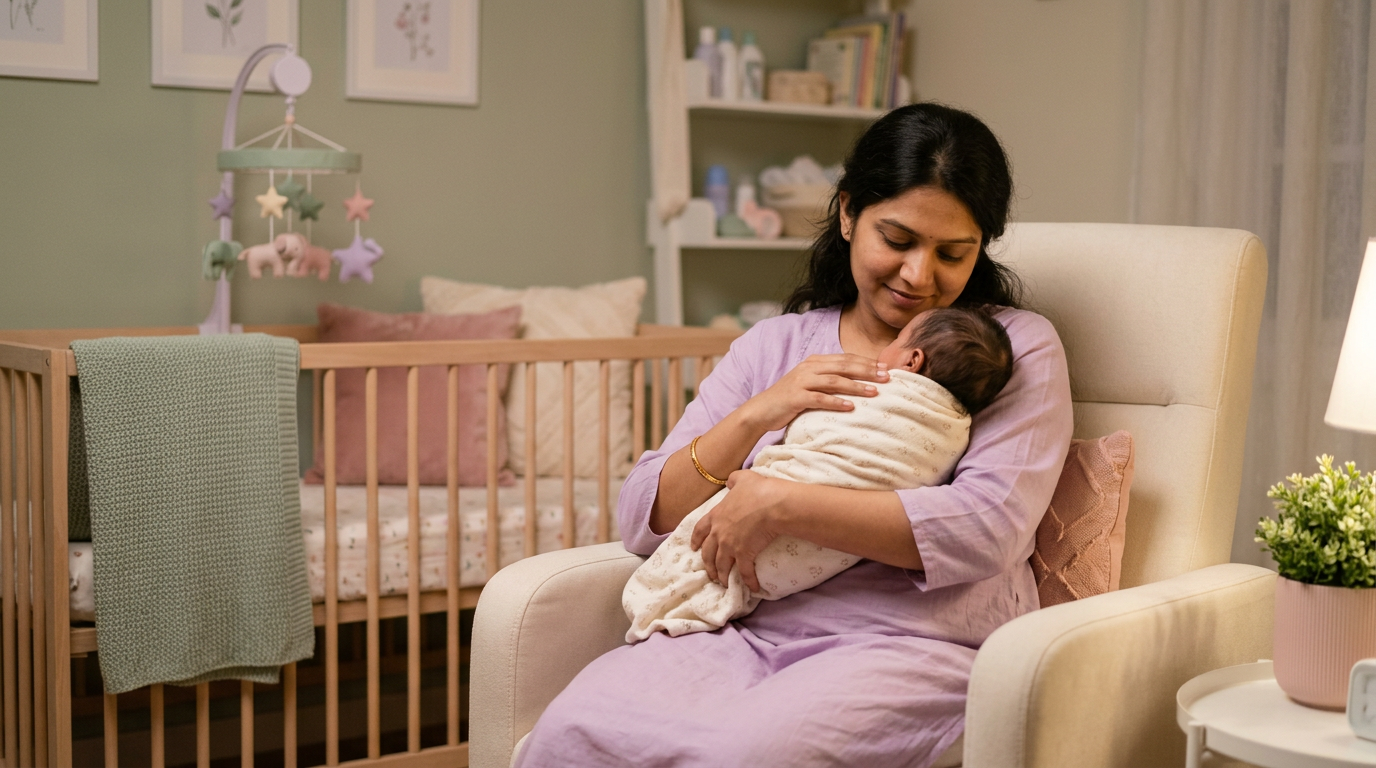
A baby crying at night is often the first real "welcome to parenthood" moment that hits Indian homes, usually right around 2:00 AM when the rest of the neighborhood is silent. Whether it is a piercing shriek or a rhythmic whimper, your baby is communicating their only way they know how. Most night crying in India stems from hunger, trapped wind (gas), or temperature discomfort, though developmental leaps play a massive role as your little one grows.
Why is my baby crying at night? The Indian Reality
In many Indian households, the first instinct when a baby cries is to assume they are hungry or "the milk isn't enough." While hunger is a primary driver, the baby crying at night often has subtle nuances that we miss between the advice from nani and dadi. Understanding these cues helps you respond with calm rather than panic.
1. The Hunger Cry (The 'Neh' Sound)
According to the Dunstan Baby Language theory, which many lactation consultants observe, a hunger cry often starts with a "Neh" sound, caused by the sucking reflex. In the Indian context, "demand feeding" as recommended by the Indian Academy of Pediatrics (IAP) is the gold standard. If your baby is rooting or sucking their hands, they need stanpaan (breastfeeding), regardless of when they last ate.
2. Trapped Wind and 'Pet Dard'
Gas is perhaps the most common reason for a fussy infant in India. If your baby pulls their legs toward their tummy or has a rigid abdomen, it is likely wind. Traditional remedies like Hing (asafoetida) paste applied around the navel are common, but often, all the baby needs is a proper burping session. If the crying is inconsolable and lasts for hours, you might be dealing with colic. You can use our AI cry analyzer to help distinguish between a "gas cry" and a "hunger cry."
3. Temperature and Clothing Overload
Indian parents have a cultural tendency to over-layer babies. We worry about "thandi lag jayegi" (they will catch a cold), but an overheated baby is a miserable baby. If your baby's chest or back feels hot or sweaty, they are likely crying because they are too warm. The BIS (Bureau of Indian Standards) guidelines for infant clothing suggest breathable cotton fabrics for the Indian climate.
Decoding the Dunstan Cues: What your baby is saying
Before the crying escalates into a full-blown meltdown, babies usually give off "pre-cry" sounds. Training your ears to these five sounds can change your postnatal nights:
* 'Neh': I'm hungry.
* 'Owh': I'm sleepy/overtired.
* 'Heh': I'm uncomfortable (wet diaper or itchy fabric).
* 'Eair': I have lower gas (tummy pain).
* 'Eh': I need to burp.
Why babies cry at night: The developmental perspective
Sometimes, there is no physical "problem" to solve. As babies hit milestones, their brains become hyper-active. If you are tracking your child's growth using a baby milestones tracker, you might notice that crying increases just before they learn to crawl or roll over. This is often why babies cry at night; their brains are "practicing" new skills even in sleep, leading to frequent wake-ups.
The Overtired Loop
In many Indian families, late-night dinners and social gatherings are the norm. However, a baby who misses their sleep window becomes "overtired." When a baby is overtired, their body produces cortisol and adrenaline, making it harder for them to fall asleep. This leads to the dreaded baby crying at night for no reason, where they seem to fight sleep even though they are exhausted.
The "Ghutti" and Gripe Water Myth
Walk into any local chemist in Mumbai or Delhi, and you will see rows of gripe water and Ayurvedic "Ghutti." While these have been used for generations, modern paediatrics warns against them. The WHO and IAP recommend exclusive breastfeeding for the first six months. Introducing sugar-heavy gripe water or untested herbal concoctions can interfere with gut health and actually increase night-time fussiness. If your baby is struggling with digestion, consult your doctor rather than reaching for a ₹50 bottle of sugar water.
Real talk from Indian moms
"My son would cry every night at 7 PM like clockwork. My mother-in-law insisted it was 'nazar' (evil eye), but it turned out to be the witching hour. Swaddling him and moving to a dark room was the only thing that worked."
— Meera, Bengaluru, mom to 4-month-old
"I spent weeks wondering why do babies cry at night only to realize my daughter was just hot. In Chennai's humidity, the three layers of clothing my nani insisted on were making her sweat buckets. Switched to a single cotton onesie and the crying stopped."
— Deepika, Chennai, mom to 6-month-old
When to call your paediatrician
While night crying is normal, certain "Red Flag" cries require immediate medical attention:
* High-pitched, weak, or continuous crying that sounds different from their usual cry.
* Fever (Temperature above 100.4°F or 38°C).
* Projectile vomiting or refusing more than two consecutive feeds.
* Bloody stools or a complete lack of wet diapers (dehydration).
* Bulging or sunken soft spot (fontanelle) on the head.
* Difficulty breathing or bluish tint around the lips.
Frequently Asked Questions
Why babies cry at night even after being fed?
If your baby is fed but still crying, they may be overstimulated, have trapped gas, or be feeling too hot/cold. In many Indian homes, loud televisions or bright lights during dinner time can overstimulate a baby’s sensitive nervous system, making it hard for them to settle down.
Why do babies cry at night suddenly after sleeping well?
This is often a "sleep regression." These usually happen around 4 months, 8 months, and 12 months. It is linked to brain development and new milestones like sitting up or teething. It is a temporary phase, though it feels permanent at 3 AM!
Is my baby crying at night for no reason?
There is almost always a reason, even if it isn't obvious. It could be a hair tourniquet (a hair wrapped around a toe), a wet diaper, or simply the need for "skin-to-skin" contact to feel safe. In the postnatal period, babies view their mother as an extension of themselves.
How can I handle a fussy infant who won't stop crying?
Try the "5 S's": Swaddle, Side/Stomach position (while holding), Shush, Swing, and Suck. In India, a gentle maalish (massage) with coconut oil followed by a lukewarm bath can also help relax a fussy infant before bedtime.
Can 'Japa' or traditional massage help with night crying?
A professional Japa maid or a mother's touch during massage can improve circulation and aid digestion, which may reduce gas-related crying. However, ensure the massage is gentle and doesn't happen immediately after a feed to avoid reflux.
The next time you find yourself pacing the living room at midnight with a screaming bundle in your arms, remember that this is a season, not a forever state. You are doing a great job, and your baby is just trying to find their way in this big, loud world.
Repeat after me: This cry is a conversation, and I am learning to listen.
Sources & further reading
- Indian Academy of Pediatrics - Infant Feeding Guidelines
- WHO Guidelines on Physical Activity and Sedentary Behaviour for children under 5 years
- National Health Portal India - Newborn Care
Written by Kavita Iyer, IBCLC Lactation Consultant
Reviewed by TheMamaCircle Editorial Team
Last updated: 9 September 2026
This article is for general information only and is not a substitute for personalised medical advice. Always consult your paediatrician or obstetrician for your specific situation.