Bedtime Stories for Indian Kids: Best Tales & Tips
Discover the best bedtime stories for Indian kids. From Panchatantra to Akbar-Birbal, learn how storytelling builds bonds and boosts brain power. Read more now!
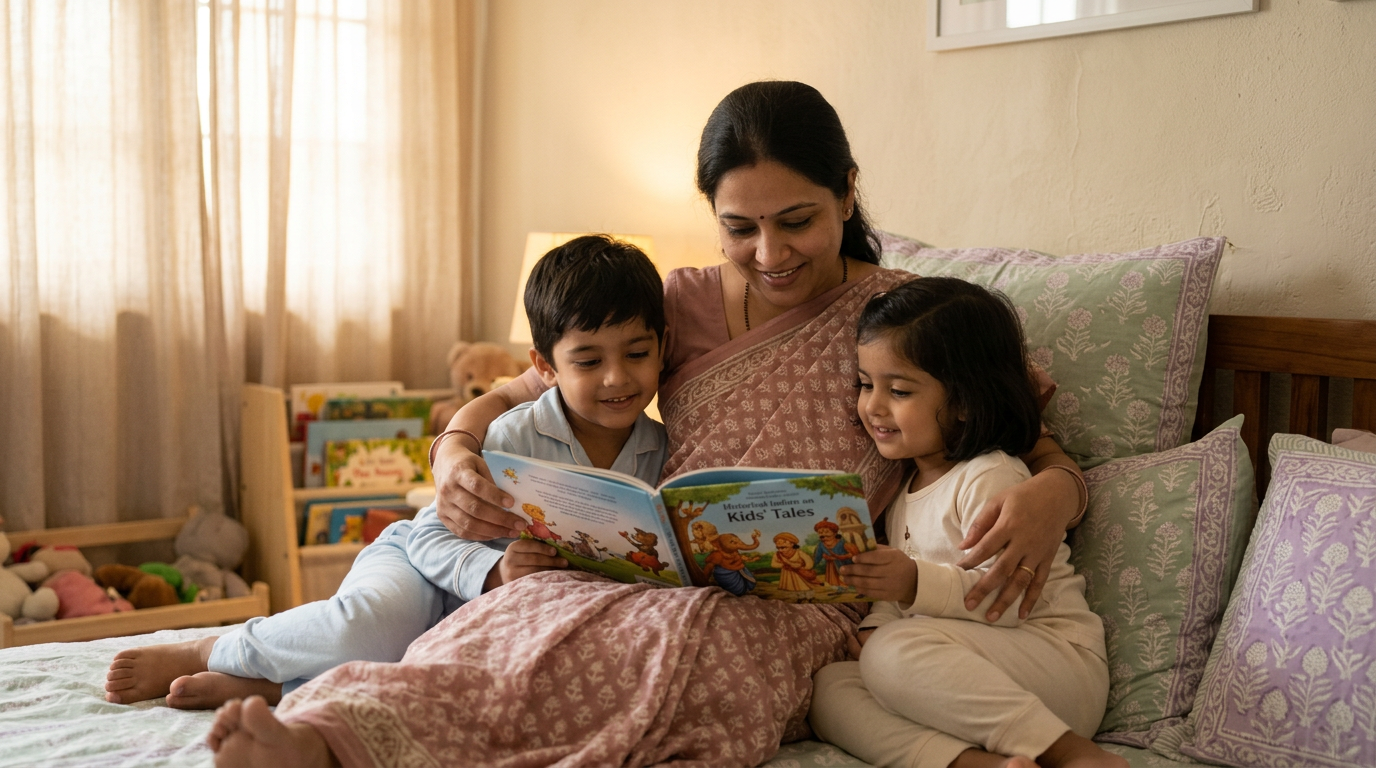
Reading bedtime stories to your child isn’t just about filling the silence before sleep; it is a powerful ritual that builds language skills and emotional security. In many Indian households, this tradition usually starts with dadi or nani narrating tales of clever crows and mighty kings. Establishing a consistent storytelling routine helps lower cortisol levels in children, preparing their brains for a restful night while strengthening the bond between parent and child.
Why Bedtime Stories Are Essential for Indian Kids
In our culture, storytelling is often the first form of education. Whether you are narrating bedtime stories for kids or sharing snippets of family history, you are helping them process the world.
The Developmental Benefits
* Language Acquisition: Exposure to rich vocabulary in short stories for kids in english helps children understand complex sentence structures faster than screen time ever could.
Empathy and Ethics: Traditional Indian tales often focus on dharma* (duty) and kindness.
* Screen-Free Wind-Down: Swiping on a tablet inhibits melatonin production. A physical book or a spoken story does the opposite.
* Cognitive milestones: Following a plot helps track baby milestones tracker related to memory and logical sequencing.
How Long Should a Bedtime Story Be?
One of the most common questions I get in my clinic is about the duration of these sessions. You don’t want the story to be so long that the child gets a "second wind" and refuses to sleep.
* Infants (0-12 months): 2–5 minutes. At this stage, it’s about the rhythm of your voice. Use high-contrast board books.
Toddlers (1-3 years): 5–10 minutes. Focus on repetition. If they want the same story about a hathi* (elephant) ten times, read it ten times.
* Preschoolers (3-5 years): 10–15 minutes. This is the golden age for bedtime stories with clear morals.
* Primary School (5-7 years): 15–20 minutes. You can start chapter books or longer folk tales.
Timeless Indian Classics for Your Nightly Routine
We are blessed with a treasure trove of literature. You don’t need expensive imported books when our own folklore is so rich.
1. Panchatantra Stories
These are perhaps the oldest panchatantra stories in the world, featuring animal characters that teach worldly wisdom.
* The Story: The Monkey and the Crocodile.
* The Moral: Presence of mind can save you from the toughest situations.
Why it works: Kids love the imagery of the sweet jamun* trees and the clever monkey.
2. Akbar and Birbal
These stories are perfect for teaching logic and wit.
* The Story: Birbal identifies the thief by using "magic" sticks.
* The Moral: Guilt always gives itself away; honesty is the best path.
* Pro-tip: Use different voices for the booming Emperor Akbar and the calm, witty Birbal.
3. Tenali Rama
Hailing from the Vijayanagara Empire, these stories are staples in South Indian households.
* The Story: Tenali Rama and the Three Thieves.
* The Moral: Wit is mightier than weapons.
4. Jataka Tales
These stories about the previous lives of the Buddha often feature themes of self-sacrifice and compassion. They are excellent moral stories in english with pictures to help children develop a sense of right and wrong.
Creating the Perfect Sleep Environment
Storytime won't work if the room is chaotic. In India, we often deal with heat and noise, so modifications are necessary.
* The Setup: Ensure the room is cool. If using an AC, keep it between 24-26°C as per BEE guidelines.
* The Lighting: Use a dim yellow night lamp. Avoid white tubelights which mimic daylight.
Comfort: A light cotton dohaar* or a soft muslin swaddle for younger babies helps them feel secure.
Nourishment: A small cup of warm turmeric milk (haldi doodh*) can be a great physical cue that sleep is coming. If your child is still in the [stanpaan] (breastfeeding) phase, a dream feed after the story is quite common.
Real Talk from Indian Moms
"We started reading bedtime stories when Advait was 6 months old. Now at 3, he won't sleep without hearing about the 'Thirsty Crow'. It’s the only 15 minutes in my day when I’m not checking my phone."
— Riya M., Mumbai (Mom to 3-year-old)
"My daughter loves it when I mix English stories with my own childhood memories from Kolkata. We call it 'Golpo time'. It’s helped her pick up Bengali words alongside her English school books."
— Ishani S., Bengaluru (Mom to 4-year-old)
Investing in Books in India
You don't need to spend a fortune. While premium international hardcovers can cost ₹800+, you can find high-quality Indian publications like CBT (Children's Book Trust) or Tulika Books for as little as ₹50 to ₹150. Look for books that carry the BIS (Bureau of Indian Standards) mark for toy safety if they include tactile elements.
When to Call Your Paediatrician
While storytelling is a joyous activity, sometimes sleep struggles are medical. Consult your doctor if:
* Your child consistently snores loudly or seems to gasp for breath (potential sleep apnea).
* Night terrors occur frequently and the child is inconsolable for more than 20 minutes.
* The child displays extreme anxiety or fear about the dark that prevents them from falling asleep despite a routine.
* You notice signs of hearing issues, such as the child not reacting to the story unless you are very loud.
* For infants, if they are not meeting the expected baby growth chart parameters alongside poor sleep.
Frequently Asked Questions
Which bedtime stories for kids are best for 2-year-olds?
For 2-year-olds, choose stories with repetitive phrases and bright illustrations. Simple animal fables from the Panchatantra where you can make animal sounds (like 'moo' or 'meow') are highly engaging. Keep the narrative under 5 minutes to match their attention span.
Should I read short stories for kids in english or in their mother tongue?
Both! Research suggests that being bilingual or multilingual is excellent for brain development. You can read the story in English and explain the moral in Hindi, Tamil, or your native language. This helps the child connect the concepts across languages.
Where can I find good panchatantra stories?
You can find these in local bookstores, public libraries, or through reputable Indian publishers like Amar Chitra Katha. Many are also available as narrated podcasts if you want to listen together, though physical books are preferred for the "touch and feel" aspect of bonding.
Are moral stories in english with pictures better than plain text?
For children under 7, pictures are vital. They use the illustrations to decode the meaning of the words you are saying. It helps them build a visual map of the story, which improves comprehension and retention of the moral lesson.
How do bedtime stories help with my child's behavior?
Storytelling allows children to explore scary or difficult emotions in a safe environment. When a character in a story overcomes a fear of the dark or learns to share, your child learns those same coping mechanisms without feeling lectured.
Can I use audiobooks for bedtime stories?
While audiobooks are a good alternative to screens, they cannot replace the warmth and eye contact of a parent reading aloud. Use audiobooks as an occasional backup, but try to make the physical reading a priority for at least 4 nights a week.
Reading to your child is one of the few investments that yields immediate emotional returns and long-term academic benefits. As you close the book tonight, remember that these moments are the ones they will carry into adulthood.
Main toh bas ek bahana hoon, asli jaadu toh aapki awaaz mein hai. (I am just an excuse; the real magic is in your voice.)
Sources & further reading
- Indian Academy of Pediatrics (IAP) - Guidelines on Screen Time and Early Literacy
- WHO - Guidelines on Physical Activity, Sedentary Behaviour and Sleep for Children under 5 years of age
- National Institute of Nutrition (NIN) - Dietary Guidelines for Indians
Written by Dr. Anjali Mehta, MBBS, DCH (Paediatrics)
Reviewed by TheMamaCircle Editorial Team
Last updated: 7 September 2026
This article is for general information only and is not a substitute for personalised medical advice. Always consult your paediatrician or obstetrician for your specific situation.